咖啡冻干粉

Search documents
2025年云南咖啡出口至43个国家和地区
Xin Lang Cai Jing· 2026-01-28 13:39
Core Insights - In 2025, Yunnan's coffee exports are projected to reach 19,000 tons, valued at 860 million RMB, making it the highest in both volume and value in China [1] - The main export markets include the Netherlands, Vietnam, Germany, Malaysia, and France, with new markets in Central Asia and Central and Eastern Europe added in 2024 [1] Group 1: Export Performance - Yunnan's coffee exports are expected to lead the nation in both volume and value, with a significant increase in international market reach [1] - The export value of coffee from Tengchong Customs is projected to be 34.7 million RMB in 2025, representing a 17% year-on-year growth [1] Group 2: Product Development - Yunnan's unique climate produces high-quality coffee beans, with the Baoshan small particle coffee being a notable example, characterized by its unique flavor profile [1] - Yunnan Xiyin Coffee Co., Ltd. has begun exporting customized, deeply processed coffee beans, priced at approximately three times that of standard first-grade coffee beans [1] Group 3: Support Initiatives - Tengchong Customs has established a "Yunpin Going Global" working group to provide tailored support measures for different industries and companies to facilitate smoother coffee exports [1] - The deep processing rate and added value of exported coffee products are continuously improving, with products like freeze-dried coffee and instant coffee being part of the export mix [1]
海南产经新观察:“咖啡产业目前处于风口期”
Zhong Guo Xin Wen Wang· 2025-11-16 09:45
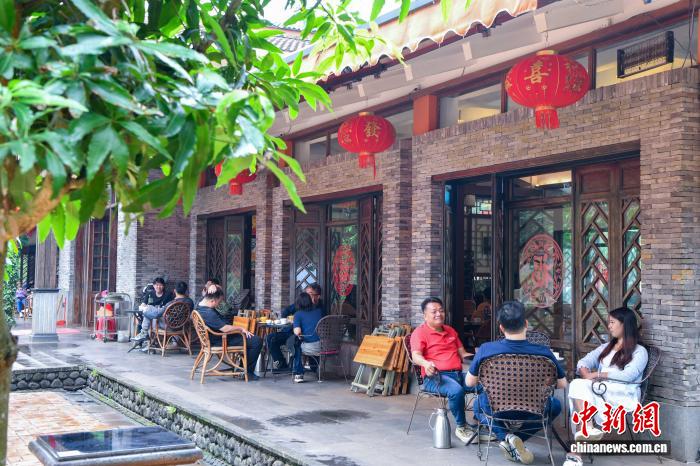
Core Viewpoint - The coffee industry in Hainan is currently at a pivotal moment, driven by the local culture and tourism, with significant growth potential and challenges ahead [6][10]. Group 1: Historical Context and Cultural Significance - The history of Fushan coffee began in 1935 when overseas Chinese brought coffee seeds to the region, leading to the establishment of the first coffee processing factory in the 1970s [3]. - Fushan coffee is deeply integrated into local life, with 80% of visitors coming to experience the coffee culture and "slow life" of Hainan [3][4]. - The traditional roasting technique of Fushan coffee has been recognized as a provincial intangible cultural heritage [3]. Group 2: Current Opportunities and Challenges - The coffee industry in Hainan is experiencing a boom due to the Free Trade Port policy, increasing tourist numbers, and the growth of brands like Luckin and Kudi [6]. - Challenges include small coffee planting areas, vulnerability to natural disasters, and competition from established brands in Europe and America [6]. - The market is facing oversupply, with the number of coffee shops in Fushan increasing from a few to around sixty or seventy since 2005 [6]. Group 3: Development Strategies - Fushan coffee is exploring standardization in production and has established a vocational school to train over 200 coffee professionals annually [6]. - The integration of coffee with rural tourism is being pursued, creating immersive experiences that enhance customer engagement [10]. - The Fushan Coffee Cultural Town has transformed from merely selling coffee to offering cultural and experiential products, generating over 100 million yuan in annual revenue [10]. Group 4: Policy and Economic Impact - Companies are leveraging the Free Trade Port policies to extend their industrial chains and focus on deep processing, which allows for tax savings and market expansion [8]. - The introduction of international coffee competitions in Hainan is expected to enhance brand recognition and improve the quality perception of Hainan coffee [10].