商业长护险

Search documents
政府工作报告连续三年点名“创新药”
第一财经· 2026-03-05 09:53
Core Viewpoint - The article emphasizes the Chinese government's commitment to promoting the high-quality development of innovative drugs and medical devices, alongside the expansion of commercial health insurance, as part of its efforts to improve public health and meet diverse medical needs [3]. Group 1: Government Initiatives - The government work report for 2026 reiterates the focus on "innovative drugs" for the third consecutive year, highlighting the need for high-quality development in this sector [3]. - In 2025, China approved a record 76 innovative drugs for market entry, surpassing the 48 approved in 2024, indicating a significant increase in innovation [3]. - The total value of authorized transactions for innovative drugs exceeded $130 billion in 2025, with over 150 transactions, marking a historic high [3]. Group 2: Commercial Health Insurance Development - The average annual growth rate of commercial health insurance has exceeded 20% over the past decade, with over 11,000 medical insurance products currently available [4]. - In 2025, the premium for commercial health insurance reached 997.3 billion yuan, still falling short of the 1 trillion yuan milestone [4]. - The focus for 2026 will be on expanding the scale of commercial health insurance, particularly through the development of a multi-layered security mechanism [4]. Group 3: Key Focus Areas for 2026 - The potential for cross-departmental data sharing in medical expenses, health check-ups, and imaging tests is a key area of focus, contingent on the opening of medical insurance data [5]. - The effectiveness of the newly established commercial insurance catalog for innovative drugs in driving sales and facilitating one-stop settlement for hospital and insurance payments is under scrutiny [5]. - The impact of tax policies on corporate willingness to invest in employee benefits and the potential for local tax incentives to support the growth of commercial health insurance are critical considerations [5]. Group 4: Innovations in Insurance Products - Regions like Shanghai, Guangdong, and Beijing are encouraging innovation in group insurance products, with a focus on enhancing coverage for innovative drugs and medical devices [6]. - The introduction of long-term care insurance is gaining attention, with the government promoting a basic level of care that can be complemented by commercial long-term care insurance for diverse family needs [6].


中国太平洋保险(集团)副总裁 马欣:服务是健康保险的增长飞轮
Xin Lang Cai Jing· 2026-01-28 06:40
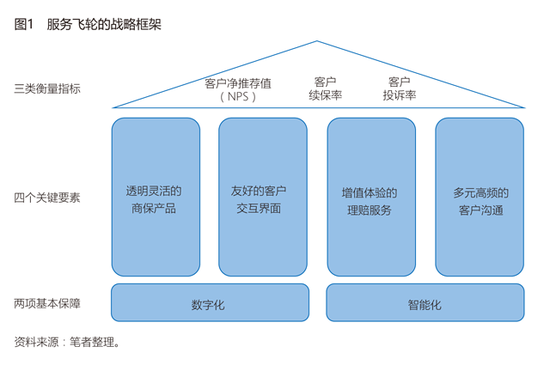
Core Viewpoint - The development of health insurance in China is transitioning from merely existing to improving quality, with a focus on enhancing service as a key driver for sustainable growth in the industry [1][20][21]. Group 1: Importance of Service in Health Insurance - Service is identified as a crucial element for driving customer engagement and sustainable operations in health insurance [2][21]. - The industry must balance three core relationships: alignment of healthcare supply with customer needs, collaboration between customer growth and diverse channel strategies, and interaction between medical inflation and risk reduction [2][21]. - The "service flywheel" concept illustrates how effective service can create a self-reinforcing cycle that enhances customer loyalty and attracts new clients [3][25]. Group 2: Service Flywheel Mechanism - The service flywheel effect describes how initial investments in customer service can lead to exponential growth in value through enhanced customer experience and retention [3][25]. - The flywheel's acceleration is driven by the "service multiplier" effect, where each health service provided generates greater value than the initial investment [3][25]. - A successful service flywheel can stabilize customer bases and mitigate the risks associated with long-term health insurance operations [4][25]. Group 3: Transition from Risk Pricing to Value Pricing - The shift from risk pricing to value pricing in health insurance is essential to address challenges such as medical inflation and changing customer expectations [16][36]. - Value pricing integrates health services into product design, allowing for a more comprehensive approach to customer needs and risk management [16][36]. - The industry is encouraged to expand coverage through innovative service combinations that address out-of-pocket expenses and provide dynamic protection throughout the customer lifecycle [18][37]. Group 4: Challenges and Solutions in Health Management - The integration of health management with insurance faces challenges such as low adherence to health management practices and difficulties in measuring effectiveness [34][35]. - Establishing a scientific mechanism for validating the impact of health services on risk reduction is crucial for aligning service investments with core business metrics [35]. - The use of artificial intelligence and data analytics can enhance personalized health management, improving adherence and breaking the linear cost growth pattern [35][36]. Group 5: Future Directions for Health Insurance - The health insurance sector must evolve from a reactive compensation model to a proactive health management partner, enhancing its role in the healthcare ecosystem [19][38]. - Companies are encouraged to deepen their engagement in health services to strengthen competitive advantages and avoid detrimental market practices [19][38]. - The establishment of a robust service framework is seen as a complex but necessary step for achieving high-quality development in commercial health insurance [19][38].


人保健康邵利铎:推动健康保险高质量发展 服务中国式现代化建设新征程
清华金融评论· 2026-01-09 09:22
Core Viewpoint - The article emphasizes the importance of health insurance in promoting common prosperity and improving the quality of life for the people, aligning with the goals set forth in the 14th Five-Year Plan [3][5]. Group 1: Commitment to Common Prosperity - The article highlights the role of health insurance as a crucial mechanism for promoting common prosperity, with a focus on expanding services and enhancing the depth of differentiated offerings [5]. - The company aims to actively participate in the construction of a long-term care insurance system, addressing the challenges posed by an aging population in China [5][6]. - The strategy includes developing a comprehensive care support system that integrates home, community, and institutional services to alleviate the burden of family caregiving [5][6]. Group 2: Expanding Demand and Service Offerings - The company plans to enhance its product offerings to meet the diverse health insurance needs of various demographic groups, including the elderly, children, and flexible workers [6]. - A multi-tiered product service system will be established, integrating basic medical insurance with affordable, mid-range, and high-end health insurance products [6][7]. - The focus will be on improving accessibility and affordability of health insurance, thereby supporting domestic demand [6]. Group 3: Regional Coordination and Development - The company will implement differentiated development strategies based on regional economic and social conditions, aiming to enhance health insurance services in both urban and rural areas [7]. - Initiatives will include establishing innovation pilot zones in major cities to boost regional development and promote health equity [7]. Group 4: Contribution to the Real Economy - The article outlines the company's commitment to supporting the real economy by integrating health insurance with technological and green finance [9][10]. - The company will explore new payment models for innovative medical technologies and drugs, fostering a win-win cycle between patients, health insurance, and the pharmaceutical industry [9]. - Emphasis will be placed on providing health management services to enterprises, thereby reducing health risks and supporting sustainable business operations [9][10]. Group 5: Health Management Integration - The company aims to integrate health management with insurance services, transitioning from passive payment to proactive health intervention [11]. - A comprehensive health service ecosystem will be developed, focusing on preventive care, treatment, and rehabilitation across various demographics [11][12]. - The goal is to create a modular health management product system that reduces disease incidence and improves overall quality of life [12].

人保健康邵利铎:健康保险高质量发展大有可为
Jing Ji Ri Bao· 2025-12-23 04:07
Core Viewpoint - The article emphasizes the importance of health insurance in improving public health and supporting the aging population in China, highlighting the role of China People's Health Insurance Co., Ltd. in this context [1][2]. Group 1: Health Insurance Development - The company reported a risk coverage amount of 99 trillion yuan, a year-on-year increase of 6.2%, and a claims service participation of 16.096 million people, also up by 6.2% [1]. - The premium income reached 40.7 billion yuan in the first half of the year, marking a historical high with a year-on-year growth of 12.2% [1]. Group 2: Focus on Elderly Care - The company is actively participating in the construction of a long-term care insurance system, being the first to launch commercial long-term care insurance and engage in related pilot programs [2]. - It aims to develop a comprehensive care insurance system that includes both basic and supplementary coverage, enhancing services for the elderly [2]. Group 3: Innovation in Health Insurance - The company plans to include more new medical technologies and drugs in its coverage, exploring diverse payment methods to create a win-win situation for patients and the pharmaceutical industry [3]. - It will focus on providing flexible health insurance products and services tailored to various health risk characteristics of enterprises [3]. Group 4: Ecosystem Development - The company intends to establish a professional health management institution to enhance service capabilities and support the health industry [4]. - It aims to create a comprehensive service system that integrates health management into the insurance business, covering the entire health management cycle [4]. Group 5: Transformation to Health Management Partner - The company is shifting from being a traditional risk compensator to a health management partner, developing a product system that covers the entire health process [5]. - It focuses on proactive health management to reduce disease incidence and improve clients' quality of life [5].
中国太保马欣:构建多层次养老保障需明确政府市场社会三方角色
Quan Jing Wang· 2025-10-27 01:44
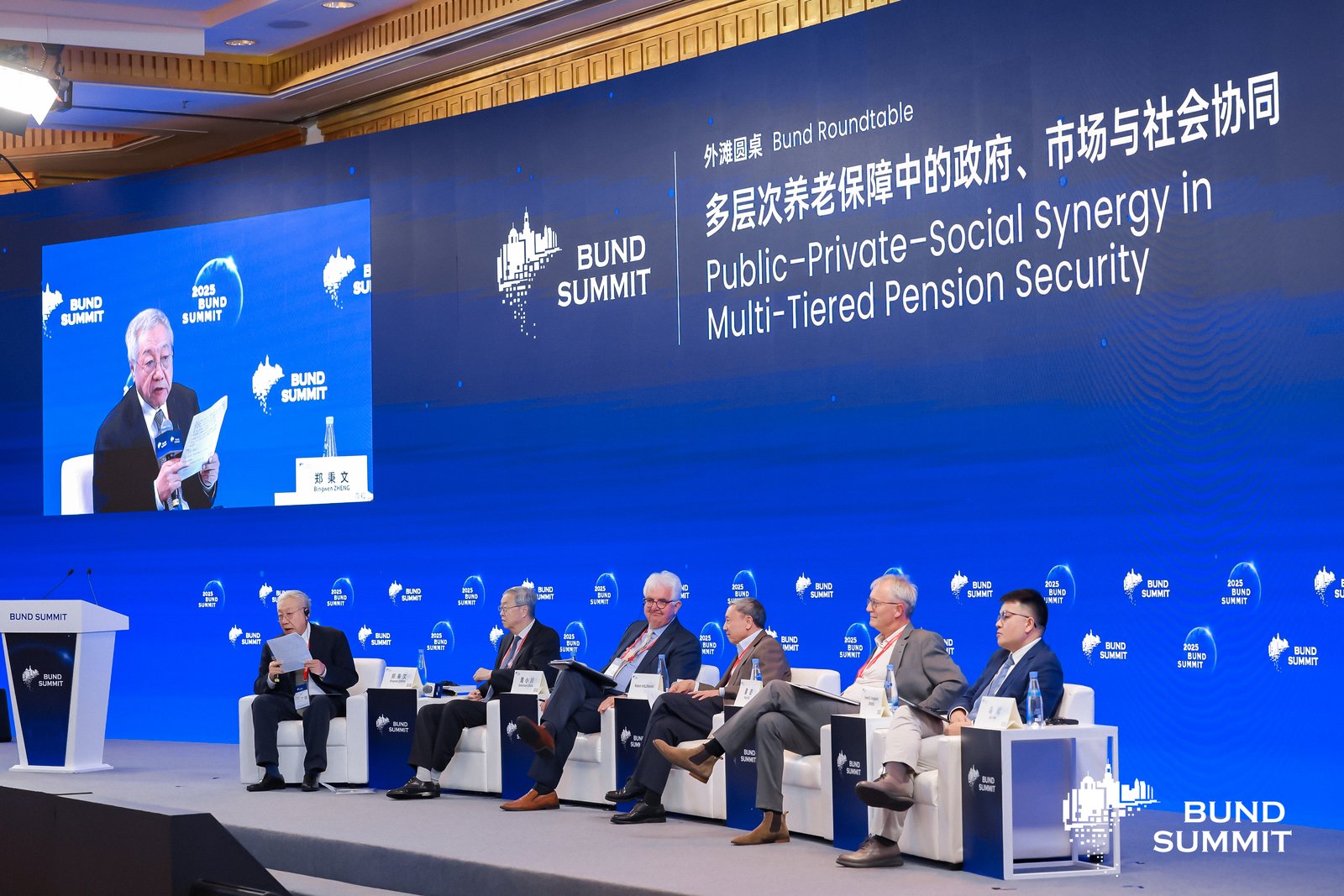
Core Insights - The discussion at the 2025 Bund Annual Conference highlighted the need for a well-defined multi-tiered pension security system, emphasizing the roles of government, market, and society in this framework [1][2] - The insurance industry is urged to enhance its core capabilities in protection, investment, and service to address the current pension supply-demand imbalance [1] Group 1: Roles in Pension Security System - The government serves as the safety net for basic security with a focus on fairness and inclusivity [1] - The market acts as a provider of diversified solutions tailored to demand [1] - Society plays a supplementary role through mutual assistance and service participation [1] Group 2: Development of Pension Pillars - The second pillar's main task is to "expand coverage," with suggestions to implement automatic enrollment mechanisms for enterprise annuities in Xiong'an New Area [1] - The third pillar should focus on "professional development," encouraging financial institutions to establish specialized pension finance entities [1] Group 3: Insurance Industry's Focus Areas - The insurance sector should enhance its ability to manage longevity and disability risks through innovative annuity plans and commercial long-term care insurance products [1] - There is a need to strengthen long-term and stable investment capabilities, balancing absolute and relative returns [1] - The industry should improve its ability to integrate diverse services, leveraging the long-term nature of insurance funds to develop a comprehensive pension service ecosystem [1]
多层次养老保障中的政府、市场与社会协同|2025外滩年会
Guo Ji Jin Rong Bao· 2025-10-24 04:54
Core Insights - The roundtable discussion at the 2025 Bund Financial Summit focused on the collaboration between government, market, and society in multi-tiered pension security in China [2] Group 1: Pension System Structure - The current pension system in China is based on a "three-pillar" framework, but there is room for improvement in functionality, institutional incentives, and diverse needs [3] - The global shift from a "pay-as-you-go" system to an "accumulation" system requires sufficient fiscal resources and institutional conditions, especially in the context of China's rapid demographic changes [4] Group 2: Demographic Challenges and Innovations - The aging population in China necessitates consideration of demographic solutions such as delaying retirement and increasing labor participation rates [4] - The first pillar of the pension system should be robust to support the second and third pillars, especially as digital economy and AI reshape employment [5] Group 3: International Experiences and Recommendations - Nordic countries have successfully implemented pension systems with automatic adjustments and mandatory contributions, which could serve as a model for China [6] - It is crucial to allow for early retirement for physically demanding jobs or those with poorer health to ensure inclusivity in the pension system [6] Group 4: Role of Financial Institutions - The insurance industry can play a vital role in the pension system by providing diverse financial products and services that meet varying needs [7] - The second pillar should expand through automatic enrollment and flexible payment policies, while the third pillar should focus on professional management and product innovation [7] Group 5: Summary of Discussion - The discussion highlighted the importance of a multi-tiered pension system supported by government, market, and social collaboration to address the challenges of an aging population and promote common prosperity [7]
制度短板逐渐补齐,政策性长护险、商业长护险双双按下“加速键”
Bei Jing Shang Bao· 2025-10-08 11:41
Core Viewpoint - The increasing aging population in China, with approximately 45 million elderly individuals suffering from disabilities or dementia, has led to a pressing need for long-term care insurance (LTCI) to alleviate the burden on families and provide a sustainable solution for elderly care [1][3]. Group 1: Policy Development - The promotion of long-term care insurance is accelerating, with both policy-based and commercial LTCI receiving supportive policies, marking a shift from pilot programs to systematic implementation [1][3]. - The policy-based LTCI, referred to as the "sixth insurance" in the social security system, aims to provide basic care and medical services for disabled individuals, significantly reducing the financial burden on their families [3][4]. - Since its pilot launch in 2016, nearly 190 million people have enrolled in policy-based LTCI, accumulating over 100 billion yuan in funds and spending more than 85 billion yuan [3]. Group 2: Service Standards and Regulations - The National Healthcare Security Administration has released a trial version of the "National Long-Term Care Insurance Service Project Directory," which specifies 36 basic service items covering daily care, professional nursing, and health management [4]. - The introduction of the service directory aims to standardize care services, enhance service quality, and ensure the rights of beneficiaries while stabilizing the LTCI fund's operation [4]. Group 3: Challenges and Recommendations - The implementation of policy-based LTCI faces multiple challenges, including a shortage of professional caregivers, uneven distribution of care services, and a lack of a stable funding mechanism [6][7]. - Experts suggest that the government should establish a multi-tiered funding mechanism, integrating personal contributions, corporate support, and public donations to create a sustainable funding framework [7]. - There is a need for collaboration among health, civil affairs, and human resources departments to expand the professional caregiver workforce and improve service quality through training and support for community care initiatives [7]. Group 4: Market Opportunities for Commercial LTCI - The demand for long-term care services is projected to reach 3.1 trillion yuan by 2030 and nearly 6.6 trillion yuan by 2040, highlighting the growing market for commercial LTCI as a complement to policy-based insurance [7]. - Recent trends indicate a push for the development of commercial LTCI, with policies encouraging the integration of health insurance and management, as well as the expansion of service offerings [8]. - Insurance companies are advised to innovate products by expanding coverage for dementia and moderate disabilities, and to create a "cash + service" payment model to enhance product appeal [8].