
商改保REITs

Search documents
一文看懂“北上深”三城「商改保」最新推进情况
Sou Hu Cai Jing· 2026-02-27 04:50
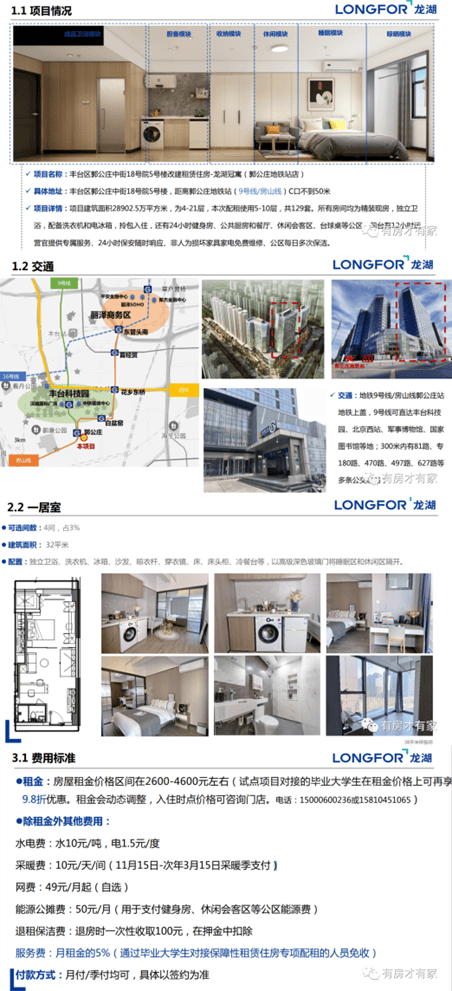
Core Insights - The "commercial-to-rental" initiative aims to convert idle non-residential properties into affordable rental housing, addressing the dual challenges of asset underutilization and housing shortages in major cities [1][3][31] Group 1: Policy Framework - The State Council's 2021 guidelines allowed the conversion of idle commercial properties into affordable rental housing without changing land use or paying additional land fees, providing tax incentives and utility price reductions [1][2] - Beijing has established a comprehensive policy framework for "commercial-to-rental," including top-level regulations and operational details, serving as a national benchmark [5][14] - Shanghai has developed a complete policy framework with a three-year action plan and implementation guidelines, focusing on the conversion of commercial properties into rental housing [14][15] Group 2: Market Conditions - Major cities like Beijing, Shanghai, and Shenzhen face high vacancy rates in commercial properties, with Beijing's Grade A office rental prices dropping to 246 RMB/sqm/month and vacancy rates reaching 17.9% [1][2] - The demand for affordable rental housing remains significant, with Beijing aiming for 400,000 new units and Shenzhen targeting at least 740,000 units during the 14th Five-Year Plan [2][3] Group 3: Project Implementation - Beijing's first "commercial-to-rental" project, the Longfor Guanyuyuan in Fengtai District, converted an idle office building into 728 rental units, showcasing a successful model [7][12] - Shanghai's Suhe Meixin Apartment, converted from an old office building, exemplifies the market-oriented approach to "commercial-to-rental," offering 230 high-quality rental units [16][20] - Shenzhen's first operational project, the Huan Shui | Boyu Ecological Software Park, quickly reached full occupancy, demonstrating the effectiveness of the initiative [25][29] Group 4: Financial and Operational Support - Financial institutions are providing low-interest loans and tax incentives for "commercial-to-rental" projects, facilitating funding and operational efficiency [6][15] - The approval process for these projects has been significantly streamlined, with some projects receiving approvals in as little as two months [6][15] Group 5: Broader Implications - The "commercial-to-rental" initiative addresses structural contradictions in urban development, optimizing resource allocation and enhancing living conditions [31] - It shifts urban renewal from extensive redevelopment to organic updates, preserving historical urban fabric while activating spatial value [31] - The integration of REITs into the "commercial-to-rental" model transforms it into a sustainable market-driven business, paving the way for new development models in the real estate sector [31]

太平洋房地产日报:全国首单“商改保”REITs在上交所上市-2025-03-31
Tai Ping Yang Zheng Quan· 2025-03-31 14:13
Investment Rating - The report does not provide a specific investment rating for the real estate industry, indicating a neutral stance on the sector's performance relative to the Shanghai and Shenzhen 300 Index [9]. Core Insights - The report highlights the listing of the first "commercial reform insurance" REITs on the Shanghai Stock Exchange, which raised 1.362 billion yuan with a subscription rate of 494 times for public investors, marking a new record in the public REITs market [10]. - The real estate sector experienced a decline, with the Shanghai Composite Index and Shenzhen Component Index falling by 0.46% and 0.97%, respectively, while the Shenwan Real Estate Index dropped by 1.80% [5]. - Significant land transactions occurred in Guangzhou and Tianjin, with Guangzhou's two residential land plots selling for a total of 1.688 billion yuan and Tianjin's three residential plots fetching approximately 2.0668 billion yuan [7][9]. Market Performance - The report notes that the top five gainers in the real estate sector included Wolong Real Estate, Yunnan City Investment, and Huangting International, with respective increases of 9.71%, 4.80%, and 3.66% [6]. - Conversely, the top five decliners included Quzhou Development and Shenzhen Zhenye A, with declines of -7.74% and -6.06% [6]. Company Announcements - Poly Developments announced plans to issue convertible bonds totaling up to 8.5 billion yuan, with proceeds allocated for 15 project developments [11].