国泰君安灵犀

Search documents
业绩回暖未掩“弱弱联合”底色,湘财股份大智慧抱团难复制东财神话
Sou Hu Cai Jing· 2025-11-06 09:13
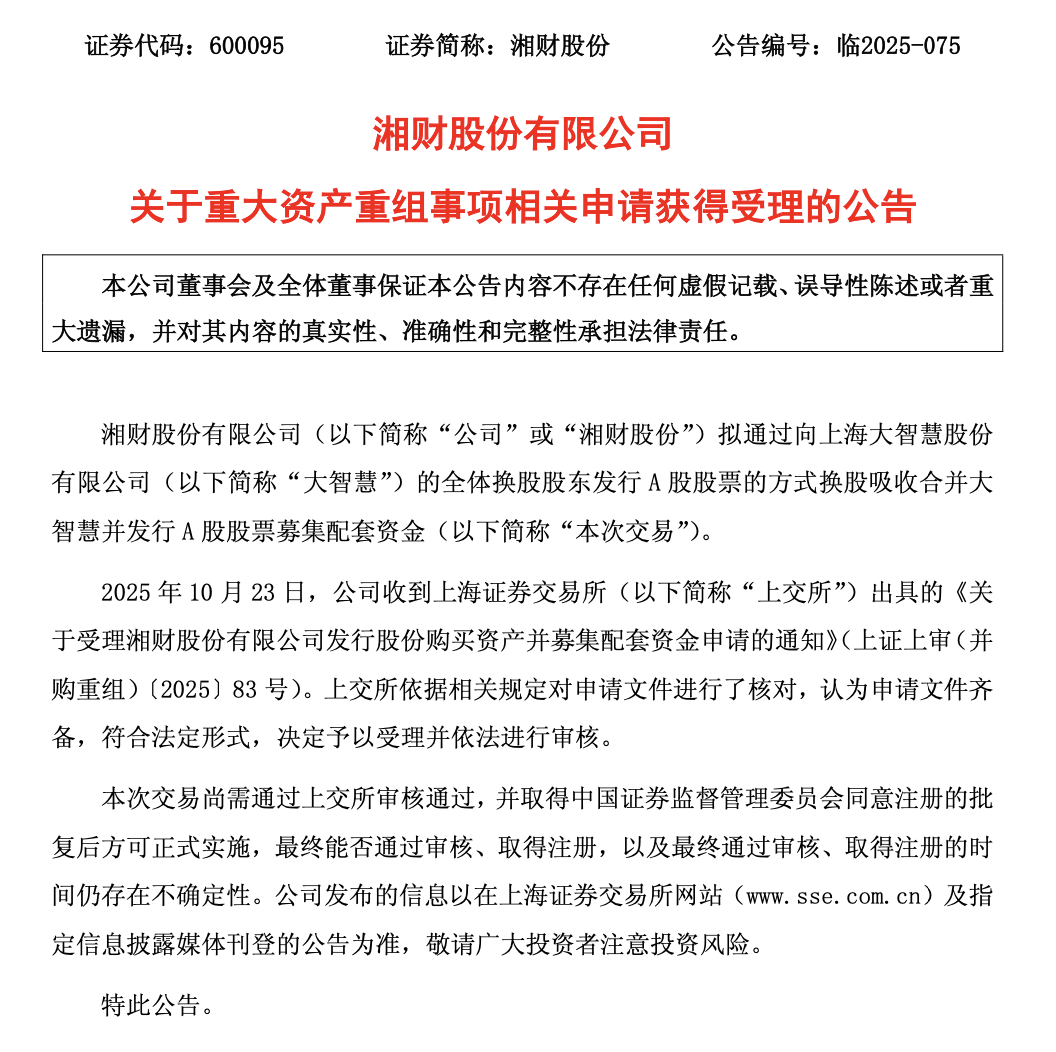
Core Viewpoint - The merger between Xiangcai Co. and Dazhihui is seen as a "weak union," with both companies showing improved profits but still facing significant challenges in revenue decline, cash flow pressure, and ongoing losses [1][4][11]. Financial Performance - Xiangcai Co. reported a net profit of 442 million yuan for the first three quarters of 2025, a year-on-year increase of over 200% [1][4]. - Dazhihui's revenue for the first three quarters was 564 million yuan, an increase of 8.78%, but it still recorded a net loss of 29.56 million yuan [6][7]. - Xiangcai Co.'s total revenue for Q3 was 655 million yuan, up 43.77%, while its operating income fell by 71.49% to 27 million yuan due to a reduction in trading activities [5][6]. Merger Implications - The merger aims to create a larger entity that could potentially rank as the second-largest internet brokerage, but it still falls significantly short compared to industry leader Dongfang Caifu [1][9]. - The combined revenue of Xiangcai Co. and Dazhihui is only 23.63 billion yuan, compared to Dongfang Caifu's 115.89 billion yuan, highlighting a substantial gap in market position [9][12]. Market Position and Competition - The current market landscape is dominated by established players like Dongfang Caifu, which has a user base and revenue far exceeding that of the combined entity of Xiangcai Co. and Dazhihui [9][10]. - The competition is intensifying with other brokerages rapidly adopting AI technologies, making it challenging for the merged entity to establish a competitive edge [10][12]. Integration Challenges - The merger faces internal integration challenges, particularly in aligning corporate cultures and decision-making processes between the two companies [11]. - Regulatory approval is still pending, adding uncertainty to the merger's future and operational timeline [11].


1.75亿人 9月证券服务类App月活用户创年内新高
Shang Hai Zheng Quan Bao· 2025-10-20 18:13
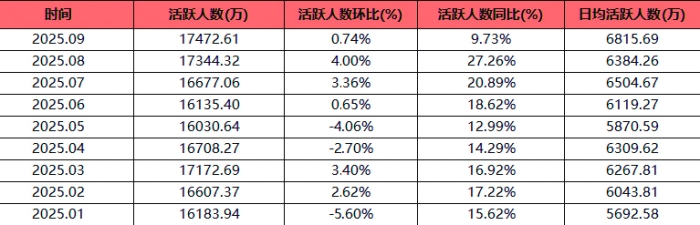
Core Insights - The number of monthly active users for securities service apps reached a record high of 175 million in September, driven by a vibrant A-share market and a significant increase in new account openings [1][2] - The A-share market continued to show positive momentum, with new account openings in September reaching 2.9372 million, a year-on-year increase of 60.73% [2][3] - The top-tier apps maintained a stable ranking, with 11 brokerage apps exceeding 6 million monthly active users, led by Huatai Securities' "Zhangle Caifutong" app [2][3] User Growth and Market Dynamics - The monthly active user count for securities service apps increased by 0.74% month-on-month and 9.73% year-on-year in September, marking a new monthly record for the year [1][2] - The user growth was supported by a surge in new account openings, which have seen continuous month-on-month growth for four consecutive months [2][3] - There is a notable disparity in user growth among different apps, with some smaller brokerage apps showing significant year-on-year increases, such as Industrial Securities' "Yuli Bao" app, which grew by 35.95% [3] Competitive Landscape - The industry remains concentrated, with Tonghuashun, Dongfang Caifu, and Dazhihui leading the market, each maintaining millions of monthly active users [3][4] - The top-tier apps are characterized by a clear user scale gap, with Tonghuashun leading at 37.21 million monthly active users, reflecting an 8.78% year-on-year growth [3][4] Technological Integration - The securities industry is increasingly adopting AI technologies, with many brokerage apps undergoing functional iterations to enhance user experience [5][6] - Several brokerages have launched AI-driven apps to improve investment advisory services, indicating a shift towards intelligent and personalized financial services [5][6] - User feedback suggests that while some AI features are beneficial, there is still room for improvement in terms of practical application and personalization [6]