
国际集装箱运输服务平台(集运MaaS)系统

Search documents
聚焦“三化”转型,上海如何推动国际航运中心能级跃升?
Di Yi Cai Jing· 2025-12-25 09:27
Core Viewpoint - Shanghai International Shipping Center is at a critical juncture, transitioning from basic establishment to comprehensive completion, maintaining its position as the world's third-largest shipping center for five consecutive years, which underscores its strength as a global shipping hub and ensures the safety and stability of global supply chains [1][2] Group 1: Shipping Capacity and Performance - In 2024, Shanghai Port's container throughput is projected to reach 51.506 million TEUs, ranking first in the world for 15 consecutive years and becoming the first global port to exceed 50 million TEUs annually [1] - Shanghai's airport is also enhancing its hub capabilities, with air cargo and passenger throughput expected to reach 4.206 million tons and 125 million people, respectively, in 2024, representing year-on-year growth of 11% and 29%, ranking second and third globally [1] Group 2: Digital and Technological Transformation - The Shanghai International Shipping Center is undergoing a transformation towards digitalization, intelligence, and greening, driven by the integration of new technologies such as 5G, IoT, cloud computing, big data, AI, and blockchain [2][3] - A digital infrastructure for shipping trade is taking shape, with the launch of the International Container Transport Service Platform (MaaS), enabling one-stop queries for container transport status [3] Group 3: Green and Sustainable Development - Shanghai is accelerating its transition to a diversified new energy development track, with a significant increase in LNG refueling for international vessels, achieving 102 refuels and a total of 603,000 cubic meters, a 65% year-on-year increase [3] - The city aims to achieve a power-based energy structure for airports and ports by 2030, with carbon emissions reaching peak levels, and to establish a digital twin system for the international shipping hub [4] Group 4: Future Goals and Strategies - Shanghai plans to enhance water-to-water transshipment and sea-rail intermodal transport, promote the construction and use of shore power facilities, and advance the low-carbon transformation of shipping equipment [4][5] - The city is focused on building a smart travel system at airports and integrating new technologies like blockchain and digital twins into shipping operations [5]

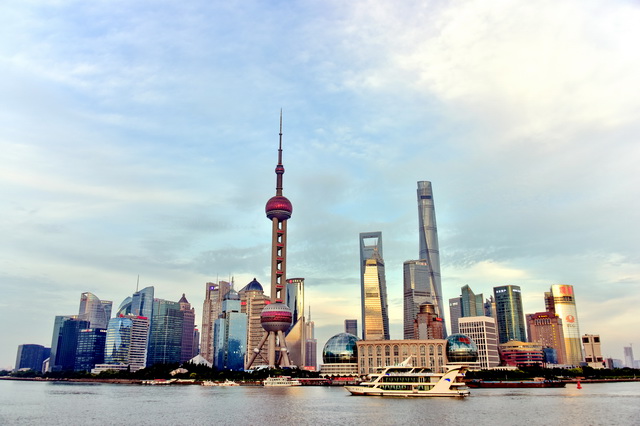
转型、服务、开放……上海国际航运中心建设迈向新阶段
Xin Hua Cai Jing· 2025-10-19 06:24
Core Viewpoint - Shanghai is making significant strides in becoming a global shipping center, focusing on sustainable development and digital transformation in the shipping industry, as evidenced by various initiatives and partnerships aimed at reducing carbon emissions and enhancing operational efficiency [1][2][10]. Group 1: Sustainable Development Initiatives - The shipping industry accounts for over 80% of global trade volume and contributes approximately 1 billion tons of CO2 emissions annually, representing 3% of global emissions [2]. - The International Maritime Organization (IMO) has set mandatory emission reduction targets for the shipping industry, requiring a 20% reduction in carbon emissions by 2030 compared to 2008 levels and aiming for net-zero emissions by around 2050 [2]. - Shanghai has introduced a development plan for its international shipping center, aiming to become a global leader in digital, intelligent, and green shipping by 2030 [2]. Group 2: Green Fuel Infrastructure - Shanghai Port is one of the few ports globally capable of supplying both green methanol and LNG, positioning itself advantageously in the green fuel supply chain [3]. - In the first half of 2025, Shanghai Port achieved a bonded LNG supply volume of 384,000 cubic meters, marking a 57.7% year-on-year increase, making it the leading port in China for LNG supply [3]. - The development of a stable and economically viable supply chain for green fuels is crucial for the further advancement of Shanghai's international shipping center [3]. Group 3: Smart Port Development - Shanghai Port is leading the innovation and practice of smart ports, with the automated terminal at Yangshan Phase IV entering full operation, projected to handle over 7 million TEUs in 2024 [4]. - The launch of an international container transport service platform has improved information access efficiency for shipping operations [4]. - Shanghai's smart port technologies have been successfully exported to international ports, enhancing global smart port operations [4]. Group 4: High-End Shipping Services - The North Bund area is developing a high-end shipping service ecosystem, with over 4,600 shipping enterprises established by the end of 2024 [6]. - The integration of legal services, arbitration, and financial services is crucial for enhancing Shanghai's competitiveness in the global shipping market [6][7]. - The establishment of the North Bund International Legal Service Port aims to strengthen Shanghai's influence in global shipping rule-making [7]. Group 5: International Collaboration - Shanghai is actively enhancing its international partnerships, including agreements with major global ports like HAROPA and Los Angeles, focusing on green and low-carbon initiatives [10]. - The city is fostering cooperation in green shipping, digital transformation, and maritime safety with international organizations [9]. - The establishment of a collaborative framework with the International Maritime Organization aims to promote greenhouse gas reduction in the shipping industry [11].