地中海·邻境

Search documents
200亿复星旅文 一举拿下14个度假地标
2 1 Shi Ji Jing Ji Bao Dao· 2025-11-29 00:25
Core Insights - Fosun Tourism Group has announced the development of 14 new projects, setting a record for contract signings, with locations in cities such as Guangzhou, Chongqing, and Hangzhou [1][8] - The company reported a revenue of 9.53 billion yuan and a net profit of 460 million yuan for the first half of the year, marking a historical high [1][20] - The CEO indicated that the company aims to return to the capital market in the future but is currently focused on expanding its scale and density [2][3] Business Strategy - Following privatization, the management team has re-evaluated the business strategy, deciding to exit marginal businesses and concentrate on the vacation sector [4] - The company has identified three core vacation product lines: Super Resorts, Super Vacation Zones, and Super Cultural Tourism Malls [5] - The Super Resorts aim to transform traditional scenic spots into comprehensive vacation destinations, while Super Vacation Zones will integrate various entertainment forms in tourist cities [5][6] Financial Performance - The company is projected to generate around 20 billion yuan in revenue for the entire year [2] - Atlantis in Sanya is reported to generate over 1.5 billion yuan annually, making it the highest-grossing single hotel in China [7] - The tourism operation revenue reached 10.2 billion yuan, contributing nearly all of the company's income, while property sales are decreasing [18] New Business Initiatives - The company is launching two new business lines: Mediterranean Neighbor and Mediterranean Daydream, focusing on urban micro-vacations and enhancing existing commercial properties [12][14] - The Mediterranean Neighbor targets hotel supply around 4A/5A scenic areas, with plans to open two new resorts in Xi'an and Hangzhou by next year [13] - The Mediterranean Daydream project in Chongqing will combine cultural tourism and shopping, with a total area of 500,000 square meters [14] Operational Changes - The company is transitioning to a light-asset model, reducing self-owned resorts and properties while increasing the proportion of leased and managed resorts [16][17] - The average daily room rate has risen to 2,021 yuan, reflecting improved operational efficiency [17] - The company has completed an 800 million euro syndicated loan to optimize its debt structure [19] Future Outlook - The company plans to open 100 Club Med resorts by 2035, with a focus on maintaining a balance between natural and cultural elements [11] - The CEO expressed confidence in the company's operational capabilities, aiming to enhance profitability as the light-asset strategy is implemented [20][21] - There are no immediate plans to introduce strategic investors for core assets like Atlantis and Club Med, as current returns are deemed satisfactory [23]
任命新总裁,75岁地中海俱乐部走向何方
第一财经· 2025-07-22 08:05
Core Viewpoint - The appointment of Stéphane Maquaire as the new CEO of Club Med is aimed at continuing the company's internationalization strategy while maintaining its French roots and core values [1][2]. Group 1: Leadership and Strategy - Stéphane Maquaire was recommended by former president Henri Giscard d'Estaing and has a strong background in high-end brand transformation and commercial real estate [1]. - The decision to retain the decision-making center in France reflects the company's commitment to its French heritage while expanding in international markets [1][2]. Group 2: Financial Performance - Since Fosun Group's acquisition in 2010, Club Med has invested nearly €800 million, with revenue increasing from €1.5 billion to €2.1 billion and operating profit growing over five times [2]. - Despite a slowing market economy, Club Med's revenue in China is projected to grow by 8.5% in 2024 compared to 2023, with significant increases during key holiday periods [3]. Group 3: Market Expansion - The number of Club Med resorts in China has grown from 0 to 11 since Fosun's investment, making China the second-largest source of guests globally [2]. - The company plans to expand its short-distance travel product line, aiming to increase the number of resorts from 6 to around 20 within five years [4]. Group 4: Customer Trends - Post-pandemic, Chinese consumers are increasingly focused on cost-effectiveness and quality, leading to a stronger market for high-quality resorts [3]. - The main sources of inbound tourists to Club Med in China include Hong Kong, Singapore, Malaysia, and Thailand, with a growing interest in culturally rich destinations [3]. Group 5: Future Plans - Club Med has no immediate plans for selling minority stakes or an IPO, indicating a focus on internal growth and expansion [5].


任命新总裁,75岁地中海俱乐部走向何方
Di Yi Cai Jing· 2025-07-22 06:49
Core Viewpoint - Despite a slowdown in market economic growth, Club Med's market share in China is experiencing growth, with revenue increasing by 8.5% compared to 2023 [1][4]. Group 1: Leadership Changes - Stéphane Maquaire has been appointed as the new President and CEO of Club Med, recommended by former President Henri Giscard d'Estaing [1]. - Maquaire has a strong background in high-end brand transformation and commercial real estate, previously serving as President and Executive Director of Carrefour Brazil and Latin America [1]. - The company emphasizes maintaining its French roots and core values while pursuing internationalization under Maquaire's leadership [1][2]. Group 2: Financial Performance - Since Fosun Group's acquisition in 2010, Club Med's total investment has reached nearly €800 million, with revenue growing from €1.5 billion to €2.1 billion and operating profit increasing over fivefold [2]. - In the Chinese market, guest numbers have surged from 20,000 to over 300,000, making it the second-largest source of customers globally for Club Med [2]. Group 3: Market Trends and Consumer Behavior - The Chinese market is showing resilience, with a 3% increase in revenue during the Spring Festival and a 15% increase during the May Day holiday [4]. - Pre-booking revenue for the second half of 2025 has increased by over 40% compared to 2024, with domestic and inbound markets seeing a 50% increase [4]. - Post-pandemic, Chinese consumers are focusing more on cost-effectiveness and quality, leading to a growing market for high-quality resorts [5]. Group 4: Expansion Plans - Club Med plans to expand its short-distance travel product line, aiming to increase the number of resorts from 6 to around 20 within five years, with a new resort opening in Hangzhou [6]. - Traditional all-inclusive resorts will continue to seek opportunities in Northeast China, Zhangjiakou, Xinjiang, and Hainan for new locations [6]. - There are currently no plans for selling minority stakes or an IPO in the short term [6].
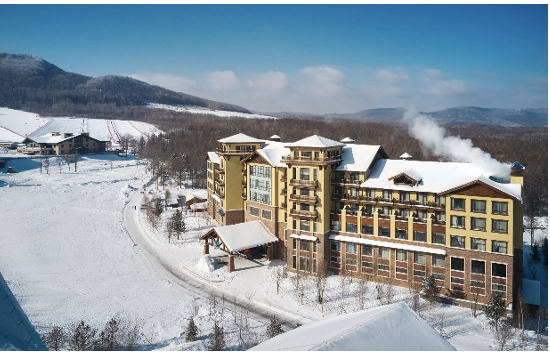
复星私有化Club Med十年:五大洲新增26个度假村
Zhong Guo Jin Rong Xin Xi Wang· 2025-07-02 12:02
Group 1 - The core viewpoint of the articles highlights the successful growth and expansion of Club Med under the ownership of Fosun International, marking its 75th anniversary and significant achievements in the global market [1][2] - Since Fosun's strategic investment in 2010, Club Med has added 26 resorts globally, with a notable increase in the Chinese market, where the number of resorts has grown from 0 in 2010 to 11 by 2024, and customer numbers surged from 20,000 to 310,000 [1] - Club Med operates nearly 70 resorts across 26 countries, receiving over 1.5 million guests annually and achieving an annual revenue exceeding €2 billion [1] Group 2 - Fosun International's co-CEO and chairman of Fosun Tourism, Xu Xiaoliang, expressed confidence in Club Med's unique business model and global potential, emphasizing the importance of integrating global resources and optimizing local operations for high-end transformation [2] - Club Med has enhanced its digital marketing and channels, achieving a global direct and semi-direct sales rate of 72% by leveraging digital experiences from the Chinese market [2] - The company has established 38 sun resorts globally and plans to introduce a luxury French sailing cruise product line to the Chinese market by 2025, catering to the growing demand for high-quality vacations [2] - In response to the Chinese market's characteristics of "more holidays, shorter time," Club Med has launched two new product lines focused on short-distance vacations, achieving an average occupancy rate of over 95% during the recent May Day holiday [2]