交通枢纽建设

Search documents
【新春走基层·欢乐闹新春】技术匠心筑就通途
Xin Lang Cai Jing· 2026-02-21 23:22
Core Viewpoint - The construction of the Xi'an East Station elevated expressway project is progressing efficiently, with continuous work during the Spring Festival to ensure timely completion and enhance regional transportation infrastructure [1][2]. Group 1: Project Overview - The Xi'an East Station elevated expressway project includes a 4.4-kilometer main bridge and 4.2 kilometers of access ramps, serving as a vital connection for the transportation hub [2]. - The project has successfully completed two major bridge rotation constructions within a month, marking significant milestones in the construction timeline [2]. Group 2: Economic Impact - The completion of the Xi'an East Station is expected to transform the transportation landscape of the southeastern area of Xi'an, improving connectivity between the high-speed rail station and the urban road network [2]. - The elevated expressway will significantly enhance passenger transportation efficiency and support industrial upgrades and urban renewal in surrounding areas [2]. Group 3: Commitment to Construction - The construction team, including experienced personnel, is dedicated to maintaining high safety and quality standards while working through the holiday period [1][2]. - The project management emphasizes the importance of continuous work during the Spring Festival as both a responsibility and a mission to support regional economic development [2].

呼之欲出的交通枢纽,长沙西站守站人春节里无声守护|新春走基层
Xin Lang Cai Jing· 2026-02-16 10:53
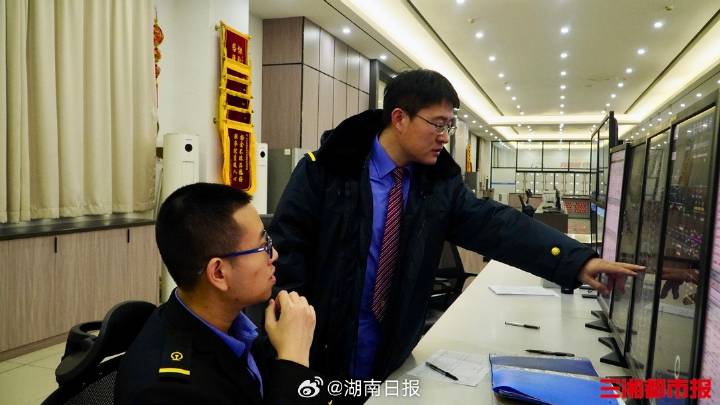
Core Viewpoint - The article highlights the dedication of railway workers, particularly the station master at Changsha West Station, who is committed to ensuring safety and operational efficiency during the construction of a major transportation hub, which is expected to serve 20 million passengers annually by 2027 [1][6]. Group 1: Station Operations and Responsibilities - Changsha West Station is a critical node in China's high-speed rail network, specifically in the "eight vertical and eight horizontal" framework, and is essential for the integration of the Changsha-Zhuzhou-Xiangtan area [3]. - Despite being under construction, the station continues to handle train operations, with increased pressure during the Spring Festival due to additional temporary trains [3][4]. - The station master, 彭嘉琪, is responsible for maintaining safety standards and coordinating between various departments to ensure the station's operational integrity [4][5]. Group 2: Safety Measures and Challenges - 彭嘉琪 actively identifies and rectifies safety hazards, having addressed 14 safety issues on frequently used tracks to enhance operational efficiency and safety [5]. - The station's construction environment poses challenges, requiring constant vigilance and coordination among different teams to ensure passenger safety [4][6]. - The station master conducts regular safety meetings and inspections to address potential risks, such as damaged protective barriers and signal issues [3][4]. Group 3: Personal Commitment and Future Outlook - 彭嘉琪's personal commitment is evident as he balances work responsibilities with family, reflecting the sacrifices made by railway workers during peak travel seasons [1][6]. - The completion of Changsha West Station is anticipated to significantly improve transportation capacity, with projections of handling 20 million passengers annually, showcasing the importance of this infrastructure project [6].

一座长三角枢纽城市,如何打通发展“任督二脉”?
Xin Lang Cai Jing· 2026-01-23 13:44
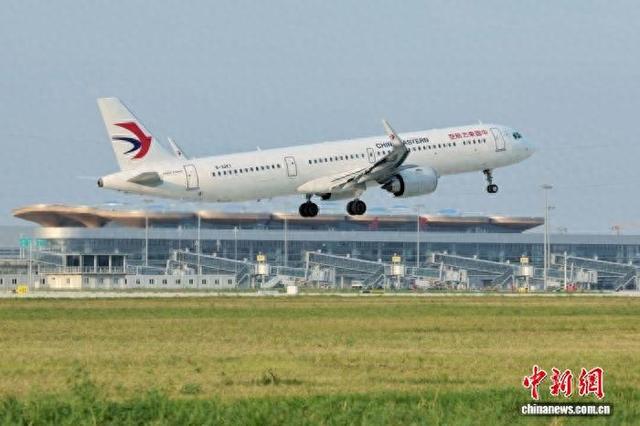
Core Viewpoint - The city of Jiaxing is accelerating the construction of a multi-modal transportation hub, integrating road, rail, water, and air transport, to enhance its connectivity and support its economic development within the Yangtze River Delta region [1][3][4]. Group 1: Transportation Infrastructure Development - Jiaxing aims to establish a high-level modern transportation system by 2025, focusing on creating three "half-hour transportation circles" and improving its overall transportation network service level [3]. - The city is constructing a comprehensive transportation framework, including the completion of the Jiaxing South Lake Airport and the ongoing construction of the Tongsujiaying High-speed Railway, which will enhance connectivity within the Yangtze River Delta [3][8]. - The Jiaxing Port has developed into a major hub for bulk and container transportation, with new shipping routes established during the 14th Five-Year Plan period [8][10]. Group 2: Economic and Industrial Implications - The transportation hub is seen as a critical support for Jiaxing's industrial structure upgrade, facilitating the integration of new industries such as artificial intelligence and digital economy into the global market [6][11]. - Jiaxing's strategic location at the geometric center of major cities like Shanghai, Hangzhou, Suzhou, and Ningbo provides it with natural advantages for trade and logistics, positioning it to attract more resources [4][5]. - The city is transitioning from a manufacturing hub to an innovation-driven economy, with a focus on nurturing new growth drivers and enhancing its industrial capabilities [3][6]. Group 3: Social and Community Impact - The development of the transportation hub is expected to improve the quality of life for residents, with projections indicating that by 2025, the per capita disposable income of rural residents in Jiaxing will reach 54,939 yuan, maintaining the highest level in Zhejiang province [12]. - The transportation infrastructure is also anticipated to boost local tourism, with an expected 82.165 million visitors and a total tourism revenue of 98.39 billion yuan by 2025 [12]. - The city is committed to ensuring that transportation development aligns with the goal of common prosperity, focusing on enhancing public services and supporting local businesses [13].
17号线望京西站为啥还不开通?
Bei Jing Wan Bao· 2026-01-14 07:03
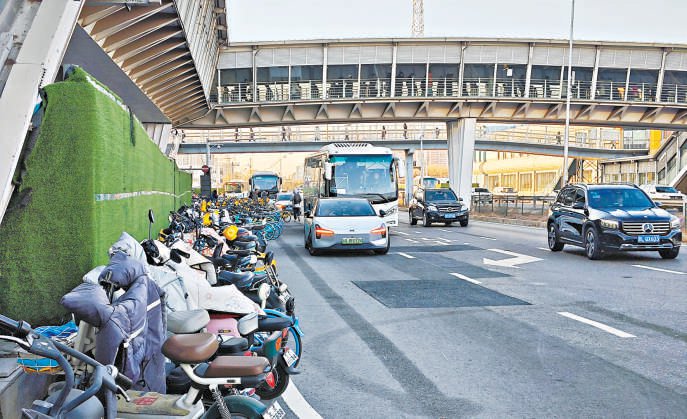
Group 1 - The core issue is the delay in the opening of the Wangjing West Station of the subway line 17, which is causing inconvenience for commuters who need to transfer to reach the Future Science City [3][4] - The Wangjing West Station has two entrances, but one is not operational due to the slow progress of the associated transportation hub construction, which is affecting the station's opening conditions [3][4] - The transportation hub was completed on June 30 of the previous year, but it has not opened due to issues with fire safety inspections related to the existing transfer passages for lines 13 and 15 [4][5] Group 2 - The construction of the underground transfer hall at Wangjing West Station is progressing slowly, which is intended to replace the existing transfer passage that has been criticized for its long walking time [4][5] - The complexity of the surrounding environment, including proximity to existing operational lines and high-pressure gas facilities, is contributing to the construction difficulties [5] - Relevant departments are actively coordinating to expedite the opening of the transportation hub and the associated subway station facilities [5]
合肥将再添一东西向交通枢纽
Xin Lang Cai Jing· 2026-01-05 16:39
Core Viewpoint - The construction of the G222 Hefei to Xiangyang Expressway segment from Feixi (Fengle) to Shucheng (Qianrenqiao) has recently undergone completion acceptance, which will enhance the east-west transportation hub in Hefei [1] Group 1: Project Overview - The project starts at the intersection of Fengle Town in Feixi County and G3 Jing-Tai Expressway, featuring a Fengle hub interchange for traffic conversion [1] - The total length of the route is 10.111 kilometers, designed for a speed of 120 kilometers per hour, with a roadbed width of 34.5 meters and constructed with asphalt concrete pavement [1] - The project includes two interchange overpasses and is built to a dual six-lane expressway standard, with bridge and culvert designs meeting Highway-I load standards [1] Group 2: Strategic Importance - This segment is a crucial part of the Anhui Province expressway network's "five vertical and ten horizontal" layout, aimed at connecting key national highway nodes and improving regional road network integration [1] - The completion of this project is expected to activate industries and tourism in the old areas, while also establishing benchmarks for railway supervision and construction [1] - It lays a solid foundation for the overall connectivity of the expressway and the collaboration between the Yangtze River Delta and the central-western regions [1]
京津冀“串门”更快了!北京通州站启用,至唐山最快55分钟
Xin Jing Bao· 2025-12-30 04:09
Core Points - Beijing Tongzhou Station officially opened on December 30, marking a significant milestone in the comprehensive transportation hub of Beijing's sub-center [1] - The opening of the station signifies the full operation of the Beijing-Tangshan Intercity Railway [1] Summary by Categories Infrastructure Development - The opening of Beijing Tongzhou Station is a crucial component of the city's infrastructure development, enhancing connectivity within the region [1] Transportation Network - The full operation of the Beijing-Tangshan Intercity Railway is expected to improve transportation efficiency and accessibility for commuters [1]
合肥西站开通在即 前往京港更便捷
Xin Lang Cai Jing· 2025-12-25 17:23
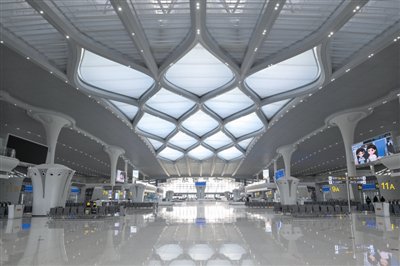
Core Viewpoint - Hefei West Station has passed safety assessments and is expected to officially open by the end of the year, enhancing the regional transportation network and connectivity in Hefei [2] Group 1: Infrastructure and Connectivity - Hefei West Station is a key component of the Beijing-Hong Kong high-speed rail corridor and will connect with 13 lines, including the Shougan-Hangzhou, Hefei-Anhui, and Hefei-Fuzhou lines, filling a significant gap in the Hefei West area [2] - The station features a building area of 80,000 square meters and a scale of 8 platforms and 18 tracks, designed to facilitate efficient transportation flow between the hub and the city [2][3] - The station will integrate with urban rail lines 3, 10, and S1, as well as existing freight rail lines, creating a multi-layered transportation system [3] Group 2: Design and Aesthetics - The station's exterior design incorporates parametric design elements inspired by the water features of Chaohu Lake, enhancing its dynamic visual appeal [4] - The interior design reflects themes of the lake and technology, featuring elements like water droplets and chips, which highlight the cultural and modern spirit of the region [4] - The station includes a large "water droplet skylight" of 10,400 square meters, designed for natural lighting and cultural representation, contributing to the city's skyline [4] Group 3: Economic Impact - Once operational, Hefei West Station will create high-speed rail corridors to northern, southern, and northeastern directions, improving accessibility to major economic regions such as Beijing-Tianjin-Hebei, Pearl River Delta, and Shandong Peninsula [4] - The station is expected to significantly enhance local transportation efficiency, making travel within the city and to surrounding economic zones more convenient [4]
通苏嘉甬高铁张家港东站房首桩顺利开钻
Yang Zi Wan Bao Wang· 2025-12-09 14:44
Core Viewpoint - The construction of the Zhangjiagang East Station project, part of the Nantong to Ningbo high-speed railway, has officially entered a substantial construction phase with the successful drilling of the first engineering pile [1] Group 1: Project Details - The East Station building will cover an area of approximately 20,000 square meters, with an additional 12,000 square meters allocated for an underground parking lot and 1,400 square meters for the main structure of the rail transit [1] - The design concept of the East Station is inspired by "cloud sails navigating the vast sea," complementing the West Station's theme of "bravely standing at the forefront, welcoming distant sails" [1] - The station will feature a dual-layer drop-off and boarding system, with the underground level reserved for future metro extensions and the first underground level housing the exit hall, distribution hall, and parking [1] Group 2: Connectivity and Infrastructure - An underground passage will effectively connect the East and West station buildings, utilizing space under the bridge to create dedicated transfer corridors for seamless integration of various transportation modes [1] - The East Station is expected to be completed by the end of 2027, in sync with the Tong-Su-Jia-Ning railway, and will add 1,738 social parking spaces to meet passenger parking needs once surrounding municipal infrastructure is completed [1]
全国首例!西安东站主体结构封顶 这座超级枢纽长这样
Yang Shi Xin Wen· 2025-10-27 09:26
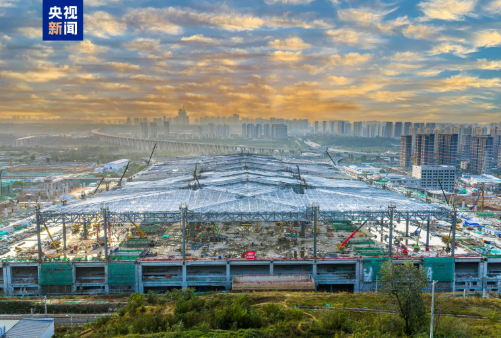
Core Insights - The completion of the main structure of Xi'an East Station marks a significant milestone in the construction of a key transportation hub in Northwest China [1] - The station is designed to accommodate various transportation modes, including high-speed rail, conventional rail, metro, and bus, facilitating seamless connections [3] Group 1 - Xi'an East Station has a total construction area of 394,000 square meters, featuring 13 platforms and 27 tracks, with provisions for intercity connections [3] - The expected annual passenger throughput after the station becomes operational is projected to exceed 36.5 million, serving as a crucial engine to alleviate passenger flow pressure in the Xi'an railway hub [3] Group 2 - The station's roof design incorporates the first-ever ridge combination style spatial truss structure in the country, presenting unique visual effects and high construction challenges [5] - The construction team developed a zone-lifting plan that improved overall construction efficiency by nearly 30% through precise segmental hoisting and assembly [5]
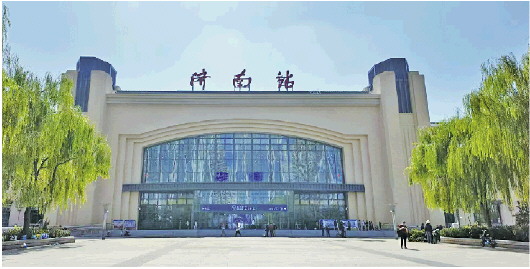
百年济南火车站迈入“双向进出”时代
Qi Lu Wan Bao· 2025-09-25 22:16
Core Viewpoint - The newly constructed North Station building of Jinan Railway Station will significantly enhance passenger travel convenience by implementing a "south-north dual-direction entry and exit" model, addressing the increasing traffic demands of the city [2][3] Group 1: Infrastructure and Design - The North Station building, located on the north side of Jinan Station, has a total construction area of 41,995 square meters, with a height of 28.2 meters and a structure comprising one underground and two above-ground levels [2] - The North Station features a main entry on the first floor and an underground entry, with 8 platforms and 11 tracks operational from the start [2] Group 2: Transportation Connectivity - Six bus routes connect to the North Square, including the newly launched 778 route, which links major tourist attractions like Daming Lake and Baotu Spring [3] - The second metro line's "Jinan Station North" stop has been opened, allowing for seamless access from the subway to the train station [3] Group 3: Project Development and Impact - The project was approved in 2020 by the National Railway Group and the Shandong Provincial Government, with significant attention and coordination from the Jinan Urban and Rural Transportation Bureau to address construction needs and challenges [3] - The North Station is expected to serve as a "new engine" for Jinan, enhancing the city's internal transportation network and solidifying its position in the national railway framework [3]