天猫养车

Search documents
大厂“爱”上车,“野蛮人”还是“送水人”?
3 6 Ke· 2025-11-11 07:52
Core Insights - The article highlights the aggressive entry of major internet companies into the automotive industry, particularly in the electric vehicle (EV) sector, as they seek to capitalize on the growing market opportunities presented by the shift towards new energy and smart vehicles [1][7][12] Group 1: Market Dynamics - Aion UT Super, a new energy vehicle, has topped JD.com's sales rankings during the Double Eleven shopping festival, showcasing the potential of low-cost EVs with battery rental options [1] - Major internet firms like Alibaba, Tencent, and Baidu are expanding their presence in the automotive sector, focusing on various aspects such as production, sales, maintenance, and mobility services [1][7] - The penetration rate of new energy vehicles in China reached 58.7% by October 2025, a significant increase from 20% three years prior, indicating a shift from niche to mainstream adoption [7] Group 2: Strategic Collaborations - Alibaba's strategic partnership with Shanzi Gaoke aims to explore new retail models for smart vehicle customization, with the first project, the V17 model, already in testing [4][6] - Alibaba has been investing in the automotive sector since 2014, establishing a comprehensive O2O service model for car sales, and has made significant investments in companies like Xpeng Motors and partnerships with SAIC [6][12] Group 3: Technological Integration - The automotive industry is transitioning from mechanical products to smart terminals, with AI, big data, and cloud computing being core strengths of internet companies, facilitating cross-industry collaborations [9][10] - Baidu's autonomous driving service, "Luobo Kuaipao," has completed over 17 million rides globally, demonstrating the potential of turning vehicles into "mobile smart spaces" [9] - Meituan's self-developed delivery vehicle, equipped with L4-level autonomous driving capabilities, enhances delivery efficiency while collecting valuable real-world data for technology iteration [9] Group 4: Ecosystem Development - Internet companies are seeking a second growth curve as traditional business growth slows, with the automotive industry's smart transformation providing a new direction for expansion [12] - JD.com focuses on leveraging its retail and logistics strengths to enhance car sales and usage, while Alibaba aims to integrate automotive services into a broader lifestyle ecosystem [12][13] - The competition among internet giants in the automotive ecosystem is not about replacing traditional automakers but rather reshaping the industry's value distribution and encouraging a shift towards an ecosystem mindset [13]


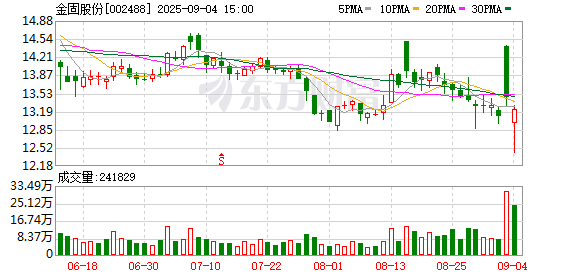
金固股份:公司子公司特维轮网络间接持有天猫养车9.855%股权,是第二大股东
Mei Ri Jing Ji Xin Wen· 2025-09-04 13:15
Group 1 - Alibaba's stock in Hong Kong is experiencing significant growth, attracting investor interest [2] - Tmall Auto, a subsidiary of Alibaba, is performing well and is expanding its operations through AI-driven site selection [2] - Alibaba Investment Limited is the largest shareholder of Tmall Auto, while its subsidiary, Tewei Lun Network, holds a 9.855% stake, making it the second-largest shareholder [2]

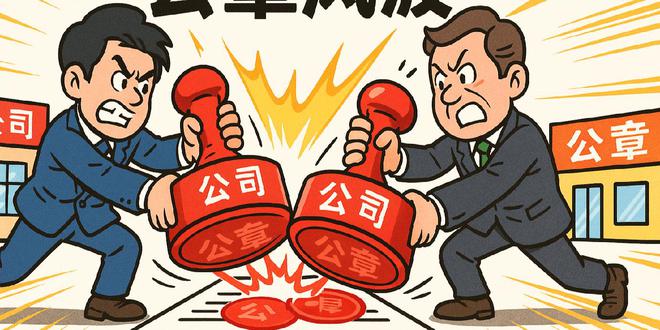
“公章事件”再现,天猫养车高管内斗升级
Jing Ji Guan Cha Bao· 2025-05-21 03:23
Core Points - A conflict has arisen within the automotive service industry involving Tianmao Yangche, centered around the legitimacy of executive dismissals and authority over company representation [2][5][8] - The dispute highlights the importance of legal representation and authority in corporate governance, particularly regarding the use of company seals and management rights [9] Group 1: Incident Overview - On May 19, a statement was circulated claiming the dismissal of three executives, citing unauthorized positions and management over Tianmao Yangche [2][5] - The following day, a counter-statement was issued, declaring the previous dismissal announcement invalid and alleging illegal actions by the individuals who made the announcement [5][6] Group 2: Company Structure and Governance - The focus of the conflict is not merely about job positions but rather about who has the legal authority to represent Tianmao Yangche and exercise management rights [9] - The governance structure of the company is complex, with overlapping control and ownership, making the delineation of authority unclear [9] - Jiangsu Kangzhong Auto Parts Co., Ltd. is a key operational entity behind the Tianmao Yangche platform, with significant investments from various financial institutions [9][11] Group 3: Key Individuals - Luo Fangye, Huang Jianliang, and Wu Wangyang are identified as directors of Jiangsu Kangzhong Auto Parts Co., Ltd., while Cai Yongzhi serves as the legal representative of Hangzhou Tianmao Chezhang Technology Co., Ltd. [11]