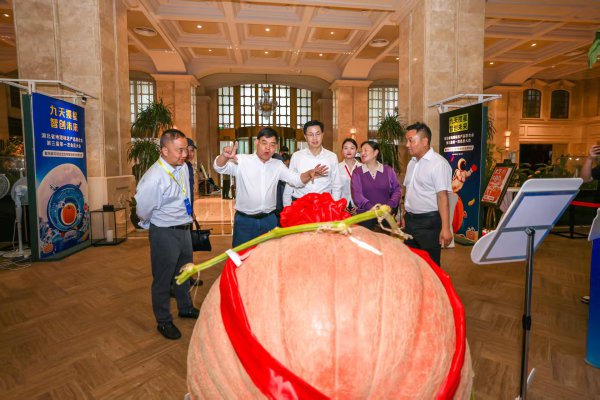
太空南瓜

Search documents
中外网友“大对账”,对到了菜市场
Xin Lang Cai Jing· 2026-02-14 06:12
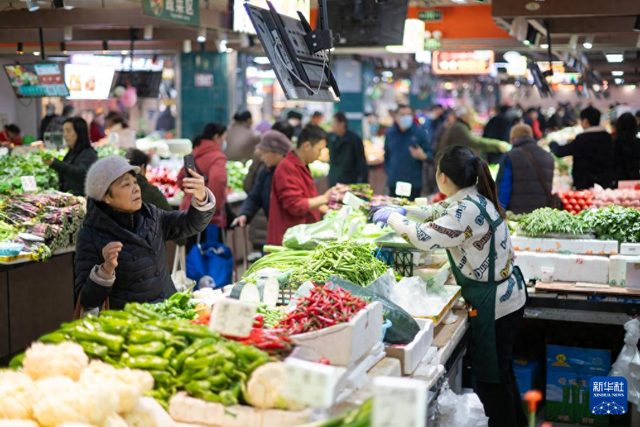
Core Viewpoint - The article highlights the stark contrast in fruit and vegetable availability between China and several Western countries, emphasizing China's successful agricultural policies and practices that ensure year-round supply of diverse produce [3][10]. Group 1: Agricultural Policies and Achievements - China's "vegetable basket" project, initiated in 1988, has significantly improved the supply of vegetables, meat, and dairy, leading to increased farmer incomes and a stable supply chain [6][7]. - In 2023, the average per capita vegetable consumption in China reached 588 kilograms, with vegetable cultivation area consistently exceeding 300 million mu, maintaining the world's largest scale [3][10]. - China is the world's largest producer and consumer of fruits, with a total fruit production of 335 million tons and consumption of 328 million tons in 2024, far exceeding the global average per capita fruit consumption [3][10]. Group 2: Technological Advancements and Infrastructure - The use of advanced technology in agricultural practices, such as smart systems for monitoring soil conditions and automated irrigation, has transformed traditional greenhouses into intelligent "cloud greenhouses" [9]. - The establishment of a comprehensive cold chain logistics system facilitates the efficient transportation of produce across regions, ensuring fresh vegetables reach consumers quickly [9][10]. - China's focus on seed breeding has led to a domestic seed market share exceeding 91%, contributing to the diversity and quality of produce available [9][10]. Group 3: Global Context and Comparisons - In contrast to China's agricultural success, several Western countries face challenges such as adverse weather conditions and rising energy costs, leading to reduced vegetable production and supply shortages [3][6]. - Reports from the UK, South Korea, and Australia indicate significant vegetable shortages due to various factors, highlighting the effectiveness of China's agricultural policies in maintaining a stable supply [3][6].

全球首个地面可视太空生物智能舱在汉亮相
Chang Jiang Ri Bao· 2025-06-22 07:13
Core Insights - The event showcased the world's first ground-visible space biological intelligent cabin developed by the Wuhan Space Agriculture Research Institute, along with innovative space agriculture products such as a 1,090-pound space pumpkin and space eggplant trees [1][7] Group 1: Space Breeding Technology - Space breeding, also known as space mutation breeding, involves sending crop seeds or seedlings to space to induce mutations through unique conditions such as high vacuum, cosmic radiation, and magnetic fields, leading to the development of new crop varieties [3] - The intelligent cabin utilizes various automatic control technologies to manage light, temperature, humidity, pressure, and artificial gravity, allowing real-time monitoring of plant growth from the ground [3][5] Group 2: Future Applications and Efficiency - The ultimate goal of the intelligent cabin is to achieve a full lifecycle cultivation of plants in space, from seed germination to maturity [5] - The intelligent cabin is expected to address multiple industry pain points, significantly enhance breeding efficiency, and reduce the breeding cycle compared to traditional methods that rely on Shenzhou spacecraft [5] - The research institute has successfully cultivated new varieties of staple crops, vegetables, and flowers, with plans to expand applications to aquaculture and biopharmaceuticals [5][7] Group 3: Achievements and Impact - The space pumpkin, weighing 1,090 pounds, was cultivated from seeds that underwent a space journey and three generations of selection, demonstrating the potential of space breeding [7] - The institute has also developed new varieties of rice, corn, rapeseed, and wheat, contributing to farmers' income and rural revitalization efforts across various regions [7]