太空计算中心

Search documents
“基建狂魔”,要上太空了!
Jing Ji Ri Bao· 2026-02-02 08:01
Core Viewpoint - The China Aerospace Science and Technology Corporation has unveiled a new blueprint for the "14th Five-Year Plan," focusing on the development of space tourism, smart space infrastructure, space resource development, and space traffic management, marking a significant shift in infrastructure development towards space [1] Group 1: Security Perspective - Space is considered a "high frontier" for national security, with approximately 15,000 satellites in orbit globally, over half of which are owned by the United States [2] - The increasing congestion in low Earth orbit raises collision risks, necessitating the establishment of a space traffic management system to ensure safety [2] - Developing key technologies for space debris monitoring, early warning, and removal is crucial for securing China's position in international space traffic management rules [2] Group 2: Economic Perspective - The global space economy is projected to reach approximately $600 billion in 2024, with forecasts suggesting it could grow to $1.8 trillion by 2035 [2] - Space resource development, including mining on the Moon and asteroids, is expected to turn the concept of "space mining" into reality, driven by the rich resources available beyond Earth [2] - Building gigawatt-level smart space infrastructure is essential for unleashing space-based productivity and accelerating the development of the space economy [2] - Space tourism is anticipated to emerge as a new engine for consumer spending [2] Group 3: Current Capabilities - China has established a solid foundation for advancing space infrastructure, with significant technological advancements in satellite navigation and space computing [3] - Successful return of lunar soil samples and breakthroughs in 3D metal printing in microgravity demonstrate China's growing capabilities in space technology [3] - The development of reusable rockets is entering a verification phase, which is expected to significantly reduce launch costs [3] - Favorable policies, such as the establishment of a commercial space administration and initiatives to promote the utilization of commercial satellite data, are emerging [3] Group 4: Challenges Ahead - Technical challenges remain, particularly in the maturity of reusable rocket technology and the need for breakthroughs in key areas such as resource exploration and autonomous mining [4] - There is a significant regulatory gap in international space law, with existing treaties not adequately addressing current commercial space activities [4] - High capital risks associated with commercial space ventures necessitate a layered approach to investment, breaking down operations into independently profitable modules to lower entry barriers for private capital [4]
王忠民:太空建计算中心,靠太阳能供电,实现AI时代终极ESG
Xin Lang Cai Jing· 2026-01-15 07:01
Core Viewpoint - The 2026 Global and China Capital Market Outlook Forum was held on January 15, focusing on the new logic of wealth in the AI era and the future of capital markets [1][4]. Group 1 - Wang Zhongmin, former vice chairman of the National Social Security Fund Council, delivered a keynote speech emphasizing the importance of space as a computing center due to its efficient use of solar energy and potential for discovering materials from other celestial bodies [1][4]. - The discussion highlighted the role of space in data transmission, marking a new era of AI applications driven by ESG (Environmental, Social, and Governance) principles [1][4].



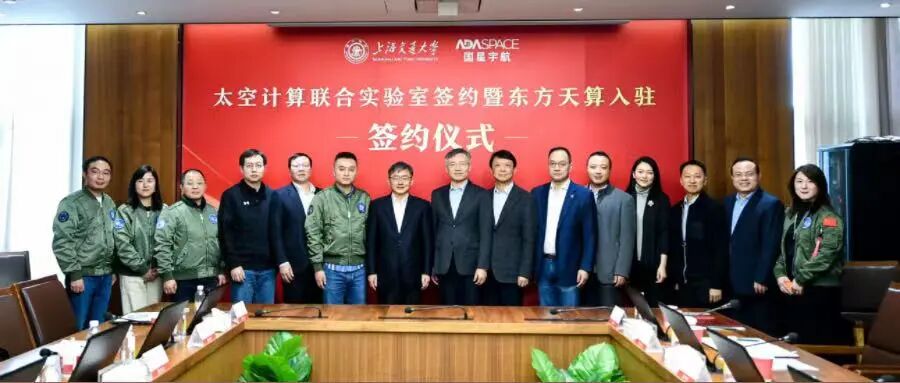
太空算力,上海出手了
Xin Lang Cai Jing· 2025-12-12 14:14
Core Viewpoint - The establishment of China's first space computing joint laboratory by Shanghai Jiao Tong University and Guoxing Aerospace marks a significant step in advancing the country's autonomous space computing capabilities, amidst a global race for space-based AI infrastructure [2][4][12]. Group 1: Ground Computing Limitations - Ground-based data centers are reaching their energy and scale limits, with global data center electricity consumption projected to reach 415 terawatt-hours in 2024, accounting for approximately 1.5% of total global electricity usage [2][12]. - The demand for computing power is expected to expand significantly, with predictions indicating that global computing capacity will increase by over 70 times in the next decade [2][12]. - Countries and companies are increasingly looking to space for new computing supply directions, leveraging natural advantages such as cold sources and abundant solar radiation [2][12]. Group 2: Collaboration Between Academia and Industry - On December 12, Shanghai Jiao Tong University and Guoxing Aerospace signed an agreement to establish the first domestic space computing joint laboratory, supported by the Shanghai Municipal Science and Technology Commission [4][14]. - The collaboration will focus on key areas such as the development of autonomous space computing chips, satellite robotics for in-orbit maintenance, and in-orbit additive manufacturing [6][16]. - The establishment of the joint laboratory and the industrial platform, Dongfang Tiancan Company, aims to bridge the gap between research and engineering applications, positioning Shanghai as a leader in the space computing sector [6][16]. Group 3: Technological Advancements - Guoxing Aerospace has achieved significant milestones in space AI, including the world's first deployment of a universal large model in orbit, as disclosed by academician Wang Jian at a conference [7][17]. - The development of China's space computing capabilities follows a clear "three-step" strategy, with key milestones achieved ahead of international events, including the launch of the first AI large model scientific satellite in September 2024 [9][19]. - By May 2025, Guoxing Aerospace successfully launched the world's first 5POPS-level in-orbit computing cluster, establishing itself as a global leader in this field [9][19]. Group 4: Conclusion on Space Computing Leadership - The collaboration between Shanghai Jiao Tong University and Guoxing Aerospace represents a shift from conceptual planning to practical implementation in the space computing arena, contrasting with the more theoretical approaches of international competitors [11][21]. - This partnership not only fills gaps in China's autonomous space computing landscape but also positions the country as a leading practitioner on the global stage [11][21]. - The future landscape of computing is set to be significantly influenced by China's advancements in space-based solutions, with ongoing developments accelerating the realization of these technologies [11][21].