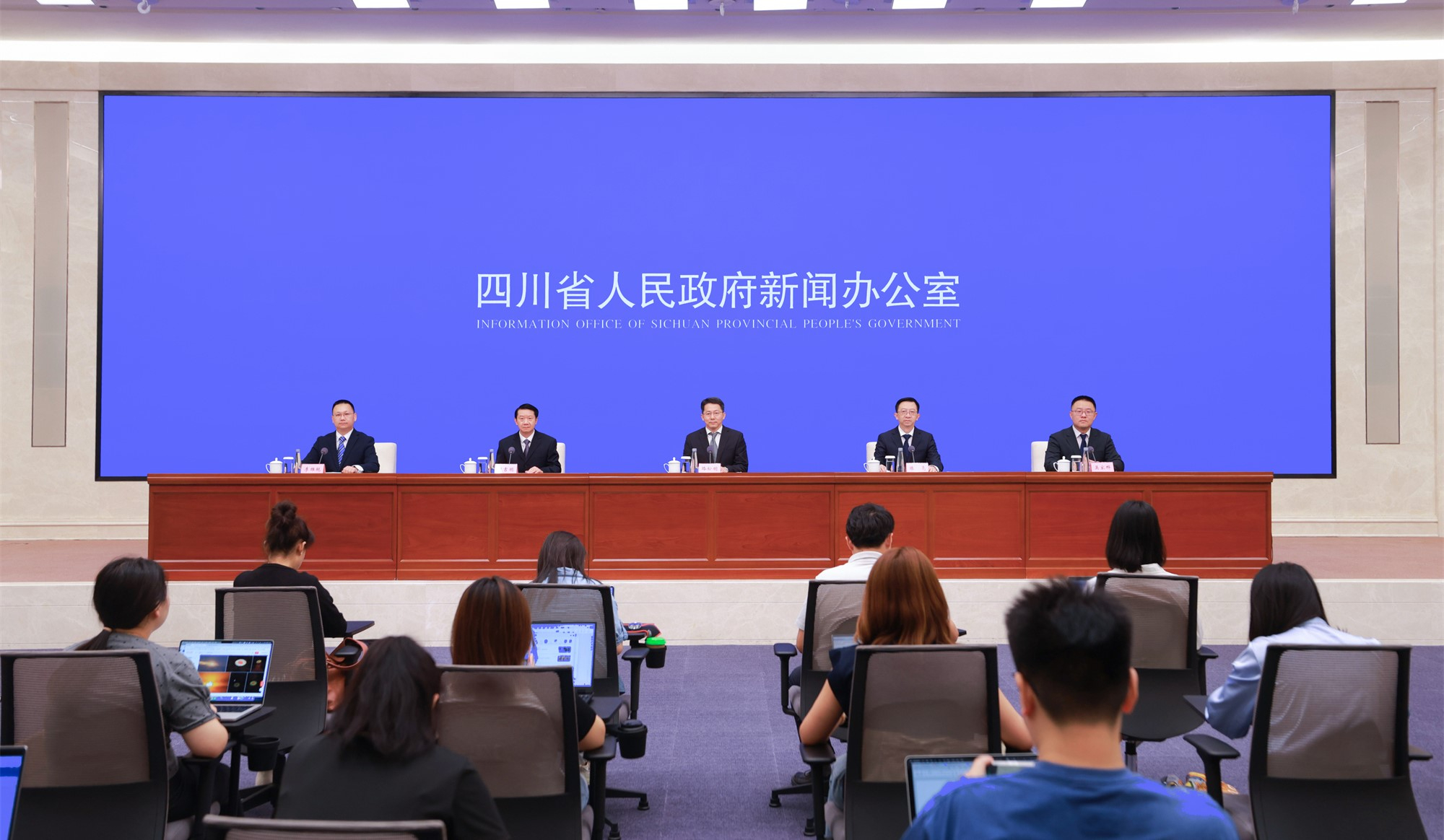
AI大模型科学卫星

Search documents
太空算力,上海出手了
Xin Lang Cai Jing· 2025-12-12 14:14
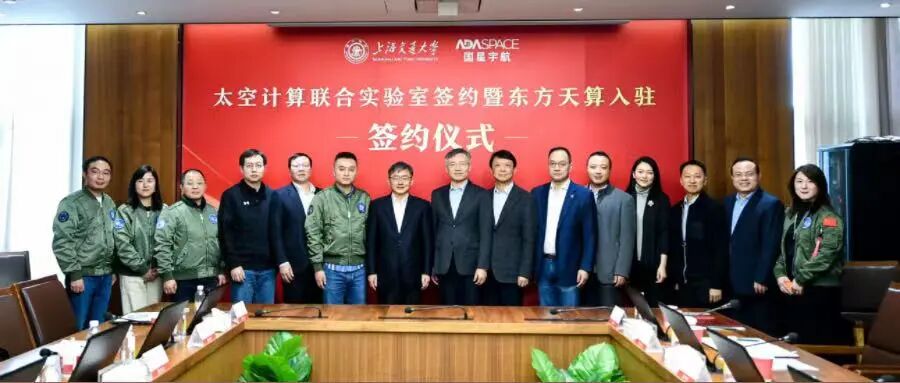
Core Viewpoint - The establishment of China's first space computing joint laboratory by Shanghai Jiao Tong University and Guoxing Aerospace marks a significant step in advancing the country's autonomous space computing capabilities, amidst a global race for space-based AI infrastructure [2][4][12]. Group 1: Ground Computing Limitations - Ground-based data centers are reaching their energy and scale limits, with global data center electricity consumption projected to reach 415 terawatt-hours in 2024, accounting for approximately 1.5% of total global electricity usage [2][12]. - The demand for computing power is expected to expand significantly, with predictions indicating that global computing capacity will increase by over 70 times in the next decade [2][12]. - Countries and companies are increasingly looking to space for new computing supply directions, leveraging natural advantages such as cold sources and abundant solar radiation [2][12]. Group 2: Collaboration Between Academia and Industry - On December 12, Shanghai Jiao Tong University and Guoxing Aerospace signed an agreement to establish the first domestic space computing joint laboratory, supported by the Shanghai Municipal Science and Technology Commission [4][14]. - The collaboration will focus on key areas such as the development of autonomous space computing chips, satellite robotics for in-orbit maintenance, and in-orbit additive manufacturing [6][16]. - The establishment of the joint laboratory and the industrial platform, Dongfang Tiancan Company, aims to bridge the gap between research and engineering applications, positioning Shanghai as a leader in the space computing sector [6][16]. Group 3: Technological Advancements - Guoxing Aerospace has achieved significant milestones in space AI, including the world's first deployment of a universal large model in orbit, as disclosed by academician Wang Jian at a conference [7][17]. - The development of China's space computing capabilities follows a clear "three-step" strategy, with key milestones achieved ahead of international events, including the launch of the first AI large model scientific satellite in September 2024 [9][19]. - By May 2025, Guoxing Aerospace successfully launched the world's first 5POPS-level in-orbit computing cluster, establishing itself as a global leader in this field [9][19]. Group 4: Conclusion on Space Computing Leadership - The collaboration between Shanghai Jiao Tong University and Guoxing Aerospace represents a shift from conceptual planning to practical implementation in the space computing arena, contrasting with the more theoretical approaches of international competitors [11][21]. - This partnership not only fills gaps in China's autonomous space computing landscape but also positions the country as a leading practitioner on the global stage [11][21]. - The future landscape of computing is set to be significantly influenced by China's advancements in space-based solutions, with ongoing developments accelerating the realization of these technologies [11][21].

向新而行 激活发展新动能
Si Chuan Ri Bao· 2025-11-23 23:01
Group 1 - The high-altitude cosmic ray observatory "Lasso" in Ganzi Prefecture has confirmed that black holes act as "super particle accelerators," solving a 70-year mystery regarding cosmic ray "knee" formation [2] - Sichuan has implemented a frontier technology breakthrough plan over the past five years, focusing on key core technologies to promote deep integration of technological and industrial innovation [3] - The province has laid out 102 major technology projects, supporting leading enterprises to form high-level innovation consortia to tackle significant technological challenges [3] Group 2 - Sichuan's R&D expenditure is expected to reach 150 billion yuan in 2024, representing a growth of over 40% compared to 2020 [3] - The province is undergoing a transformation from mid-stage to late-stage industrialization, with over 70% of its economy based on traditional industries, and a digital transformation coverage rate of 45.5% among industrial enterprises [3] - The biopharmaceutical sector in Sichuan is projected to exceed 200 billion yuan in scale by 2024, with nearly 300 new drug approvals in the past year, marking a 66% increase [3] Group 3 - Sichuan is actively developing future industries such as 6G, quantum technology, and the metaverse, showcasing its commitment to innovation [3] - The establishment of the Sichuan Artificial Intelligence Academy reflects a collaborative model between government, academia, and industry to foster talent and innovation in AI [3] - A series of reforms aimed at enhancing the rights of scientific achievements and improving the evaluation of scientific talent are being implemented to stimulate research and development [3]
创新成果闪耀世界 四川建设西部创新高地迈出坚实步伐
Zhong Guo Fa Zhan Wang· 2025-09-26 09:37
Core Insights - Sichuan Province is making significant strides in establishing itself as an innovation hub in Western China during the "14th Five-Year Plan" period, focusing on innovation-driven development strategies [2] Group 1: Comprehensive Innovation Capability - R&D expenditure in Sichuan is expected to reach approximately 150 billion yuan, a growth of over 40% compared to 2020, with basic research funding accounting for an estimated 6.5% of total R&D spending [3] - The province has seen a substantial increase in high-value invention patents, with a per capita ownership rate of 7.94 patents, which is 2.7 times that of 2020 [3] - The transaction volume of technology contracts has surpassed 260 billion yuan, doubling since 2020 [3] Group 2: Growth of High-tech Industries - The revenue from high-tech industries in Sichuan has increased from 31.9% to 40.9% of the total industrial output, marking a 9 percentage point rise [4] - Emerging industries such as artificial intelligence, biotechnology, and nuclear technology applications are projected to grow by over 20% in added value in 2024 [4] Group 3: High-level Innovation Platforms - The number of national-level innovation platforms in Sichuan has increased to 205, including the only national laboratory in Western China and 28 national key laboratories [5] - Major scientific facilities are being developed, including 10 national large scientific devices, with significant breakthroughs in various research areas [5] Group 4: Breakthroughs in Key Technologies - In aerospace, Sichuan has successfully completed major national projects and launched the world's first AI large model scientific satellite [6] - In the electronic information sector, significant advancements have been made in integrated circuits and software security, including the release of the first international gallium nitride quantum light source chip [6] - The biopharmaceutical sector has seen the approval of the first domestic TROP2 antibody-drug conjugate and the world's first trivalent COVID-19 vaccine for emergency use [6] Group 5: Innovation Entity Vitality - The number of high-tech enterprises in Sichuan has reached 19,000, a 2.4-fold increase since 2020, with a significant rise in technology-based SMEs [8] - Corporate R&D spending has increased by 58.4% compared to 2020, highlighting the strengthening of enterprises' roles in innovation [8] Group 6: Talent Development - Sichuan has implemented open talent policies, with the number of academicians reaching 67 and R&D personnel exceeding 400,000 [9] - The province has established a comprehensive talent service system, making it a key area for high-level talent innovation and entrepreneurship [9] Group 7: Regional Collaborative Innovation - Sichuan and Chongqing are jointly building the Western Science City and have established 11 joint key laboratories, enhancing collaborative innovation efforts [10] - Chengdu and Mianyang are positioned as major innovation engines, with Chengdu ranking 24th globally among tech clusters [10]