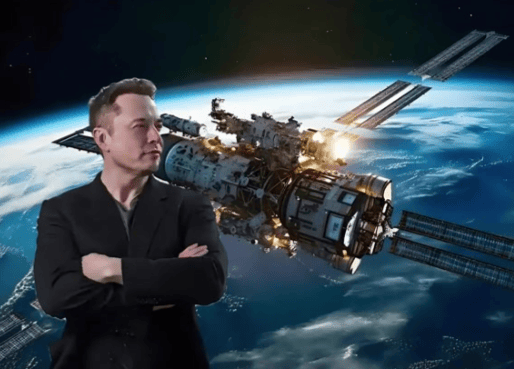
太空AI

Search documents
电力设备及新能源周报20260329:SpaceX拟1.75万亿估值IPO,2026年国网输变电设备1批中标公示
Guolian Minsheng Securities· 2026-03-29 07:50
Investment Rating - The report maintains a "Buy" rating for key companies in the electric equipment and new energy sectors, including CATL, Keda, and others [6][7]. Core Insights - The electric equipment and new energy sector saw a slight increase of 0.05% in the past week, outperforming the Shanghai Composite Index. Wind power indices showed the highest growth at 4.33%, while solar energy indices experienced the largest decline at 3.79% [1]. - Xiaomi's new generation SU7 electric vehicle was launched with strong market demand, achieving over 30,000 pre-orders within 72 hours. The vehicle features significant technological upgrades and competitive pricing [2][14]. - SpaceX's launch of a mini AI satellite with a power output of 100kW is expected to create a surge in demand for high-power, lightweight photovoltaic components, particularly P-type HJT batteries [3][39]. - The State Grid's recent tender for transmission and transformation equipment totaled 9.834 billion yuan, with major contracts awarded to companies like China West Electric and Siyi Electric [4][55]. Summary by Sections New Energy Vehicles - Xiaomi's SU7 was launched on March 19, 2026, with three versions priced at 219,900 yuan, 249,900 yuan, and 303,900 yuan. The vehicle features over 100 technical upgrades and a minimal price increase of 4,000 yuan [2][14]. - The vehicle's intelligent features include full standard configurations such as laser radar and advanced computing capabilities, marking a shift to a cognitive-driven approach in smart driving [16][18]. New Energy Generation - SpaceX's AI satellite launch is projected to drive demand for lightweight and radiation-resistant photovoltaic components, with plans to deploy 1 million satellites in the future [3][39]. - The P-type HJT battery technology is highlighted as a key solution for the anticipated large-scale deployment of satellites, with significant cost advantages over traditional solar batteries [41][42]. Electric Equipment and Automation - The State Grid's tender for transmission and transformation equipment reached 9.834 billion yuan, with the top three categories being switchgear, transformers, and power cables [4][55]. - The report indicates a robust demand for electric equipment, with significant contracts awarded to leading companies in the sector [4][55]. Commercial Aerospace - SpaceX is preparing for an IPO with a target valuation of approximately 1.75 trillion USD, aiming to raise between 50 billion to 75 billion USD [5]. - The establishment of China's first commercial aerospace "star alliance" in Wuxi aims to enhance satellite network efficiency and support economic development [5]. Market Trends - The electric equipment and new energy sector's performance is closely tied to market demand and technological advancements, with a focus on sustainable growth and innovation [1][28].




老黄太疯狂,英伟达要把AI算力送上天,连马斯克都坐不住了
3 6 Ke· 2026-03-24 00:27
Core Insights - NVIDIA is accelerating its "Space AI" initiative, aiming to deploy AI capabilities in space, with the Thor chip already certified for radiation resistance and the development of the NVIDIA Space-1 Vera Rubin space computer underway [1][5][7] Group 1: NVIDIA's Space AI Initiative - NVIDIA's CEO Jensen Huang announced the launch of multiple AI chips and systems at the GTC conference, including plans for AI in space [1] - The Thor chip, designed for high-performance computing, is being adapted for space applications, having passed radiation tests [5][7] - The Starcloud-1 satellite, equipped with NVIDIA's H100 GPU, successfully demonstrated the operation of a large model in space, boosting NVIDIA's confidence in its Space AI plans [3][5] Group 2: Advantages and Challenges of Space AI - Space AI can utilize continuous solar energy due to the lack of atmospheric interference, allowing for uninterrupted power supply [8][10] - Thermal management in space is more efficient due to the extreme cold of space, although challenges remain regarding heat dissipation methods [10][11] - The maintenance of space equipment is nearly impossible, necessitating high redundancy in design, which increases costs [11] Group 3: Potential Applications of Space AI - AI in space could transform satellite functions from merely transmitting data to processing and sending conclusions back to Earth, enhancing communication efficiency [14] - The integration of AI capabilities in satellites could lead to autonomous operations, such as avoiding space debris and conducting deep space exploration without Earth commands [25][27] Group 4: Competitive Landscape in Space AI - Other companies, including SpaceX and Google, are also pursuing space AI initiatives, with SpaceX planning a constellation of satellites for data processing [15][17] - Domestic companies like Zhiqi are entering the space AI sector, with plans to launch their own satellite-based computing systems [20][22] - The competition in space AI is characterized by different strategic goals, with NVIDIA focusing on chip sales, while others aim to build comprehensive AI ecosystems [22] Group 5: Future Implications of Space AI - Space AI could alleviate the increasing energy demands of AI technologies by harnessing solar power, potentially paving the way for sustainable AGI development [24] - The deployment of AI-equipped satellites may revolutionize satellite communication, contributing to the development of a unified 6G network that integrates terrestrial and space-based systems [25][27]


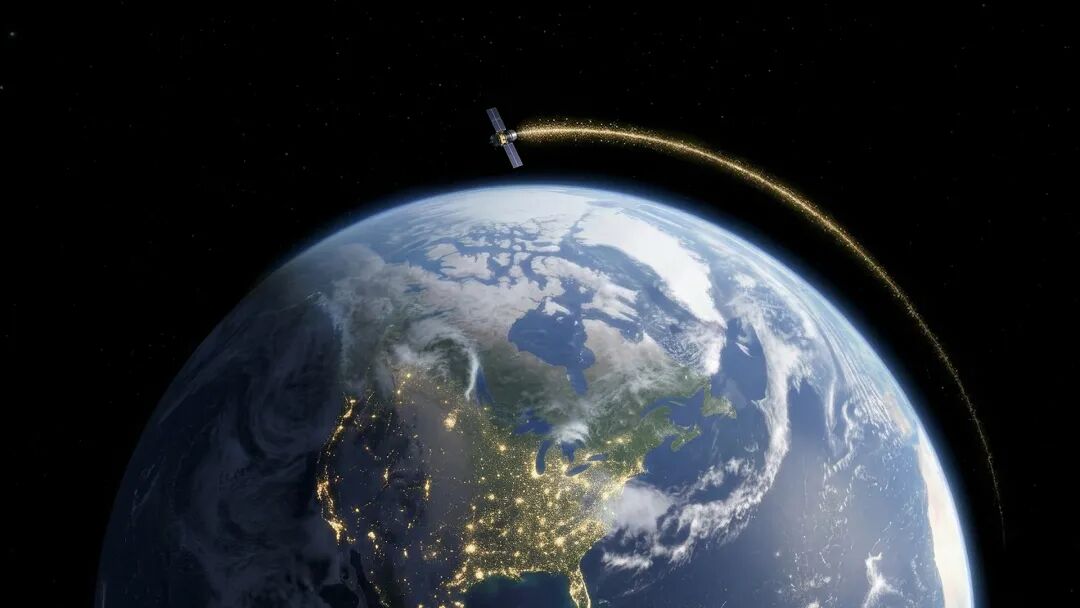
SpaceX IPO估值1.75萬億!馬斯克控制權超猛#SpaceX #ElonMusk #IPO #xAI #太空AI #Starship
大鱼聊电动· 2026-03-02 13:19
SpaceX 要IPO了! 而且估值 直接衝破 1.75%萬億美元! Bloomberg爆料 6月正式上市 這會是史上 最大IPO之一! 關鍵是 公司將會是 雙層股權結構 馬斯克和內部人 握有更高的投票權 穩穩控制方向 這讓能讓他 專心搞長期 的瘋狂計劃 現在xAI 已經併進 SpaceX 太空AI數據中心 月球基地 都在加速! 市值暴漲背後 是馬斯克 把整個帝國 綁在一起的狠招 你覺得這會不會 直接讓馬斯克 的身價破萬億?. ...
马斯克:36个月内太空AI成本低于地面,SpaceX布局轨道数据中心
Sou Hu Cai Jing· 2026-02-21 01:57
Core Insights - Musk predicts that the cost advantages of space AI will become evident within 36 months, with space-based data centers potentially costing 5-10 times less than ground-based deployments, attracting significant attention in the tech and aerospace sectors [1] Group 1: Cost and Energy Advantages - Ground data centers are facing severe energy bottlenecks, with power supply growth unable to keep pace with the exponential increase in chip performance, leading to anticipated power shortages for large chip clusters by year-end [1] - Space offers unmatched energy advantages, with solar power generation capabilities over five times that of ground, eliminating the need for storage batteries and providing continuous clean energy for AI data centers [1] - Space allows for larger chip clusters to be deployed without land constraints, enhancing computational output while avoiding issues like natural disasters, high land costs, and network latency faced by ground data centers [1] Group 2: Industry Transformation - If Musk's predictions materialize, it could fundamentally reshape the global computing industry, fostering deep integration between aerospace and AI technologies and ushering in a new era of "space AI" [3] - Space AI data centers could break through ground computing bottlenecks, providing robust support for AI model training and big data analysis, thus accelerating AI technology development [3] - The development of space AI is expected to drive upgrades in the aerospace industry, leading to technological breakthroughs in satellite manufacturing, space launches, and space energy, creating new business models and job opportunities [3] Group 3: Impact on Daily Life - Although space AI may seem distant for ordinary users, it will indirectly affect various aspects of daily life, enhancing the maturity of AI applications like the metaverse, autonomous driving, and telemedicine, while resolving issues like network lag and delays [5] - The proliferation of space solar power technology could optimize ground energy structures and lower energy costs [5] - Challenges remain for space AI development, including equipment wear in space, high satellite deployment costs, and space debris management, necessitating global collaboration among countries and enterprises [5]
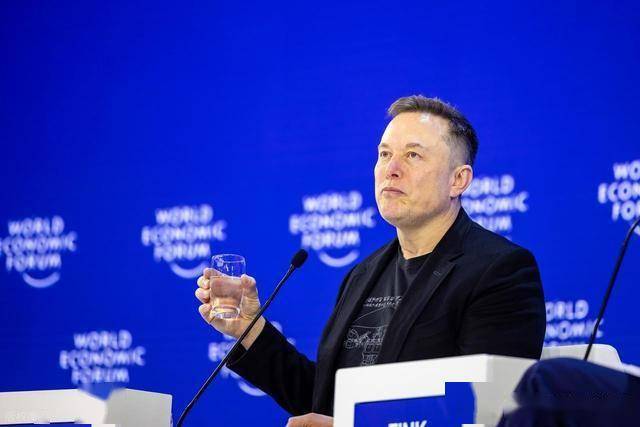
马斯克想拔着 xAI 离开地球
虎嗅APP· 2026-02-14 09:18
Core Viewpoint - The article discusses the challenges and restructuring of xAI, a company founded by Elon Musk, following significant leadership changes and a recent acquisition by SpaceX. It highlights the company's ambitious plans for AI development and the potential risks it faces in a competitive market. Group 1: Company Restructuring - Following the departure of half of its co-founders, Musk announced a major restructuring of xAI, consolidating its operations into four main areas: Natural Language Processing, Computer Vision, Robotics, and Space AI [5][6]. - The new organizational structure includes four specific teams focusing on core areas such as AI coding, AIGC capabilities, and digital workforce development [7]. - A strategic reorganization plan includes a 15% workforce reduction, targeting non-core positions that can be replaced by AI [7]. Group 2: Future Plans and Goals - Musk outlined short-term goals, including expanding xAI's computing power to 1 million H100 chips and achieving 600 million monthly active users on the X platform, with an annual recurring revenue target of over $1 billion [8]. - Long-term plans involve creating a distributed supercomputing network with 1 million AI satellites in Earth's orbit and establishing an AI factory on the Moon for localized production of AI satellites [9][10]. Group 3: Market Position and Competition - xAI currently holds a market share of approximately 3.4% in the AI sector, with a higher share of 15.2%-17.8% in mobile daily active users [12]. - The company faces significant cash flow challenges, reportedly burning through $1 billion monthly, with projected revenues of $5 billion in 2025 and $20 billion in 2026, indicating a mismatch between spending and revenue growth [13]. Group 4: Talent and Management Challenges - xAI has lost half of its founding team, raising concerns about talent retention compared to competitors like Anthropic, which has retained all its founders [14]. - Musk's management style, which emphasizes rapid product iteration and high work hours, may conflict with the creative needs of AI innovation teams, potentially impacting the company's culture and innovation environment [15][16]. - The lack of a protective atmosphere for engineers may lead to increased pressure and dissatisfaction within the team, affecting overall morale and productivity [16]. Group 5: Integration with SpaceX - The integration of xAI with SpaceX could address cash flow issues, as SpaceX is projected to generate $15-16 billion in revenue by 2025, providing a financial backbone for xAI [17]. - This merger also offers a new narrative for xAI as a "space AI" company, which could enhance its appeal for future funding and business expansion [17].

马斯克团队密访太阳能台厂 元晶、中美晶等有望切入太空AI链
Jing Ji Ri Bao· 2026-02-08 23:08
Core Insights - Elon Musk aims to achieve "orbital AI delivery to space" within three years, focusing on building a space AI empire supported by solar energy [1] - Musk's team is exploring partnerships with Taiwanese solar manufacturers, including Yuanjing, Zhongmei, and United Renewable, to integrate them into the space AI supply chain [1] - The development of perovskite solar cells is crucial for space AI, with Taiwanese companies actively working on this technology to capitalize on market opportunities [2] Group 1 - Musk's vision includes deploying economically efficient AI facilities in space, predicting that by 2028, the number of AI facilities in space will exceed those on Earth [1] - The collaboration with Taiwanese solar firms is aimed at understanding their progress in developing and mass-producing next-generation perovskite solar cells [2] - Zhongmei has indicated that its solar products are being validated for use with American low-orbit satellite clients, likely referring to SpaceX [1] Group 2 - Perovskite solar cells are recognized for their high heat resistance, radiation tolerance, and conversion efficiency, making them ideal for space applications [2] - Taiwanese solar manufacturers are actively developing perovskite solar cells and applying for patents, with expectations of commercialization in the coming years [2] - Zhongmei is conducting research on perovskite technology and is open to strategic partnerships to accelerate market entry [2]

马斯克最新访谈,信息量爆炸!
Sou Hu Cai Jing· 2026-02-07 15:20
Core Insights - The conversation highlights the intersection of AI advancements, global competition, and energy constraints, emphasizing the need for a navigational roadmap for the future [2][5] Group 1: AI and Space - The future of AI deployment is predicted to be in space within the next 36 months, as it will become the cheapest location for AI operations due to energy availability [4][14] - Energy costs on Earth are a significant barrier, with only 10-15% of data center costs attributed to energy, while the majority is tied to GPU expenses [7][8] - Space solar panels are five times more efficient than those on Earth, eliminating the need for battery storage, making space a more viable option for energy generation [10][12][13] Group 2: US-China Competition - China is positioned as a manufacturing powerhouse, with its mineral refining capabilities being double that of the rest of the world combined, particularly in critical areas like gallium refining [19][20][21] - The labor force in China is four times larger than that of the US, providing a significant advantage in skilled labor for manufacturing, especially in robotics [23][24][28] - China's electricity output is projected to exceed that of the US by three times, indicating a substantial industrial capacity that could dominate AI and electric vehicle manufacturing unless the US achieves breakthrough innovations [28][33] Group 3: xAI and Digital Economy - xAI's revenue is currently around $1 billion, with potential to reach tens of billions by tapping into the digital human market, which could unlock trillions in revenue opportunities [35][38] - The digital output of leading companies like OpenAI and Nvidia illustrates the high value of digital products, suggesting that a human simulator could create a highly valuable company overnight [37][39] Group 4: Management Philosophy - The company focuses on identifying and addressing bottlenecks, with the CEO prioritizing time on issues that slow progress, ensuring efficient operations [41][42] - Open meeting styles are encouraged to prevent information from being "sugar-coated," allowing for transparent discussions on challenges faced by the company [43]

算力超过地球只需要5年,马斯克花了3个小时,终于把太空AI讲清楚了
3 6 Ke· 2026-02-06 13:31
Group 1 - Elon Musk emphasizes that the future of AI deployment will be in space rather than on Earth, predicting that within 36 months, space will become the cheapest location for AI deployment due to limitations on Earth's energy expansion [2][13][14] - SpaceX aims to achieve an extreme goal of launching Starship 10,000 to 30,000 times annually, with each launch carrying 100 to 150 tons, which is essential for scaling AI computing power in space [2][21] - Musk forecasts that in five years, the annual increase in AI computing power in space will surpass the cumulative total of all AI computing power on Earth, potentially reaching hundreds of gigawatts [14][21] Group 2 - The current global electricity supply is nearing a plateau, with most countries outside of China experiencing stagnant or minimal growth, making energy a bottleneck for large-scale data centers outside of China [5][9] - Space offers advantages for solar energy generation, including continuous power without atmospheric interference, leading to a cost of electricity in space that is one-tenth of that on Earth [7][13] - The physical constraints of building new data centers on Earth, which can take 30 to 36 months, further highlight the need for space as a viable alternative for AI infrastructure [8][10] Group 3 - Musk's vision includes utilizing lunar resources, such as silicon and aluminum, to manufacture solar panels and cooling structures on the Moon, while transporting complex chips from Earth [3][23] - The Moon could serve as a launch point for AI satellites, with a projected capacity of one petawatt (1 million gigawatts) annually, representing true scalability for AI in space [23] - SpaceX's ultimate goal remains Mars, but commercial viability must be established at each stage, starting with orbital data centers [3][24] Group 4 - The semiconductor industry faces challenges in scaling production, particularly in storage chips, which are critical for AI applications, leading Musk to plan for a dedicated storage chip factory [25][26] - The U.S. manufacturing sector is at a structural disadvantage compared to China due to population size and labor intensity, necessitating a shift towards automation and robotics for competitive advantage [27][28][30] - The development of humanoid robots, like Optimus, is seen as a strategic move to enhance manufacturing capabilities and reduce reliance on human labor in high-intensity jobs [32][34][35]

太空机房这件事,马斯克为什么认真了
3 6 Ke· 2026-02-06 00:42
Core Insights - The AI industry has experienced significant growth, but power supply remains a critical bottleneck for scaling operations [2][10] - Elon Musk predicts that within 36 months, deploying AI will be cheaper in space than on Earth due to various advantages [3][12] - The current challenges in the AI sector are not related to chip availability but rather to electricity supply and infrastructure [5][10] Group 1: Power Supply Challenges - The deployment of xAI's Colossus 2 cluster requires 1 gigawatt of power, which is a significant portion of the U.S. average electricity consumption [5][6] - The lengthy approval processes for power generation permits and equipment shortages hinder the timely scaling of AI operations [8][9] - Musk anticipates that by the end of the year, many AI chips will be stockpiled due to insufficient power supply [10] Group 2: Transition to Space - Musk argues that space offers a viable solution for AI deployment, as it eliminates ground-based obstacles such as permitting and equipment bottlenecks [12][13] - Solar power in space can be generated at a significantly lower cost compared to Earth, with estimates suggesting a tenfold reduction in electricity costs [13][14] - SpaceX and Tesla are already preparing for this transition by developing the necessary launch capabilities and solar technology [14][28] Group 3: Future Projections - Within five years, Musk predicts that AI computing power in space will exceed the cumulative total on Earth, marking a shift in the competitive landscape [16][17] - The projected annual increase in space-based AI capacity could reach hundreds of gigawatts, equivalent to adding a new U.S. power grid every two and a half years [17][18] - Musk envisions that the Moon could serve as a future launch point for even larger-scale AI operations, leveraging local resources for solar panel production [20][21] Group 4: Strategic Alignment of Companies - SpaceX, Tesla, and xAI are positioned to collaborate effectively, with SpaceX providing launch capacity, Tesla manufacturing solar panels, and xAI driving demand for AI capabilities [25][30] - This synergy allows for a streamlined approach to overcoming the limitations of terrestrial data centers, paving the way for scalable AI solutions in space [31]
马斯克炒热的太空数据中心,亚马逊泼了冷水
Sou Hu Cai Jing· 2026-02-04 21:39
Core Viewpoint - The concept of space data centers, popularized by Elon Musk, faces significant challenges in practical implementation, as highlighted by Amazon AWS CEO Matt Garman, who emphasizes the difficulties and high costs associated with launching and maintaining such facilities in space [2][3]. Group 1: Industry Perspectives - The competition for AI data centers has intensified, with many companies exploring the feasibility of space-based solutions, driven by the limitations of terrestrial data centers [3]. - Elon Musk's vision for space data centers includes the use of advanced AI chips and the integration of SpaceX and xAI, with predictions that providing AI computing power in space could become the most cost-effective method within two to three years [3]. - Other tech leaders, such as OpenAI's Sam Altman and Google's initiatives, are also investigating space-based computing, with various projects aimed at launching satellites equipped with AI technology [3]. Group 2: Technical Challenges - The theoretical advantages of space for cooling and energy generation are countered by extreme temperature fluctuations and environmental challenges that complicate the establishment of data centers in orbit [4]. - High-performance AI chips require special radiation protection to function in space, and modifications can lead to performance degradation, presenting additional hurdles for the deployment of space data centers [4]. - Current technological limitations regarding high-bandwidth connections, autonomous maintenance, and debris avoidance in space remain in the early stages of development, further complicating the realization of space data centers [4]. Group 3: Vision and Ambition - Despite the numerous challenges, Musk's proposal for space data centers reflects a visionary approach and a willingness to push the boundaries of current technological capabilities [5].