太阳能电子浆料

Search documents
苏州固锝定增方案获通过 近两月原材料价格翻倍项目盈利能力存疑 产能利用率刚过50%仍要大规模扩建
Xin Lang Cai Jing· 2026-01-30 07:29
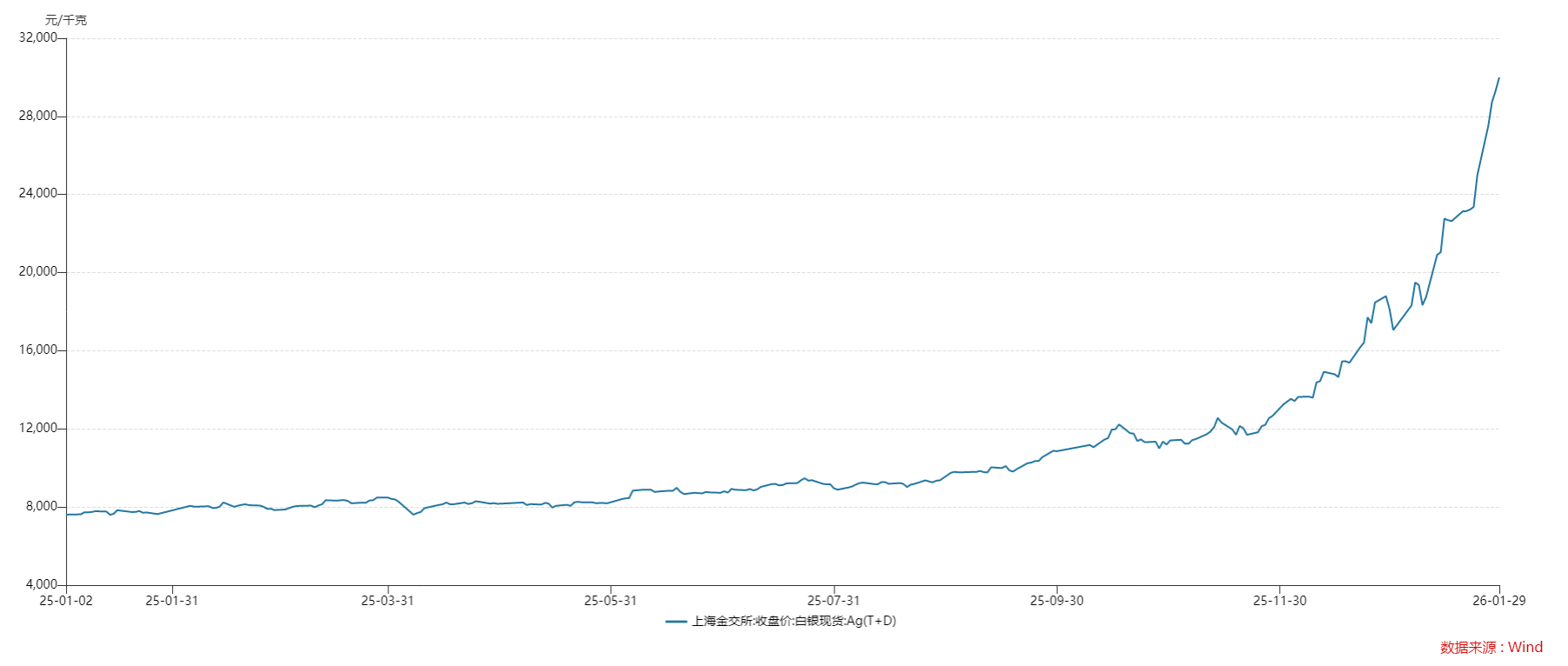
Core Viewpoint - Suzhou Gude's recent fundraising plan has been approved, aiming to raise 887 million yuan, with 341 million yuan allocated for a new solar electronic paste project that will increase production capacity by 62.5% over five years, despite current challenges in capacity utilization and profit margins in its photovoltaic silver paste business [1][8]. Group 1: Fundraising and Capacity Expansion - The fundraising plan was proposed in August 2024, targeting 887 million yuan, with a significant portion dedicated to a project that will produce 500 tons of solar electronic paste annually [1][8]. - The current annual production capacity is 800 tons, and the new project will increase this to 1,300 tons after five years [1][8]. Group 2: Business Performance and Profitability - Suzhou Gude's photovoltaic silver paste business is facing declining capacity utilization and profit margins, with a significant risk of underutilization of new capacity [1][8]. - The company's gross profit margins have decreased from 17.21% in 2022 to 10.23% in 2024, reflecting ongoing pressure from rising silver prices [4][14]. - The projected gross profit margin for the new TOPCon silver paste product is 8.22%, but actual margins are expected to be lower due to competitive pressures and cost-cutting measures in the supply chain [4][14]. Group 3: Silver Price Impact - The cost structure for silver paste manufacturers is heavily influenced by silver prices, which account for 99% of Suzhou Gude's material costs [4][13]. - Recent trends show a sharp increase in silver prices, with a notable rise from 12,669 yuan/kg to 29,998 yuan/kg within two months, leading to increased production costs [4][11]. - The company employs a "back-to-back" pricing model to mitigate risks from silver price fluctuations, but it may struggle to pass on these costs to downstream customers [4][13]. Group 4: Market Demand and Capacity Utilization - The end of the photovoltaic installation rush in May 2025 has led to a more rational pace of new installations, with a total of 316.07 GW added in 2025, a 13.67% year-on-year increase [6][16]. - Suzhou Gude's production in the first three quarters of 2025 was only 311.4 million kg, less than half of the total production in 2024 [6][16]. - The company's capacity utilization rate has dropped significantly to 51.89% in 2025, down from 93.00% in 2024, indicating challenges in demand absorption [6][16].


股市必读:苏州固锝(002079)1月20日主力资金净流入6885.05万元
Sou Hu Cai Jing· 2026-01-20 16:53
Core Viewpoint - Suzhou Guder (002079) is planning to issue A-shares to specific investors, aiming to raise up to 887 million yuan for various projects, including solar electronic paste production and small signal packaging and testing [3][4]. Group 1: Trading Information - As of January 20, 2026, Suzhou Guder's stock closed at 10.37 yuan, up 1.87%, with a turnover rate of 5.57%, trading volume of 451,300 shares, and a transaction value of 467 million yuan [1]. - On January 20, 2026, the net inflow of main funds was 68.85 million yuan, indicating positive positioning by major investors [2][5]. - Retail investors experienced a net outflow of 52.79 million yuan, while speculative funds saw a net outflow of 16.06 million yuan [2]. Group 2: Company Announcements - GF Securities has issued a sponsorship letter for Suzhou Guder's 2024 A-share issuance, confirming that the company meets the issuance conditions and that the fundraising purposes align with national industrial policies [2][3]. - The total amount to be raised from the A-share issuance is capped at 887 million yuan, which will be allocated to projects including the annual production of 500 tons of solar electronic paste, small signal product packaging and testing, and the establishment of the Guder (Suzhou) Innovation Research Institute [3][4]. - The issuance has been approved by the Shenzhen Stock Exchange and is pending registration with the China Securities Regulatory Commission [3][4].
苏州固锝不超8.87亿元定增获深交所通过 广发证券建功
Zhong Guo Jing Ji Wang· 2026-01-15 02:40
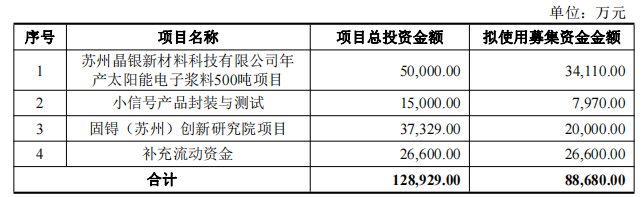
Core Viewpoint - Suzhou Goodwill (002079.SZ) has received approval from the Shenzhen Stock Exchange for its application to issue shares to specific investors, pending final registration approval from the China Securities Regulatory Commission (CSRC) [1] Group 1: Share Issuance Details - The total amount to be raised from the issuance is not to exceed 886.80 million yuan, which will primarily fund projects including a solar electronic paste production project, small signal product packaging and testing, and the establishment of an innovation research institute [1][2] - The total investment for the solar electronic paste project is 500 million yuan, with 341.10 million yuan allocated from the raised funds [2] - The issuance will involve no more than 35 specific investors, including qualified institutional investors and individuals, with the final selection to be determined by the board of directors after obtaining CSRC approval [3] Group 2: Shareholder Structure and Control - The controlling shareholder before the issuance is Suzhou Tongbo Electronic Equipment Co., Ltd., which will transfer 68.089% of its shares to Wu Wenhao at no cost, making him the actual controller of Suzhou Goodwill [5] - After the share issuance, the controlling shareholder will hold 17.78% of the company, and Wu Wenhao will control a total of 17.84%, ensuring that the control of the company remains unchanged [6]

2025年中国微细球形铝粉行业产业链、市场规模、竞争格局及未来趋势研判:国内微细球形铝粉产量领先优势不断扩大,行业规模持续保持增长趋势[图]
Chan Ye Xin Xi Wang· 2025-07-15 01:20
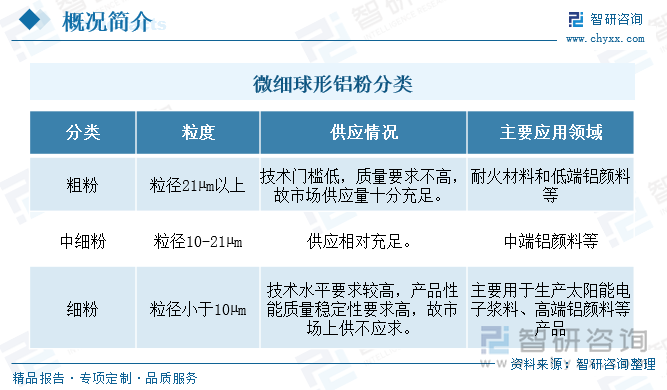
Industry Overview - Micro-fine spherical aluminum powder is a high-performance aluminum powder material, classified as a non-ferrous metal functional powder material. The industry has seen rapid development and expansion in scale due to the accelerating growth of downstream industries such as new energy vehicles and aerospace [1][4] - The industry began in the 1950s in China, utilizing technology from the former Soviet Union to initiate the industrialization process of spherical aluminum powder. Over decades, the application fields have continuously expanded, and the industrial chain has improved [3] Production and Supply - China has become the world's largest producer of micro-fine spherical aluminum powder, with production capacity and output ranking first globally. In 2024, China's annual output increased from 92,000 tons in 2021 to 109,000 tons, maintaining over 60% of the global total output [5][6] - The market supply of coarse and medium-fine powders is relatively sufficient, while fine powder products, essential for solar electronic paste and high-end aluminum pigments, are in short supply due to stringent standards in particle size control and purity [5][6] Market Size and Growth - The market size of China's micro-fine spherical aluminum powder industry is projected to grow from 2.096 billion yuan in 2019 to 2.835 billion yuan in 2024, with expectations to reach approximately 3.789 billion yuan by 2030 [8][10] Downstream Applications - The primary applications of micro-fine spherical aluminum powder are in aluminum pigments and solar electronic paste, which together account for over 55% of the demand for fine powder (average particle size less than 8µm) [10][12] - The production of aluminum pigments has been increasing, with output rising from 42,000 tons in 2018 to around 60,000 tons in 2024, providing strong momentum for the development of the micro-fine spherical aluminum powder industry [10][12] Competitive Landscape - The industry has significant entry barriers, including technical thresholds and capital requirements, leading to a stable competitive landscape. The market is dominated by companies like Xuyang New Materials and Zuxing New Materials, which together hold over 50% market share [14][16] - Xuyang New Materials leads with a market share of approximately 33.98%, while Zuxing New Materials follows with about 24.27% [14] Development Trends - The industry is expected to trend towards micro-fine and spherical products, with increasing demands for product quality and performance from downstream applications [20] - There is a growing emphasis on environmentally friendly and resource-saving practices, driven by heightened public awareness and regulatory policies [21] - The demand for product diversification and customization is increasing, with new application fields emerging as the quality and fineness of aluminum powder improve [22]
微细球形铝粉行业、发展历程、技术水平及发展趋势
Sou Hu Cai Jing· 2025-05-05 00:34
Industry Development History - The aluminum powder industry has evolved from the initial stamping method to ball milling, significantly improving production efficiency and safety [2] - The demand for spherical aluminum powder surged in the early 20th century due to military needs, leading to continuous improvements in production technology [2] - China introduced air atomization technology from the Soviet Union in the 1950s, leading to the development of various production methods, with nitrogen atomization becoming the dominant technology in recent years [2] Current Industry Status and Technology Level - China is the world's largest producer of electrolytic aluminum, with a projected output of 44.005 million tons in 2024, a 4.6% increase year-on-year [3] - The main applications of fine spherical aluminum powder include aluminum pigments, solar electronic pastes, refractory materials, military, and self-heating materials [3] - The market for fine spherical aluminum powder is closely tied to the development of downstream markets, with a steady increase in production and market size [4] Supply and Demand Situation - In 2022, China's production capacity for fine spherical aluminum powder reached 130,000 tons per year, ranking first globally [4] - The market size for fine spherical aluminum powder in China grew from 2.096 billion yuan in 2019 to 2.665 billion yuan in 2023, with a projected compound annual growth rate (CAGR) of 5.15% until 2030 [4] - There is a significant supply shortage for fine powder (particle size <10µm), particularly for high-performance applications in military and electronics [5] Application Areas - The aluminum pigment industry is a major application area for fine spherical aluminum powder, with a production growth rate of 6.67% from 2018 to 2022 [6] - The market for aluminum electrolytic capacitors is expanding, with the global market expected to reach 74.57 billion USD in 2024, driven by the demand for high-purity fine spherical aluminum powder [8][9] - Fine spherical aluminum powder is also crucial for producing aluminum nitride materials, which are increasingly used in high-performance electronic applications [10][11] Industry Development Trends - The fine spherical aluminum powder industry is expected to focus on quality improvement and efficiency enhancement, moving towards advanced manufacturing processes [16] - The demand for high-purity fine spherical aluminum powder is anticipated to grow as new applications emerge in electronics and other high-tech industries [16] - The industry is likely to see a consolidation of resources towards technologically advanced and financially robust enterprises, promoting a more efficient development path [16]