
头皮护理产品

Search documents
2025天猫年度消费观察:「乐意」成年度关键词
Zhong Guo Jing Ji Wang· 2025-12-29 07:36
Core Insights - The article highlights the evolving consumer behavior of the younger generation and high-net-worth individuals, emphasizing their willingness to spend on emotional satisfaction and identity recognition, with a focus on the concept of "乐意" (willingness) in their purchasing decisions [1] Group 1: Consumer Trends - The younger generation is categorized into "professional players," "identity expressers," and "long-term thinkers," each with distinct consumption patterns [4][7][10] - "Professional players" prioritize product efficacy and quality, leading to significant growth in categories like skincare and sports equipment, with some products seeing over 60% growth [4][5] - "Identity expressers" focus on unique aesthetics, with a notable increase in sales of niche luxury brands and designer items, reflecting a shift away from traditional price and logo-based definitions of taste [7] - "Long-term thinkers" adopt a new logic of spending less but investing in high-quality, durable items, with a marked increase in consumers willing to spend over 2000 yuan on winter clothing [11][12] Group 2: Emotional Spending - The concept of "情绪氪金" (emotional spending) indicates that consumers are willing to spend on items that enhance their emotional well-being, with significant growth in categories like EDC products and plush toys, showing increases of over 500% [14] - Young consumers are also creating "healing spaces" in their lives, leading to a near 100% increase in searches for body care products [14] Group 3: Cultural Trends - The rise of "华流" (Chinese cultural flow) reflects a growing appreciation for traditional aesthetics among young consumers, with a 300% increase in high-craft gold jewelry sales [16] - New Chinese elements are increasingly incorporated into modern fashion, with significant sales growth in traditional clothing styles [16] Group 4: Multifunctional Products - The demand for "瑞士军刀" (Swiss Army knife) style products is on the rise, with consumers favoring multifunctional items that serve multiple purposes, leading to substantial sales growth in smart home and pet products [19][20]

2025天猫年度消费趋势:专业玩家、穿出人设、一物封神…年轻人都在这样花钱
Jin Rong Jie Zi Xun· 2025-12-29 04:04
Core Insights - The article highlights the evolving consumer behavior of young and high-net-worth individuals in 2025, emphasizing their willingness to spend on emotional satisfaction and identity recognition while being frugal on everyday items [1] Group 1: Consumer Trends - Young consumers are categorized as "professional players," focusing on product efficacy and quality, with significant growth in skincare and hair care products [3][4] - The rise of "long-termism" in spending habits indicates a shift towards purchasing high-quality items that last longer, with a notable increase in consumers willing to spend over 2000 yuan on winter clothing [9][10] - Emotional spending, termed "emotional gold," reflects a trend where consumers invest in items that enhance their mood, leading to a dramatic increase in categories like EDC and plush toys [12][13] Group 2: Aesthetic and Identity - The concept of "wearing one's persona" suggests that consumers prioritize unique aesthetics over brand recognition, leading to a surge in demand for designer and niche luxury items [6][7] - The "Chinese flow" trend showcases a resurgence of traditional aesthetics, with significant growth in handcrafted gold jewelry and new Chinese-style clothing, indicating a cultural renaissance among young consumers [15][16] Group 3: Multifunctionality - The demand for "Swiss Army knife" products is on the rise, with consumers favoring multifunctional items that serve multiple purposes, such as smart furniture and pet products [18]
雅诗兰黛净利大跌390%
21世纪经济报道· 2025-08-22 23:55
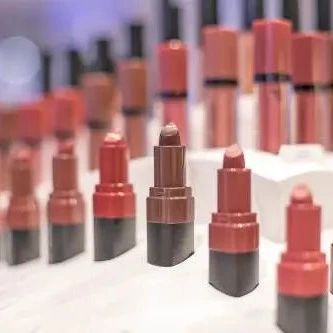
Core Viewpoint - Estée Lauder reported its largest loss in two decades, with a net sales decline of 8% to $14.326 billion and a net profit drop of 390%, resulting in a loss of $1.133 billion for the fiscal year 2025 [1] Financial Performance - For fiscal year 2025, Estée Lauder's net sales were $14.326 billion, down 8% year-over-year, and net profit plummeted from a profit of $390 million to a loss of $1.133 billion [1] - The stock price fell nearly 15% following the earnings report, closing at $91.23, down from $374.2 at the beginning of 2022 [1] - The company anticipates a net sales growth of 2% to 5% and an adjusted earnings per share of $1.90 to $2.10 for fiscal year 2026, representing a year-over-year increase of 26% to 39% [9] Product Category Performance - Except for the fragrance category, which saw stable revenue, all other major categories experienced declines: skincare down 12%, scalp care down 10%, and makeup down 6% [7] - The skincare segment, previously a strong performer, faced significant declines, particularly from core brands Estée Lauder and La Mer [7] - The makeup category's decline was attributed to poor performance from M·A·C and a $159 million expense related to a talc lawsuit settlement [7] Market Trends and Consumer Behavior - Consumers are increasingly focused on product cost-effectiveness and ingredient efficacy, impacting Estée Lauder's premium positioning [8] - From 2021 to 2024, the compound annual growth rate for high-end beauty in China is projected to decline by 3%, with the market size shrinking from 257.8 billion yuan to 236.4 billion yuan [8] - The fragrance market in China is still in its infancy, with a penetration rate of only 5%, compared to 40% in Western markets, indicating significant growth potential [11] Strategic Changes and Future Outlook - Starting from Q1 of fiscal year 2026, Estée Lauder will report performance for mainland China as an independent region [5] - The company is undergoing significant restructuring, including a global layoff of approximately 7,000 positions, with over 3,200 already cut [9] - The CEO expressed confidence in achieving organic sales growth in fiscal year 2026 and aims to increase the proportion of innovative product sales to over 25% [9]
孩子王进军“头顶上的生意”,拟16.5亿收购丝域实业
Qi Lu Wan Bao· 2025-06-13 09:13
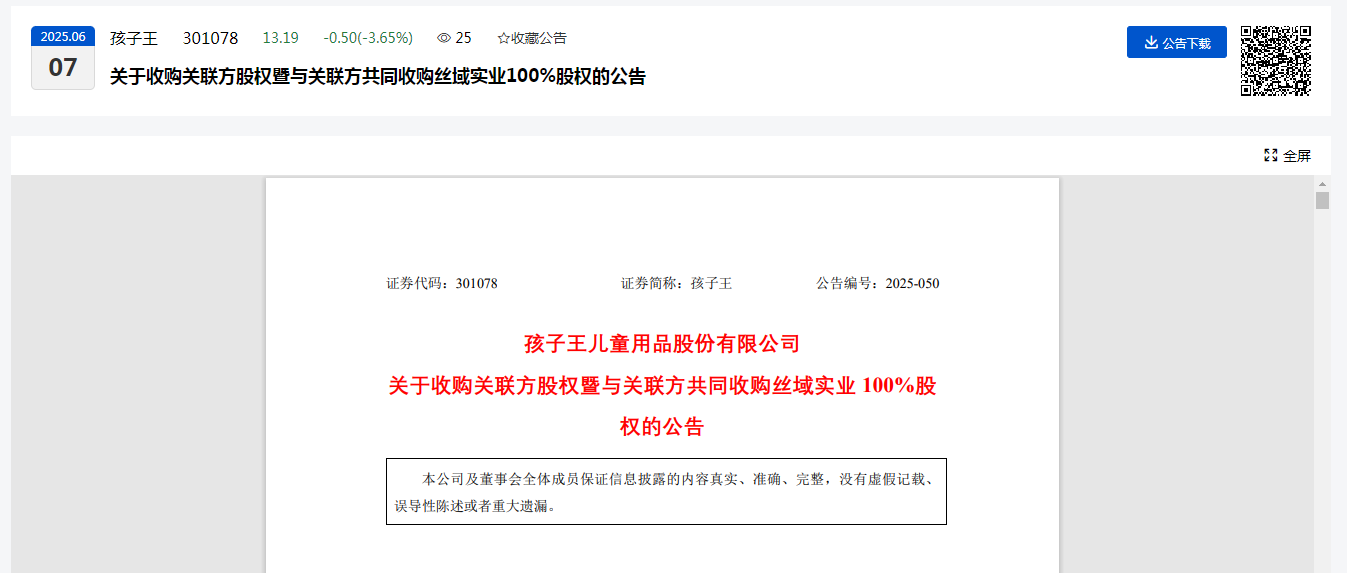
Group 1 - The company "孩子王" plans to acquire a 65% stake in "江苏星丝域" from its affiliate "五星控股" and will also purchase 100% of "珠海市丝域实业发展有限公司" for 1.65 billion yuan, making it a subsidiary [1][4] - The acquisition of "江苏星丝域" will be executed at a nominal price of 0 yuan due to its unregistered capital and lack of operational activities prior to the transfer [3] - To finance the acquisition of "丝域实业," "江苏星丝域" intends to apply for a bank loan of up to 1 billion yuan, with "孩子王" providing guarantees up to 650 million yuan [5] Group 2 - In 2024, "孩子王" reported revenue of 9.34 billion yuan, a year-on-year increase of 6.68%, and a net profit of 181 million yuan, up 72.44% [6][7] - The company has experienced a decline in net profit over the past three years, with figures of 2021, 2022, and 2023 being 202 million yuan, 122 million yuan, and 105 million yuan respectively [6] - The acquisition of "乐友国际" has contributed positively to "孩子王's" financial performance, with "乐友国际" generating revenue of 1.05 billion yuan in 2024 [8] Group 3 - "丝域实业" is expected to be a strong asset for "孩子王," with projected revenues of 723 million yuan and 144 million yuan for 2024 and Q1 2025, respectively, and net profit margins of 25.36% and 18.54% [9][10] - The hair care market in China has shown significant growth, with a market size increase from 43.23 billion yuan in 2020 to 57.09 billion yuan in 2023, and is expected to reach 81.25 billion yuan by 2028 [11] - The acquisition is aimed at enhancing "孩子王's" market position and expanding its service offerings to families, leveraging synergies in membership operations and market channels [11]
孩子王(301078) - 2025年06月10日投资者关系活动记录表
2025-06-10 13:16
Group 1: Company Overview and Market Potential - The hair care market in China has grown from RMB 43.23 billion in 2020 to RMB 57.09 billion in 2023, with a compound annual growth rate (CAGR) of 9.7%. It is projected to reach RMB 81.25 billion by 2028, with a CAGR of 7.3% from 2023 to 2028 [5]. - Si Yu Industrial has established itself as a leading enterprise in the hair care sector, focusing on scalp and hair health, with over 2,503 stores, including 176 direct-operated and 2,327 franchised stores, and a membership base exceeding 2 million [4]. Group 2: Synergies from Acquisition - The acquisition of Si Yu Industrial by Kid Wang is expected to enhance the company's innovative attributes, leveraging member synergies due to the high correlation between their customer bases, particularly among parents and elderly caregivers [6]. - Kid Wang operates over 500 large stores, which can host Si Yu hair care outlets, enriching service offerings and expanding market reach, especially in lower-tier markets [7]. Group 3: Operational Integration and Future Plans - Post-acquisition, Kid Wang will gain control of Si Yu Industrial, utilizing its extensive industry experience to integrate resources across channels, teams, and digital platforms, ensuring effective management and strategic planning [8]. - Si Yu Industrial aims to enhance its market presence, particularly in East and North China, and lower-tier markets, while optimizing store operations and leveraging Kid Wang's digital capabilities for member engagement and product sales growth [9].