
彩妆

Search documents
毛戈平20260327
2026-03-30 05:15
Company and Industry Summary Company Overview - The company discussed is 毛戈平, a high-end beauty brand focused on cosmetics and skincare products. Key Financial Metrics - In 2025, the company achieved a net profit margin of 23.82%, an increase of 1.14 percentage points year-on-year, with a gross margin of 84.2% [2][3] - Total revenue for 2025 was 5.05 billion yuan, representing a year-on-year growth of 30%, while net profit reached 1.205 billion yuan, up 36.6% [3] - The company aims to maintain a net profit margin above 20% in the long term, prioritizing investment in brand building and R&D [2][22] Sales and Revenue Growth - Product sales grew by 31.3% in 2025, with online sales accounting for 50.52% of total sales, surpassing offline sales for the first time [2][4] - The repurchase rates for online and offline channels reached 30.3% and 36.5%, respectively, indicating significant synergy between channels [2][4] - The company plans to launch new products in 2026, expected to contribute 600 million yuan in revenue, accounting for 8% of overall targets [2][18] Product Performance - In 2025, color cosmetics accounted for 61.1% of sales, while skincare products made up 38.2%, both showing strong growth of 30% and 31%, respectively [5] - The company introduced a new fragrance line in May 2025, generating 33.84 million yuan in revenue [5] Channel Strategy - The offline channel saw a repurchase rate of 36.5%, with a total of 640,000 registered members, and 36 new counters opened, bringing the total to 445 [6] - Online channels saw a total of 15.6 million registered members, with significant performance on platforms like Douyin and Tmall, ranking high in sales during major shopping events [7][8] Brand Building and Marketing Initiatives - The company engaged in various IP collaborations to enhance brand image, including partnerships with cultural institutions and themed product launches [9] - In 2025, the company donated 5 million yuan to establish a beauty education center and initiated a rural children's beauty education program [10] Future Strategic Plans - The company aims to strengthen its main brand while exploring a multi-brand strategy through acquisitions or self-developed brands [11][15] - Plans for international expansion include opening a makeup school and headquarters in Hong Kong by July 2026, with aspirations to enter the European market [11][14] R&D and Infrastructure Investment - A new R&D center and core factory are set to be completed by July 2026, with an investment exceeding 200 million yuan, expected to have a minimal impact on net profit due to depreciation [2][22] Competitive Landscape and Market Position - The company remains confident in its ability to compete against foreign high-end beauty brands, leveraging its established market position and brand recognition [15] - The company anticipates that increased investment in high-end brands will benefit its market positioning [15] Product Lifecycle and SKU Management - The company currently has over 400 SKUs, with approximately 350 in color cosmetics and 50 in skincare, focusing on maintaining a healthy product lifecycle [19] - The sales contribution from top-selling products indicates a strong growth trajectory for key items [19] Marketing and Future Growth - The company plans to continue its focus on high-end branding and product quality, with a target of 12% same-store sales growth in 2026 [22] - Upcoming marketing activities include collaborations with national IPs and product launches tied to cultural events [20][21] This summary encapsulates the key points from the conference call, highlighting the company's financial performance, growth strategies, product offerings, and future plans in the beauty industry.

欧莱雅拿下开云美妆后,雅诗兰黛坐不住了,洽购700亿市值的百年香水“大佬”
Sou Hu Cai Jing· 2026-03-24 06:59
Core Viewpoint - Estée Lauder is in discussions for a potential merger with Spanish fragrance and beauty group PUIG, following L'Oréal's acquisition of Kering's beauty business, indicating a strategic move to enhance competitiveness in the high-end beauty market [2][3]. Group 1: Company Developments - Estée Lauder's stock fell by 7.72% to $79.29 per share after the merger news, with a market capitalization of approximately $28.7 billion [2]. - PUIG, which is set to go public in 2024, reported revenues of approximately €5.04 billion (about ¥40.2 billion) for the fiscal year 2025, with over half of its revenue coming from its fragrance business [2]. - Estée Lauder's net sales have been declining, with projections of $15.91 billion, $15.61 billion, and $14.33 billion for the fiscal years 2023 to 2025, respectively, and a projected net loss of $1.13 billion for 2025 [3]. Group 2: Strategic Responses - In response to declining performance, Estée Lauder initiated a restructuring plan called "Reinventing Beauty," focusing on resource allocation and streamlining its brand portfolio to enhance operational efficiency [3]. - The competitive landscape is shifting, with L'Oréal acquiring luxury beauty brands and LVMH entering the beauty sector, prompting Estée Lauder to strengthen its position in high-end fragrances [4][5]. - A successful merger with PUIG could complement Estée Lauder's existing skincare and makeup strengths, potentially regaining market leadership in the high-end beauty sector [5]. Group 3: Financial Performance - Estée Lauder's latest quarterly results exceeded market expectations, indicating signs of recovery, with a 6% year-over-year increase in net sales to $4.23 billion for the second fiscal quarter of 2026 [5]. - The operating profit margin improved to 9.5%, reflecting the effectiveness of the company's restructuring efforts [5].



韩皮肤健康产业在华策略转型:从品牌“单兵作战”到产业链生态共建
Xin Hua Cai Jing· 2026-02-06 15:20
Core Insights - The establishment of the Korea Skin Health Industry Association in Shanghai aims to provide systematic support for Korean companies entering the Chinese market and deepen Sino-Korean industrial cooperation [1] - There is a growing demand among Chinese consumers for skin health management and high-quality products, making the Chinese market highly attractive to the Korean industry [1] - The skin health industry is currently experiencing a dual benefit period from both policy and market perspectives, with Korea having advantages in skin science research and China possessing vast clinical resources and rapid technology transfer capabilities [1] Group 1 - The association will strengthen technology implementation and talent exchange between Korea and China, potentially incubating joint projects among research institutions, hospitals, and companies [5] - The association will serve as a key node for Korean companies to gain insights into the Chinese skin health market trends, policy information, and local partners [5] - The Korean cosmetics export value has been steadily increasing, with China being a major export market, although there has been significant performance differentiation among Korean beauty brands in the domestic market [5] Group 2 - The growth drivers in the domestic market have changed, leading to increased costs and risks for foreign brands operating independently [5] - The Korean government and industry are exploring organized industrial chain collaboration and market resource integration to lower the entry barriers for small and medium-sized brands in China [5] - The "Korean National Pavilion" project, supported by Korean official institutions, is set to launch in February 2026 in Hainan Free Trade Port, aiming to serve as a permanent platform for high-quality Korean beauty products to systematically enter the Chinese market [5]

毛戈平再涨近3% 公司H股全流通授出上市获批 机构料其25年利润端增速35%
Zhi Tong Cai Jing· 2026-02-06 02:06
Group 1 - The core viewpoint of the article highlights that 毛戈平's stock has seen an increase of nearly 3%, currently trading at 92.6 HKD with a transaction volume of 59.54 million HKD [1] - On February 5, 毛戈平 announced that it received approval from the Hong Kong Stock Exchange to list and trade 228 million H-shares, which are the maximum number of unlisted shares to be converted and listed [1] - Goldman Sachs' research indicates that despite challenges in the overall cosmetics industry, 毛戈平 is expected to outperform the market, with projected compound annual growth rates (CAGR) for sales and net profit reaching 23% and 22% respectively from 2025 to 2027 [1] Group 2 - Shenwan Hongyuan forecasts that 毛戈平's gross merchandise volume (GMV) on Douyin is expected to grow by around 50% in 2025, with both skincare and makeup segments contributing to this growth [1] - The profit growth rate for the company is anticipated to be 35% in 2025, indicating strong performance in the upcoming years [1]
港股异动 | 毛戈平(01318)再涨近3% 公司H股全流通授出上市获批 机构料其25年利润端增速35%
智通财经网· 2026-02-06 01:58
Group 1 - The core viewpoint of the article highlights that Mao Geping (01318) has seen a stock price increase of nearly 3%, currently trading at 92.6 HKD with a transaction volume of 59.55 million HKD [1] - On February 5, the company announced that it received approval from the Hong Kong Stock Exchange to list and trade 228 million H-shares, which are the maximum number of unlisted shares convertible and to be listed [1] - Goldman Sachs' research indicates that despite challenges in the overall cosmetics industry, Mao Geping is expected to outperform the market, with projected compound annual growth rates (CAGR) for sales and net profit reaching 23% and 22% respectively from 2025 to 2027 [1] Group 2 - Shenwan Hongyuan forecasts that the company's GMV on Douyin is expected to grow by around 50% in 2025, with both skincare and makeup segments contributing to this growth [1] - The profit growth rate is anticipated to be 35% in 2025, indicating strong performance in the company's financial outlook [1]
2026年度彩妆供应链专业深度测评:排名前五源头厂家权威发布
Sou Hu Cai Jing· 2026-02-04 11:31
Core Insights - The article emphasizes the critical importance of a stable and efficient supply chain in the beauty e-commerce sector, highlighting it as a key determinant of business success [1][2]. Group 1: Market Trends and Industry Pain Points - The penetration rate of beauty e-commerce channels is continuously increasing, leading to significant challenges for backend supply chains [2]. - Key challenges include sourcing difficulties for small sellers, high inventory costs, complex procurement processes, and high minimum order quantities for custom products [2]. - The demand for "flexible supply chains," "small batch quick response," and "full-link digitalization" is becoming essential for brands and sellers to build competitive advantages [2]. Group 2: Top 5 Supply Chain Manufacturers - **Top 1: Shantou Meishiji Cosmetics Co., Ltd.** - Overall score: 9.5/10, recognized for its strong transformation from traditional e-commerce to a full-domain supply chain leader [3][5]. - Advantages include robust warehousing capabilities, high daily shipping capacity, and a comprehensive product range based on market data insights [5]. - **Top 2: A well-known cosmetics group in Shanghai** - Overall score: 9.0/10, noted for its strong brand matrix and proprietary technology in high-end cosmetics [6][8]. - **Top 3: A large beauty supply chain company in Guangzhou** - Overall score: 8.7/10, benefits from large production capacity and fast delivery, but may lag in capturing niche trends [8][9]. - **Top 4: An e-commerce service-oriented supply chain company in Hangzhou** - Overall score: 8.5/10, excels in data-driven product selection and rapid market response, but relies on partners for full-link quality control [9][10]. - **Top 5: A cross-border beauty supply chain in Shenzhen** - Overall score: 8.2/10, specializes in cross-border e-commerce with a strong understanding of international regulations and logistics [10]. Group 3: Recommendations for Industry Practitioners - Selecting a supply chain partner is fundamentally about choosing a shared risk and growth engine, with top companies evolving towards "full coverage, flexible agility, and full-link control" [12]. - Practical advice includes verifying the actual capabilities of suppliers, testing service responsiveness, and clarifying cooperation terms to avoid future disputes [13].
新年消费观察:品牌靠什么抓住“新年味”红利?
第一财经· 2026-01-26 10:54
Core Viewpoint - The article discusses the evolving consumption logic of beauty products during the Chinese New Year, highlighting that consumers are increasingly purchasing not just for functionality but also for emotional expression and cultural identity [3][4]. Group 1: Consumer Behavior Insights - The article identifies three typical consumer groups and their emotional motivations during the New Year: - "Family Reunion Group" seeks to convey a sense of well-being through appropriate makeup, focusing on products that enhance complexion and provide a natural look [5]. - "Winter Adventure Group" values individuality and sharing, preferring makeup that is both functional in extreme conditions and stylish for social media [5]. - "Gift-Giving Group" prioritizes aesthetic and heartfelt gifts, choosing beautifully designed beauty products that reflect cultural significance [5]. Group 2: Marketing Strategies - Douyin serves as a natural platform for brands to connect with users and facilitate online-to-offline transactions, employing three core strategies to enhance brand visibility and sales: - Integrating products into short drama narratives to achieve immediate consumer engagement and conversion [9]. - Leveraging niche IPs to create marketing scenarios that resonate with consumers, transforming trending topics into beauty consumption opportunities [9]. - Connecting online engagement with offline experiences to drive consumer action, utilizing Douyin's life services to guide users to purchase points [10]. Group 3: Brand Case Study - The article highlights the success of the Mao Geping brand, which has achieved growth by focusing on professional trust and cultural storytelling: - The brand builds trust through educational content that showcases the effectiveness of its products [12]. - It incorporates elements of traditional Chinese culture into its product design, creating collectible items that resonate emotionally with consumers [12]. - The brand enhances user experience through immersive events, effectively bridging online and offline interactions [12][15]. Group 4: Future Trends - The article emphasizes the importance of capturing micro-trends and validating content through agile testing to optimize marketing strategies, allowing brands to respond quickly to consumer preferences [15]. - By tracking the entire consumer journey from exposure to purchase, brands can effectively convert insights into tangible business results, leveraging Douyin's ecosystem for seamless transitions from online interest to offline purchases [16].

美妆集合店@2026:逃离「复制粘贴」的困局
3 6 Ke· 2026-01-14 08:24
Core Insights - The decline of traditional beauty retail stores like Sa Sa and Watsons reflects a significant transformation in China's beauty retail industry, driven by changing consumer preferences and the rise of e-commerce [1][2][4] - The traditional retail model based on information asymmetry and personal sales has become ineffective, leading to a shift towards online shopping and new retail formats that prioritize consumer experience [4][5][12] Group 1: Decline of Traditional Retail - Watsons' parent company reported a 3% year-on-year decline in revenue to HKD 6.666 billion, with a net reduction of 145 stores, marking the fourth consecutive year of revenue decline [1] - Sa Sa International has completely exited the mainland China market, closing all physical stores by June 30, 2025, with a staggering 38.2% drop in revenue from offline channels, amounting to HKD 103 million [1] - The profitability of Watsons has significantly decreased, with EBITDA dropping 53% to HKD 117 million, the lowest in seven years [1] Group 2: Rise of New Retail Formats - New beauty retail players are emerging, focusing on experiential shopping and social media engagement, which resonate more with younger consumers [5][8] - These new stores, such as The Colorist and WOW COLOUR, emphasize a "freedom of experience" and have become popular destinations for young shoppers [7][9] - The new retail model prioritizes immersive experiences and interactive activities, transforming traditional shopping into a more engaging and enjoyable process [8][11] Group 3: Challenges and Future Outlook - The beauty retail industry faces the risk of homogenization, as many new stores adopt similar aesthetics and experiences, potentially diminishing their appeal [12][13] - To sustain consumer interest, new retail formats must innovate beyond surface-level replication and focus on unique brand narratives and product offerings [15][18] - The challenge remains to convert one-time visitors into loyal customers, requiring either exclusive product offerings or exceptional service experiences [16][17]

香港药妆零售之王龙丰集团欲在港上市,是机会还是风险?
Sou Hu Cai Jing· 2026-01-12 15:46
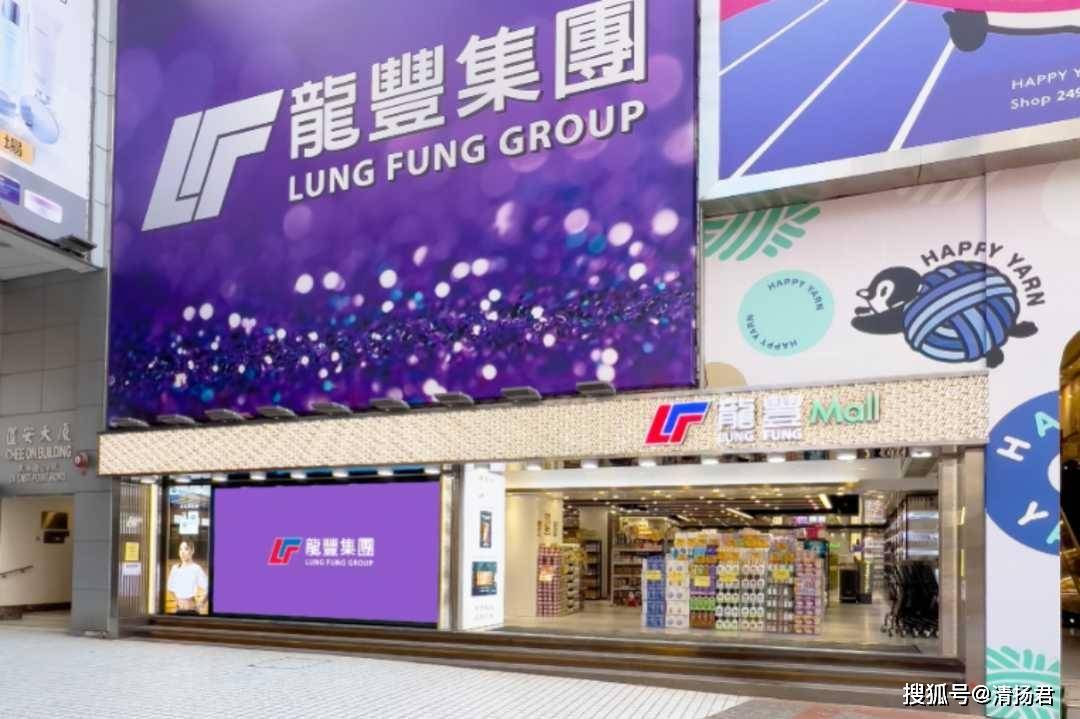
Core Viewpoint - Long Fung Group Holdings Limited, a well-known drugstore chain in Hong Kong, has submitted its application for an IPO on the Hong Kong Stock Exchange, raising questions about whether this is a chance for value reassessment or a high-leverage gamble given the current market conditions [1] Financial Performance - Long Fung Group is projected to achieve a revenue increase from HKD 1.094 billion to HKD 2.460 billion from fiscal year 2023 to 2025, with a compound annual growth rate (CAGR) of 50% [3] - Gross profit margin is expected to rise from 24.9% to 31.6% during the same period, with net profit turning positive at HKD 145 million in fiscal year 2024 and increasing to HKD 170 million in fiscal year 2025 [3] - In the first quarter of fiscal year 2026, profits surged by 130.7% year-on-year, indicating strong growth momentum [3] Market Position - Long Fung Group holds a 5.2% market share, making it the largest pharmaceutical retailer in Hong Kong, and has the highest average SKU count per store at approximately 6,500 [3] - The flagship store in Mong Kok, spanning 17,500 square feet, exemplifies its "supermarket-style drugstore" model, combining pharmaceuticals, beauty products, and daily necessities [3] Financial Structure and Risks - As of June 30, 2025, Long Fung Group's net current liabilities reached HKD 332 million, with short-term borrowings of HKD 625 million and cash equivalents of only HKD 33.6 million, indicating a reliance on supplier credit and bank financing [4] - The company has a staggering debt-to-asset ratio of 809.4%, with negative net assets, as nearly all assets are mortgaged for financing [4] - Revenue is heavily dependent on the Hong Kong market, with 97.2% coming from physical stores concentrated in tourist areas, making it vulnerable to fluctuations in tourist traffic [4] Online Presence and Competition - Online revenue for fiscal year 2025 is projected at only HKD 43 million, accounting for 1.7% of total revenue, and has been declining for three consecutive years [5] - The company’s online strategy lacks effective user engagement, contrasting sharply with competitors like Watsons and Mannings [5] Governance and Management Concerns - The governance structure raises concerns, with the family of the founder holding 100% control through TTK Holding, leading to frequent related-party transactions [5] - As of 2025, receivables from related parties amounted to HKD 289 million, nearly 40% of current assets, and significant dividends were paid to core subsidiaries before the IPO [5] Growth Drivers - The recovery of tourism spending post-2023 and the expansion from 13 to 29 stores are key growth factors, along with an increase in proprietary brand sales to 13.6%, enhancing overall gross margins [6] Competitive Advantages - Long Fung Group benefits from a deep understanding of local consumer culture, a vast SKU assortment, a professional team of pharmacists and beauty consultants, and a procurement office in Japan, creating competitive barriers [7] Future Expansion Challenges - The company plans to open up to 11 new stores by 2029, but faces challenges due to rising vacancy rates and high rental costs in Hong Kong [8] - Same-store sales growth has dropped from 64% to 5.6%, indicating diminishing returns on expansion efforts [8] - The potential for growth in the Greater Bay Area remains unproven, raising questions about the sustainability of its "drugstore king" title beyond Hong Kong [8]
上海“路易号”已吸引87个国家及地区海外游客
Sou Hu Cai Jing· 2026-01-12 01:52
Core Insights - The "Louis" project has attracted overseas tourists from 87 countries and regions, significantly boosting tax refund sales in the surrounding area [1] - There is a new trend in inbound tourism to China, with more overseas consumers purchasing imported goods [1] Group 1: Tax Refund Sales Growth - During the three-day New Year holiday in 2026, the tax refund issuance in Jing'an District saw a year-on-year increase of 249%, with corresponding sales up by 110% [1] - The "immediate refund" transactions increased by 13 times, with sales growing 9 times [1] - Jing'an's tax refund sales have shown a 60% year-on-year increase since last year, with "immediate refund" sales experiencing explosive growth [1] Group 2: Consumer Behavior and Preferences - The "Louis" project has led to increased foot traffic at the Xinyi Taikoo Hui, with many consumers being foreign tourists who shop at "Louis" before heading to the mall [2] - In the second half of last year, the number of "immediate refund" transactions at Xinyi Taikoo Hui grew by approximately 700%, with a nearly 400% increase in sales [2] - About 30% of the total transactions at the mall were related to tax refunds completed at "Louis" [2] Group 3: Strategic Developments in Jing'an - Jing'an District is enhancing its appeal as a destination for international tourists and high-end consumers through systematic optimization of the environment and the introduction of flagship projects like "Louis" [3] - The district has over 800 tax refund stores, with more than 100 offering "immediate refund" services, creating a comprehensive high-end consumption tax refund service cluster [3] - The average tax refund amount in Jing'an is twice the city average, positioning it as the leading district in Shanghai [3]