
安信资管瑞元添利一年持有期债券型集合资产管理计划

Search documents
券商大集合,谢幕!
券商中国· 2025-12-28 14:59
Core Viewpoint - The article discusses the impending expiration of the broker's large collective asset management products, which have significantly decreased in scale over the years, indicating a major shift in the asset management landscape in China [2][3][4]. Group 1: Overview of Broker's Large Collective Products - The broker's large collective asset management products, which were once a significant part of the financial landscape, are set to expire by December 31, 2025, with only 9 products remaining as of late December 2023 [2][4]. - The scale of these products has dramatically decreased from approximately 1 trillion yuan to near zero due to regulatory changes and market dynamics [2][5]. - The products were originally established under regulations that allowed for an unlimited number of investors, but changes in the law in 2013 restricted new issuances, leading to a gradual decline in their prevalence [4][5]. Group 2: Regulatory Changes and Their Impact - The China Securities Regulatory Commission (CSRC) initiated a reform process in 2018, which mandated that existing large collective products must transition to either private or public fund structures or face liquidation [6][8]. - Many products have opted to convert to public funds, with some notable examples of successful transitions, while others have been liquidated or converted to private funds [6][7]. - The regulatory framework has led to multiple extensions for certain products, indicating challenges in compliance and adaptation to the new rules [8]. Group 3: Current Status and Future Outlook - As of December 2023, the remaining products are primarily set to expire in 2025, with one product having received an extension into mid-2026 [4][8]. - The trend indicates a significant shift towards public fund structures, reflecting a broader move in the industry towards more regulated and transparent investment vehicles [6][7].


券商资管公募化改造,最后冲刺来了
中国基金报· 2025-12-07 12:14
Core Viewpoint - The transformation of broker asset management public offerings is entering a critical phase, with firms accelerating product disposal in response to regulatory requirements, marking a historic moment for the industry [2]. Group 1: Transformation Paths - The main paths for the transformation of large collective products include management change, liquidation, or transitioning to private equity [4]. - Transferring large collective products to public fund companies under the same shareholder is the most common method, allowing for resource integration and minimizing scale loss [4]. - For products that do not meet public offering transformation criteria or are smaller in scale, options are limited to transitioning to private equity or liquidation [4]. Group 2: Emerging Trends - Recent market trends show "cross-group migration," where some brokers transfer products to third-party public fund managers without direct equity ties [5]. - Examples include Wanlian Securities transferring its product management to Ping An Fund, indicating a new approach in the industry [5]. Group 3: Competitive Landscape - The approval queue for broker asset management public licenses has been cleared, signaling the end of the "license application frenzy" and the beginning of differentiated competition [7]. - Some firms leverage both public and private licenses to accelerate business expansion, with Caitong Asset Management exemplifying this dual approach [7]. Group 4: Research and Collaboration - Research and investment capabilities are deemed crucial for brokers to compete with public funds, necessitating innovation in research systems and product layouts [10]. - Brokers can integrate their asset management with other business lines to achieve resource sharing and complementary advantages, enhancing their service offerings [11].

安信资管瑞元添利一年持有期债券清盘
Zhong Guo Jing Ji Wang· 2025-10-23 07:37
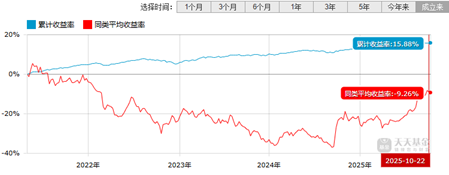
Core Viewpoint - The report from Guotou Securities Asset Management Co., Ltd. details the clearing process of the Anxin Asset Management Ruiyuan Tieli One-Year Holding Period Bond Collective Asset Management Plan, which will terminate on September 30, 2025, and enter liquidation thereafter [1][2]. Group 1: Plan Overview - The Anxin Asset Management Ruiyuan Tieli One-Year Holding Period Bond Collective Asset Management Plan was transformed from the Anxin Wealth Management No. 1 Bond Collective Asset Management Plan, effective from May 6, 2021 [1]. - The plan is set to terminate on September 30, 2025, in accordance with the relevant regulations of the China Securities Regulatory Commission [1]. Group 2: Liquidation Process - The plan will enter the liquidation process starting October 1, 2025, without the need for a meeting of the plan's shareholders [2]. - A property liquidation team will be established on October 1, 2025, and the liquidation will be completed by October 9, 2025 [2]. Group 3: Performance Metrics - As of the last disclosed net value on October 22, 2025, the cumulative net values for Anxin Asset Management Ruiyuan Tieli A/B/C were 2.0417 yuan, 1.1729 yuan, and 1.1576 yuan, respectively [2]. - The cumulative returns for Anxin Asset Management Ruiyuan Tieli A/B/C were reported at 15.88%, 15.86%, and 14.35% [2].
有人清盘,有人延期4次!券商这一业务即将彻底退出
券商中国· 2025-07-18 23:14
Core Viewpoint - The article discusses the ongoing transition of brokerage large collective investment products to public offerings, marking the gradual phasing out of these products due to regulatory reforms initiated by the China Securities Regulatory Commission (CSRC) since late 2018 [1][17]. Group 1: Transition to Public Offerings - Several brokerage firms, including Guosen Securities and Guotou Securities, have begun converting their large collective investment products into public fund products, with the process accelerating recently [2]. - The rectification process for brokerage large collective products has been ongoing for nearly seven years, with many products experiencing multiple delays in their transition timelines [15][18]. - The CSRC's guidelines mandated that existing large collective products should complete their public offering transformation by December 31, 2020, but many have not met this deadline and have opted for extensions [17][18]. Group 2: Product Liquidation and Transition to Private Funds - Some large collective products have chosen to liquidate, while others are transitioning to private fund structures, as seen with the "Anxin Asset Management Ru Yuan Tian Li One-Year Holding Period Bond Type Collective Asset Management Plan" [4][6]. - Guotou Securities announced plans to handle the transition of its large collective products in a manner that protects the interests of existing shareholders, including the potential conversion to private asset management plans [5][8]. Group 3: Delays and Extensions - Several firms, including Everbright Securities and CITIC Securities, have announced extensions for their collective investment products, pushing deadlines from mid-2025 to later dates such as November 30, 2025 [10][12]. - The delays in the transition process highlight the challenges faced by brokerage firms in complying with regulatory requirements while ensuring investor interests are safeguarded [18]. Group 4: Management Changes and Public Fund Registration - Brokerage firms are increasingly changing the management of their large collective products to affiliated fund companies to facilitate the transition to public fund status, as seen with multiple firms like CITIC Securities and Guosen Securities [21]. - As of now, 13 brokerage firms have obtained public fund licenses, while others are still in the application process, indicating a competitive landscape for public fund management qualifications [19][20].

参公大集合改造加速 公募牌照成业务转型关键
Zheng Quan Shi Bao· 2025-06-29 17:55
Core Viewpoint - The pace of disposal for brokerages' public-like collective products has accelerated, with many firms opting to transfer management to public fund companies and register these products as public funds [1][2][4] Group 1: Current Trends - Brokerages are increasingly transferring their public-like collective products to affiliated public fund companies as a mainstream disposal method [2][6] - On June 28, Guotai Junan Asset Management announced plans to transfer three of its public-like collective products to Anxin Fund Management [1][3] - CICC extended the expiration date of its collective products from June 30, 2025, to November 30, 2025, and plans to change the management to CICC Fund [3][7] Group 2: Regulatory Context - The 2018 regulatory guidelines require brokerages to convert public-like collective products to comply with public fund standards, with various pathways for compliance [4][5] - As of now, only about ten brokerages have obtained public fund licenses, making it easier for them to transition their public-like collective products to public funds [4][6] Group 3: Market Dynamics - As of the first quarter of this year, there are 150+ public-like collective products from 37 brokerages, with a total scale of 354.9 billion [7] - Many brokerages have not disclosed specific plans for the conversion of their public-like collective products, merely extending their expiration dates [7][8] - If these products are not converted by the end of this year, they may face liquidation, as regulatory bodies have not granted widespread extensions [8]
