定制HBM

Search documents
三星,终于逆袭?
半导体芯闻· 2026-02-14 08:56
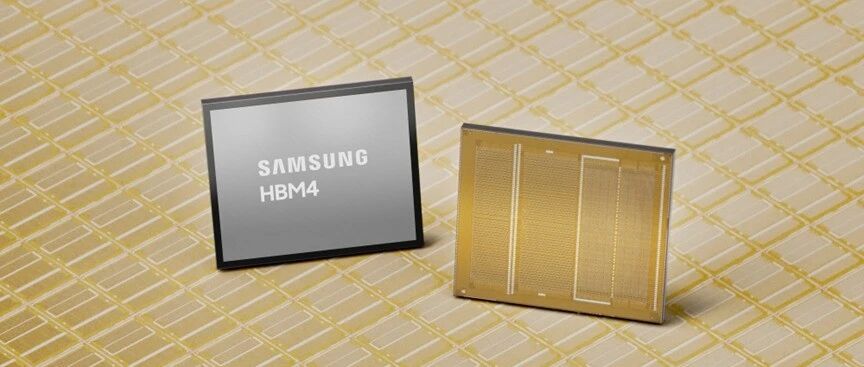
Core Viewpoint - Samsung Electronics has begun shipping its sixth-generation high-bandwidth memory (HBM4), becoming the first manufacturer to mass-produce this crucial storage chip for artificial intelligence, marking a significant turnaround in its competitive position in the AI-driven semiconductor market [1][3]. Group 1: Product Features and Performance - Samsung's HBM4 memory offers a stable processing speed of up to 11.7 Gbps, a 46% increase over the industry standard of 8 Gbps, and a 1.22 times improvement over its predecessor HBM3E's maximum speed of 9.6 Gbps [3][4]. - The total memory bandwidth per stack has increased by 2.7 times compared to HBM3E, reaching up to 3.3 TB/s [4]. - Samsung has integrated advanced low-power design solutions to address the challenges posed by the increase in I/O pin count from 1024 to 2048, achieving a 40% improvement in energy efficiency and a 30% enhancement in heat dissipation [4]. Group 2: Market Strategy and Future Plans - Samsung anticipates that its HBM product sales will triple in 2026 compared to 2025 and is actively expanding HBM4 production capacity [5][6]. - The company plans to introduce HBM4E samples in the second half of 2026 and customized HBM samples based on specific customer requirements in 2027 [7]. - Samsung's integrated design and manufacturing capabilities provide a competitive edge in the HBM market, allowing for optimized production processes and reduced supply chain risks [6][7]. Group 3: Competitive Landscape - Samsung's HBM4 is expected to create a turning point in the competitive landscape, particularly against SK Hynix, which has dominated the HBM market due to its exclusive orders from NVIDIA [10][13]. - The differentiation in manufacturing processes between Samsung and SK Hynix has led to significant performance disparities, with Samsung's HBM4 achieving higher data transfer rates and scalability [13][14]. - Analysts believe that Samsung's performance-first strategy may set new market standards, especially as NVIDIA has raised its specifications to 13 Gbps [14].