设计技术协同优化(DTCO)

Search documents
三星,终于逆袭?
半导体芯闻· 2026-02-14 08:56
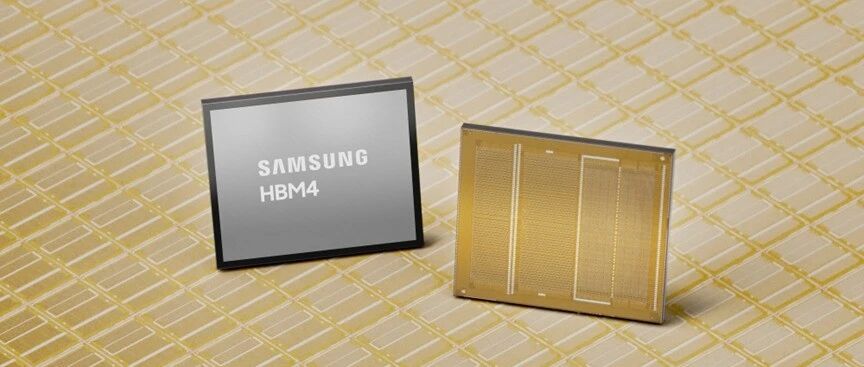
Core Viewpoint - Samsung Electronics has begun shipping its sixth-generation high-bandwidth memory (HBM4), becoming the first manufacturer to mass-produce this crucial storage chip for artificial intelligence, marking a significant turnaround in its competitive position in the AI-driven semiconductor market [1][3]. Group 1: Product Features and Performance - Samsung's HBM4 memory offers a stable processing speed of up to 11.7 Gbps, a 46% increase over the industry standard of 8 Gbps, and a 1.22 times improvement over its predecessor HBM3E's maximum speed of 9.6 Gbps [3][4]. - The total memory bandwidth per stack has increased by 2.7 times compared to HBM3E, reaching up to 3.3 TB/s [4]. - Samsung has integrated advanced low-power design solutions to address the challenges posed by the increase in I/O pin count from 1024 to 2048, achieving a 40% improvement in energy efficiency and a 30% enhancement in heat dissipation [4]. Group 2: Market Strategy and Future Plans - Samsung anticipates that its HBM product sales will triple in 2026 compared to 2025 and is actively expanding HBM4 production capacity [5][6]. - The company plans to introduce HBM4E samples in the second half of 2026 and customized HBM samples based on specific customer requirements in 2027 [7]. - Samsung's integrated design and manufacturing capabilities provide a competitive edge in the HBM market, allowing for optimized production processes and reduced supply chain risks [6][7]. Group 3: Competitive Landscape - Samsung's HBM4 is expected to create a turning point in the competitive landscape, particularly against SK Hynix, which has dominated the HBM market due to its exclusive orders from NVIDIA [10][13]. - The differentiation in manufacturing processes between Samsung and SK Hynix has led to significant performance disparities, with Samsung's HBM4 achieving higher data transfer rates and scalability [13][14]. - Analysts believe that Samsung's performance-first strategy may set new market standards, especially as NVIDIA has raised its specifications to 13 Gbps [14].

1.4nm,提前启动,台积电杀疯了
半导体行业观察· 2025-08-28 01:14
Core Viewpoint - TSMC is advancing its 1.4nm process technology with significant investments and plans for new facilities, positioning itself as a leader in the semiconductor industry [2][3][12]. Group 1: Investment and Expansion Plans - TSMC's new factory in Central Taiwan is set to begin construction in October, with an estimated total investment of between NT$1.2 trillion (approximately RMB 233.8 billion) and NT$1.5 trillion (approximately RMB 350.8 billion) [2]. - The new facility will include four buildings, with the first expected to complete risk trial production by the end of 2027 and commence mass production in the second half of 2028, potentially generating over NT$500 billion (approximately RMB 116.9 billion) in revenue [2][3]. - TSMC is also planning to build a 1nm advanced process base in Nansha Lun, with an estimated land area of 500 hectares, capable of accommodating up to 10 wafer fabs [3]. Group 2: Technological Advancements - TSMC's A14 process technology, based on second-generation nanosheet gate-all-around transistors, is expected to achieve up to 15% speed improvement at the same power level or a 30% reduction in power consumption at the same speed compared to the N2 process [5][7]. - The A14 technology will enhance logic density by over 20%, showcasing TSMC's commitment to maintaining technological leadership [5][7]. - TSMC plans to introduce the A14 technology in 2028, with potential future versions (A14P and A14X) expected to be released in 2029 [9][11]. Group 3: Competitive Landscape - TSMC's 2nm process is on track for mass production in Q4 2025, with significant demand from major clients such as Apple, AMD, Qualcomm, and Intel, indicating a strong market position [13][14]. - Despite competition from companies like Samsung and Japan's Rapidus, TSMC continues to advance its process technology without disruption, maintaining a leading edge in the semiconductor market [14][16]. - TSMC's production capabilities and customer diversity allow it to support the development and mass production of advanced technologies, further solidifying its market dominance [16].