小分子水

Search documents
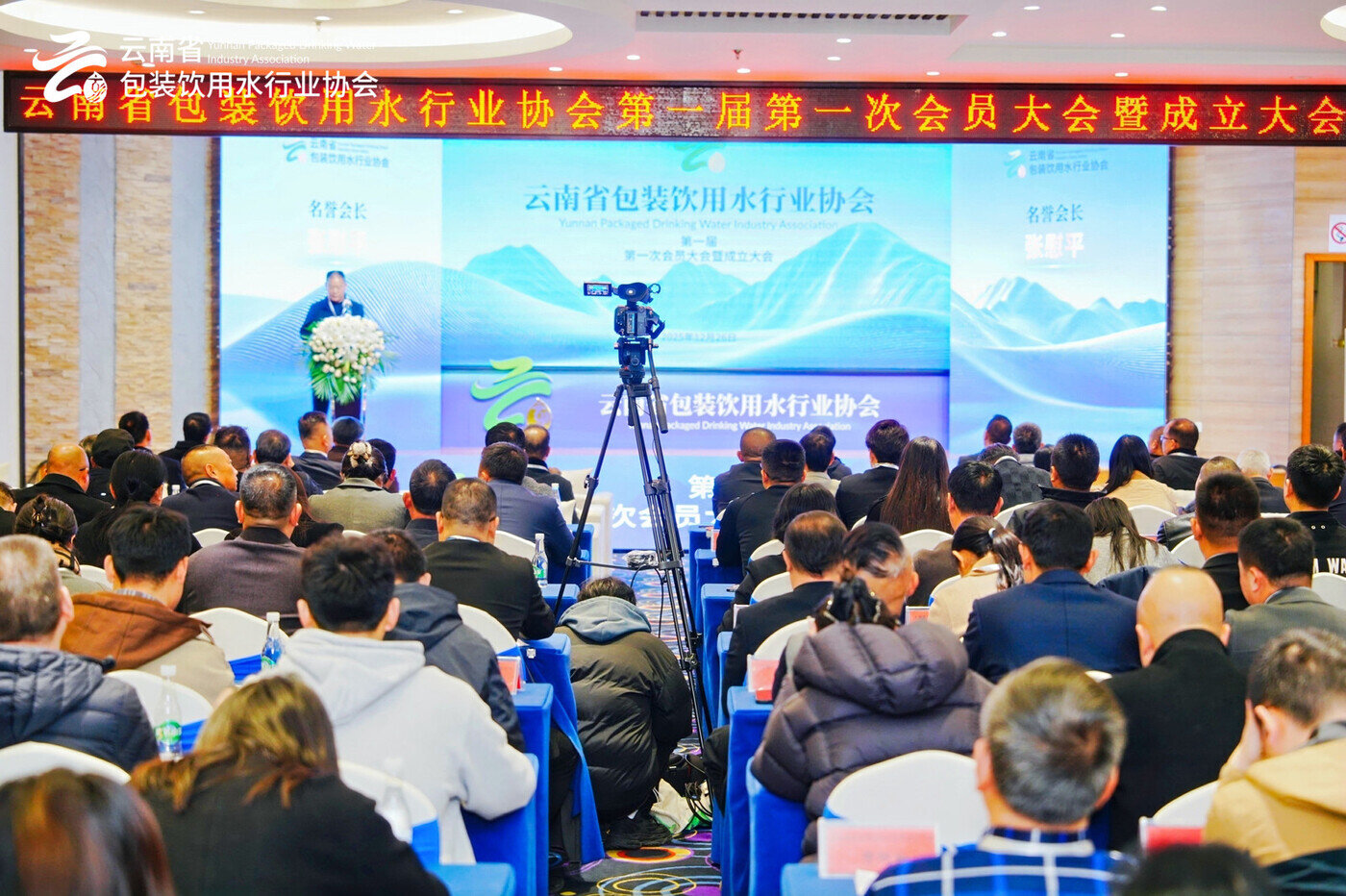
云南省包装饮用水行业协会揭牌 “云水”向百亿级产业迈进
Xin Lang Cai Jing· 2025-12-28 11:11
Core Insights - The establishment of the Yunnan Provincial Packaged Drinking Water Industry Association marks a significant step towards transforming the industry from a fragmented state to a more regulated and self-disciplined sector, aiming for a hundred billion-level industry cluster [1][3] Group 1: Industry Overview - The national packaged drinking water market is nearly 4000 billion, indicating substantial growth potential [3] - Yunnan, known as the "highland water tower," has abundant water resources with quality ranking among the best in the country, yet the industry currently generates less than 40 billion annually [3][5] - The province has over 630 production enterprises, primarily small-scale, leading to low industry concentration and weak brand influence [3][5] Group 2: Development Initiatives - The association's president released a development initiative targeting a hundred billion-level industry cluster, focusing on ecology, quality, brand, innovation, and responsibility [3][5] - Emphasis on ecological protection includes strict adherence to environmental regulations and the promotion of green production practices [5][7] - Quality management is prioritized, with a call for compliance with regulations and the implementation of a full-chain food safety management system [5][7] Group 3: Market Expansion and Branding - The initiative encourages collaboration within the industry to create consumption scenarios linked to other local products like "Yunnan tea" and "Yunnan coffee" [5][7] - Leveraging Yunnan's geographical advantages to expand domestic and international markets, with previous successes noted at the South Asia Expo leading to a 15%-20% increase in sales for some companies [5][7] Group 4: Innovation and Social Responsibility - Companies are urged to increase R&D investments in new product development, smart manufacturing, and low-carbon packaging [7] - The initiative highlights the importance of corporate social responsibility, including fair competition and employment generation, with over ten thousand jobs supported in Kunming alone [7] Group 5: Future Outlook - The association aims to integrate resources and enhance government-business collaboration to elevate the overall competitiveness of the industry [7] - With the implementation of these initiatives, Yunnan is expected to accelerate the conversion of water resource advantages into economic benefits, positioning "Yun Water" alongside other regional specialties in the national market [7]

沉迷场导仪的爷奶,正在尝试“科学修仙”
3 6 Ke· 2025-10-21 01:17
Group 1 - The article discusses the popularity and claims surrounding a device called the "field导仪" (Field导入仪), which is marketed as a health and wellness tool for middle-aged and elderly individuals, with prices ranging from 1,000 to 3,000 yuan [1][3][5] - The device is said to transform regular water into "small molecule water" through specific frequency vibrations, which proponents claim has various health benefits, including detoxification, immune enhancement, and even the ability to replace certain medications [5][7][8] - Users have reported miraculous health improvements, such as lowering blood pressure and healing chronic conditions, leading to exaggerated claims that drinking this water can solve 99% of health issues [8][10][12] Group 2 - The marketing of the field导仪 relies on anecdotal evidence and dubious claims, such as the association with the longevity of residents in Bama, a region known for its high number of centenarians, suggesting that the device can replicate the "magical" water of the area [25][32] - The article critiques the scientific validity of the claims made about the device, pointing out that the evidence provided by manufacturers is weak and often based on misinterpretations of scientific principles [32][40][41] - The field导仪 is compared to other pseudoscientific products, highlighting a trend where companies exploit scientific concepts to market ineffective health products, often targeting vulnerable populations like the elderly [42][56][61]