小思3.0

Search documents
陪学关系迭代:AI 如何打通技能、情绪与知识陪伴?
3 6 Ke· 2025-12-09 00:43
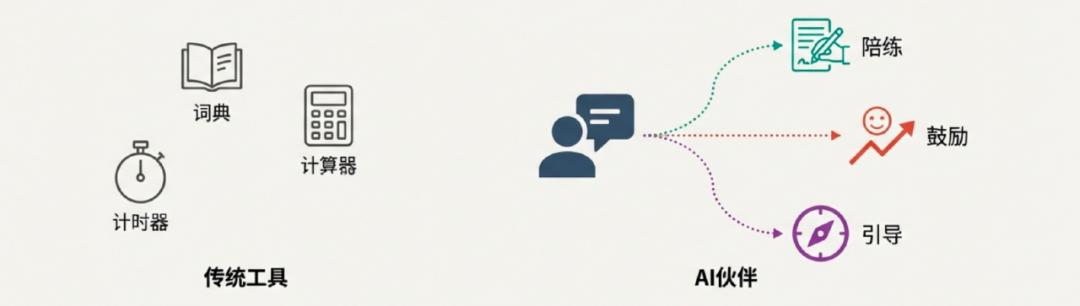
Core Insights - The emergence of AI Learning Companions is transforming the education sector by providing personalized, long-term, and emotionally supportive learning experiences, moving beyond traditional educational software [1][3] Group 1: AI Language Practice - Language learning is a key area for AI Learning Companions, addressing the scarcity of immersive practice and real-time feedback that traditional methods lack [5] - Duolingo has integrated GPT-4 into its platform, allowing users to engage in roleplay conversations in various virtual scenarios, enhancing the realism of language practice [5][6] - In China, products like SpeakGuru offer tailored practice for exams like IELTS and high school English, providing instant feedback based on official scoring criteria [6][9] - AI language companions lower the barriers to practice, enabling students to engage in conversation anytime and anywhere, thus increasing practice frequency significantly [9][11] Group 2: Emotional Support and Habit Management - Learning is influenced by emotional factors, and AI Learning Companions can provide scalable emotional support that traditional educational systems often lack [12][17] - Replika, an AI emotional companion, has shown potential in helping users express emotions and alleviate stress, although it faces regulatory challenges regarding user safety [12][13] - Domestic products like Xiaosi 3.0 focus on emotional perception and habit guidance, helping students manage anxiety and procrastination through interactive dialogue [15][17] Group 3: Knowledge Guidance - AI is evolving towards providing knowledge guidance, with products like PhotoMath offering process-oriented learning in mathematics, enhancing understanding rather than just providing answers [18][21] - The integration of visual recognition and interactive explanations in products like Xiaoyuan AI aims to create a more engaging learning experience similar to that of a human tutor [21][25] - The potential for AI to handle routine knowledge explanations could free up teachers for more complex tasks, but challenges regarding reliability and ethical boundaries remain [25]


学习机进化论:穿过内容舒适区,驶入AI深水区
2 1 Shi Ji Jing Ji Bao Dao· 2025-11-11 07:52
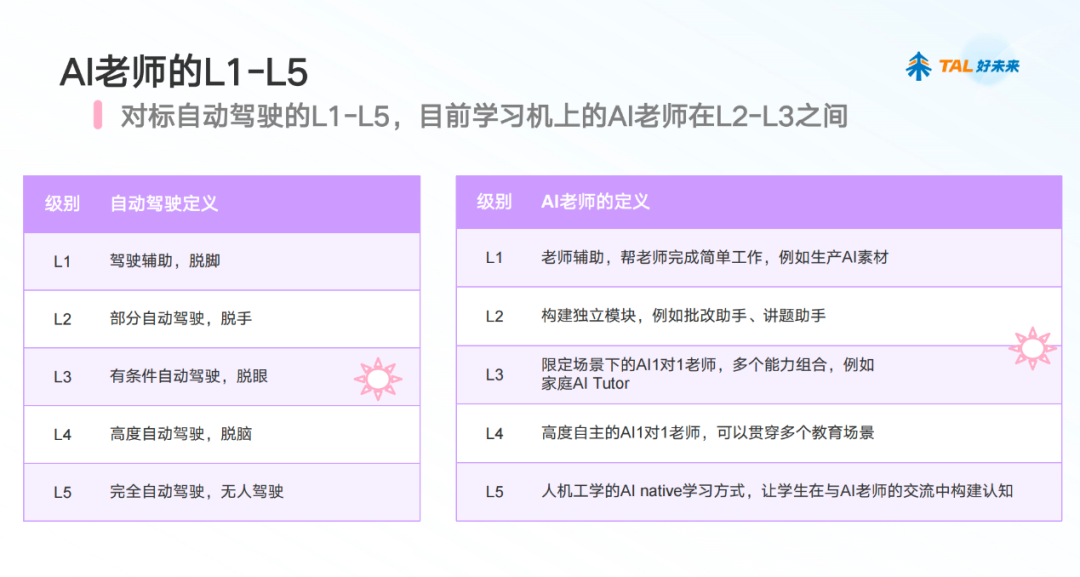
Core Insights - The learning machine market in 2025 is characterized by innovation-driven market capture and the consolidation of advantages through continuous innovation [1] - The learning tablet market saw a total channel sales of 1.806 million units in Q3 this year, reflecting a year-on-year growth of 3.5% [2] - Education companies, represented by Xueersi, are expected to fully surpass traditional educational technology companies in 2024, capturing a dominant share of the learning machine market [3] - In 2025, education companies are not only focusing on providing quality content but are also deeply exploring AI teachers, which represent a higher barrier than quality content [4] Market Dynamics - Quality content serves as a strong barrier for education companies entering the learning machine market, with Xueersi's learning machine offering a total of 16 million minutes of courses, 4 million minutes added since launch, 850,000 sets of real questions, and 700 million questions in its knowledge resource library [5] - The brand reputation behind quality content is crucial, as using Xueersi's learning machine allows users to access lessons from well-regarded teachers with over 20 years of experience [6] AI Teacher Development - The shift from quality content to AI teachers is driven by the need for interaction and guidance in self-learning scenarios, as traditional human services cannot scale to meet the needs of millions of users [7] - AI teachers are seen as the most direct and effective form of deep service, leveraging vast amounts of user data generated during content usage to develop high-quality datasets for AI [8] - The evolution of AI teachers is likened to the progression of autonomous driving, with Xueersi's AI teacher currently at L3 capability, indicating a combination of multiple abilities [10][11] AI Teacher Capabilities - The L3 AI teacher represents a significant advancement, capable of breaking down complex problems into manageable steps and guiding students to think independently while providing real-time feedback [12][13] - The latest version, Xiao Si 3.0, offers a natural interaction experience akin to a real teacher, capable of immersive, multi-modal, and deeply personalized teaching [16][20] - The integration of multi-modal capabilities allows the AI teacher to interact with students in a paper-and-screen environment, providing real-time guidance and feedback as students work through problems [21][22] Competitive Landscape - The future competition in the learning machine market will center around AI capabilities, with successful products needing to provide both quality resources and effective solutions for utilizing those resources [22]
学习机进化论:穿过内容舒适区,驶入AI深水区
21世纪经济报道· 2025-11-11 07:47
Core Viewpoint - The learning machine market in 2025 is characterized by innovation-driven market capture and the continuous strengthening of competitive advantages through technological advancements [1] Group 1: Market Dynamics - In Q3 of this year, the total sales volume of learning tablets reached 180.6 thousand units, reflecting a year-on-year growth of 3.5% [2] - Education companies, represented by Xueersi, are expected to fully surpass traditional educational technology firms by 2024, capturing a dominant market share in the learning machine sector [2] - High-quality content is identified as the core competitive advantage that allows educational companies to gain market traction [2] Group 2: Transition to AI Teachers - Educational companies are moving beyond merely providing quality content to deeply exploring AI teachers, which presents a higher barrier to entry [2][3] - The need for interactive guidance rather than one-way content delivery is a significant demand in self-learning scenarios [3] - AI teachers are seen as a solution to the limitations of human teachers, which cannot simultaneously achieve personalization, high quality, and scalability [3] Group 3: AI Teacher Development - The development of AI teachers is likened to the progression from L1 to L5 in autonomous driving, with Xueersi's AI teacher currently at L3 capability [4] - L2 AI teachers function as independent modules, while L3 AI teachers combine multiple capabilities to create a closed-loop teaching experience [7] - The latest version, Xiao Si 3.0, offers natural interaction and can provide personalized teaching experiences [9] Group 4: Technological Innovations - The integration of multi-modal capabilities allows AI teachers to interact with students in a more immersive manner, enhancing the learning experience [10] - The AI teacher can facilitate "paper-screen interaction," where students can write on paper while receiving real-time guidance from the AI [11] - The complexity of real-time judgment and interaction requires high-quality data and advanced R&D capabilities, which are essential for companies to develop effective AI solutions [13]