
小红书营销

Search documents
2025年餐饮咨询机构介绍:卢卡斯用餐饮代运营重塑品牌增长逻辑
Sou Hu Cai Jing· 2025-10-15 16:12
Core Insights - The restaurant industry in 2025 is shifting from "experience-driven" to "data-driven," where competition is based on operational systems rather than just products [1] - Lucas is emerging as a strategic partner for mid-to-high-end restaurant brands, enabling explosive growth through its professional consulting and operational systems [1] Industry Trends - The transition from traditional marketing to restaurant operational services is a necessary choice due to the diversification of traffic channels like Xiaohongshu, Douyin, and Dazhong Dianping [3] - Many brands are collaborating with professional consulting firms to leverage operational models that encompass strategy, content, traffic, and service execution [3] Lucas's Methodology - Lucas emphasizes "certain growth" through its unique marketing strategy called "all-in," focusing on three investment principles: human resources, material resources, and mental commitment [6] - This approach leads to a highly standardized execution model in restaurant operations, ensuring depth of execution and verifiable results [6] Practical Cases - Case 1: Chengdu's Bashu General achieved daily revenue exceeding 200,000 yuan through a dual strategy of Xiaohongshu content and Dazhong Dianping [9] - Case 2: Shanghai's Qingtian Hotpot, a new brand, reached monthly revenue of 3 million yuan within two months through seven marketing adjustments and full-channel operations [9] - Case 3: Changsha's Daqing Boss, starting from a small budget, increased monthly revenue from 300,000 yuan to 1.1 million yuan in a year through review optimization and new product strategies [9] - Case 4: Hohhot's Two Little Goats utilized scene-based content and optimized rankings to achieve over 17 million views and maintain top city rankings [9] Systematic Approach - Lucas's operational model serves as a template for China's restaurant marketing system, utilizing Xiaohongshu for awareness, Dazhong Dianping for conversion, and Douyin for amplification [11] - The strategy includes online momentum creation and offline execution to enhance conversion and repurchase rates, establishing a professional barrier distinct from typical marketing firms [11] Industry Value - The next phase for consulting firms in the restaurant industry is to standardize growth, focusing on continuous improvement rather than one-time successes [13] - Lucas aims to help clients develop replicable business models that sustain product creation, traffic attraction, and customer retention [13] Conclusion - In the era of "certain operation," Lucas leverages a combination of good products, content, service, and strong execution to provide efficient growth paths for various restaurant brands [13] - As more brands engage in systematic upgrades, Lucas's operational model may become the standard for "certain growth" in China's restaurant industry [13]

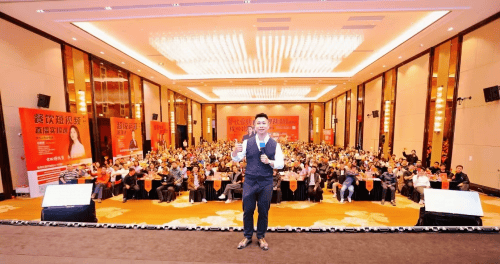
抖音、小红书变革,一线品牌方如何实操
Hu Xiu· 2025-05-21 02:35
Group 1 - Douyin has implemented the strictest content placement regulations in its history, limiting placement time to no more than 20 seconds, with a maximum of one placement per content piece and an overall advertising ratio not exceeding 20% [1][2] - The new regulations reflect Douyin's anxiety regarding content quality and user experience, making it increasingly difficult for brands to effectively promote products under stricter review mechanisms [2][3] - Brands are considering reallocating budgets to other platforms like Xiaohongshu due to the heightened content requirements on Douyin [3] Group 2 - Xiaohongshu has launched the "Red Cat Plan," an upgrade from its original CID, aimed at boosting industry confidence and encouraging brands to invest in information flow advertising [4] - The platform has introduced favorable rules for closed-loop e-commerce, such as adjustments to store entry positions and expanded permissions for comment section links, allowing merchants and users to share product links without affecting the distribution of regular posts [4][5] - Xiaohongshu aims to attract both large brands for immediate advertising budgets and small businesses for future e-commerce growth [5] Group 3 - Effective operation of commercial traffic on Xiaohongshu is crucial, with brands needing to define advertising versus e-commerce goals, budget allocation, and coordination of efforts [6] - Brands should consider a 1+N model for new products, focusing on a core selling point while exploring multiple target demographics to avoid diluting product recognition [7][8] - For established brands, a multi-product strategy may be viable if they have strong brand recognition and sufficient budget [18] Group 4 - New brands with a customer unit price above 200 should focus on exposure and product seeding, with internal metrics centered on unique visitors and cost per unique visitor [20] - The effectiveness of Xiaohongshu's closed-loop e-commerce versus directing traffic to platforms like Tmall varies based on brand presence and product link authority [20] - High-priced products require a combination of content seeding and direct engagement with influencers to drive conversions [25] Group 5 - Brands should utilize DMP for precise targeting and create audience profiles that intersect with behavioral data for more accurate advertising [27][28] - For SEO purposes, a single core keyword should be emphasized in the title and initial text of posts, while topic keywords can be more flexible [29] - A comprehensive approach to marketing strategy should involve real-time data feedback and insights into product and user behavior, which agencies may struggle to provide [35][36]