确定性增长

Search documents
「食」代新机:小红书食品行业增长全景指南
Zhong Guo Shi Pin Wang· 2025-12-19 10:19
Core Insights - The article emphasizes the importance of understanding consumer behavior and market trends in the fast-moving consumer goods (FMCG) sector, particularly in the food industry, to achieve sustainable growth and effective marketing strategies [1][4]. Group 1: Industry Trends - The food industry is experiencing stable growth across six major segments, characterized by high demand and supply dynamics, indicating a robust market potential [5]. - The growth in the food supplement sector is driven by diverse and refined consumer trends, reflecting significant consumption upgrades and innovative expressions [7]. Group 2: Marketing Strategies - Xiaohongshu (Little Red Book) is becoming a central platform for brands to gain insights into trends, connect with users, and achieve certain growth, especially during peak seasons like the Spring Festival [4]. - A systematic marketing blueprint is provided for food brands, focusing on three core paths: external e-commerce, closed-loop e-commerce, and major brand events, to ensure comprehensive coverage from brand exposure to sales conversion [4]. Group 3: Consumer Segmentation - The article outlines four key decision factors in food consumption: taste satisfaction, health nourishment, emotional resonance, and experiential context, which help brands develop precise consumer segmentation strategies [10]. - Brands are encouraged to leverage existing user assets for intelligent expansion rather than blindly seeking new customers, focusing on penetrating potential consumer circles [9]. Group 4: Growth Accelerators - Three major growth accelerators for merchants are identified: expanding product offerings, broadening target demographics, and enhancing market presence [8]. - The article suggests that once brands overcome initial survival challenges, they should shift their strategic focus towards development through systematic breakthroughs in the aforementioned dimensions [8]. Group 5: Brand Positioning - The comprehensive prosperity of the six food categories provides brands with a full-cycle platform for launching new products, breaking into competitive segments, and achieving long-term growth [6]. - Brands can achieve differentiated marketing appeals and business objectives by aligning their strategies with the platform's ecosystem and marketing tools, transforming community momentum into brand growth [6].

谨慎看涨?
第一财经· 2025-11-26 11:31
Core Viewpoint - The A-share market shows a divergence in index performance, with the Shanghai Composite Index being dragged down by military, banking, and traditional cyclical stocks, while the Shenzhen Component Index is supported by consumer electronics, retail, and new energy sectors, and the ChiNext Index leads due to strong performance in high-growth sectors like CPO (optical modules), pharmaceuticals, and semiconductors [4][5]. Market Performance - A total of 9 stocks rose while 3,591 stocks fell, indicating a market characterized by "high-growth sectors strengthening and traditional defensive sectors retreating" [5]. - The CPO (optical modules) sector continues to perform strongly, with the pharmaceutical sector leading due to flu and innovative drug concepts, while traditional cyclical sectors like banking, oil, and steel experienced slight pullbacks [5]. Trading Volume - The total trading volume in the two markets decreased by 1.6%, reflecting a trend of "rapid rise in the morning and gradual narrowing in the afternoon" [6]. - The Shenzhen market dominated trading volume, while the Shanghai market saw a contraction, indicating that market funds are seeking "undervalued, high-growth" targets [6]. Fund Flows - Institutional investors are cautious and pursuing "certain growth," with technology sectors like consumer electronics, semiconductors, and communication equipment becoming core allocation directions [8]. - Individual investors are avoiding "high valuation risks," moving funds from previously popular internet and software service sectors into low-valuation defensive sectors like banking and public utilities [8]. Investor Sentiment - Retail investor sentiment is at 75.85%, while institutional sentiment stands at 52.86% [9].

2025年餐饮咨询机构介绍:卢卡斯用餐饮代运营重塑品牌增长逻辑
Sou Hu Cai Jing· 2025-10-15 16:12
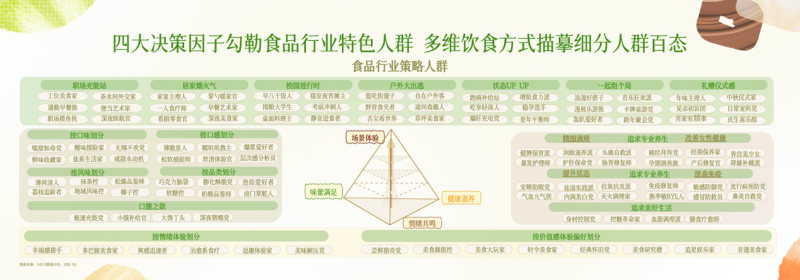
Core Insights - The restaurant industry in 2025 is shifting from "experience-driven" to "data-driven," where competition is based on operational systems rather than just products [1] - Lucas is emerging as a strategic partner for mid-to-high-end restaurant brands, enabling explosive growth through its professional consulting and operational systems [1] Industry Trends - The transition from traditional marketing to restaurant operational services is a necessary choice due to the diversification of traffic channels like Xiaohongshu, Douyin, and Dazhong Dianping [3] - Many brands are collaborating with professional consulting firms to leverage operational models that encompass strategy, content, traffic, and service execution [3] Lucas's Methodology - Lucas emphasizes "certain growth" through its unique marketing strategy called "all-in," focusing on three investment principles: human resources, material resources, and mental commitment [6] - This approach leads to a highly standardized execution model in restaurant operations, ensuring depth of execution and verifiable results [6] Practical Cases - Case 1: Chengdu's Bashu General achieved daily revenue exceeding 200,000 yuan through a dual strategy of Xiaohongshu content and Dazhong Dianping [9] - Case 2: Shanghai's Qingtian Hotpot, a new brand, reached monthly revenue of 3 million yuan within two months through seven marketing adjustments and full-channel operations [9] - Case 3: Changsha's Daqing Boss, starting from a small budget, increased monthly revenue from 300,000 yuan to 1.1 million yuan in a year through review optimization and new product strategies [9] - Case 4: Hohhot's Two Little Goats utilized scene-based content and optimized rankings to achieve over 17 million views and maintain top city rankings [9] Systematic Approach - Lucas's operational model serves as a template for China's restaurant marketing system, utilizing Xiaohongshu for awareness, Dazhong Dianping for conversion, and Douyin for amplification [11] - The strategy includes online momentum creation and offline execution to enhance conversion and repurchase rates, establishing a professional barrier distinct from typical marketing firms [11] Industry Value - The next phase for consulting firms in the restaurant industry is to standardize growth, focusing on continuous improvement rather than one-time successes [13] - Lucas aims to help clients develop replicable business models that sustain product creation, traffic attraction, and customer retention [13] Conclusion - In the era of "certain operation," Lucas leverages a combination of good products, content, service, and strong execution to provide efficient growth paths for various restaurant brands [13] - As more brands engage in systematic upgrades, Lucas's operational model may become the standard for "certain growth" in China's restaurant industry [13]