小马夜灯文创作品

Search documents
浓浓烟火气 游客乐陶陶
Xin Lang Cai Jing· 2026-02-20 22:46
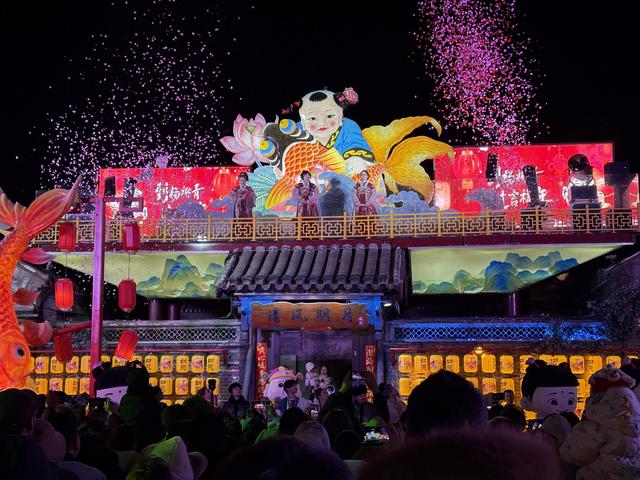
Core Viewpoint - The Yangliuqing Ancient Town in Tianjin is undergoing a significant transformation through systematic renovation and innovative operations, becoming a cultural landmark and a popular tourist destination, especially during the Spring Festival [1][15]. Group 1: Renovation and Cultural Significance - The Yangliuqing Ancient Town renovation project started in October 2024, aiming to revitalize the historical site with a focus on cultural heritage and modern aesthetics [1][15]. - The town is recognized for its rich history, being a key location along the Grand Canal, and is known for its traditional crafts such as woodblock New Year paintings and paper-cutting [11][19]. - The town's cultural offerings include immersive performances and interactive experiences that engage visitors in the local traditions and stories [12][13]. Group 2: Spring Festival Activities - During the Spring Festival, the town launched a series of themed activities under the banner "Gathering Good Fortune," establishing itself as China's first "Auspicious Year" themed ancient town [5][12]. - The festival features seven auspicious time slots, each with unique themes and emotional narratives, providing a continuous immersive experience for visitors [12][13]. - The town's activities include a market showcasing local delicacies and cultural products, enhancing the festive atmosphere and attracting a larger crowd [13][15]. Group 3: Traditional Crafts and Innovation - Yangliuqing woodblock New Year paintings, a significant cultural heritage, are characterized by vibrant colors and auspicious themes, with the "Child Holding Fish" design being particularly popular [6][9]. - The local artisans are integrating modern elements into traditional crafts, such as creating interactive experiences that appeal to younger audiences [19][20]. - The use of AI and new media is being explored to enhance the traditional craft's reach and relevance, ensuring its preservation and adaptation to contemporary tastes [20].


杨柳青古镇:浓浓烟火气,游客乐陶陶
Xin Lang Cai Jing· 2026-02-20 03:07
Core Viewpoint - The Yangliuqing Ancient Town in Tianjin is undergoing a transformation to become a cultural landmark and a popular tourist destination, leveraging its historical significance and traditional crafts like woodblock printing and paper-cutting to attract visitors and stimulate economic activity [3][12][14]. Group 1: Cultural and Historical Significance - Yangliuqing Ancient Town is known for its rich cultural heritage, particularly the Yangliuqing woodblock prints, which are recognized as one of China's four major woodblock print styles and were listed as a national intangible cultural heritage in 2006 [4][12]. - The town's historical significance is highlighted by its location along the Grand Canal, contributing to its reputation as a cultural hub with traditional performances and crafts [6][12]. Group 2: Transformation and Modernization - The local government initiated a renovation project in October 2024 to revitalize the ancient town, focusing on systematic upgrades and innovative operations to enhance its appeal [3][12]. - The renovation includes the improvement of facilities, beautification of streetscapes, and the integration of cultural experiences, aiming to create a dynamic and interactive tourist destination [13][14]. Group 3: Tourism and Economic Impact - The ancient town has become a popular destination for tourists, particularly from the Beijing-Tianjin-Hebei region, with visitor numbers expected to exceed 760,000 during the upcoming Spring Festival [14]. - The introduction of themed events, such as the "Fortune Gathering" during the Spring Festival, aims to enhance visitor engagement and stimulate local economic activity [9][12]. Group 4: Traditional Crafts and Innovation - The Yangliuqing woodblock print, particularly the "Child Holding Fish" motif, remains a significant cultural symbol, with modern adaptations being developed to appeal to younger audiences [4][16]. - The integration of technology and innovative design in traditional crafts, such as the use of AI for color matching in new products, is helping to attract a new generation of artisans and consumers [20][21].