工商业储能解决方案

Search documents
为恒智能递表港交所 报告期内累计亏损近4亿元
Mei Ri Jing Ji Xin Wen· 2026-02-12 10:47
Core Viewpoint - The company, Heng Intelligent Technology Co., Ltd., has submitted its listing application to the Hong Kong Stock Exchange, aiming to raise funds for capacity expansion, product development, and sales network expansion, despite facing significant losses and declining average selling prices in its core business [1][3]. Group 1: Company Overview - Heng Intelligent claims to be a leader in smart commercial energy storage solutions, yet it has not achieved profitability, with cumulative losses nearing 400 million yuan during the reporting period [3][6]. - The company operates in a highly competitive industry, ranking eighth in global commercial energy storage system shipments and third in overseas markets, with operations covering over 50 countries [4][5]. Group 2: Financial Performance - Revenue for the reporting period was 267 million yuan, 268 million yuan, and 476 million yuan, with losses of approximately 154 million yuan, 205 million yuan, and 40.4 million yuan respectively [6]. - The average selling prices for commercial energy storage solutions dropped significantly from 1.7 yuan per watt-hour in 2023 to 1.0 yuan per watt-hour by the first three quarters of 2025, a decline of 41% [5]. Group 3: Operational Challenges - The company has a negative cash flow from operating activities, with net cash flow of approximately -162 million yuan, -70.11 million yuan, and -117 million yuan during the reporting period [7]. - Inventory levels increased from 191 million yuan at the end of 2023 to 319 million yuan by the third quarter of 2025, indicating potential overstock issues [7]. Group 4: Market Position and Strategy - Heng Intelligent's market share is only 2.0%, indicating a significant gap compared to the leading companies in the lithium-ion battery storage market, which has around 1,500 participants in mainland China [5]. - The company's production capacity utilization for commercial energy storage systems decreased from 88.3% in the first three quarters of 2024 to 77.5% in the first three quarters of 2025, suggesting that capacity expansion is outpacing order growth [10].

5000万博出27亿IPO,香港“壳王”隐身幕后
阿尔法工场研究院· 2026-02-12 04:06
Core Viewpoint - The article discusses the upcoming IPO of Weiheng Intelligent Technology Co., Ltd., highlighting its valuation of 2.7 billion and the competitive landscape of the energy storage industry in China, emphasizing the challenges and opportunities faced by the company in a capital-intensive environment [5][31]. Group 1: Company Overview - Weiheng Intelligent was founded in 2017 by Professor Sun Yaojie from Fudan University, who has over 33 years of experience in the electronic engineering and energy sectors [7]. - The company has established a dual-team model for software and hardware development, with over 50% of its staff focused on BMS/EMS software, achieving a near-zero failure rate [11]. - The business structure has shifted significantly, with commercial energy storage becoming the core revenue driver, increasing from 0.89 billion in 2023 to 2.22 billion in 2024, representing an 82.6% revenue share [11]. Group 2: Market Position and Financial Performance - Weiheng Intelligent's overseas market revenue surged from 14.5% in 2023 to 50.6% in 2024, with Europe contributing nearly 80% of this revenue [12]. - The company reported a revenue increase from 2.67 billion in 2023 to 4.76 billion in the first nine months of 2025, marking a 281.5% year-on-year growth [26]. - Gross profit rose from 22 million to 90.8 million, with gross margin improving from 8.3% to 19.1% [26]. Group 3: Challenges and Risks - The company's industry ranking is questioned, as it claims to be the eighth in global commercial energy storage but lacks corroborating data from other industry sources [27]. - Despite narrowing losses to 40.4 million in the first nine months of 2025, the company has not yet achieved profitability, with cumulative losses reaching 399 million over three years [28]. - The production capacity for commercial energy storage is underutilized at 77.5%, and the company relies heavily on outsourcing for its supply chain [29]. - A significant portion of revenue (59.4%) comes from a single customer, raising concerns about supply chain concentration risks [30].
5000万博出27亿IPO!香港“壳王”隐身幕后,宁德时代、马云竟都是这名复旦教授的“牌友”?
Xin Lang Cai Jing· 2026-02-11 06:04
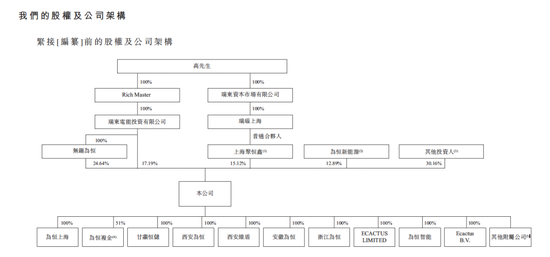
Core Viewpoint - Jiangsu Weiheng Intelligent Technology Co., Ltd. (referred to as "Weiheng Intelligent") officially submitted its IPO application to the Hong Kong Stock Exchange on February 9, 2026, marking the beginning of a significant capital event involving scholars, capital tycoons, and industry giants. The company, founded by Fudan University professor Sun Yaojie in 2017, has reached a valuation of 2.7 billion. Despite its achievements, Weiheng Intelligent faces challenges in a highly competitive market with numerous players and significant capital demands [1][23]. Group 1 - Weiheng Intelligent's valuation and market share are considered "mini" compared to its peers, despite the ongoing IPO frenzy among Chinese energy storage companies since 2026 [1][23]. - The company has established a strong focus on commercial energy storage, with revenue increasing from 0.89 billion in 2023 to 2.22 billion in 2024, representing a significant growth in revenue share from 33.3% in 2023 to 82.6% in 2024 [5][27]. - The overseas market has become a key growth driver, with revenue share soaring from 14.5% in 2023 to 50.6% in 2024, and maintaining a high level of 44.7% in the first nine months of 2025 [6][28]. Group 2 - The company has received substantial backing from Hong Kong capital legend Gao Zhenshun, who acquired a 57.14% controlling stake for approximately 50 million, significantly enhancing the company's valuation [7][29]. - Gao Zhenshun's strategic management has included relocating the company's headquarters to Wuxi and implementing a robust governance structure, which has laid a solid foundation for future financing and the IPO process [10][33]. - The entry of CATL (Contemporary Amperex Technology Co., Ltd.) as an investor has provided not only financial support but also comprehensive industrial empowerment, making it one of Weiheng Intelligent's top five customers by 2025 [15][35]. Group 3 - Weiheng Intelligent's narrative centers around "AI empowerment + digital energy," leveraging its self-developed AI algorithm platform to optimize charging and discharging strategies, resulting in project returns exceeding traditional models by over 30% [17][37]. - The company's financial performance has shown significant improvement, with revenue increasing from 267 million in 2023 to 476 million in the first nine months of 2025, and gross profit rising from 22 million to 90.8 million, with a gross margin increase from 8.3% to 19.1% [17][37]. - Despite these achievements, the company faces several challenges, including doubts about its industry ranking credibility and a fragile profit foundation, with cumulative losses of 399 million over the past three years [18][38]. Group 4 - The company has a mismatch in production capacity and trends, with a commercial energy storage capacity of 4.28 GWh and an actual utilization rate of only 77.5%, indicating reliance on third-party processing [19][39]. - There is a significant overlap between major customers and suppliers, with one entity contributing 59.4% of revenue, raising concerns about supply chain concentration risks [21][40]. - The future of Weiheng Intelligent in the competitive energy storage market will depend on its ability to demonstrate independent value amidst pressures from industry giants and a crowded market landscape [22][41].

“工业股壳王”高振顺实控的为恒智能递表港交所:工商业储能平均售价三年时间跌逾四成,报告期内累亏近4亿元
Mei Ri Jing Ji Xin Wen· 2026-02-11 00:13
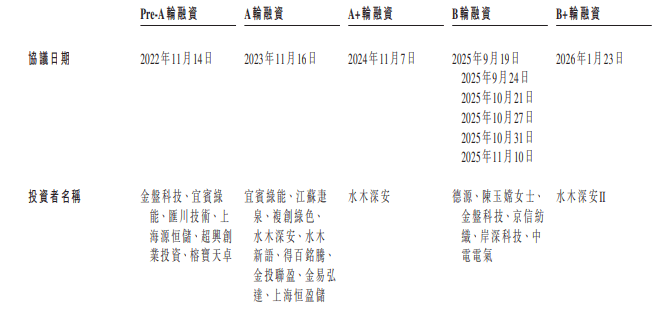
Core Viewpoint - Weiheng Intelligent Technology Co., Ltd. has submitted its listing application to the Hong Kong Stock Exchange, aiming to raise funds for capacity expansion, product development, and sales network expansion, despite facing declining average selling prices and ongoing losses [2][3][4]. Company Overview - Weiheng Intelligent is a provider of smart commercial energy storage solutions, claiming to be a leader in the sector. The company has a global presence, covering over 50 countries and regions, with more than 600 operational energy storage stations across various industries [3][4][6]. - The company ranks eighth among 900 lithium-ion battery storage system integrators in China and third in overseas markets based on shipment volume [3][4][6]. Financial Performance - The company reported revenues of RMB 266.835 million, RMB 268.275 million, and RMB 476.389 million for the years 2023, 2024, and the first three quarters of 2025, respectively. However, it incurred losses of approximately RMB 1.54 billion, RMB 2.05 billion, and RMB 404 million during the same periods, totaling nearly RMB 4 billion [6][7][8]. - The average selling prices for commercial energy storage solutions have decreased significantly, with a drop of 41% from RMB 1.7 per watt-hour in 2023 to RMB 1.0 per watt-hour in the first three quarters of 2025 [5][15]. Market Position and Competition - The energy storage market is highly competitive, with around 1,500 participants in the lithium-ion battery storage market in China and approximately 800 in the commercial storage segment. Weiheng holds a market share of only 2.0%, indicating a significant gap compared to the leading companies [6][16]. - The company relies heavily on short-term orders, lacking a long-term revenue "moat," which raises concerns about future revenue visibility [7][17]. Operational Metrics - The capacity utilization rate for commercial energy storage systems has declined from 88.3% in the first three quarters of 2024 to 77.5% in the first three quarters of 2025, suggesting that capacity expansion may be outpacing order growth [10][20]. - The company's cash flow from operating activities has been negative, with net cash flows of approximately -RMB 1.62 billion, -RMB 701 million, and -RMB 1.17 billion during the reporting periods [7][17]. Inventory and Receivables - Weiheng's inventory increased from RMB 191 million at the end of 2023 to RMB 319 million by the end of the third quarter of 2025, alongside a rise in trade receivables from RMB 93 million to RMB 141 million during the same period [8][18]. Funding and Valuation - The company completed a B+ round of financing in January 2026, achieving a post-money valuation of RMB 2.708 billion, a 145% increase from its Pre-A round valuation of approximately RMB 1.106 billion in August 2023 [8][19].
IPO雷达|为恒智能递表港交所,大客户更替显著,逾七成收入被原材料“吃掉”
Sou Hu Cai Jing· 2026-02-10 06:49
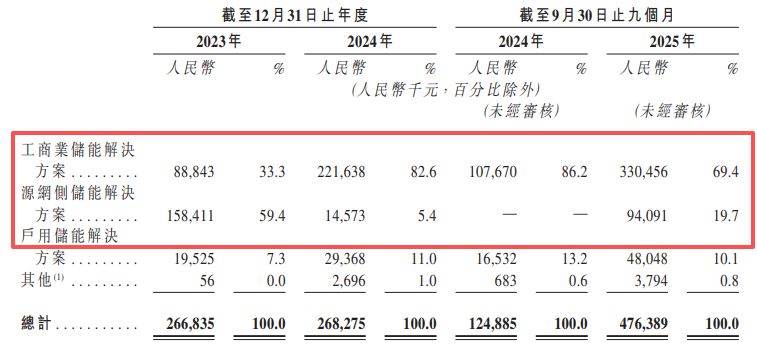
Core Viewpoint - The company, Weiheng Intelligent Technology Co., Ltd., has submitted an application for a main board listing on the Hong Kong Stock Exchange, reporting significant revenue growth in the first three quarters of 2025 but still not achieving profitability. The company has undergone notable changes in its top five customers, with raw material costs accounting for 75% of its revenue [1][10]. Financial Performance - The company reported revenues of RMB 267 million, RMB 268 million, and RMB 476 million for the years 2023, 2024, and the first three quarters of 2025, respectively, with a year-on-year increase of 281% in the first three quarters of 2025. However, losses were recorded at RMB 154 million, RMB 205 million, and RMB 40.4 million for the same periods [5][12]. - The revenue breakdown shows that commercial energy storage solutions contributed 33.3%, 82.6%, and 69.4% of total revenue during the respective periods, while grid-side energy storage solutions accounted for 59.4%, 5.4%, and 19.7%, indicating significant fluctuations [5][8]. Customer and Supplier Dynamics - The revenue from the top five customers represented 75.3%, 31.2%, and 36.3% of total revenue across the reporting periods, with the largest customer contributing 59.4%, 9.5%, and 18.5% respectively. There has been a significant turnover among the top five customers, with major clients changing from year to year [11]. - The company has seen an increase in procurement concentration, with purchases from the top five suppliers amounting to RMB 117 million, RMB 166 million, and RMB 231 million, representing 41.5%, 41.1%, and 50.1% of total procurement [11]. Market Position and Expansion - As of the first three quarters of 2025, the company ranked eighth in global commercial energy storage system shipments and third in overseas markets, with established market presence in over 50 countries and regions, including Europe, Australia, Southeast Asia, and the Middle East [7]. - The company has faced various legal, regulatory, and operational risks while conducting business in multiple overseas jurisdictions, particularly in Europe and the Asia-Pacific region [8][9]. Research and Development - The company has established three R&D centers in Wuxi, Xi'an, and Shanghai, focusing on different technologies and product categories. R&D expenditures were RMB 46 million, RMB 47 million, and RMB 38 million, accounting for 17.3%, 17.7%, and 8.0% of total revenue during the respective periods [14][15]. - The company plans to enhance R&D efficiency by optimizing processes and integrating artificial intelligence into its energy storage solutions to improve energy analysis and automate complex processes [16].
派能科技:公司将继续深化全场景布局,构建产品与技术护城河
Zheng Quan Ri Bao Zhi Sheng· 2026-01-15 12:39
Core Insights - The company aims to deepen its full-scenario layout and build a product and technology moat to enhance its competitive edge in the market [1] Group 1: Home Energy Storage - The company will continue to optimize the performance and cost structure of its home energy storage products, leveraging its brand reputation in the European market to increase its global market share [1] Group 2: Commercial and Industrial Energy Storage - The company is focusing on the domestic "independent storage" market opportunities and the diversified demand upgrades in overseas markets, aiming to explore core scenario values such as renewable energy integration, peak-valley price arbitrage, grid demand response, and energy security during extreme weather [1] - It plans to launch standardized and customized solutions suitable for different scenarios to rapidly expand market coverage [1] Group 3: Lightweight Power Solutions - The company is committed to developing the battery swap ecosystem for two- and three-wheeled vehicles and expanding its business-to-business (B2B) client base to create new growth drivers [1]

工商业储能迈入价值竞争新阶段,中国燃气(00384.HK)“技术+运维”双壁垒破局
Ge Long Hui· 2026-01-08 01:06
Core Insights - The article discusses the recent policy changes in China's energy sector, particularly the "Document No. 136," which promotes market participation for renewable energy and establishes a sustainable pricing mechanism for new energy projects [1] - It highlights the shift in energy storage projects from mere compliance to creating actual economic benefits for users and the power system [1] Group 1: Policy and Market Changes - The National Development and Reform Commission and the National Energy Administration have issued a notice to deepen the market-oriented reform of renewable energy pricing [1] - The new policy encourages energy storage projects to focus on generating actual revenue through various means such as peak-valley arbitrage and frequency regulation services [1] Group 2: Company Capabilities - China Gas has emerged as a leading player in the commercial energy storage sector, leveraging its technological expertise and comprehensive service system [3] - The company offers a full lifecycle service that addresses user pain points, including customized energy storage system design, standardized installation, and professional operation and maintenance [3][4] Group 3: Project Implementation - China Gas has successfully implemented numerous energy storage projects in regions like the Yangtze River Delta and the Pearl River Delta, demonstrating its ability to adapt to different scales of enterprise needs [4] - The company has established partnerships with high-energy-consuming industries, showcasing its technical advantages in energy storage solutions [4] Group 4: Revenue Generation - The primary revenue source for China Gas comes from peak-valley arbitrage, with specific projects demonstrating significant cost savings for enterprises [6] - The company has developed a robust revenue structure that reduces reliance on peak-valley arbitrage by integrating virtual power plants and participating in demand response services [7] Group 5: Competitive Advantage - China Gas has transformed energy storage assets from mere cost optimization tools to revenue-generating vehicles, enhancing its value proposition for commercial users [8] - The company’s comprehensive energy service model positions it favorably in the market, allowing it to meet diverse energy management needs while ensuring safety and cost efficiency [10] Group 6: Future Growth Potential - The article suggests that as a comprehensive energy service provider, China Gas has a higher growth ceiling compared to pure energy storage companies [10] - The integration of energy storage into a holistic energy management system presents significant opportunities for China Gas, enabling it to optimize overall energy costs and enhance its market presence [10]

荣膺技术创新奖!弘正储能数字化方案赋能华南工商储市场
起点锂电· 2025-12-29 10:32
Core Viewpoint - Hongzheng Energy has been recognized for its technological breakthroughs in digital energy storage, winning the "2025 Industrial Battery Technology Innovation Award," highlighting the industry's acknowledgment of the company's technical strength and solution value [4][12]. Group 1: Market Opportunities - Guangdong, as the largest industrial electricity consumer in China, presents a stable electricity demand and significant investment potential for energy storage, driven by its manufacturing sector [6]. - The "electricity price difference" in Guangdong, particularly in the Pearl River Delta, reaches up to 1.3235 yuan/kWh, creating an attractive arbitrage environment for industrial energy storage [6]. - The combination of high electricity price differences and a large electricity consumption base is expected to lead to explosive growth in industrial energy storage projects in South China [6]. Group 2: Technological Innovations - Hongzheng Energy's commercial energy storage solutions focus on safety, economy, and stability, utilizing a dual-driven model of "smart hardware + digital platform" to create a comprehensive digital energy storage system [8]. - The digital energy storage system encompasses the entire lifecycle value, integrating energy regulation, smart energy management, and energy forecasting technologies to enhance the intelligence level of energy storage systems [8][9]. - The solutions provided by Hongzheng Energy extend beyond peak-valley arbitrage to include demand-side response, energy aggregation, and virtual power plants, offering multi-dimensional energy value enhancement for enterprises [9]. Group 3: Future Outlook - With the advancement of the "dual carbon" goals and the deepening of electricity market reforms, the potential of the South China industrial energy storage market is expected to continue to be released [15]. - Hongzheng Energy aims to deepen its focus on digital energy storage technology innovation, providing smarter energy solutions to empower various industries and contribute to regional energy transformation and green development [15].
中国燃气携手河南金利金锌打造有色金属冶炼行业储能项目新标杆
Zheng Quan Ri Bao· 2025-12-01 11:39
Core Viewpoint - The collaboration between China Gas Holdings Limited and Henan Jinli Zinc Co., Ltd. on a 60MW/120MWh commercial energy storage project represents a significant advancement in the green transformation of the non-ferrous metal smelting industry, addressing high energy consumption and enabling low-carbon production [1][2]. Group 1: Project Overview - The energy storage project is one of the largest user-side applications in the non-ferrous metal smelting sector, aimed at creating an efficient and low-carbon energy system for Henan Jinli Zinc's lead-zinc smelting operations [1]. - The total investment for Henan Jinli Zinc's lead-zinc smelting project is 3 billion yuan, with an expected annual output value of 5 billion yuan upon completion [1]. Group 2: Technical Specifications - The project includes 24 DC cabins and 12 power conversion systems, utilizing a fully liquid-cooled lithium iron phosphate system with a charge-discharge efficiency exceeding 87% [2]. - The liquid cooling temperature control technology maintains battery temperature within ±3°C, ensuring stable output even under high-temperature smelting conditions, and features a "black start" capability to provide emergency power during grid failures [2]. Group 3: Economic and Environmental Impact - Once operational, the energy storage project will significantly reduce electricity costs for smelting production through peak shaving and valley filling, while optimizing power resource utilization and reducing carbon emissions from fossil fuel consumption [2]. - The project is positioned as a benchmark for energy storage applications in the non-ferrous metal smelting industry, with China Gas aiming to continue focusing on energy transition needs in high-energy-consuming sectors through technological innovation and service upgrades [2].
英飞特:公司主要有用户侧的工商业储能以及户用储能解决方案及相关产品
Zheng Quan Ri Bao Zhi Sheng· 2025-11-19 13:41
Core Viewpoint - The company, Infit, primarily engages in the research, production, sales, and technical services of LED lighting supporting products, including LED drivers, sensors, control systems, and LED modules [1] Group 1: Company Overview - Infit focuses on LED lighting products and solutions, indicating a strong presence in the LED market [1] - The company also offers energy storage solutions, specifically targeting commercial and residential sectors, although the current scale of this segment is relatively small [1]