峰谷套利

Search documents
国内储能篇-政策催化下独立储能放量-关注-十五五-电费收支平衡与顶层电价机制
2026-02-13 02:17
Summary of the Conference Call on Independent Energy Storage in China Industry Overview - The conference call focused on the independent energy storage sector in China, highlighting the impact of national policies on the market dynamics and growth potential of the industry [2][3][14]. Key Points and Arguments 1. **National Capacity Pricing Mechanism**: A nationwide independent energy storage capacity pricing mechanism has been introduced, clarifying market expectations for 2026 and stimulating demand across the industry chain. However, provincial implementation details and peak-valley price differences will significantly affect storage profitability [2][3][14]. 2. **Renewable Energy Demand**: The demand for renewable energy consumption is substantial, with an expected addition of 250 GW of wind and solar capacity over the next five years, leading to a resource adjustment gap of approximately 300-350 GW, which corresponds to a required storage capacity of 250-300 GWh for 4-hour systems [2][4][11][12]. 3. **Electrochemical Storage Dominance**: Electrochemical storage, primarily using lithium batteries, accounts for over 95% of the market. As of Q3 2025, the total electrochemical storage capacity reached 80 GW (189 GWh), with a projected annual increase of 170-180 GWh [2][5][6]. 4. **Independent Storage Growth**: Independent storage has become the main type of new installations, with its share increasing significantly. The average duration of these systems is 2.3 hours, with many new projects featuring 4-hour systems. Utilization efficiency is higher for independent storage compared to renewable energy pairing, with some regions exceeding 1,000 hours of utilization [2][3][7]. 5. **Profitability Shift**: The profitability model for independent storage is shifting from a rental market to a combination of capacity pricing, spot market arbitrage, and auxiliary service frequency regulation revenues. The national capacity pricing policy has clarified the commercial model, with capacity compensation now accounting for 20-30% of revenues [2][3][7][14]. 6. **Regional Variations in Profitability**: The internal rate of return (IRR) varies significantly by region, with areas like Inner Mongolia benefiting from high subsidies and substantial peak-valley price differences. In contrast, coastal regions may not see as favorable economic conditions despite the capacity pricing policy [3][7]. 7. **Impact on Other Energy Sources**: The growth of independent storage is beneficial for renewable operators, as the cost of auxiliary services is primarily borne by the benefiting parties. However, the current market structure for these services is not fully mature, necessitating attention to the growth of wind and solar installations and changes in electricity pricing [8][10]. 8. **Future Projections**: The expected growth in storage capacity is anticipated to be sustained over the next five years, with a focus on the need for additional storage to accommodate the increasing renewable energy output. The projected annual gap remains around 60-70 GW [11][12]. 9. **Investment Recommendations**: Investors are advised to focus on large storage manufacturers, lithium-ion sector stocks, and Hong Kong-listed wind power operators, as the market dynamics evolve with the new pricing policies [3][14]. Additional Important Insights - The transition to a more structured capacity pricing model is expected to enhance the overall profitability of the energy storage sector, but ongoing monitoring of regional price differences and installation growth will be crucial for assessing long-term investment opportunities [3][14]. - The integration of peak-shaving costs into the spot market is anticipated to improve the overall profitability of green electricity, indicating a shift in how energy pricing and storage interact in the market [9].
工商业储能告别 “躺赚时代”,未来3-5年将进入 “能力竞争期”
中关村储能产业技术联盟· 2026-01-20 11:57
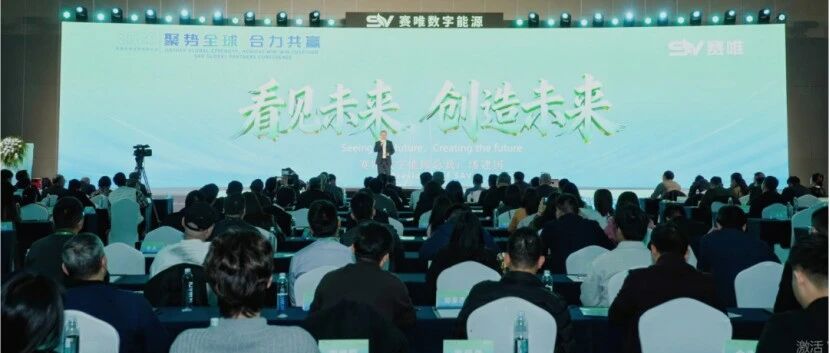
Core Viewpoint - The commercial energy storage industry has transitioned from a "profit-making era" to a "capability competition period" over the next 3-5 years, as stated by the chairman of Saiwei Digital Energy, indicating a shift in market dynamics and profitability models [2]. Market Dynamics - The market for user-side energy storage in China is expanding, with approximately 10.5 GWh of new installations expected by November 2025, despite the shrinking profit margins from the "peak-valley arbitrage" model due to adjustments in electricity pricing mechanisms [3]. - The national push for "microgrids" and "zero-carbon factories" is creating broader application scenarios for energy storage, presenting both opportunities and challenges for the industry [3]. Industry Trends - There is a consensus in the industry regarding the necessary shift from "policy dividends" to "value co-creation," emphasizing the need for collaborative innovation and internationalization [6][8]. - The development strategy of Saiwei Digital Energy aligns with this trend, having completed over 1,500 projects and established over 200 global partnerships in the past year, highlighting the diverse opportunities presented by varying global energy demands [10]. Product Innovation - The launch of the X3 "Storage Overlord" energy storage system represents a significant technological advancement aimed at addressing core market pain points, featuring a capacity of 836 kWh and a footprint reduced by 35% compared to traditional solutions [14][16]. - The X3 system integrates advanced AI-BMS battery management technology, enhancing usable capacity by 8% and achieving an overall system efficiency of up to 92.9% through innovative cooling and energy storage techniques [17][20]. Strategic Focus - Saiwei Digital Energy's strategic focus includes deepening technology, product iteration, and fostering ecological co-prosperity, aiming to enhance core competitiveness in a market characterized by technological diversity and dynamic policy adjustments [12][21]. - The company emphasizes the importance of intelligent operations, cross-scenario adaptability, and global layout capabilities as essential competitive factors in the future [21]. Ecosystem Collaboration - The event highlighted the importance of ecosystem collaboration, with discussions on agent policies and regional market insights, fostering partnerships across various regions [23]. - The founder of Jack Technology praised Saiwei's strategic positioning in the digital energy sector, recognizing its potential for growth and the importance of continued technological development and market expansion [25].

这家工厂的“印钞机”,居然不是生产线,而是易事特?
Xin Lang Cai Jing· 2026-01-15 14:09
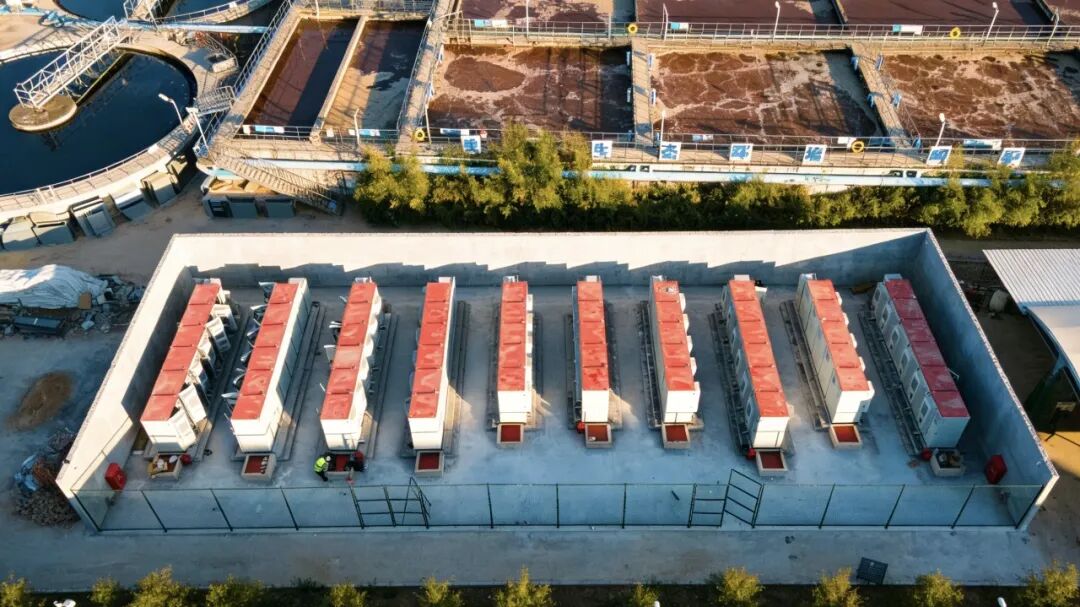
Core Insights - The article discusses the implementation of a battery energy storage system by a food company in Xuzhou, Jiangsu, which allows for strategic electricity usage based on price fluctuations, optimizing costs and enhancing financial returns [2][15]. Group 1: System Operation - The energy storage system consists of 56 outdoor integrated storage cabinets, each with a capacity of 50kW/215kWh, and operates automatically through a local Energy Management System (EMS) without frequent manual intervention [5][21]. - The system charges during off-peak hours when electricity prices are lowest and discharges during peak hours, effectively reducing overall electricity costs for the enterprise [19][21]. - On a typical day, the system can store 17MWh of electricity, with a discharge of approximately 15.11MWh during peak hours, translating to significant cost savings [5][19]. Group 2: Financial Impact - The daily financial benefit from the energy storage system is recorded at nearly 10,000 yuan, with an estimated annual revenue of over 3 million yuan under current electricity pricing conditions in Jiangsu [19][21]. - The system transforms energy management from a cost burden into a sustainable, value-adding asset for the company, allowing for consistent financial tracking and optimization [23][25]. Group 3: Reliability and Scalability - The integrated design of the storage cabinets minimizes on-site construction and operational complexity, while parallel operation enhances redundancy and scalability [21][23]. - The company emphasizes the importance of system reliability and delivery capability, ensuring that the energy storage project can be implemented and maintained effectively over time [11][23]. Group 4: Strategic Positioning - The company positions itself as a leader in the commercial energy storage sector, focusing on stable, reliable, and user-friendly technology that delivers clear economic benefits [25]. - By leveraging AI and renewable energy technologies, the company aims to redefine the relationship between productivity and energy management, moving from mere installation to essential operational integration [25].

工商业储能迈入价值竞争新阶段,中国燃气(00384.HK)“技术+运维”双壁垒破局
Ge Long Hui· 2026-01-08 01:06
Core Insights - The article discusses the recent policy changes in China's energy sector, particularly the "Document No. 136," which promotes market participation for renewable energy and establishes a sustainable pricing mechanism for new energy projects [1] - It highlights the shift in energy storage projects from mere compliance to creating actual economic benefits for users and the power system [1] Group 1: Policy and Market Changes - The National Development and Reform Commission and the National Energy Administration have issued a notice to deepen the market-oriented reform of renewable energy pricing [1] - The new policy encourages energy storage projects to focus on generating actual revenue through various means such as peak-valley arbitrage and frequency regulation services [1] Group 2: Company Capabilities - China Gas has emerged as a leading player in the commercial energy storage sector, leveraging its technological expertise and comprehensive service system [3] - The company offers a full lifecycle service that addresses user pain points, including customized energy storage system design, standardized installation, and professional operation and maintenance [3][4] Group 3: Project Implementation - China Gas has successfully implemented numerous energy storage projects in regions like the Yangtze River Delta and the Pearl River Delta, demonstrating its ability to adapt to different scales of enterprise needs [4] - The company has established partnerships with high-energy-consuming industries, showcasing its technical advantages in energy storage solutions [4] Group 4: Revenue Generation - The primary revenue source for China Gas comes from peak-valley arbitrage, with specific projects demonstrating significant cost savings for enterprises [6] - The company has developed a robust revenue structure that reduces reliance on peak-valley arbitrage by integrating virtual power plants and participating in demand response services [7] Group 5: Competitive Advantage - China Gas has transformed energy storage assets from mere cost optimization tools to revenue-generating vehicles, enhancing its value proposition for commercial users [8] - The company’s comprehensive energy service model positions it favorably in the market, allowing it to meet diverse energy management needs while ensuring safety and cost efficiency [10] Group 6: Future Growth Potential - The article suggests that as a comprehensive energy service provider, China Gas has a higher growth ceiling compared to pure energy storage companies [10] - The integration of energy storage into a holistic energy management system presents significant opportunities for China Gas, enabling it to optimize overall energy costs and enhance its market presence [10]

取消“行政化分时电价”,储能收益要重新算账了
阿尔法工场研究院· 2026-01-05 00:03
Core Viewpoint - The cancellation of the "administrative time-of-use electricity pricing" policy will significantly impact the renewable energy sector, particularly affecting the revenue models of solar and wind energy investors, as well as the operations of retail electricity companies [4][11]. Group 1: Policy Changes - The National Development and Reform Commission and the Energy Administration announced that from December 17, 2025, electricity users participating in market transactions will no longer follow government-mandated time-of-use pricing [4][5]. - The previous time-of-use pricing aimed to guide users to shift electricity consumption from peak to off-peak periods, ensuring grid stability [6][9]. Group 2: Impacts on Renewable Energy - The fixed time-of-use pricing model has become outdated, leading to issues such as fixed pricing not reflecting real-time supply and demand, particularly during peak solar generation times [9][10]. - The cancellation of fixed pricing will disrupt the revenue models of solar and wind energy investors, as their previous calculations based on fixed periods and prices will no longer be valid [12][13]. - New market dynamics may allow for better resource allocation through market pricing, potentially leading to higher returns if managed effectively [12][14]. Group 3: Effects on Retail Electricity Companies - Retail electricity companies, which previously profited from fixed pricing, will face increased trading risks as they must now engage in market negotiations [11][12]. - The traditional model of "easy profits" for retail companies will be challenged, necessitating improved trading management to maintain profitability [11]. Group 4: Storage and Flexibility - The previous revenue model for commercial energy storage, which relied on charging during low-price periods and discharging during high-price periods, will be rendered ineffective [12][14]. - However, the shift to a market-driven approach may create new opportunities for energy storage systems to provide grid support and participate in ancillary services, thus generating new revenue streams [14].
别卷峰谷价差了!储能“新路子”席卷!下一轮赢家是它?
Xin Lang Cai Jing· 2026-01-04 11:30
Core Insights - The Guangdong electricity spot market has welcomed the first five power generation virtual power plant trading units, with a total capacity of approximately 33 million kilowatts, marking a significant step towards fair market entry for distributed renewable energy resources [1][10] - The virtual power plants, formed by aggregating distributed photovoltaic, user-side energy storage, and charging piles, allow for active market participation, transforming previously passive grid resources into responsive market entities [1][10] - The Jiangsu province has also accelerated its virtual power plant development, aiming for a regulation capacity of over 5 million kilowatts by 2030, with an initial investment of approximately 10.39 million yuan for 100 projects [1][10] Group 1: Market Dynamics - The traditional peak-valley arbitrage model for commercial energy storage is losing its certainty due to changes in market conditions, with the installed capacity of renewable energy expected to exceed 1.2 billion kilowatts by 2025 [3][12] - The price of electricity during peak hours has risen, while daytime prices have dropped below 0.2 yuan per kilowatt-hour, making it challenging for energy storage to maintain profitability [3][12] - Policy adjustments have further weakened the economic viability of projects relying solely on peak-valley price differences, as new regulations remove the safety net of government-mandated time-of-use pricing [4][13] Group 2: Virtual Power Plant Benefits - Virtual power plants are redefining energy storage revenue models by combining aggregation of distributed resources with intelligent scheduling, leading to a composite revenue model that includes basic arbitrage and various ancillary services [5][14] - The accuracy of power forecasting for aggregated resources has reached over 92%, with deviation assessment costs reduced by 67% [5][14] - The revenue sources for virtual power plants include dynamic basic arbitrage, peak shaving services, frequency regulation, and demand response, showcasing a shift from single arbitrage tools to flexible adjustment assets [7][16] Group 3: Industry Transformation - Leading companies in the energy storage sector are transitioning from equipment manufacturing to service-oriented business models, enhancing their capabilities across the entire value chain [8][18] - Major players like Envision and Huawei are integrating hardware, software, and operational services to maximize the lifecycle value of energy storage systems [8][18] - Cross-industry players, including state-owned enterprises, are leveraging their resources to establish a comprehensive advantage in the virtual power plant market [8][19] Group 4: Policy and Technological Drivers - National policies have set ambitious targets for virtual power plant regulation capacity, aiming for 20 million kilowatts by 2027 and over 50 million kilowatts by 2030 [9][19] - Local governments are exploring differentiated policies, such as Guangdong's open load-type virtual power plant trading and Jiangsu's focus on cultivating demonstration projects [9][19] - The future of energy storage is seen as promising, with virtual power plants enabling scale effects and transitioning from single arbitrage to diversified revenue streams, supported by ongoing technological advancements and policy improvements [9][19]
派能科技(688063):首次覆盖报告:受益国内大储+海外小储+两轮车换电需求向上,公司出货量正加速增长
Shanghai Aijian Securities· 2025-12-26 11:44
Investment Rating - The report assigns an "Accumulate" rating for the company, indicating a positive outlook for its stock performance [7]. Core Insights - The company is expected to benefit from domestic large-scale storage, overseas small-scale storage, and the demand for battery swapping in two-wheeled vehicles, leading to accelerated growth in shipment volumes [1]. - The company is positioned as the fourth largest in China's global household storage system shipments in 2024, with a competitive edge in vertical integration across the entire industry chain, global presence, and continuous R&D investment [7]. - The report highlights the significant growth potential in both domestic and international commercial storage products and lightweight power battery businesses, driven by global energy transformation and favorable policies in emerging markets [7]. Financial Data and Profit Forecast - Revenue projections for the company are as follows: - 2023: 3,299 million CNY - 2024: 2,005 million CNY - 2025E: 2,722 million CNY - 2026E: 5,341 million CNY - 2027E: 9,036 million CNY - The expected year-on-year growth rates are: - 2023: -45.1% - 2024: -39.2% - 2025E: 35.8% - 2026E: 96.2% - 2027E: 69.2% [6]. - The projected net profit for the company is: - 2023: 516 million CNY - 2024: 41 million CNY - 2025E: 90 million CNY - 2026E: 334 million CNY - 2027E: 468 million CNY - The report anticipates a significant recovery in profitability, with net profit growth rates expected to be: - 2024: -92.0% - 2025E: 119.3% - 2026E: 270.9% - 2027E: 40.0% [6]. Industry and Company Situation - The company focuses on overseas household storage, domestic and international commercial storage, and lightweight power battery products, with future growth primarily driven by commercial storage and lightweight battery businesses [7]. - The report notes that the household storage industry is expected to recover due to global energy transformation and emerging market policy benefits, while commercial storage will benefit from global grid upgrades [7]. - The company has established a strong presence in approximately nine countries and regions, focusing on Southeast Asia, Africa, and the Middle East, effectively diversifying regional risks [7]. Key Assumptions - Domestic large-scale storage and commercial storage assumptions include shipment volumes of 1.5/2.0/9.0 GWh from 2025 to 2027, with a unit price of 0.4 CNY/Wh and expected gross margins of 9%/10%/10% [7]. - For overseas household storage and commercial storage, the assumptions are 1.5/4.0/5.0 GWh shipments with unit prices of 1.1/0.8/0.73 CNY/Wh and gross margins of 30%/29%/28% [7]. - Lightweight power battery assumptions include shipments of 1.0/3.5/4.8 GWh with a unit price of 0.4 CNY/Wh, with expected gross margins improving due to scale effects [7].

新能安 区域总监 全一斯:中国工商业储能可持续发展(2025-2027):复盘、思考与期待
起点锂电· 2025-12-19 12:17
Core Viewpoint - The article discusses the sustainable development of commercial energy storage in China from 2025 to 2027, highlighting the challenges and opportunities in the industry, particularly in light of recent policy changes and market dynamics [2][5][6]. Group 1: Industry Overview - The 2025-2027 action plan by the National Energy Administration aims to add 100 million kilowatts of new energy storage capacity, potentially reaching 180 million kilowatts by the end of 2027 [5]. - The commercial energy storage market in China has evolved since 2017, with a more defined pricing structure and decreasing system prices, leading to a more complete business model [6]. - Different regional markets exhibit varying characteristics, with East China experiencing significant policy impacts leading to reduced profitability, while markets in Anhui and Guangdong show better performance [6][7]. Group 2: Challenges and Considerations - Investors face increasing uncertainty in financial models due to factors such as energy storage system performance and market price volatility, particularly with the diminishing effectiveness of administrative time-of-use pricing [7][8]. - The shift from fixed time-of-use pricing to market-driven pricing has led to a significant decrease in profitability for projects, as seen in Jiangsu, where the static payback period has increased from 5 years to nearly 11 years due to a 25% drop in peak-valley price differentials [8][9]. - The cancellation of administrative time-of-use pricing in several provinces indicates a broader trend towards market-driven pricing, which poses challenges for energy storage development [9][10]. Group 3: Future Outlook - The integration of energy storage with photovoltaic systems is becoming increasingly common, enhancing project profitability by optimizing discharge timing and increasing the proportion of green energy [12]. - The future of commercial energy storage will likely involve a shift towards collaborative models with electricity retailers and a focus on managing demand capacity, as well as exploring new revenue streams [13]. - New products with extended operational lifespans, such as energy cells capable of 15 years of operation without replacement, are being introduced to reduce costs and improve efficiency in the energy storage sector [13].
自然资源保护协会:2025年分布式储能发展商业模式研究报告
Sou Hu Cai Jing· 2025-12-17 04:07
Core Insights - The report by the Natural Resources Defense Council highlights the rapid development of distributed energy storage in China, driven by the dual carbon goals, with installed capacity increasing from 570 MW in 2019 to 3,638 MW by Q3 2025, primarily using lithium-ion batteries [10][11]. Group 1: Domestic Development of Distributed Energy Storage - From 2019 to Q3 2025, China's cumulative installed capacity of distributed energy storage grew from 570 MW to 3,638 MW, with lithium-ion batteries accounting for 92.77% of the technology used [10][21]. - The primary application scenario for distributed energy storage is commercial and industrial energy storage, which constitutes 68.70% of the total, followed by grid-side storage at 8.30% and renewable energy storage at 7.09% [24][28]. - Economic development in provinces like Jiangsu, Guangdong, and Zhejiang has led to higher installed capacities due to significant price differences between peak and off-peak electricity [25][28]. Group 2: International Comparison of Business Models - In contrast to China, countries like the USA, Germany, and Australia have successfully promoted household energy storage through strong fiscal incentives, high residential electricity prices, and participation in virtual power plants [10][11]. - The USA offers investment tax credits and local subsidies, while Germany exempts energy storage from VAT and provides subsidies for solar storage systems, significantly lowering initial investment costs [29][35]. - Australia has introduced tax deductions for household battery systems, which can reduce investment costs by 25-35%, enhancing the economic viability of energy storage [40]. Group 3: Business Model Analysis - The report identifies six core business models for distributed energy storage in China, including commercial and industrial energy storage, distributed photovoltaic storage, green electricity direct connection, and virtual power plants [11][14]. - The commercial and industrial energy storage model primarily relies on contract energy management, with revenue generated from arbitrage of peak and off-peak electricity prices [2][48]. - The report suggests phased recommendations for scaling up distributed energy storage, emphasizing the need for improved demand response mechanisms and safety standards in the short term, and deeper electricity market reforms in the long term [11][14].

储能收益降40%?多企研判浙江电价新政影响
行家说储能· 2025-10-31 04:41
Core Viewpoint - The adjustment of time-of-use electricity pricing in Zhejiang is expected to significantly impact the revenue models of commercial and industrial energy storage projects, leading to a potential decrease in profitability and a shift in operational strategies [2][15][18]. Revenue Model Changes - The new pricing policy will change the charging and discharging strategy from "two charge and two discharge" to "one charge during low valley and one discharge during peak" [3][5]. - The peak discharge time has been adjusted, extending the discharge period in spring and autumn while narrowing it in summer and winter, which may affect the overall revenue [3][5]. Impact on Profitability - The proposed changes could lead to a 40% decrease in annual revenue for a 1MWh energy storage project, with the payback period increasing by 3.15 years and the return on investment decreasing by 11.66% [9][10]. - The price difference between peak and valley periods has decreased significantly, with a reduction of 18.82% in the peak-valley price difference [6][8]. Market Demand Shifts - The demand for energy storage is expected to increase among businesses operating night shifts or those with high nighttime electricity consumption, while traditional office-type businesses may see a decrease in compatibility with the new pricing [11][12]. - The market demand structure is anticipated to shift towards larger enterprises that align better with the adjusted peak periods [12]. Long-term Outlook - Despite short-term challenges, the long-term outlook for energy storage in Zhejiang remains positive due to continuous growth in electricity demand and increasing penetration of renewable energy [15][20]. - The industry is expected to transition from a simple arbitrage model to a more diversified revenue model, incorporating capacity markets and ancillary services [16][20]. Industry Adaptation Strategies - Companies are encouraged to move away from reliance on a single arbitrage model and focus on building diverse revenue streams through technological upgrades and operational innovations [23]. - Collaboration and resource sharing among energy storage companies and virtual power plant operators are recommended to enhance operational efficiency and overall project profitability [23].