
帐篷布

Search documents
「向新而行·湖南经济新动能」永州:新兴纺织小镇的现代产业经纬
Xin Lang Cai Jing· 2026-01-27 23:08
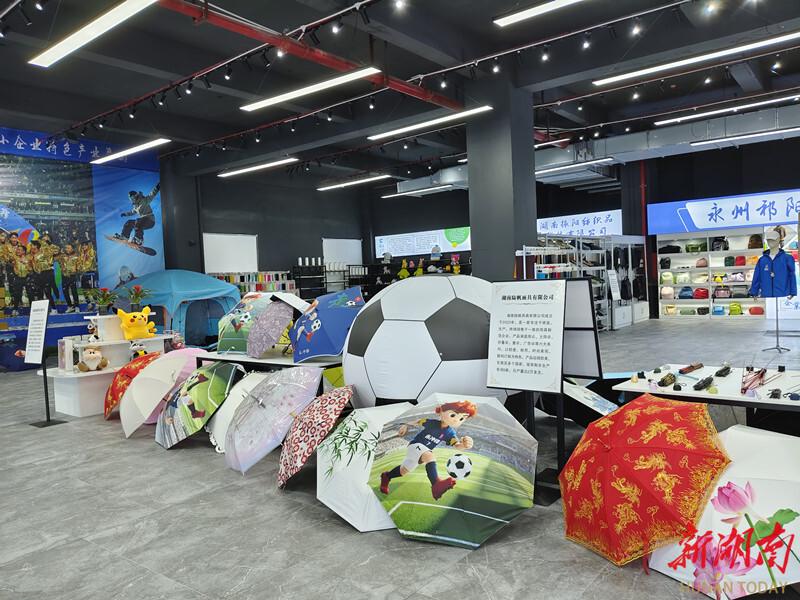
Core Insights - The article highlights the development of the Baishui Textile Town in Qiyang, which has successfully established a complete textile industry chain and attracted significant investment, leading to substantial economic growth and job creation [1][16]. Group 1: Industry Development - Baishui Textile Town has introduced 38 large-scale textile enterprises and established 15 provincial and above technology innovation platforms, producing 1 billion meters of umbrella fabric, 300 million meters of tent fabric, 300 million meters of luggage fabric, and 500 million meters of high-end elastic fabric annually [1]. - The town achieved a total output value of 9.744 billion yuan and tax revenue of 986.475 million yuan in 2025, representing growth rates of 18.15% and 19.78% respectively [10]. Group 2: Business Growth - Qiyang Dongjun Textile Co., Ltd. has expanded from a small operation with 30 employees to a full-chain enterprise with over 1,700 employees and a factory area of 331 acres [5]. - The company has improved its production efficiency significantly, with one worker now managing 60 weaving machines compared to 22-24 previously, and has saved nearly 3 million yuan in electricity costs annually due to equipment upgrades [10]. Group 3: Technological Innovation - The integration of information technology into production has led to advancements such as zero wastewater discharge and improved product quality, with companies adopting automated processes that enhance efficiency and reduce labor costs [6][17]. - Qiyang Dongjun Textile Co., Ltd. has transitioned from manual color matching to computer-assisted processes, resulting in faster production times and reduced errors [10]. Group 4: Community Impact - The textile industry has created over 15,000 jobs in the region, with local residents increasingly filling management and technical roles, reflecting a shift from reliance on external labor [11][12]. - The establishment of processing points in villages has provided flexible employment opportunities for over 8,000 villagers, with average monthly incomes exceeding 4,000 yuan [15].

湖南祁阳:无水印染、数智化改造 传统纺织企业焕发产业新活力
Yang Shi Xin Wen Ke Hu Duan· 2026-01-26 01:20
Core Viewpoint - The traditional textile industry is undergoing a transformation towards "intelligent, green, and integrated" upgrades, driven by technological innovation and collaboration within the industry ecosystem [1][4]. Group 1: Industry Transformation - In Hunan Qiyang, a textile company has implemented smart production with 4,800 high-speed water-jet looms, producing 2 out of every 3 umbrella fabrics in China [2]. - The company faced a 40% drop in orders from European and American clients due to tariff impacts, prompting a shift towards technological innovation [2]. - The introduction of a waterless dyeing technology has significantly improved production efficiency by 5 times and reduced costs by 30%, achieving zero wastewater discharge [2]. Group 2: Digitalization and Management - Another textile company in Qiyang adopted a self-developed management system to enhance production visibility and flexibility, resulting in a doubling of production capacity and a reduction in order delivery time from 45 days to 15 days [3]. - The minimum order quantity was lowered to 200 pieces, and the success rate of production increased by 15%, leading to a surge in high-end orders [3]. Group 3: Industry Challenges and Opportunities - Qiyang has become the largest chemical fiber textile industry cluster in Hunan, with plans to be recognized as a national-level characteristic industrial cluster by 2025 [4]. - In the first 11 months of 2025, the industrial added value of China's textile industry increased by 1.7%, with retail sales of clothing and textile products exceeding 1.3 trillion yuan, a growth of 3.5% [4]. - Despite positive growth, the textile industry still faces challenges in achieving high-end, intelligent, and green transformations, particularly in smart manufacturing and data integration [5].