
智能化改造

Search documents
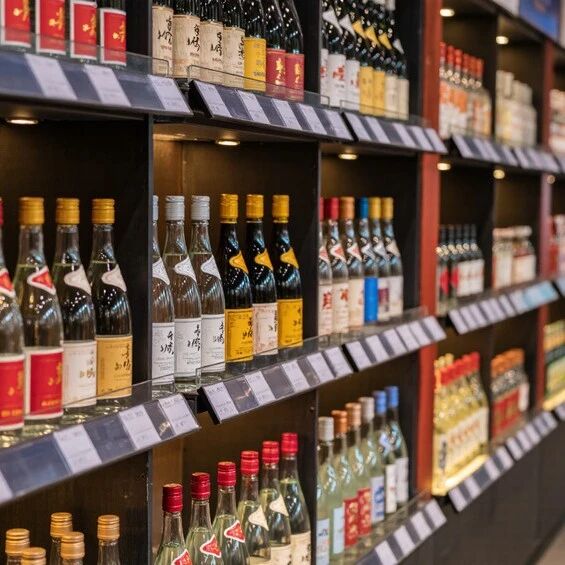
泸州老窖如何实现周期反转?
虎嗅APP· 2026-03-24 09:39
Core Viewpoint - The Chinese liquor industry is at a crossroads, with significant production declines and high inventory levels indicating a shift from rapid expansion to a focus on existing market competition. However, there are signs of potential recovery, particularly for high-end brands like Moutai, as sales during the Spring Festival exceeded expectations, prompting analysts to predict an upcoming cyclical turnaround for the industry [2]. Industry Overview - In 2025, the total production of liquor in China fell to 3.549 million kiloliters, a decrease of 12.1% year-on-year, marking the ninth consecutive year of decline and a nearly 74% drop from the peak in 2016 [2]. - The average inventory turnover days for the industry are projected to reach 900 days in 2025, with channel inventory valued at over 500 billion yuan, highlighting the challenges of production shrinkage, high inventory, and sluggish sales [2]. Company Strategy - Luzhou Laojiao has opted not to follow the market trend of price reductions but instead emphasizes its historical assets and launches the 38-degree Guojiao 1573 as a new growth engine, aiming for a unique path in the current market environment [2]. - Analysts predict that 2025 will be a year of pressure release for Luzhou Laojiao, with expectations of a cyclical reversal starting in 2026, and some optimistic forecasts suggest a return to high single-digit net profit growth by 2027 [2]. Product Growth Strategy - Luzhou Laojiao's product strategy consists of three parts: maintaining price stability for high-end Guojiao, expanding the low-alcohol Guojiao product line, and targeting younger consumers through innovative products [6][8][9]. - The high-end Guojiao 1573 has maintained a price around 850 yuan, successfully avoiding price declines, but a demand recovery is necessary to signal the end of the adjustment period [7]. - The 38-degree Guojiao 1573 has become the first low-alcohol product in the industry to achieve over 10 billion yuan in sales, with a 50% sales share, indicating a successful market entry and growth potential, particularly in the North China market [8]. Brand Positioning and Digital Strategy - The 2026 theme of the annual sealing ceremony, "The Ancestor of Strong Aroma, A New Chapter for Guojiao," reflects a strategic shift towards reinforcing brand identity and future direction, combining historical significance with modern trends [11]. - The focus on digitalization and consumer data collection aims to transition from a B2B channel-driven model to a C2C consumer-driven approach, addressing long-standing issues in the industry [12][13]. - Luzhou Laojiao's emphasis on its historical status as the "ancestor of strong aroma" serves to establish a mental anchor in the market, countering competition from other flavor categories [12]. Future Outlook - The strategic layout of Luzhou Laojiao is clear, with a focus on leveraging historical assets, validating low-alcohol products as a second growth curve, and implementing smart manufacturing to enhance efficiency and reduce costs [13][14]. - The company is preparing for a cyclical reversal by establishing value anchors, sustainable growth engines, and a consumer-driven mindset, with the potential for a significant turnaround in performance over the next 2-3 years [14][15].


中国宏桥:2025年实现净利226.36亿元,不排除根据市场状况进一步回购
Xin Lang Cai Jing· 2026-03-23 14:58
Core Viewpoint - China Hongqiao Group reported a revenue of approximately 162.35 billion yuan for 2025, reflecting a year-on-year increase of about 4.0%, and a net profit attributable to shareholders of approximately 22.64 billion yuan, up by about 1.2% [1][7] Financial Performance - Revenue from aluminum alloy products was approximately 106.10 billion yuan, an increase of about 3.6% year-on-year [3][9] - Revenue from alumina products reached approximately 38.83 billion yuan, marking a year-on-year increase of about 4.0% [3][9] - Revenue from deep-processed aluminum alloy products was approximately 14.96 billion yuan, also up by about 4.0% year-on-year, primarily due to increased sales prices [3][9] - Basic earnings per share were approximately 2.3842 yuan, with a proposed final dividend of 0.165 HKD per share, resulting in a payout ratio of about 65% for 2025 [1][7] Strategic Initiatives - The company is advancing its green low-carbon strategy, implementing a phased approach to emission reduction across all processes, and increasing the share of clean energy [4][10] - The Yunnan green low-carbon demonstration industrial park and the Wenshan smart aluminum project have officially commenced production, serving as benchmarks for industrial upgrade and green transformation [4][10] - The company is leveraging digital technology to upgrade production and management systems, enhancing its core competitiveness through smart transformation and data governance [3][9] Market Outlook - The company remains optimistic about the electrolytic aluminum industry and aluminum price trends, citing that domestic electrolytic aluminum production capacity is nearly maxed out, with last year's output reaching 44.63 million tons [6][11] - The expected average price of electrolytic aluminum for 2025 is around 20,600 yuan per ton, with a projected increase of over 2,000 yuan per ton, which will significantly boost company profits [6][11] - The company plans to continue its stable dividend policy as profits increase and has announced a share buyback plan totaling approximately 3.06 billion shares for a total amount of about 5.58 billion HKD [6][11]
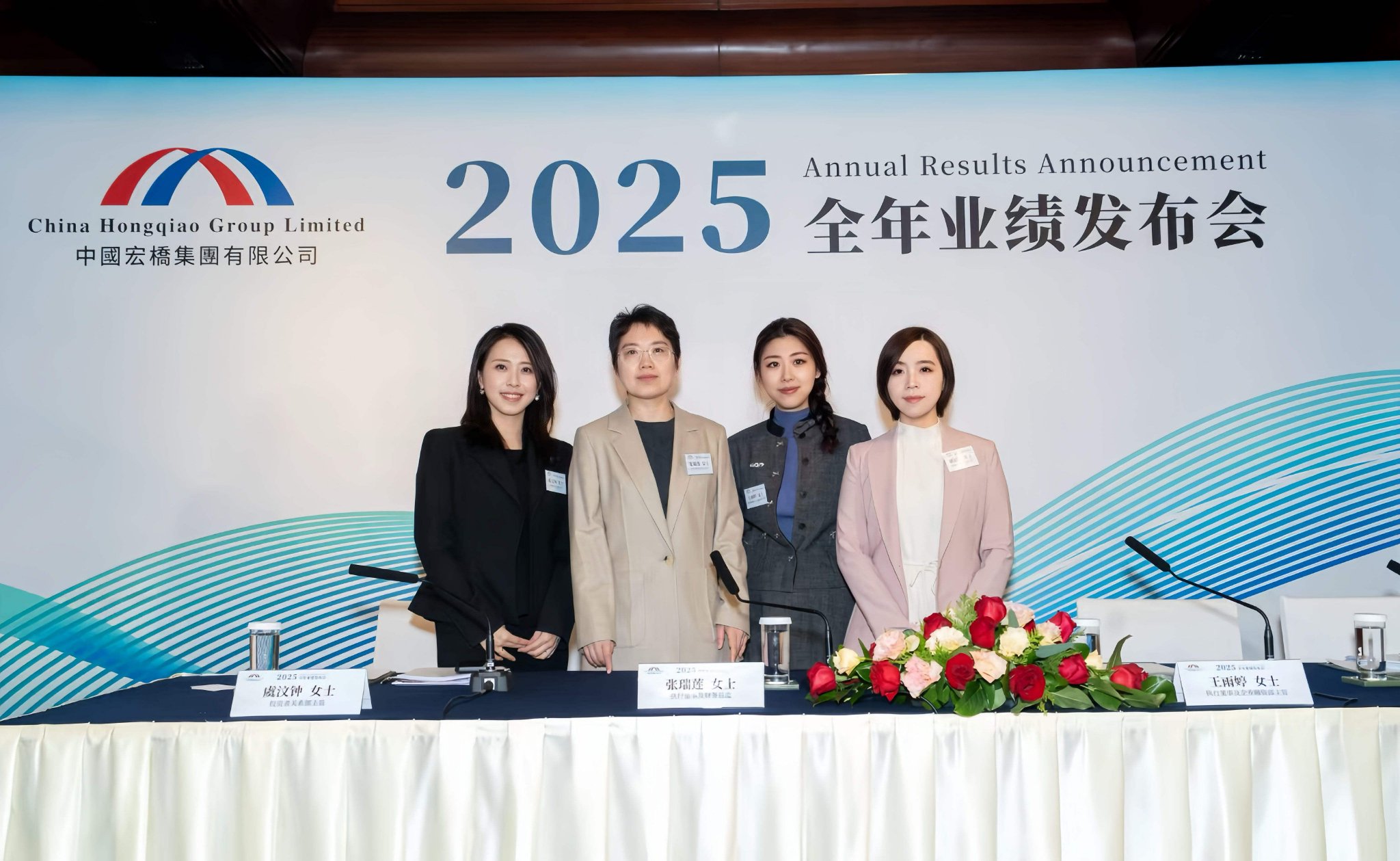
中国宏桥公布2025年业绩 股东应占净利润同比增加约1.2%至226.36亿元 末期息每股165港仙
Zhi Tong Cai Jing· 2026-03-21 15:23
Core Viewpoint - China Hongqiao Group reported a revenue increase of approximately 4.0% year-on-year for 2025, driven by higher sales prices and volumes of aluminum alloy products and alumina [3] Group Performance - Revenue reached approximately 162.35 billion yuan, while gross profit decreased by about 1.6% to approximately 41.51 billion yuan [3] - Net profit attributable to shareholders increased by approximately 1.2% to about 22.64 billion yuan, with basic earnings per share at 2.3842 yuan [3] - The sales volume of aluminum alloy products was approximately 5.82 million tons, remaining stable compared to the previous year, with an average selling price increase of about 3.8% to approximately 18,216 yuan per ton (excluding VAT) [3] - Alumina sales volume increased by approximately 22.7% to about 13.40 million tons, while the average selling price decreased by approximately 15.2% to about 2,899 yuan per ton (excluding VAT) [3] - The sales volume of deep-processed aluminum alloy products was approximately 716,000 tons, with an average selling price increase of about 3.1% to approximately 20,874 yuan per ton (excluding VAT) [3] Technological Advancements - The company is actively utilizing digital intelligence technology to upgrade production and management systems, focusing on "smart transformation" and "digital transformation" [4] - Efforts are being made to enhance the aluminum industry chain, from bauxite mining to alumina preparation, primary aluminum smelting, deep processing of aluminum materials, and recycling of recycled aluminum [4] - The establishment of "smart aluminum factories" and breakthroughs in future electrolytic aluminum factories are being pursued, along with the introduction of the "AI + electrolytic aluminum" intelligent production model [4]
未知机构:申万建筑鸿路钢构顺周期弹性标的看好转债转股价下修催化股价弹性-20260227
未知机构· 2026-02-27 02:10
Summary of Conference Call Notes Company Overview - **Company**: 鸿路钢构 (Honglu Steel Structure) - **Industry**: Steel Structure Processing Key Points 1. Operational Improvement and Robotics Integration - The company has shown operational improvement with a year-on-year increase of 2.84% in new contracts for 2025, achieving a steel structure processing volume of 5.02 million tons, which is an 11.3% increase year-on-year [1] - The application of welding robots has expanded actual effective capacity, leading to a projected year-on-year increase of 0.5% in processing volume for 2024 and 11.3% for 2025, indicating strong advantages in market development and internal management [1] 2. Smart Production Line Transformation - The company is actively advancing the smart transformation of its steel structure processing lines, incorporating advanced equipment such as flat laser cutting devices and intelligent industrial welding robots [1] - This transformation is expected to enhance operational efficiency, reduce reliance on welders, and improve product quality standards [1] 3. Anticipated Market Demand Surge in 2026 - The steel structure market is expected to experience a resonance of internal and external demand in 2026, primarily driven by industrial needs [2] - Steel structures are approximately 30%-50% lighter than precast concrete structures, making them suitable for large-span space design [2] - With the domestic economy stabilizing and manufacturing investment likely to recover, along with accelerated industrialization in Southeast Asia, the company, as the largest steel structure processing enterprise in China with a capacity of 5.2 million tons, is positioned to benefit from the industry's recovery [2] 4. Profit Forecast and Convertible Bond Details - The projected net profit attributable to the parent company for 2025-2027 is estimated at 739 million, 859 million, and 996 million yuan, reflecting a year-on-year change of -4.3%, +16.2%, and +16.4% respectively [2] - The company is trading at a price-to-earnings ratio of 21X for 2025, 18X for 2026, and 16X for 2027 [2] - The convertible bond maturing in October 2026 has a remaining balance of 1.57 billion yuan, with the latest adjusted conversion price at 21.99 yuan per share and a strong redemption price of 28.59 yuan per share, supporting the stock price increase [2]

大山深处,杜仲“智能成丁”
Xin Lang Cai Jing· 2026-02-26 22:49
Core Insights - The company Sichuan Zhigao Agricultural Development Co., Ltd. has implemented an intelligent production line for processing traditional Chinese medicine materials, significantly improving efficiency and product quality [2][3] - The introduction of smart sorting machines has increased sorting efficiency from a few hundred kilograms per day to 2 tons per day, enhancing quality control [3] - The company has invested in smart technology and has applied for 10 related patents, with 4 already authorized, indicating a strong focus on innovation [3] Group 1 - The company has transformed its production process by utilizing intelligent machinery, allowing a single worker to manage multiple production steps [2] - The company faced production bottlenecks due to high standards from overseas orders, prompting a shift towards quality-focused production [2] - The market price for high-quality products has increased significantly, with prices reaching over 50,000 yuan per ton for premium products [3] Group 2 - The company has processed nearly 1,000 tons of Du Zhong and over 300 tons of other medicinal materials, achieving annual sales of nearly 10 million yuan [3] - The collaboration between eastern and western regions has provided financial and intellectual support, facilitating the company's technological upgrades [3] - The completion of the intelligent transformation is expected by December 2025, with significant improvements already noted in production efficiency and product quality [3]

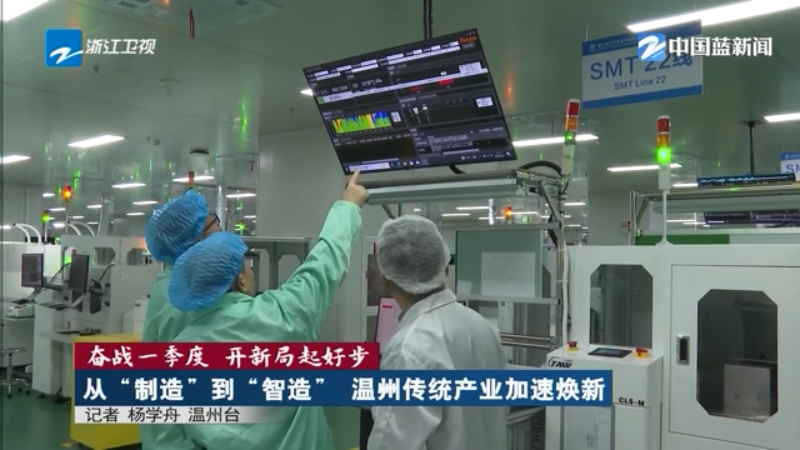
奋战一季度 开新局起好步 | 从“制造”到“智造” 温州传统产业加速焕新
Xin Lang Cai Jing· 2026-02-03 12:47
Core Viewpoint - Wenzhou aims to become an "industrial strong city" by accelerating the transformation of its manufacturing sector towards high-end, intelligent, and green production through smart upgrades and revitalization of traditional industries [1][12]. Group 1: Smart Manufacturing - Zhejiang Changjiang Automotive Electronics Company has implemented smart workshops where production progress, efficiency, and product quality can be monitored on a single screen, significantly improving operational efficiency [3][14]. - The company has 12 smart workshops that serve over 60 global OEMs, providing services for more than 500 vehicle models, and has established 7 provincial-level future factories in Wenzhou [5][16]. - The production capacity has doubled, with only 2 to 3 workers needed per production line compared to the previous requirement of over ten [17]. Group 2: Economic Growth and Projections - Wenzhou's GDP has surpassed 1 trillion yuan, presenting significant growth opportunities for the automotive industry, with an expected output value of 10 billion yuan in the next three years [5][16]. - The city anticipates a 10.3% growth in industrial added value by 2025, with specific sectors like automotive parts and electrical industries projected to grow by 18.4% and 13.6%, respectively [9][22]. - The number of "billion-dollar counties (cities, districts)" in Wenzhou has increased to five as the city officially joins the "trillion club" [9][22]. Group 3: Industry Transformation - The company Qixing Technology Development, previously a traditional printing business, has transitioned to producing high-value cultural cards by adopting high-precision equipment [7][20]. - The company has achieved a production value exceeding 50 million yuan within a year and expects to double this figure in the current year, leveraging popular IPs [10][22]. - Wenzhou plans to continue enhancing smart upgrades, support equipment upgrades, and build industrial internet platforms while strengthening clusters in automotive electronics and digital cultural innovation [12][24].
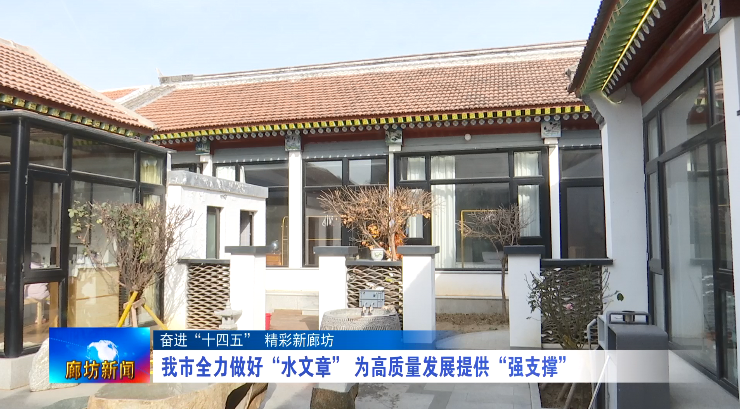
廊坊广电·关注丨【奋进“十四五”精彩新廊坊】我市全力做好“水文章” 为高质量发展提供“强支撑”
Xin Lang Cai Jing· 2026-02-01 14:11
Core Viewpoint - The city has implemented a new water management strategy focusing on water conservation, spatial balance, systematic governance, and dual efforts, leading to significant improvements in water security and infrastructure, thereby supporting high-quality economic and social development [1] Group 1: Water Supply Improvements - The rural water supply in Dachang Hui Autonomous County has transitioned to a unified supply system, benefiting approximately 68,000 residents across 75 administrative villages, with enhanced water quality and 24-hour availability [3][4] - The city has achieved a rural water supply rate of 84%, surpassing the provincial average by 20 percentage points, with 80% of counties implementing unified water management [7] Group 2: Investment in Water Infrastructure - During the "14th Five-Year Plan" period, the city secured 55.14 million yuan in central and provincial funding for rural water projects, constructing five new surface water plants and laying over 3,500 kilometers of water supply pipelines, benefiting 6.2249 million rural residents [7] - Water infrastructure investment reached 37.06 billion yuan, a tenfold increase compared to the previous five-year period, with 15.11 billion yuan invested in 2024 alone, ranking second in the province [15] Group 3: Technological Advancements - The city has implemented smart upgrades in urban water supply, reducing maintenance response times from 2 hours to under 30 minutes through the use of inspection robots and efficient scheduling systems [11][13] - The surface water plants have adopted a strategy centered on smart technology, enhancing service quality and efficiency, including 24-hour automated inspections and improved emergency response capabilities [13] Group 4: Ecological and Conservation Efforts - The city has focused on river management and ecological preservation, with eight rivers recognized as provincial "happy rivers," and significant water conservation measures have been implemented, including the development of efficient irrigation systems covering 189,000 acres [23][25] - The city has achieved a reduction in groundwater extraction by 114 million cubic meters annually, effectively eliminating areas of severe over-extraction [25][27]
鹤壁资源型城市“老树发新芽”
Xin Lang Cai Jing· 2026-01-27 22:08
Core Viewpoint - The city of Hebi in Henan Province is undergoing a significant industrial transformation, focusing on three core industries: electronics and electrical appliances, functional new materials, and magnesium-based new materials, to build a modern industrial system and drive sustainable economic development [1] Group 1: Electronics and Electrical Appliances Industry - Hebi's electronics and electrical appliances industry is evolving from an existing industrial base, aiming to create a complete industrial chain from key components to smart terminal products [2] - Leading enterprises like Tianhai Group are enhancing their advantages in automotive electronics and deepening into areas such as new energy vehicle wiring harnesses and smart charging facilities, with the group's new energy business surpassing 60% [2] - The city has formed an automotive electronics and electrical appliances industry system covering eight categories and over 10,000 products, with the share of new energy products increasing from less than 15% in 2021 to 41% [2] Group 2: Functional New Materials Industry - The functional new materials industry is positioned as a strategic direction for fostering new growth points, focusing on high-performance resins, specialty rubbers, electronic chemicals, advanced ceramics, and bio-based materials [4] - Hebi's production capacity for certain products, such as special isocyanates, ranks first in the world, breaking foreign technology monopolies [4] - The city is promoting green development in new material research and production, with projects like high molecular weight polylactic acid that significantly reduce energy consumption and carbon emissions [5] Group 3: Magnesium-based New Materials Industry - Hebi has a unique advantage in developing magnesium-based new materials due to its rich magnesium ore resources, shifting from primary raw material production to high-value-added processing [6] - The city is focusing on developing magnesium alloys and deep-processing products for sectors like automotive lightweighting and aerospace [6] - The establishment of the China Aluminum (Hebi) magnesium-based new materials industrial test base is a key milestone in the transformation, aiming to create a complete industrial chain from magnesium smelting to high-end product manufacturing [6] Group 4: Overall Industrial Transformation - The transformation practices of the three key industries reflect Hebi's "3+3+N" leading industry system, with a focus on technological innovation and cluster development [7] - The city is advancing its industrial structure towards higher-end, smarter, and greener solutions, contributing to a more vibrant and competitive Hebi [7]
迈过“数据关”“工艺关” 数智化改造打开纺织企业破局之路实现价值跃升
Yang Shi Wang· 2026-01-26 07:29
Core Viewpoint - The textile industry is undergoing a transformation driven by technological innovation, focusing on smart, green, and integrated upgrades to enhance production efficiency and reduce costs [2][7][30]. Group 1: Company Transformation - A textile company in Hunan has successfully transitioned from facing significant order losses to thriving by implementing innovative technologies, including a waterless dyeing process that improves efficiency and reduces costs [4][7]. - The company has increased its market share from 20% to 60% domestically and 40% globally, while reducing production costs by approximately 20% [17]. - The introduction of a self-developed management system has led to a 40% reduction in labor, doubled production capacity, and decreased order delivery times from 45 days to 15 days [20][22]. Group 2: Industry Trends - The textile industry in China saw a 1.7% year-on-year increase in industrial added value for large-scale enterprises, with retail sales of clothing and textiles exceeding 1.3 trillion yuan, a 3.5% increase [27]. - Exports of textiles and garments to countries involved in the Belt and Road Initiative reached $146.83 billion, accounting for 53.8% of total exports [27]. - The industry is facing challenges in data integration and technological innovation, with a need for improved collaboration across the supply chain to enhance efficiency and overcome existing bottlenecks [30][32].
湖南祁阳:无水印染、数智化改造 传统纺织企业焕发产业新活力
Yang Shi Xin Wen Ke Hu Duan· 2026-01-26 01:20
Core Viewpoint - The traditional textile industry is undergoing a transformation towards "intelligent, green, and integrated" upgrades, driven by technological innovation and collaboration within the industry ecosystem [1][4]. Group 1: Industry Transformation - In Hunan Qiyang, a textile company has implemented smart production with 4,800 high-speed water-jet looms, producing 2 out of every 3 umbrella fabrics in China [2]. - The company faced a 40% drop in orders from European and American clients due to tariff impacts, prompting a shift towards technological innovation [2]. - The introduction of a waterless dyeing technology has significantly improved production efficiency by 5 times and reduced costs by 30%, achieving zero wastewater discharge [2]. Group 2: Digitalization and Management - Another textile company in Qiyang adopted a self-developed management system to enhance production visibility and flexibility, resulting in a doubling of production capacity and a reduction in order delivery time from 45 days to 15 days [3]. - The minimum order quantity was lowered to 200 pieces, and the success rate of production increased by 15%, leading to a surge in high-end orders [3]. Group 3: Industry Challenges and Opportunities - Qiyang has become the largest chemical fiber textile industry cluster in Hunan, with plans to be recognized as a national-level characteristic industrial cluster by 2025 [4]. - In the first 11 months of 2025, the industrial added value of China's textile industry increased by 1.7%, with retail sales of clothing and textile products exceeding 1.3 trillion yuan, a growth of 3.5% [4]. - Despite positive growth, the textile industry still faces challenges in achieving high-end, intelligent, and green transformations, particularly in smart manufacturing and data integration [5].