微信商城小程序

Search documents
无锡企业做微信商城小程序?本地制作公司搭建,方案定制更省心
Sou Hu Cai Jing· 2026-02-22 22:43
Group 1 - The core focus for Wuxi enterprises when selecting a WeChat mini-program development company is not just the price, but the provider's experience in the same industry and their understanding of local user habits [1] - Many local business owners have faced issues by either opting for cheap template development or hiring out-of-town teams, leading to high communication costs and slow response times [1] - A reliable service provider will inquire about the specific industry characteristics, while unreliable ones may claim to do everything without understanding local payment policies and logistics [1] Group 2 - Wuxi Hemu Network Technology Co., Ltd. has rich experience in retail industry mini-program customization, offering systems that integrate with physical store cash registers and enhance user experience [2] - Wuxi Xingbei Cloud Network Technology Co., Ltd. excels in complex function development, successfully managing multi-level distributor systems for clients in the building materials wholesale sector [3] - Wuxi Mingchuang Advertising Co., Ltd. is noted for its design and user experience, with clients reporting higher conversion rates due to appealing aesthetics and smooth shopping processes [4] Group 3 - The cost for template development in Wuxi is approximately several thousand to ten thousand yuan, while custom development starts at around twenty thousand yuan, depending on the complexity of features [4] - It is advised that companies meet with local providers in person to assess their understanding of the industry and their ability to provide long-term technical support [4]


怎么做微信商城小程序
Sou Hu Cai Jing· 2025-12-30 04:15
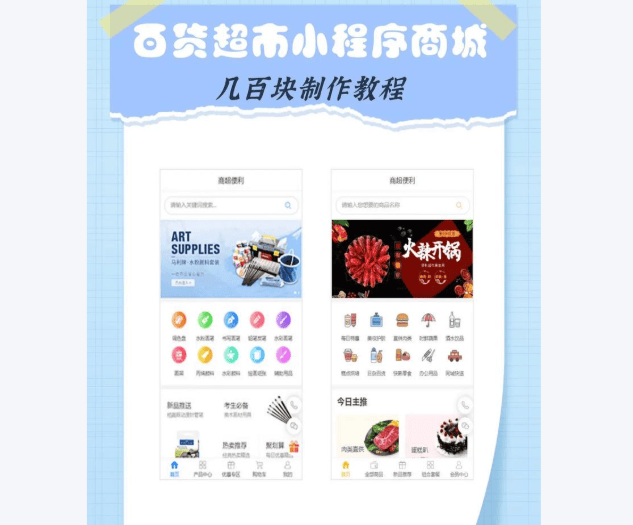
Core Insights - In 2025, consumer shopping behavior has shifted from "searching for goods" to "goods finding people," with WeChat mini-programs becoming essential for businesses to overcome growth bottlenecks due to rising traffic costs on traditional e-commerce platforms [1] Group 1: Traffic Expansion - WeChat's ecosystem, with over 1.2 billion monthly active users, serves as a natural traffic expansion engine for mini-programs, enabling businesses like Perfect Diary to gain 2 million new users in three months through group buying and bargaining strategies [2] - The integration of "public accounts, video accounts, and enterprise WeChat" on platforms like Feiduoduo enhances user engagement, allowing seamless transitions from content to purchase, resulting in a 300% increase in traffic conversion efficiency [2] Group 2: Cost Efficiency - Developing traditional apps requires an investment of 500,000 to 2 million yuan, while WeChat mini-programs reduce development costs by 70% and shorten the launch cycle to 15 days, exemplified by the restaurant brand "Huangshanghuang," which digitized 3,000 stores for only 30,000 yuan [5] - Mini-programs have a "ready-to-use" feature that significantly lowers user churn, with average user engagement time being 2.3 times longer than H5 pages and conversion rates exceeding traditional methods by 40% [5] Group 3: Data-Driven Marketing - The AI data analysis system in WeChat mini-programs tracks user behavior in real-time, allowing brands to create detailed user profiles and implement targeted marketing strategies, such as a beauty brand increasing sales by 210% after introducing an AR virtual try-on feature based on user data [7] - The system's ability to deliver personalized offers based on location and consumer habits enhances marketing effectiveness, achieving an ROI of 1:8 on advertising spend [7] Group 4: Ecosystem Empowerment - The retail landscape in 2025 is characterized by an omnichannel approach, with WeChat mini-programs facilitating a closed-loop system of "online traffic, offline experience, and repeat purchases," as seen with brands like K-Boxing and Haidilao [9] - The integration of features like LBS positioning and multi-store management allows businesses to optimize inventory turnover and enhance customer engagement [9] Group 5: Future Trends - WeChat mini-programs are evolving with advancements in AI and blockchain technology, offering features like 24/7 intelligent customer service and product traceability, which build consumer trust [11][13] - The e-commerce transaction volume through WeChat mini-programs has surpassed 8.5 trillion yuan, with 70% of physical stores establishing an online presence, indicating that the focus is now on optimizing these platforms rather than deciding whether to adopt them [16]
微信小程序商城怎么开通?
Sou Hu Cai Jing· 2025-12-08 10:15
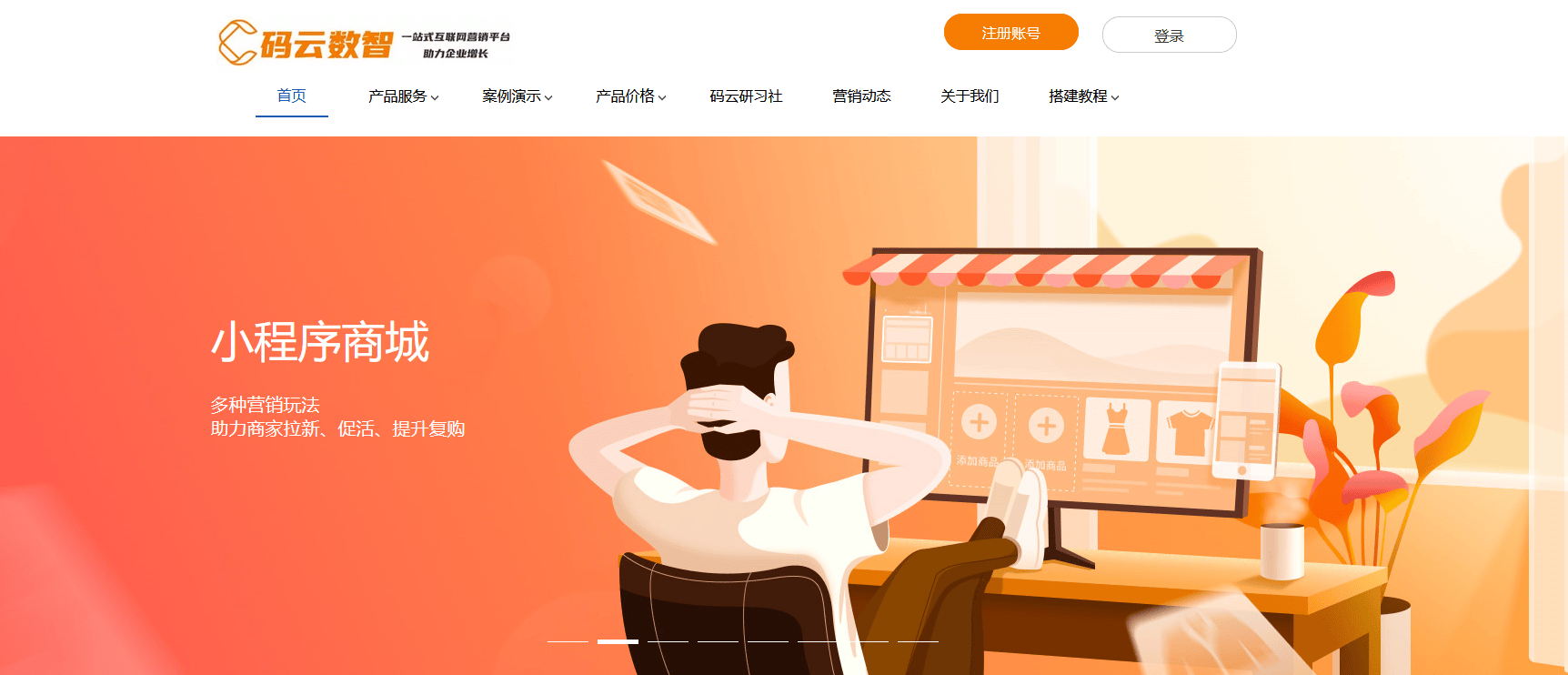
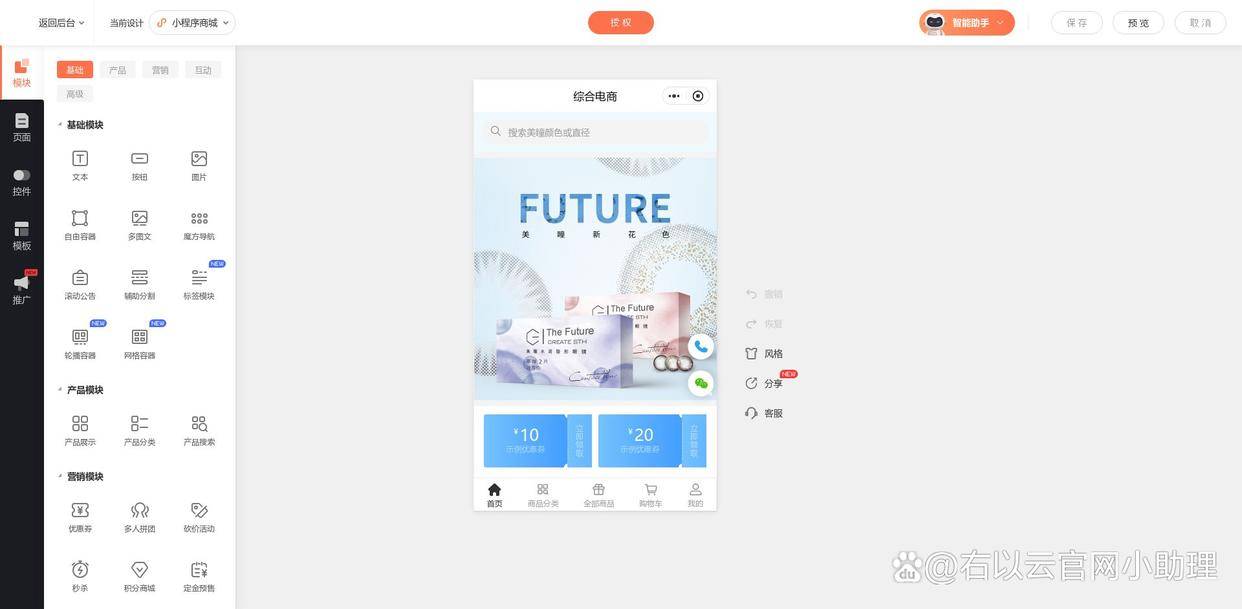
Core Insights - The article emphasizes the importance of mini-program malls for businesses' online presence and sales channels, highlighting that no technical expertise is required for development using SaaS platforms [1][22]. Group 1: Mini-Program Development Process - The first step involves selecting a mini-program creation platform, such as "Miyun Shuzhi," and registering an account [1]. - The platform offers over 2000 industry templates that can be edited using a drag-and-drop interface for visual customization [5]. - Product management allows for bulk or individual addition of items to the mini-program [11]. - Marketing features can be configured in the marketing center according to business needs [12]. - Businesses must apply for a mini-program account certification [15]. - Enabling WeChat Pay is essential to complete the transaction loop [17]. - The final step is to officially publish the mini-program [22]. Group 2: Cost of Mini-Program Development - SaaS model costs range from 2000 to 8000 yuan per year, allowing for quick deployment without the need for in-house development [22]. - Custom development costs vary between 20,000 to 200,000 yuan, tailored to specific business requirements [22]. - Different versions of mini-programs are available, with annual fees for standard, luxury, diamond, and multi-merchant versions ranging from 1998 to 14998 yuan, each offering varying features and capabilities [22]. Group 3: Template and Customization - The platform provides templates suitable for various industries, ensuring that businesses can find a fitting design for their needs [23]. - Users can easily modify templates by changing images, text, and colors to quickly set up their mini-programs [24]. - The platform supports custom development for unique functionality, allowing integration with third-party services and features [24].
微信商城小程序开发一般需要多少钱,制作小程序商城的费用
Sou Hu Cai Jing· 2025-09-26 04:31
Core Insights - The WeChat mini-program has become a core entry point for enterprises' digital transformation, with development costs varying significantly from thousands to hundreds of thousands of yuan, influenced by development mode, functional complexity, and ongoing operational costs [1] Development Cost Factors - Development mode is the primary factor determining the price starting point, with template development costing between 4,000 to 20,000 yuan annually, suitable for standardized product display but lacking extensibility [2] - Source code authorization development costs range from 3,000 to 30,000 yuan, allowing for secondary adjustments, but low adaptability may lead to higher modification costs than custom development [2] - Custom development, which includes UI design and backend architecture tailored to needs, starts at approximately 15,000 to 50,000 yuan, with comprehensive solutions costing between 80,000 to 200,000 yuan [2][3] Core Functionality Cost Breakdown - Basic functionality costs approximately 5,000 to 20,000 yuan, while advanced interactive modules such as membership systems cost 10,000 to 30,000 yuan, and live streaming features add an additional 30,000 to 80,000 yuan [2] - Additional marketing tools like group buying and flash sales increase costs by about 5,000 to 20,000 yuan per feature [2] Hidden Costs and Operational Investment - Hidden costs include mandatory expenses such as WeChat certification fees (300 yuan), SSL certificates (500 to 2,000 yuan), and domain fees (60 to 200 yuan) [4] - Initial server costs range from 2,000 to 5,000 yuan annually, but may exceed 20,000 yuan when upgrading for high traffic [4] - Continuous iteration costs account for about 20% of development fees annually, with security enhancements costing between 5,000 to 20,000 yuan [4] High Cost-Effectiveness Building Strategies - Budget-sensitive enterprises can leverage modular platforms that allow users to build mini-programs without complex coding, with costs controlled at the thousand-yuan level [5][7] - These platforms can reduce the launch cycle from months to under 72 hours and support elastic scaling, saving up to 80% on initial server costs [7] Strategic Budget Planning - Cost control hinges on accurately matching business stages with solution selection, where startups can use modular platforms to validate models at low costs, while mature enterprises should reserve 30,000 to 50,000 yuan annually for iterations [7] - Leading brands are adopting a "hybrid architecture," combining custom core systems for stability with plug-and-play SaaS components for cost reduction [7][8] Conclusion - The cost of developing a fully functional WeChat mini-program is influenced by the complexity of functional requirements, with basic setups costing a few tens of thousands of yuan, while customized features and integrations can escalate costs into the hundreds of thousands [8][9]
做一个合肥微信商城小程序需要多少钱?
Sou Hu Cai Jing· 2025-08-15 06:17
Core Insights - The article discusses the cost structure of developing WeChat mini-programs for e-commerce, emphasizing the importance of understanding functional requirements and development modes in determining overall expenses. Group 1: Functional Requirements - The cost of WeChat mini-programs varies significantly based on functionality, with basic versions costing between 10,000 to 30,000 yuan, suitable for startups or single product promotions [1] - Advanced versions range from 30,000 to 80,000 yuan, incorporating marketing and user operation modules, ideal for regional chain supermarkets [3] - Customized versions start at 80,000 yuan and are tailored to specific industry needs, such as cross-border e-commerce or fresh food delivery, leading to exponential cost increases due to technical complexity [3] Group 2: Development Modes - Template-based development costs between 5,000 to 15,000 yuan, allowing quick deployment but limited customization, suitable for small businesses [4] - Semi-custom development ranges from 20,000 to 50,000 yuan, allowing for some tailored features while reusing common modules, appropriate for medium-sized enterprises [4] - Full custom development exceeds 80,000 yuan, requiring a complete technical team and extensive time investment, typically for large brands needing multi-platform integration [5] Group 3: Hidden Costs - Ongoing operational costs, including server and domain expenses, can range from 2,000 to 100,000 yuan annually, depending on the scale of operations [6] - Maintenance and iteration costs are estimated at 20% to 30% of initial development costs per year, necessary for bug fixes and user experience optimization [6] - Compliance and security costs can range from 10,000 to 50,000 yuan, particularly for industries handling sensitive user data [6] Group 4: Budget Recommendations - Startups are advised to opt for template-based development with a budget of 10,000 to 20,000 yuan to quickly validate business models [7] - Growth-stage companies should consider semi-custom development with a budget of 30,000 to 60,000 yuan, focusing on member systems and marketing tools [7] - Large enterprises should plan for full custom development with a budget of over 100,000 yuan, ensuring scalability and allocating 30% of the budget for future iterations and security enhancements [7]