
怡园深蓝

Search documents
“杨大炮”1.59亿港元控“仙股”,为1919资本化铺路?
Guan Cha Zhe Wang· 2025-12-18 09:43
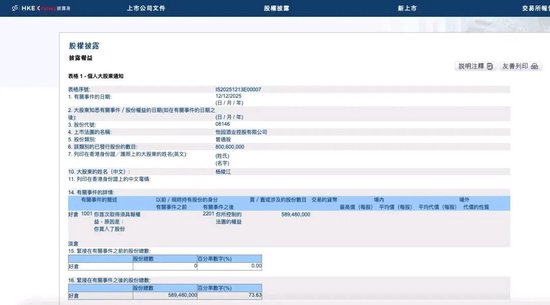
Core Viewpoint - The acquisition of a controlling stake in Yiyuan Wine Industry by Yang Lingjiang, founder of 1919, marks a significant move in the liquor distribution sector, allowing for potential integration of high-margin wine production into 1919's operations [1][2]. Group 1: Acquisition Details - Yang Lingjiang acquired 73.63% of Yiyuan Wine Industry for approximately HKD 159 million (around RMB 144 million) [1]. - Yiyuan Wine Industry's stock had been trading below HKD 1 since the second half of 2022, indicating a favorable acquisition cost for Yang [1]. - The acquisition is defined as a personal investment by Yang and does not involve direct asset injection or business merger between 1919 and Yiyuan [1]. Group 2: Strategic Implications - The acquisition is expected to enhance 1919's profitability by integrating Yiyuan's high-quality wine into its sales network, transitioning from a liquor retailer to a comprehensive liquor service provider [2]. - Yiyuan Wine Industry, established in 1997, has faced challenges, including a significant revenue decline of 46.8% in 2024, leading to a net loss of RMB 41.02 million [2]. - Analysts believe that Yang's involvement will lead to strategic business model adjustments and potential further capital actions [2][3]. Group 3: Market Positioning - Yiyuan's status as a publicly listed company provides a platform for capital integration, facilitating Yang's broader international market ambitions [3]. - The acquisition aligns with the trend of Chinese liquor companies expanding their operational elements overseas, including capital and management [4]. - Yang Lingjiang's proactive approach and past decisions have positioned 1919 to navigate industry cycles effectively, enhancing its market presence [4][5]. Group 4: Future Prospects - The transaction is viewed as mutually beneficial, allowing 1919 to strengthen its supply chain while providing Yiyuan with access to 1919's extensive distribution network [7]. - Yang's acquisition of Yiyuan Wine Industry is likely to be a strategic move to incorporate the wine segment into his expanding liquor business portfolio [7].


杨陵江1.59亿港元抄底怡园酒业:资本布局与行业困局下的双向博弈
Xin Lang Cai Jing· 2025-12-18 05:32
Core Insights - Yang Lingjiang, founder of 1919 Wine Supply, acquired 73.63% of Yiyuan Wine Industry for approximately HKD 159 million, becoming the new controlling shareholder and actual controller of the largest wine producer in Shanxi [1][6] - This acquisition represents a strategic move for Yang to enhance his wine industry portfolio and a potential turnaround attempt for Yiyuan, which has been struggling with performance issues [1][6] Acquisition Details - The acquisition was completed on December 12, with Yang purchasing 589 million shares, representing 73.63% of Yiyuan's total shares [2][7] - Yiyuan's market capitalization was only HKD 212 million prior to the suspension, with an estimated net asset value of approximately HKD 226 million by the end of 2024 [2][7] - The funding for this acquisition came from Yang's personal funds, unrelated to 1919, following his recent restructuring efforts that significantly reduced 1919's debt from 92% to below 20% [2][7] Company Background - Yiyuan Wine Industry was founded in 1997 and became the first boutique winery listed on the Hong Kong Stock Exchange in June 2018 [3][8] - The company has faced significant performance volatility post-IPO, with three years of losses out of seven, and a projected loss exceeding HKD 41 million for 2024 [3][8] - Despite a revenue increase of 42.5% in the first half of 2025, the company has struggled to reverse its declining trend [3][8] 1919 Wine Supply Overview - 1919 Wine Supply, established in 2005, is a leading player in China's new retail wine sector, with a total transaction volume of HKD 11 billion in 2023 and over 5,000 stores [4][9] - The company faced challenges, including delisting from the New Third Board in June 2023, and is currently undergoing a strategic transformation to focus on high-quality store operations [4][9] - The acquisition of Yiyuan is seen as a critical step for Yang to restart the capitalized growth of 1919, with plans to integrate Yiyuan into a broader business model alongside 1919 and Tianmu International [4][9] Industry Context - The domestic wine industry is currently experiencing a downturn, characterized by weak demand, high inventory levels, and excess raw wine, leading to production cuts and overall contraction [5][11] - Despite the alignment of interests between Yang and Yiyuan, the challenging market conditions pose significant risks to the potential synergies from the acquisition [5][11]
1919创始人杨陵江控股怡园酒业 持股73.63%
Zheng Quan Ri Bao Wang· 2025-12-16 12:47
Core Insights - The actual controller of Yiyuan Wine Industry Holdings Limited has changed, with Yang Lingjiang acquiring 73.63% of the shares, becoming the largest shareholder and actual controller [1] - Yang Lingjiang, founder of 1919 Wine Technology Co., has expressed confidence in the growth potential of Yiyuan Wine and the long-term value of the wine industry [1] - Yiyuan Wine, known for its mid-to-high-end wines, has faced operational challenges due to a shrinking domestic wine market and competition from imported wines [1] Financial Performance - In 2024, Yiyuan Wine reported revenues of 34.55 million yuan and a net loss of 41.018 million yuan [2] - For the first half of 2025, the company achieved revenues of 18.775 million yuan with a net loss of 2.745 million yuan [2] - The decline in performance is attributed to falling wine sales and prices, as well as losses from the sale of whiskey business [2] Asset and Brand Value - Despite poor performance, Yiyuan Wine's net assets were approximately 226 million yuan by the end of 2024, with an annual production capacity of nearly 3,000 tons [2] - Core product lines maintain a certain level of recognition among consumers and within the industry [2] - The company's market capitalization was 212 million HKD at the time of suspension, indicating a potential investment opportunity [2] Industry Context - Experts suggest that Yiyuan Wine's core value lies in its scarce quality vineyard assets, strong local brand heritage, and established distribution network, which could support future recovery [2] - The Chinese premium wine market is transitioning from an introduction phase to a growth phase, presenting both challenges and opportunities [3] - The rise of domestic brands and the emphasis on quality among middle-class consumers provide growth space for established local wineries like Yiyuan Wine [3] Strategic Implications - Yang Lingjiang's entry is expected to bring business integration and a new operational approach to Yiyuan Wine [3] - The integration of channels, brands, and capital may signal a trend of vertical integration within the industry, enhancing competitive barriers for leading companies [3][4] - Yiyuan Wine is anticipated to become an important capital platform for Yang Lingjiang in overseas markets, leveraging his existing ventures in various alcoholic beverages [3]
成都酒业连锁大佬,抄底2亿葡萄酒庄
Xin Lang Cai Jing· 2025-12-16 12:42
Core Viewpoint - The acquisition of a controlling stake in Yiyuan Wine Industry by Yang Lingjiang, founder and chairman of 1919 Group, marks a significant move in the capital market after 1919's delisting from the New Third Board two and a half years ago [2][4]. Company Overview - Yiyuan Wine Industry, established in 1997, is one of the earliest family-owned boutique wineries in China, founded by Hong Kong businessman Chen Jinqiang and Frenchman Jean Weir [4]. - The company operates wineries in Shanxi and Ningxia, with an annual production capacity of nearly 3,000 tons [4]. - Yiyuan's top product lines include "Yiyuan Master Collection," flagship "Yiyuan Deep Blue," and "Yiyuan Liubai" series from Ningxia, which have gained some recognition [4]. Financial Performance - Yiyuan's revenue for 2024 is projected to be approximately 34.55 million RMB, with a net loss exceeding 41 million RMB [4]. - In the first half of the current year, Yiyuan reported revenue of 18.775 million RMB, with a narrowed net loss of 2.745 million RMB [5]. - As of June 30, Yiyuan's total assets were around 200 million RMB, with a low debt ratio of about 14% [5]. Market Strategy - Yang Lingjiang's strategy involves expanding upstream to directly control some production capacity, as he believes the era of relying solely on high-priced wines for profit is over [8][9]. - The acquisition of Yiyuan allows Yang to leverage 1919's store traffic, product selection data, and logistics network to enhance Yiyuan's profitability through increased volume [11].

73.63%控股!1919杨陵江拿下山西怡园酒业,酒业格局生变
Xin Lang Cai Jing· 2025-12-16 01:59
Core Insights - Yang Lingjiang, founder and chairman of 1919 Group, has completed a strategic acquisition of a controlling stake in Yiyuan Wine Industry (08146.HK), holding 73.63% of the shares as of December 12 [1][14][15] - This acquisition is part of a broader strategy following significant internal restructuring, including the repayment of over 6 billion yuan in debts, reducing the group's debt ratio from 92% to below 20% [15][18] Strategic Layout - The acquisition coincided with a temporary suspension of Yiyuan Wine's trading, pending the release of insider information [3][16] - The market estimates the value of the acquired shares at approximately 156 million HKD, involving around 589 million shares [5][18] - Analysts suggest that Yang is focusing on Yiyuan's strategic shift back to its core wine business after divesting its whisky operations [5][18] Yiyuan Wine's Transformation - Yiyuan Wine, established in 1997 and listed in 2018, has faced challenges, including a failed diversification into whisky, which led to significant losses [6][21] - The company sold its whisky business for 71.28 million HKD in 2024, resulting in a net loss exceeding 41 million HKD for the year [21][22] - Following the divestment, Yiyuan's wine business has shown signs of recovery, with a 42.5% year-on-year revenue increase to 18.77 million HKD, and a rise in high-end wine sales [9][22] Synergy Effects - Yang's control of Yiyuan is seen as a key move in 1919's strategy to build a "F2B2C industry ecosystem" [10][23] - 1919 is transitioning from a liquor retailer to a platform service provider, emphasizing strategic branding and experiential retail [10][23] - Yiyuan's products can integrate with 1919's extensive distribution network, enhancing sales efficiency and market presence [10][23] Capital Structure Outlook - The acquisition positions 1919 for future capital operations, especially following its delisting from the New Third Board in 2023 [11][24] - Controlling a Hong Kong mainboard listed company provides a clear capital platform for potential business injections or other capital maneuvers [11][24] - This strategic move reflects both Yang's confidence in the capital strength of 1919 and the evolving competitive landscape in the liquor industry, shifting from price and channel wars to ecosystem competition [11][24][26]
杨陵江控股港股酒企怡园酒业 1919有望“重新”上市
2 1 Shi Ji Jing Ji Bao Dao· 2025-12-16 01:00
Core Viewpoint - 1919, a prominent player in China's liquor retail market, is set to re-enter the capital market through a significant acquisition of 73.63% of Yiyuan Wine Industry by its founder Yang Lingjiang, positioning it as a key platform for future growth and expansion in the wine sector [1][2]. Group 1: Company Overview - 1919 is recognized as one of the earliest instant retail brands for liquor in China, boasting over 3,000 stores and a strong online presence [2]. - Yiyuan Wine Industry, known for its premium wine production, was the first boutique winery to go public in Hong Kong in 2018, transitioning from family control to a publicly traded company [2]. Group 2: Financial Performance - Yiyuan Wine Industry has faced declining performance, recording losses of approximately 600,000 yuan in 2022 and around 4.1 million yuan in 2024, with a loss of 274,500 yuan in the first half of 2025 [3]. - The company's market capitalization fell to about 200 million HKD before its recent suspension, categorizing its stock as a "penny stock" [3]. Group 3: Strategic Implications - The acquisition provides Yang Lingjiang an opportunity to capitalize on Yiyuan's low market valuation, with the company's net assets estimated at around 226 million yuan by the end of 2024 [4]. - Yang Lingjiang aims to build a comprehensive liquor platform by integrating 1919 and other brands into Yiyuan, aligning with his long-term goal of achieving a market valuation of 100 billion yuan within the next 5-10 years [4][5]. - The trend of mainland companies seeking listings in Hong Kong due to stringent A-share regulations highlights the strategic importance of this acquisition for expanding market access [4].
1919创始人杨陵江控股港股怡园酒业
Zheng Quan Shi Bao Wang· 2025-12-15 15:01
Group 1 - Yang Lingjiang has acquired a 73.63% stake in Yiyuan Wine Industry, becoming its largest shareholder and actual controller [1] - Yiyuan Wine Industry is a well-known Chinese wine producer focusing on the mid-to-high-end market, and it was the first boutique winery to go public in China in 2018 [1] - The company has an annual production capacity of nearly 3,000 tons, with its premium product lines enjoying high recognition domestically [1] Group 2 - Yang Lingjiang is a prominent figure in the Chinese liquor industry, known for founding the first liquor specialty chain, 1919, and has a goal to achieve a market value of 100 billion yuan in the next 5-10 years [2] - The acquisition reflects Yang's confidence in the long-term value of the liquor industry, especially as some liquor assets are showing value after a period of industry downturn [2] - The integration of resources through personal investment is seen as a significant step in the internationalization of Chinese liquor brands [3] Group 3 - The Chinese liquor market is evolving with two main paradigms: one represented by the integrated model of production, branding, and distribution, and the other by high-end boutique liquor supply chains [3] - There is potential for a new model emerging from the combination of Yiyuan Wine Industry, 1919, and Tianmu, indicating a shift in market dynamics [3]