资本布局

Search documents
30倍妖股,押中沐曦、Kimi、智元
投中网· 2026-03-14 07:07
Core Viewpoint - The article discusses the rapid growth and strategic transformation of Kimi Medical, highlighting its significant capital investments and market positioning in the healthcare and technology sectors, particularly in AI and medical devices [3][21]. Group 1: Company Background and Growth - Kimi Medical, originally focused on home healthcare electronic products, has evolved into a major player in the medical industry, leveraging its expertise in electronic blood pressure monitors and expanding into various health-related technologies [6][8]. - The company experienced a dramatic increase in revenue during the COVID-19 pandemic, securing large contracts worth approximately $1.275 billion (about 8.1 billion RMB) from the U.S. government, leading to a net profit of 14.312 billion RMB in Q1 2022, a 375-fold increase year-on-year [8][10]. Group 2: Capital Investment Strategy - Following the pandemic, Kimi Medical began diversifying its investment strategy, initially acting as a limited partner (LP) in venture capital funds, investing a total of 340 million RMB across five VC institutions [11]. - The company has since expanded its investment approach to include direct investments and the establishment of new investment platforms, focusing on sectors such as artificial intelligence, information technology, and biomanufacturing [12][21]. Group 3: Market Performance and Future Outlook - Kimi Medical's investment activities have become a core pillar of its growth, with trading financial assets exceeding 10.3 billion RMB, a 49.18% increase from the beginning of the year, and investment-related income accounting for 137.7% of its net profit in the first three quarters [14][16]. - The company is projected to achieve a net profit of between 2.02 billion and 2.35 billion RMB in 2025, reflecting a year-on-year growth of 21.05% to 40.83%, primarily driven by its asset management performance [16][21].

奶茶小料“黑榜”上热搜 现存奶茶相关企业超28.7万家
Xin Lang Cai Jing· 2026-02-14 01:56
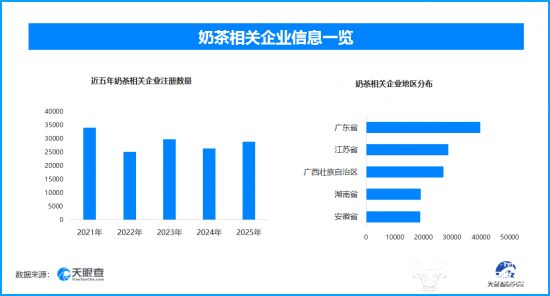
Group 1 - The core issue in the milk tea industry is the safety and consumer experience concerns related to certain ingredients like crushed peanuts, which pose choking hazards for children and the elderly, and high sugar content in red beans and raisins, leading to potential health risks [1][2] - Brands are shifting towards a "tea base + fresh milk" style, reducing the use of heavy toppings and promoting healthier options, indicating a strategic adjustment in response to changing consumer preferences [2] - As of now, there are over 287,000 milk tea-related enterprises in China, with approximately 28,000 new registrations expected by 2025, showing a fluctuating growth trend since 2021 [2] Group 2 - The ability of brands to adapt to consumer preferences is crucial, and assessing the backgrounds of key personnel in product development and quality control can provide insights into their capacity for continuous product optimization [1] - The regional distribution of milk tea enterprises shows Guangdong, Jiangsu, and Guangxi as the leading provinces, with over 39,000, 28,000, and 26,000 enterprises respectively [2]
年营收超28亿,北京八达岭奥莱要悄悄易主!背后是一群金融圈大佬
Sou Hu Cai Jing· 2026-02-06 09:16
Core Viewpoint - The article highlights the significant acquisitions made by Boyu Capital, including SKP, Badaling Outlet, and Starbucks China, showcasing its strategic positioning in the high-end retail market and its understanding of consumer psychology in China [2][4][11]. Group 1: Acquisitions and Market Position - Boyu Capital has made three major acquisitions in less than a year, including the purchase of SKP, Badaling Outlet, and Starbucks China, indicating its aggressive expansion strategy in the high-end retail sector [2][4][11]. - Badaling Outlet, despite its remote location, has thrived by attracting middle-class consumers looking for discounted luxury goods, with sales reaching 5.2 billion yuan during the 2025 National Day holiday [9][11]. - SKP's sales are projected to decline by approximately 17% in 2024, while Badaling Outlet's revenue has grown from 1.8 billion yuan in its opening year to 2.84 billion yuan in 2024, with a profit of around 900 million yuan [11][19]. Group 2: Consumer Behavior Insights - The article discusses the evolving consumer psychology among the middle class, who desire brand prestige without overspending, which Badaling Outlet effectively capitalizes on by offering luxury items at significant discounts [8][9]. - The outlet's strategy of providing a mix of nearly 300 brands, including high-end labels, has created a win-win situation for both consumers and brands, allowing for inventory clearance while satisfying consumer demand for value [9][11]. Group 3: Company Background and Leadership - Boyu Capital, founded in 2011, is one of China's largest private equity firms, managing approximately $10 billion in funds and boasting a portfolio of over 200 companies [13][14]. - The founding team includes notable figures such as Zhang Zixin, a former executive at Ping An, and Ma Xuezheng, known for her significant contributions to the investment landscape in China [14][15][16]. Group 4: Broader Investment Strategy - Beyond retail, Boyu Capital has diversified its investments into various sectors, including property, technology, and clean energy, indicating a comprehensive approach to capital allocation [17][19]. - The firm has also engaged in significant investments in data centers and biotechnology, reflecting a forward-looking strategy that aligns with future market demands [19].

杨陵江1.59亿港元抄底怡园酒业:资本布局与行业困局下的双向博弈
Xin Lang Cai Jing· 2025-12-18 05:32
Core Insights - Yang Lingjiang, founder of 1919 Wine Supply, acquired 73.63% of Yiyuan Wine Industry for approximately HKD 159 million, becoming the new controlling shareholder and actual controller of the largest wine producer in Shanxi [1][6] - This acquisition represents a strategic move for Yang to enhance his wine industry portfolio and a potential turnaround attempt for Yiyuan, which has been struggling with performance issues [1][6] Acquisition Details - The acquisition was completed on December 12, with Yang purchasing 589 million shares, representing 73.63% of Yiyuan's total shares [2][7] - Yiyuan's market capitalization was only HKD 212 million prior to the suspension, with an estimated net asset value of approximately HKD 226 million by the end of 2024 [2][7] - The funding for this acquisition came from Yang's personal funds, unrelated to 1919, following his recent restructuring efforts that significantly reduced 1919's debt from 92% to below 20% [2][7] Company Background - Yiyuan Wine Industry was founded in 1997 and became the first boutique winery listed on the Hong Kong Stock Exchange in June 2018 [3][8] - The company has faced significant performance volatility post-IPO, with three years of losses out of seven, and a projected loss exceeding HKD 41 million for 2024 [3][8] - Despite a revenue increase of 42.5% in the first half of 2025, the company has struggled to reverse its declining trend [3][8] 1919 Wine Supply Overview - 1919 Wine Supply, established in 2005, is a leading player in China's new retail wine sector, with a total transaction volume of HKD 11 billion in 2023 and over 5,000 stores [4][9] - The company faced challenges, including delisting from the New Third Board in June 2023, and is currently undergoing a strategic transformation to focus on high-quality store operations [4][9] - The acquisition of Yiyuan is seen as a critical step for Yang to restart the capitalized growth of 1919, with plans to integrate Yiyuan into a broader business model alongside 1919 and Tianmu International [4][9] Industry Context - The domestic wine industry is currently experiencing a downturn, characterized by weak demand, high inventory levels, and excess raw wine, leading to production cuts and overall contraction [5][11] - Despite the alignment of interests between Yang and Yiyuan, the challenging market conditions pose significant risks to the potential synergies from the acquisition [5][11]
陕西首富夫妇蒙掷4.5亿,名下再添一家A股公司
2 1 Shi Ji Jing Ji Bao Dao· 2025-12-03 15:09
Group 1 - The core point of the article is that Yan Jianya and his wife, after becoming the richest individuals in Shaanxi, are initiating a new round of capital investment by acquiring an 8% stake in the marketing service company Sanrenxing for a total price of 450 million yuan [1] - Following the transaction, Yan Jianya will become the second-largest shareholder of Sanrenxing, with his shareholding only behind that of the controlling shareholder [1] - Yan Jianya and his wife, with a wealth of 45.7 billion yuan, topped the Hurun Rich List in October 2025, indicating their significant financial influence and diversified industrial layout across biotechnology, aerospace, and consumer sectors [1]

贝泰妮5000万元押注10亿级产业基金,意图何在?丨美妆变局
2 1 Shi Ji Jing Ji Bao Dao· 2025-10-16 08:41
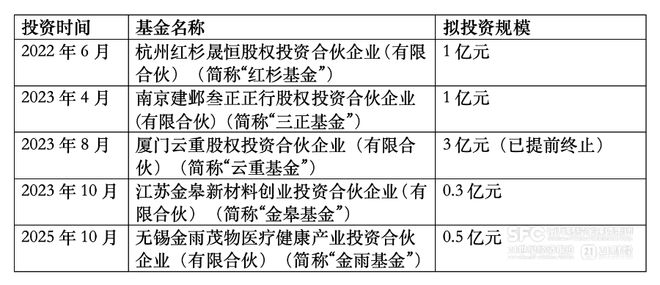
Core Viewpoint - Betaini, known as the "first stock in functional skincare," is intensifying its capital market strategy by establishing a new investment fund focused on healthcare and medical industries [1][3]. Investment Fund Overview - Betaini plans to invest as a limited partner in the Wuxi Jinyu Maowu Medical Health Industry Investment Partnership, with a total fund size of 1 billion yuan, focusing on consumer healthcare, pharmaceuticals, medical devices, and AI in drug development [1][3]. - The company will contribute 50 million yuan, acquiring a 5% stake in the fund, which has a 10-year partnership duration [2][3]. Historical Investment Activities - Over the past three years, Betaini has invested approximately 280 million yuan across various funds, including Sequoia Fund and San Zheng Fund, indicating a strategic shift towards capital investments beyond its core beauty business [2][4]. - Specific investments include 100 million yuan in Sequoia Fund in June 2022, 100 million yuan in San Zheng Fund in April 2023, and 30 million yuan in Jiangsu Jinguo New Materials Fund in October 2023 [2][4]. Financial Performance and Strategic Concerns - Betaini's revenue growth has been declining, with revenues of 4.022 billion yuan in 2021, 5.014 billion yuan in 2022, 5.522 billion yuan in 2023, and 5.736 billion yuan in 2024, showing a decreasing growth rate from 52.57% to 3.87% [6]. - The company's net profit has also decreased significantly, from 8.63 billion yuan in 2021 to 5.03 billion yuan in 2024, reflecting a trend of increasing revenue but declining profitability [6]. Brand Diversification Efforts - To mitigate reliance on its core brand Winona, which accounted for approximately 86% of total revenue in 2024, Betaini is expanding its brand portfolio by acquiring stakes in other brands and developing a multi-brand strategy [6][7]. - The company has invested 536 million yuan to acquire a 51% stake in Yuejiang (Guangzhou) Investment Co., aiming to integrate brands like Za and Pure&Mild into its offerings [6]. Industry Trends - Other major beauty brands, such as Proya and Marubi, are also increasing their capital investments to seek growth opportunities amid slowing sales, indicating a broader trend in the beauty industry towards capital market engagement [7][8].
身家超450亿元!范代娣家族资本版图:女儿、胞妹均为上市公司高管,4只在管基金规模超10亿元
21世纪经济报道· 2025-05-13 09:38
Core Viewpoint - The article discusses the rapid growth and wealth accumulation of the couple Fan Daidi and Yan Jianya, who have successfully positioned themselves in the beauty and aerospace industries through their company, Juzhi Biological, which has become a leading player in the Hong Kong stock market. Group 1: Company Performance - Juzhi Biological has seen a remarkable market performance, becoming the largest beauty and skincare company in Hong Kong with a market capitalization of 883 billion HKD as of May 13 [2] - The company achieved a gross profit of 4.5 billion RMB with a gross margin of 82.09%, earning the nickname "Medical Beauty King" [2] - In 2023 and 2024, Juzhi Biological is projected to achieve revenues of 3.52 billion RMB and 5.53 billion RMB, respectively, with net profits of 2.94 billion RMB and 4.54 billion RMB [15] Group 2: Family Business Structure - The management team of Juzhi Biological includes several family members, such as their daughter Yan Yubo, who holds multiple executive roles [4] - The couple has a significant influence over the company, controlling over 20% of the shares, which allows them to maintain substantial decision-making power [11] Group 3: Wealth Accumulation - The couple's wealth surged following the IPO of Juzhi Biological in November 2022, which has been a catalyst for their financial success [14] - As of May 13, the combined market value of Juzhi Biological and Triangle Defense is close to 1 trillion RMB, positioning them as the new richest couple in Shaanxi [29] Group 4: Investment Strategy - The couple is actively pursuing investments in various sectors, including medical beauty, aerospace, and new materials, indicating a strategic expansion of their business interests [5] - Yan Jianya has been involved in multiple investment initiatives, including a significant personal investment in Baotai Co., which highlights his role as a prominent player in the regional capital market [19][20]