慈孚®VAD

Search documents
2025年中国植入式人工心脏行业进入壁垒、市场政策、产业链图谱、市场规模、竞争格局及发展趋势研判:行业技术壁垒极高[图]
Chan Ye Xin Xi Wang· 2025-12-01 01:37
Overview - The global number of end-stage heart failure patients is large, and heart transplantation is limited by donor scarcity. The success rate of patients receiving transplant surgery is very low. Implantable artificial hearts serve as an important alternative to heart transplantation, providing transitional treatment for patients awaiting transplant and long-term treatment for those unsuitable for transplantation. In 2024, the global implantation volume of implantable artificial hearts is expected to reach 7,538 units, a year-on-year increase of 33.84%, with a market size of $1.2 billion, also up by 33.33% [1][8]. Industry Barriers to Entry - The research and development of artificial hearts involve a multidisciplinary approach, requiring expertise in mechatronics, mechanical design, fluid mechanics, biomechanics, materials science, and clinical medicine. Currently, only a few medical device companies globally have the capability to engage in this industry, making it difficult for new entrants to gain a competitive advantage in the short term. The production of these devices requires high-quality control and complex manufacturing processes, necessitating long-term practical experience and technological breakthroughs [2][4]. Relevant Policies - The medical device industry, including implantable artificial hearts, is a strategic emerging industry in China, receiving significant attention from the government. Various policies have been issued to regulate the market, ensure product quality, and safeguard patient safety, creating a favorable environment for the development of the implantable artificial heart industry [4][5]. Industry Chain - The upstream of the implantable artificial heart industry includes suppliers of metals like titanium and stainless steel, polymer materials like polyurethane and polyethylene, core components like magnetic suspension motors and precision bearings, as well as external controllers and batteries. The midstream involves the research and production of implantable artificial hearts, while the downstream consists of healthcare institutions and heart failure patients, with the core consumer group being end-stage heart failure patients [5][6]. Current Development - The number of heart failure patients is increasing globally, driven by aging populations and the prevalence of chronic diseases. In 2024, the global number of heart failure patients is projected to reach 63 million, with end-stage heart failure patients numbering 6.1 million. In China, the number of heart failure patients is expected to reach 15.4 million, with 1.6 million in the end-stage category. This rising patient population is driving demand for implantable artificial hearts [7][8]. Competitive Landscape - The implantable artificial heart market has high technical barriers, with overseas companies having a head start. Abbott's HeartMate3 holds a significant market share globally. In China, five models of implantable artificial hearts have been launched, with Shenzhen Core Medical Technology Co., Ltd.'s Corheart®6 showing notable technological advantages. As of early 2025, Core Medical's Corheart6 accounted for 52.86% of the market share in terms of implantation volume [9][10]. Representative Domestic Companies - Shenzhen Core Medical Technology Co., Ltd. focuses on innovative artificial heart products and has developed five implantable and six interventional heart products. In 2024, the revenue from its left ventricular assist system reached approximately 93.69 million yuan, a year-on-year increase of 466.08% [10][11]. - Suzhou Tongxin Medical Technology Co., Ltd. has developed the first fully magnetic suspension left ventricular assist device in China, which has received regulatory approval. This product features several innovative technologies, marking a significant advancement in the domestic artificial heart field [11][12]. Future Development Trends - The industry is expected to see continued optimization of magnetic suspension technology, leading to improved stability and longevity of devices. There will be a trend towards smaller and lighter products to reduce surgical trauma and enhance post-operative convenience. Additionally, the integration of artificial intelligence and IoT technologies is anticipated to improve remote monitoring and management of patients post-surgery. The application of advanced materials may also reduce infection and rejection risks, expanding the use of implantable artificial hearts beyond adult end-stage heart failure patients to more specific scenarios [12].


科创板即将迎来“国产人工心脏之王”
3 6 Ke· 2025-11-14 02:07
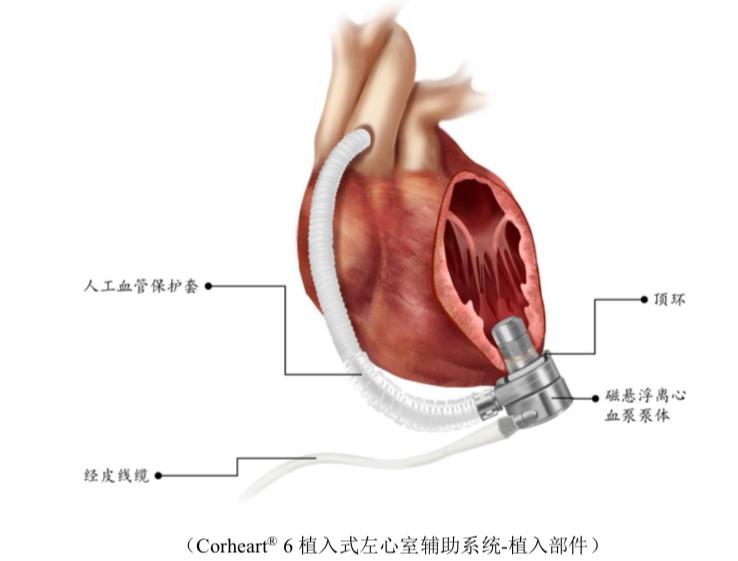
Core Viewpoint - Shenzhen Core Medical's IPO application has been accepted, marking the first innovative medical device company to be accepted under the newly restarted fifth standard of the Sci-Tech Innovation Board [1] Company Overview - Core Medical specializes in artificial hearts, with its flagship product, Corheart 6, being the fourth approved artificial heart in China and the latest domestic product to market as of June 2023 [1] - Corheart 6 has achieved a national market share exceeding 45% by 2024, making it the leading product in the industry [1][4] - The company has undergone six rounds of financing, attracting investments from notable institutions such as Hillhouse Capital and Zhengxin Valley [1] Market Dynamics - The primary application of artificial hearts is in heart failure, with over 15 million heart failure patients in China by 2024, including over 1.5 million in end-stage heart failure [2] - The number of heart transplants in China is limited, with only 1,064 procedures performed in 2024, leading many patients to opt for artificial hearts as a transitional or long-term solution [2] Product Performance - Corheart 6 has become the most implanted artificial heart in China, achieving over 1,000 implants, making it the second globally to reach this milestone after Abbott's HeartMate 3 [1][4] - The product is noted for being the smallest and lightest magnetic levitation implantable artificial heart, which facilitates smaller surgical incisions and faster patient recovery [5][6] Financial Aspects - The gross margin for artificial hearts remains above 72%, with the average factory price of Corheart 6 decreasing from 290,000 yuan in 2023 to nearly 230,000 yuan by 2025 [7] - Recent policy changes have included artificial hearts in medical insurance reimbursement lists, significantly reducing out-of-pocket costs for patients [7] Future Developments - Core Medical is developing the world's first magnetic levitation dual-heart assist device, DuoCor 2, which is currently in clinical evaluation and expected to enter special review procedures in November 2024 [9] - The company is also working on an interventional artificial heart product, CorVad, anticipated to be the first approved interventional artificial heart in China by the first quarter of 2026 [9]
心血管最后的战场,心衰治疗技术大爆发
3 6 Ke· 2025-07-28 01:04
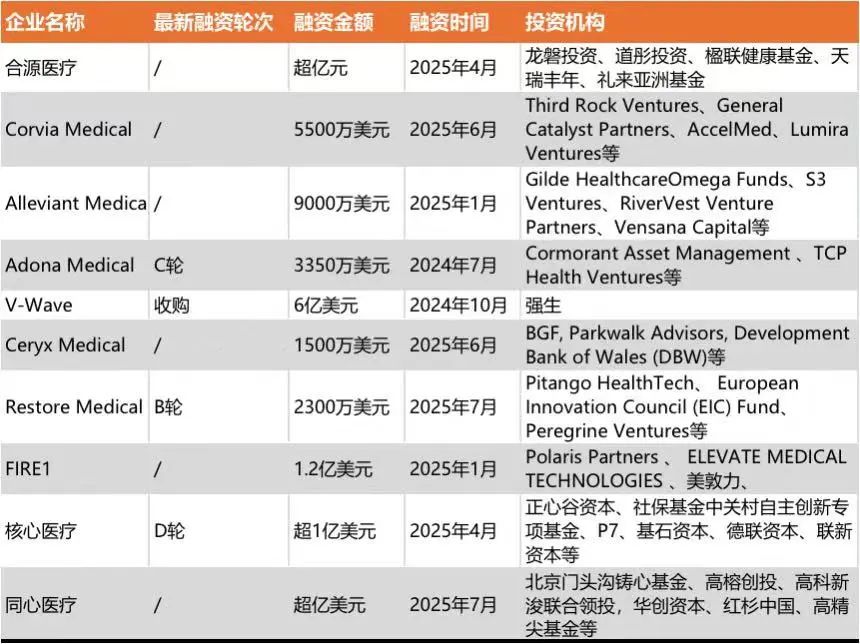
Core Insights - Heart failure (HF) is increasingly recognized as a critical area in cardiovascular medicine, with numerous companies making advancements in treatment technologies [1] - The prevalence of heart failure in developed countries is 1%-2%, while in China, it has reached 1.3% among individuals over 35, totaling approximately 13.7 million patients [1] - Current first-line medications only alleviate symptoms without halting disease progression, highlighting the urgent need for innovative treatments [1] Financing Events - Recent financing activities in the heart failure sector include companies like Alleviant Medical raising $90 million, and V-Wave being acquired for $600 million by Johnson & Johnson [2] - A total of over $1 billion has been raised across various companies in the heart failure treatment space, indicating strong investor interest [2] Innovation Directions - The innovation in heart failure treatment can be categorized into four main directions: reducing cardiac load, improving cardiac efficiency, promoting cardiac repair and regeneration, and preventing fluctuations in cardiac load [6][7] - Multiple innovative products are being developed to address different stages of heart failure, including left ventricular assist devices (LVADs) which have seen rapid adoption in recent years [6] Breakthrough Technologies - The FDA's "Breakthrough Devices" designation has been granted to over ten products in the heart failure space, reflecting the clinical demand for innovative therapies [3] - Notable products include Alleviant Medical's atrial shunt device for heart failure with preserved ejection fraction, and various monitoring systems aimed at managing heart failure [4][5] iPSC Cell Therapy - Induced pluripotent stem cell (iPSC) technology is emerging as a promising avenue for heart regeneration, with companies like Alleviant and Heartseed leading the way in clinical trials [8][11] - Alleviant's iPSC-derived cardiac cells have shown safety and potential efficacy in early trials, with plans for further studies and potential commercialization by 2028 [11][13] Atrial Shunt Devices - Atrial shunt devices have gained attention as a viable treatment option, with significant financing activity in this area, although they are still considered a palliative rather than a curative solution [14][16] - The market for atrial shunt devices is evolving, with ongoing clinical trials and a focus on improving patient outcomes through innovative designs [18] Future Directions - The heart failure treatment landscape is shifting from symptomatic management to addressing underlying causes, with a focus on personalized and multimodal approaches [18] - The ultimate goal is to achieve a state where heart failure is preventable, controllable, and potentially curable, driven by advancements in cell and gene therapies, monitoring technologies, and device innovations [18]