
慢性病用药

Search documents
八成创新药上市两年内入医保
第一财经· 2026-02-05 15:29
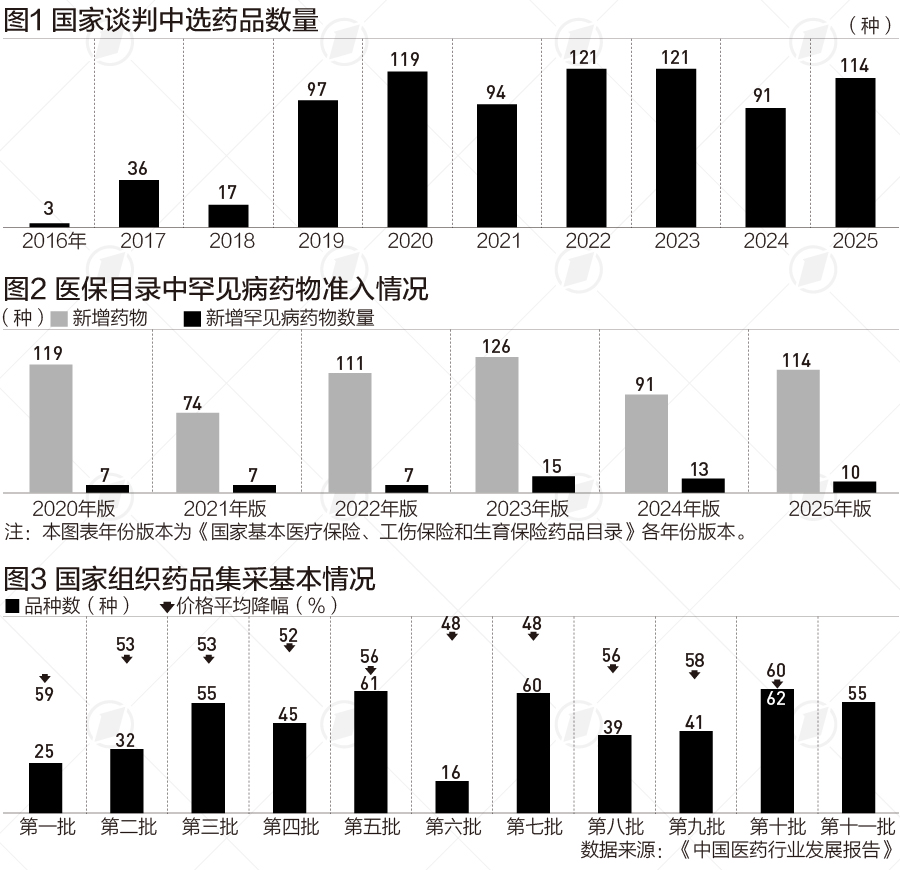
Core Viewpoint - The article discusses how the strategic purchasing mechanism of medical insurance, centered around centralized bulk purchasing and drug price negotiations, is reshaping China's pharmaceutical industry landscape [3]. Group 1: Policy Changes and Trends - Since 2018, China's pharmaceutical policy has shifted to a value-oriented and collaborative governance phase, with medical insurance transitioning from a passive payer to an active strategic purchaser [3][4]. - The establishment of a national drug price negotiation mechanism supports the accessibility of innovative and high-priced drugs, emphasizing clinical value and cost-effectiveness [4][5]. - The proportion of new drugs entering the medical insurance directory within the same year of approval has increased from 32% in 2019 to 97.6% in 2023, significantly reducing the time from drug approval to insurance reimbursement from five years to just over one year [4]. Group 2: Drug Procurement and Pricing - The centralized procurement system has expanded, with 490 types of drugs procured over eight years, covering various treatment areas including chronic diseases and cancer [7]. - In 2024, 28.6% of the newly negotiated drugs were cancer medications, and 71% of the new varieties were domestic innovative drugs, indicating a rapid shift towards high-value areas in the pharmaceutical industry [5][6]. Group 3: Challenges and Recommendations - The article highlights challenges such as inadequate quality supervision in bulk purchasing, insufficient collaboration between medical insurance and pharmaceutical innovation, and the need for improved access to rare disease medications [8][10]. - Recommendations include enhancing clinical monitoring of selected drugs, establishing a unified drug usage tracking system, and developing a multi-tiered payment system to address the accessibility of innovative drugs [10][11].


八成创新药上市两年内入医保,仿制药进入微利时代
Di Yi Cai Jing· 2026-02-05 12:55
Core Insights - The core viewpoint of the news is that China's medical insurance purchasing mechanism, centered on centralized bulk procurement and drug price negotiations, is reshaping the pharmaceutical industry landscape in China [1] Group 1: Policy Changes and Trends - Since 2018, China's pharmaceutical policy has entered a new phase focused on value orientation and collaborative governance, transforming medical insurance from a passive payer to an active strategic purchaser [1] - The current policy shift emphasizes "cost-effectiveness" and "value-based healthcare," moving away from mere cost control [2] - The establishment of a national drug price negotiation mechanism supports the accessibility of innovative and high-priced drugs [2] Group 2: Drug Procurement and Pricing - The bulk procurement policy has transitioned from pilot programs to normalization, effectively reducing prices for generic and chronic disease medications [2] - The proportion of newly listed drugs entering the medical insurance directory within the same year of approval increased from 32% in 2019 to 97.6% in 2023 [2] - The number of drugs procured through national centralized procurement has reached 490, covering various treatment areas including chronic diseases and anti-tumor medications [3] Group 3: Innovation and Market Dynamics - Domestic innovative drugs account for 71% of newly added varieties, indicating a rapid shift towards high-value areas in the pharmaceutical industry [3] - The report anticipates that by 2025, the patient burden will be reduced by over 50 billion yuan, while improving the efficiency of medical insurance fund usage by 22% [3] - The introduction of fast-track approval channels for rare disease drugs has significantly shortened the time for new drugs to enter the medical insurance directory [4] Group 4: Challenges and Recommendations - The report highlights challenges such as the lack of a robust quality supervision mechanism for bulk procurement and insufficient collaboration between medical insurance and pharmaceutical innovation [8] - Recommendations include enhancing the drug value assessment system and establishing a unified drug usage tracking system to monitor the procurement and usage of selected drugs [9] - The report suggests building a multi-tiered payment system to address the accessibility issues of innovative drugs [9]
额敏县市场监督管理局联合多部门开展春节前药品安全专项检查
Zhong Guo Shi Pin Wang· 2026-01-26 09:27
Group 1 - The core viewpoint of the article emphasizes the importance of ensuring medication safety during the Spring Festival by conducting special inspections of drug retail enterprises and medical institutions [1] Group 2 - The inspection focuses on key risk points such as the legality of drug procurement channels, compliance of storage and transportation conditions, and the management of prescription drug sales [1] - Enforcement personnel pay special attention to commonly used medications for prevalent diseases during the festival, as well as chronic disease medications and special management drugs, ensuring their quality and safety [1] - The action involves collaboration among departments to enhance regulatory effectiveness, with immediate rectification orders issued for issues found during inspections, such as uncalibrated temperature control equipment and inadequate drug classification management [1] - Continuous efforts will be made to strengthen drug safety inspections and emergency response during the holiday period, ensuring a safe and peaceful Spring Festival for the public [1]
新疆沙湾市市监局以专项检查为有力抓手 护航冬季“两品一械”质量安全
Zhong Guo Shi Pin Wang· 2026-01-09 05:08
Core Viewpoint - The article highlights the importance of drug and medical device quality safety during the winter season, which is characterized by a surge in demand due to increased incidence of flu and respiratory diseases. The Xinjiang Shawan City Market Supervision Administration is conducting a special inspection to ensure safety and compliance in the pharmaceutical and medical device sectors [1] Group 1: Inspection Focus - The inspections are concentrated in high-risk areas such as urban-rural junctions, covering retail pharmacies, medical institutions, and specialized medical device enterprises to ensure comprehensive oversight in high-risk sectors [1] - In the pharmaceutical sector, inspectors are focusing on key aspects such as procurement channels and storage conditions, particularly monitoring essential medications for cold relief, chronic diseases, and pediatric use [1] - The medical device inspections prioritize sterile, implantable, and cold-chain devices, verifying the completeness of licenses, product registration, acceptance of purchases, and storage management [1] Group 2: Regulatory and Educational Efforts - The inspections emphasize a dual approach of regulation and legal education, with on-site interpretations of the Drug Administration Law and Medical Device Supervision Regulations, distributing over 60 related promotional materials to enhance compliance awareness among operators [1] - The Xinjiang Shawan City Market Supervision Administration plans to increase patrol efforts, streamline complaint and reporting channels, and maintain a zero-tolerance policy towards illegal activities to ensure the safety of public drug and medical device use during winter [1]
党建引领强担当 监管聚力守药安—新疆沙湾市市监局以党建指导员为纽带护航冬季用药用械安全
Zhong Guo Shi Pin Wang· 2025-12-08 07:00
Core Viewpoint - The Xinjiang Shawan City Market Supervision Administration is implementing a "Party Building Guidance + Law Enforcement Supervision" integration model to enhance the safety of drug and medical device usage during the winter respiratory disease peak season [1] Group 1: Party Building and Regulatory Integration - The administration has appointed party member law enforcement officers as Party Building Guides to work closely with local drug and medical device businesses, promoting the integration of party building and regulatory oversight [1] - These guides serve dual roles as enforcement inspectors and party building counselors, helping businesses improve their party organization and management systems [1] Group 2: Focus on Drug Safety - The initiative emphasizes strict checks on key drug categories such as cold medications and chronic disease treatments, ensuring compliance with regulations regarding procurement, qualifications, storage conditions, and prescription drug sales [1] - The administration plans to increase the frequency of market inspections and intensify efforts to combat illegal activities, aiming to enhance the standardization of drug and medical device businesses [1]
【省药监局】陕西加强药品经营使用监督管理
Shan Xi Ri Bao· 2025-07-06 23:31
Core Viewpoint - The Shaanxi Provincial Drug Administration has released a plan for drug supervision and management for 2025, emphasizing the need to strengthen regulation in key varieties, links, enterprises, and regions to ensure drug quality and safety [1][2] Group 1: Regulatory Actions - Shaanxi will implement the "Qingyuan" action, focusing on drug wholesale and retail enterprises, as well as online sales, to combat illegal drug purchasing and selling channels [1] - The province aims to enhance the traceability system for drug operations, ensuring comprehensive coverage of five categories of drugs through QR code tracking [1] Group 2: Quality Supervision - Increased regulatory efforts will be directed towards vaccines, blood products, and commonly used high-value drugs, with special inspections for traditional Chinese medicine (TCM) products [1] - There will be a focus on prescription drugs and chronic disease medications, particularly in monitoring procurement channels, storage management, and information traceability [1] Group 3: Targeted Inspections - The Shaanxi Provincial Drug Administration will strengthen oversight of illegal sales of TCM formula granules and prescription drugs without proper prescriptions, as well as the absence of licensed pharmacists [2] - Special attention will be given to rural areas and small pharmacies, ensuring they have established quality management systems for drug procurement, acceptance, and storage [2] - Investigations will target issues such as substandard storage conditions and the illegal sale of TCM products, including the sale of inferior or counterfeit goods [2]