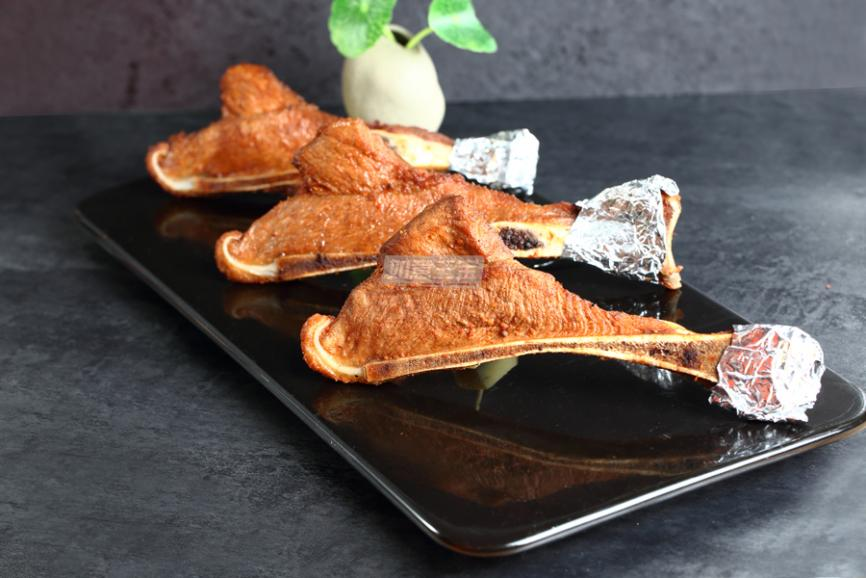
手抓扇子骨

Search documents
预制菜国标将至,餐饮透明化时代加速到来!
Zhong Guo Shi Pin Wang· 2025-12-29 05:44
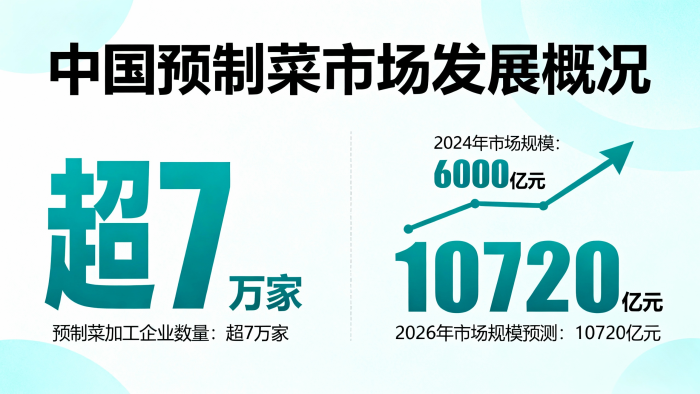
Core Insights - The pre-prepared food industry in China is rapidly growing, with over 70,000 processing companies and a projected market size exceeding 600 billion yuan in 2024, reaching 1,072 billion yuan by 2026 [1][3] Industry Overview - The demand for quick service and diverse menu options in the food and beverage sector is driving the industrialization of catering, leading to increased efficiency in kitchen operations through semi-finished products [3] - However, the industry faces challenges due to a lack of standards, resulting in food safety and quality concerns, as well as issues with ingredient freshness and production practices [3] Regulatory Developments - In response to industry issues, the government is actively working on establishing national standards for pre-prepared foods, with a significant notification issued in March 2024 to clarify definitions and promote safety [3] - The draft of the national food safety standard for pre-prepared foods has passed review and is set to be publicly consulted, addressing classification, raw materials, processing methods, storage, transportation, and inspection [3] Food Safety Standards - A new version of the national food safety standard for food additives will be implemented starting February 8, 2025, providing clear guidelines for the use of preservatives and other additives in pre-prepared foods [4] Industry Best Practices - Leading companies in the pre-prepared food sector are adopting high standards, such as the brand "Yisambao," which emphasizes no preservatives and utilizes modern food processing technology to ensure product quality [6] - Regions like Guangdong, Shanghai, and Hunan are exploring initiatives to clearly label pre-prepared foods, enhancing consumer trust and operational efficiency for restaurants [6] Future Market Outlook - The future of the dining market should not see pre-prepared foods and freshly made dishes as oppositional but rather as complementary, meeting diverse consumer needs [8] - With the implementation of national standards, consumers will be better equipped to identify quality pre-prepared food options, fostering a balance between convenience and safety in modern dining [8]

餐饮市场需求分化加剧,场景精准对接成破局关键
Zhong Guo Shi Pin Wang· 2025-11-04 05:49
Core Insights - The Chinese catering market is experiencing a significant transformation amid slowing growth, with a reported year-on-year revenue increase of only 3.3% from January to September 2025, indicating a shift towards "incremental slowdown and stock competition" [1] - The competition in the catering market has shifted from category expansion to deepening consumer scenarios, with chain brands penetrating lower-tier markets and regional cuisines gaining popularity due to cultural recognition [3] - The brand Ruyi Sanbao has effectively captured market trends by focusing on traditional ingredients like pig fan bones since 2017, creating a diversified product matrix that caters to both B-end and C-end markets [3][5] Industry Trends - The catering market is witnessing a notable trend of market differentiation, with an increase in the number of local cuisine outlets such as Yunnan and Guizhou dishes, as well as Jiangxi stir-fry [1] - Ruyi Sanbao's strategy of product matrix development allows its offerings to thrive in various dining scenarios, such as transforming the same dish into a banquet centerpiece or a popular night snack [7] - The brand's commitment to quality is evidenced by multiple international awards, which enhance product differentiation and build trust with customers in both B-end and C-end markets [7] Company Strategy - Ruyi Sanbao's deep focus on the pig fan bone category began during a relatively blank period in the industry, launching successful products like hand-held pig fan bones and cumin-flavored pig fan bones in 2018 and 2019, respectively [5] - The company plans to continue its scene-driven innovation strategy, aiming to explore more niche scenarios and provide high-adaptability ingredient solutions through technological upgrades and flavor innovations [9] - The future of the catering market belongs to brands that can accurately connect "people, goods, and scenes," and Ruyi Sanbao's approach serves as a reference for the industry, emphasizing the value of deeply exploring niche scenarios over blind expansion [9]