
场景深耕

Search documents
2026年货节:从情绪到生意,谁在重新定义“新年味”?
Sou Hu Wang· 2026-02-14 09:18
Core Insights - The article highlights a shift in consumer behavior during the Chinese New Year, emphasizing a cautious yet evolving consumption pattern that integrates social sharing and personal expression into traditional practices [1][2][36] - Douyin (TikTok) has become a significant platform for driving consumer trends and sales during the New Year, with substantial increases in sales across various categories [2][36] Group 1: Consumer Trends - Food and essential goods saw a year-on-year consumption increase of 11.5% during the Spring Festival, with cosmetics and jewelry categories showing notable recovery [1] - Douyin's 过年 (New Year) topic reached 192.08 billion views, indicating a strong engagement with New Year-related content [1] - Sales of New Year-related products surged, with year-on-year growth of 92% for New Year’s Eve dinner products and 66% for new Chinese-style clothing [2] Group 2: Marketing Strategies - Businesses are leveraging specific life scenarios such as family gatherings and personal rewards to enhance their marketing strategies, moving away from traditional shelf logic [5][8] - The use of diverse content formats, including celebrity endorsements and short dramas, has been effective in transforming New Year products into social topics [6][8] - Companies are focusing on creating emotional connections with consumers, using themes of self-renewal and cultural resonance to drive sales [9][12] Group 3: Industry-Specific Insights - In the beauty sector, brands are capitalizing on the emotional significance of the New Year, with strategies that emphasize personal renewal and self-expression [9][10] - The household cleaning industry is redefining its role by promoting products as essential for creating a festive and clean home environment, thus enhancing the consumer experience [17][18] - The digital and tech sectors are integrating their products into social gifting and aesthetic experiences, appealing to high-value consumer segments [25][26] Group 4: Performance Metrics - Brands like "花间颂" achieved over 1200% GMV growth on promotional days by effectively engaging with their audience through targeted marketing [10] - "法国科兰黎" saw a 190% increase in GMV during the New Year period, doubling its consumer base from 30 million to 60 million [12] - "立白" reported a GMV of over 36 million, outperforming the overall growth rate of the household cleaning category [18] Group 5: Future Outlook - The article suggests that understanding and leveraging the emotional and cultural significance of the New Year will be crucial for businesses aiming for sustainable growth [36][37] - Douyin is positioned as a key marketing platform for brands to explore long-term operational strategies and enhance their market presence [36][37]


阳光电源:光储融合、场景深耕将成核心主线
中关村储能产业技术联盟· 2026-02-13 04:41
Core Viewpoint - The global solar and energy storage industry experienced significant growth in the past year, with solar installations exceeding 500 GW and cumulative energy storage installations surpassing 300 GWh, reflecting a nearly 70% year-on-year increase [3]. Group 1 - The industry is shifting from scale expansion to value competition, with a focus on solar-storage integration and deepening application scenarios as core themes for the new year [3]. - Advanced technologies such as AI and network construction are accelerating implementation, while electricity trading is maturing and diverse scenarios are emerging [3]. - The company remains committed to long-term innovation and aims to meet diverse demands by collaborating with global partners to build a more stable, efficient, and intelligent energy ecosystem [3]. Group 2 - The company has confirmed its sponsorship of the 14th International Energy Storage Summit and Exhibition (ESIE 2026), inviting industry peers to participate in this global energy storage event [7]. - The event is scheduled to take place from March 31 to April 3, 2026, at the Beijing Capital International Exhibition Center [8].


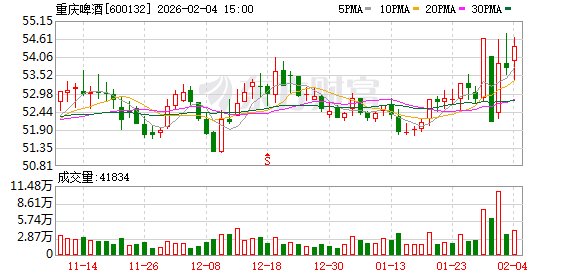
产品创新+场景深耕 重庆啤酒2025年销量、营收、净利润全面增长
Zheng Quan Ri Bao· 2026-02-04 11:44
Core Viewpoint - Chongqing Brewery demonstrates resilience and vitality in a challenging market environment, achieving stable growth in sales, revenue, and profit while focusing on product structure optimization and operational improvements [2]. Group 1: Performance Metrics - In 2025, Chongqing Brewery's sales increased by 0.68% year-on-year, outperforming the industry average, while the overall beer production in China declined by 1.1% [2]. - The company reported operating revenue of 14.722 billion yuan, a year-on-year increase of 0.53%, and a net profit attributable to shareholders of 1.231 billion yuan, reflecting a growth of 10.43% [2]. Group 2: Strategic Initiatives - Under the "Jia Su Yang Fan" strategy, the company actively responded to external changes by optimizing product structure, accelerating new product launches, and expanding non-traditional beverage channels [2]. - In 2025, Chongqing Brewery launched over 30 new products, including craft beers and flavored sodas, to meet diverse consumer needs and enhance product offerings [3]. Group 3: Marketing and Brand Strategy - The company has a diverse brand portfolio that includes both local and international brands, catering to various consumer scenarios [3]. - Chongqing Brewery is enhancing brand experiences by integrating with high-frequency consumption scenarios such as sports events and popular entertainment, thereby stimulating consumer engagement [3]. Group 4: ESG Commitment - The company is advancing its "Together Towards and Beyond Zero" ESG plan and has received an "AA" rating from MSCI ESG for two consecutive years, the highest rating among A-share food and beverage companies [3].

信用卡行业转型步入深水区 光大银行场景深耕与科技赋能寻出路
Xin Hua Cai Jing· 2026-01-29 02:59
Core Insights - The credit card industry in China is undergoing a significant transformation, moving away from a growth model reliant on scale expansion due to declining card issuance and rising delinquency rates [1][2][3] Industry Adjustment Period - As of Q3 2025, the total number of credit cards and combined lending cards in China has decreased to 707 million, down 8 million from Q2 2025 and a total reduction of approximately 100 million from the peak of 807 million in 2022, marking 12 consecutive quarters of decline [2] - The loan balance in the credit card sector is also contracting, with 18 out of 34 A-share listed banks reporting a year-on-year decline in credit card loan balances as of Q2 2025 [2] - The total overdue credit card loans reached 123.96 billion yuan by the end of 2024, accounting for 1.43% of the total credit card receivables, reflecting a year-on-year increase of 0.3 percentage points [2] Strategic Adjustments in the Credit Card Sector - The credit card industry is adjusting its operational strategies to focus on risk management and structural adjustments, emphasizing prudent and stable development [3] - Banks are exploring new business models through deepening engagement in consumer scenarios and leveraging technology to enhance service delivery [4] Technological Integration and Risk Management - The use of AI technology is being prioritized to improve operational efficiency, with a focus on customer lifecycle management and risk assessment [5][6] - Credit card issuance strategies are shifting towards targeting high-quality customer segments, with banks implementing differentiated approval and credit granting processes [6] Future Strategic Focus - The emphasis will be on returning to core consumer needs and enhancing localized operations to better serve customer demands [7] - Specific measures include optimizing product and benefit systems, enhancing customer management, and strengthening digital capabilities to support consumption-driven growth [7]

三年减少1亿张,年轻人正在抛弃信用卡
Tai Mei Ti A P P· 2025-12-16 11:57
Core Insights - The credit card market in 2025 is undergoing a significant contraction, with a total issuance of 707 million cards, down from a peak of 807 million in 2022, indicating a loss of nearly 100 million cards in three years [1][2] - The industry is experiencing a "structural collapse," particularly among state-owned banks, with notable declines in card issuance and increased non-performing loan rates [2][3] - The shift in consumer behavior is evident, with younger generations showing a high rate of card cancellations and a significant portion of the population opting not to hold credit cards at all [1][12] Market Dynamics - The total number of credit cards has decreased significantly, with a drop of 1 million cards in just six months, reflecting a broader trend of declining loan volumes and transaction amounts [1][2] - Major banks are closing credit card centers, with 63 centers shutting down in the year, indicating a shift from centralized operations to localized management [3][4] - The average customer acquisition cost for credit cards has risen to nearly 300 yuan, while the profit generated from low-efficiency customers is less than 50 yuan per year, leading to unsustainable business models [4][5] Risk Exposure - Non-performing loan rates have surged, with major banks reporting rates above 3%, and smaller banks facing even higher rates, indicating a significant risk exposure in the credit card sector [4][5] - The trend of selling off bad debts is increasing, with banks like Minsheng and Huaxia listing substantial amounts of non-performing credit card loans, reflecting the industry's struggle with asset quality [5][6] Strategic Shifts - Leading banks like China Merchants Bank are redefining their credit card strategies, focusing on integrating credit cards into broader retail banking ecosystems rather than merely as credit tools [6][7] - Banks are moving towards a model that emphasizes customer engagement and value creation, with a focus on enhancing customer experience through integrated services [12][14] - The industry is witnessing a transformation from traditional credit card offerings to more tailored products that meet specific consumer needs, such as lifestyle and essential services [15][16] Consumer Behavior - Younger consumers are increasingly rejecting traditional credit card offerings, with 37% of those born in the 1990s actively canceling cards and 42% of those born in the 2000s never having held a card [1][12] - The shift in consumer preferences is leading to a decline in card usage, with many opting for alternative payment methods that offer greater convenience [12][13] - The traditional incentives for credit card acquisition, such as promotional gifts, are losing effectiveness, prompting banks to rethink their marketing strategies [12][15]

餐饮市场需求分化加剧,场景精准对接成破局关键
Zhong Guo Shi Pin Wang· 2025-11-04 05:49
Core Insights - The Chinese catering market is experiencing a significant transformation amid slowing growth, with a reported year-on-year revenue increase of only 3.3% from January to September 2025, indicating a shift towards "incremental slowdown and stock competition" [1] - The competition in the catering market has shifted from category expansion to deepening consumer scenarios, with chain brands penetrating lower-tier markets and regional cuisines gaining popularity due to cultural recognition [3] - The brand Ruyi Sanbao has effectively captured market trends by focusing on traditional ingredients like pig fan bones since 2017, creating a diversified product matrix that caters to both B-end and C-end markets [3][5] Industry Trends - The catering market is witnessing a notable trend of market differentiation, with an increase in the number of local cuisine outlets such as Yunnan and Guizhou dishes, as well as Jiangxi stir-fry [1] - Ruyi Sanbao's strategy of product matrix development allows its offerings to thrive in various dining scenarios, such as transforming the same dish into a banquet centerpiece or a popular night snack [7] - The brand's commitment to quality is evidenced by multiple international awards, which enhance product differentiation and build trust with customers in both B-end and C-end markets [7] Company Strategy - Ruyi Sanbao's deep focus on the pig fan bone category began during a relatively blank period in the industry, launching successful products like hand-held pig fan bones and cumin-flavored pig fan bones in 2018 and 2019, respectively [5] - The company plans to continue its scene-driven innovation strategy, aiming to explore more niche scenarios and provide high-adaptability ingredient solutions through technological upgrades and flavor innovations [9] - The future of the catering market belongs to brands that can accurately connect "people, goods, and scenes," and Ruyi Sanbao's approach serves as a reference for the industry, emphasizing the value of deeply exploring niche scenarios over blind expansion [9]

为什么现在团建都选永和槽房?答案藏在 “醒得快” 里
Sou Hu Cai Jing· 2025-10-31 08:47
Core Insights - The rise of Yonghe Caofang represents a transformation in the Chinese liquor industry, focusing on a comfortable drinking experience and differentiated scenarios, which opens up a trillion-yuan market [1][6] - Yonghe Caofang's success in workplace team-building events highlights a shift from traditional marketing strategies centered on "aging" to addressing consumer demands for comfort and safety in drinking [3][10] Company Summary - Yonghe Caofang employs a "0000 standard," ensuring a high-quality drinking experience by eliminating harmful substances, which enhances consumer satisfaction and promotes a quick recovery from drinking [4][9] - The brand's transparency regarding ingredient safety resonates with the Z generation, who prioritize knowledge about food additives, thus building trust and loyalty among young consumers [6][9] - Yonghe Caofang's strategic focus on the team-building segment addresses specific consumer pain points such as concerns about hangovers, the need for large volumes, and maintaining a respectable image [6][9] Industry Summary - The white liquor industry has been traditionally associated with luxury, but Yonghe Caofang democratizes quality by offering high-standard products at accessible prices, making premium experiences available to a broader audience [8][10] - Data indicates a significant market shift, with "light intoxication and quick recovery" liquor sales expected to grow by 189% year-on-year by mid-2025, with Yonghe Caofang capturing 37% of this market [9] - The brand's approach is prompting a broader industry movement towards purity standards, as more brands adopt the "0 detection" standard, indicating a revolution in product quality and consumer expectations [9][10]

中国电子WAIC2025前沿聚焦(6):中国AI算力的崛起与务实演进
Haitong Securities International· 2025-07-29 11:38
Investment Rating - The report does not explicitly state an investment rating for the industry or specific companies. Core Insights - The 2025 World Artificial Intelligence Conference (WAIC) highlighted a transformative evolution in China's AI computing industry, emphasizing "full-stack autonomy, deepened scenario integration, and diversified ecosystems," marking a shift from technological catch-up to ecological leadership [10][11][12] - The focus has shifted from "parameter competition" to integrating computing capabilities into specific industry solutions, reflecting industry maturity and confidence [11][12] - Chinese computing firms are actively constructing a fully autonomous ecosystem, addressing external technological constraints and supply chain risks [12][13] Summary by Sections Event Overview - The WAIC 2025 showcased a collective transformation in China's AI computing industry, with leading firms like Huawei, Sugon, and Moore Threads presenting competitive foundational technologies and a complete value loop from computational infrastructure to industry applications [10][11] Industry Trends - A notable trend is the acceleration of "end-to-end domesticization," with firms developing a comprehensive ecosystem from chip architecture to software services [12] - The industry is characterized by a diversified development strategy, with various companies pursuing different technological paths, such as Huawei's "384 Super Node" and Zhonghao Xinying's TPU chips, which improve energy efficiency [13] Company Highlights - Huawei's Ascend is compatible with over 80 large-scale AI models, integrating deeply into sectors like telecom, finance, and healthcare [11] - Sugon showcased its "Five Smart" system, demonstrating extensive delivery capabilities across various AI solutions [12] - New products like the Xiyun C600 GPU and the M50 AI chip from Houmo Intelligence reflect the industry's focus on localized and low-power AI solutions [13]




食品饮料行业周观点:白酒行业逐步施压,餐供龙头边际修复
GOLDEN SUN SECURITIES· 2025-05-25 06:23
Investment Rating - The report maintains an "Increase" rating for the food and beverage industry, indicating a positive outlook for key players in the sector [5]. Core Insights - The white liquor industry is experiencing gradual pressure, with a focus on rational targets for 2025. The report emphasizes three main investment lines: leading brands with competitive advantages, high-certainty regional brands, and flexible stocks benefiting from recovery and increased risk appetite [1][2]. - The beer sector shows a slight decline in production, with a 0.6% year-on-year decrease in the first four months of 2025. However, there is potential for recovery in the upcoming peak season, suggesting a favorable investment window [3]. - The report highlights the broad recovery potential in the catering supply space, with leading companies expected to benefit from improved performance and market expansion strategies [4][7]. Summary by Sections White Liquor - The industry consensus is shifting towards stable, high-quality growth with a focus on market share rather than aggressive growth targets. Key strategies include product innovation, market penetration, and international expansion [2]. - Major companies like Guizhou Moutai and Shanxi Fenjiu are focusing on maintaining market stability and enhancing their brand presence among younger consumers [2]. Beer and Beverage - The beer production for January to April 2025 was 11.44 million kiloliters, reflecting a slight decline. However, April showed a 4.8% increase in production, indicating potential for recovery [3]. - The beverage sector is characterized by intense competition, but new product launches and recovery in consumer demand are expected to sustain high growth [3]. Catering Supply - The report notes significant opportunities for leading companies in the catering supply sector, particularly with the introduction of new products and expansion into new categories [4][7]. - Companies like Three Squirrels are diversifying their product lines and enhancing their distribution channels to capture more market share [7].






食品饮料周观点:白酒行业逐步施压,餐供龙头边际修复-20250525
GOLDEN SUN SECURITIES· 2025-05-25 06:18
Investment Rating - The report maintains an "Increase" rating for the food and beverage industry, indicating a positive outlook for key players in the sector [5]. Core Insights - The white liquor industry is experiencing gradual pressure, with a focus on rational growth targets for 2025. Key players are emphasizing market share enhancement and strategic execution efficiency. Innovations, market penetration, international expansion, and youth-oriented strategies are highlighted as core directions for liquor companies [2]. - The beer sector shows a slight decline in production, with a 0.6% year-on-year decrease in output from January to April 2025. However, there is potential for recovery in the upcoming peak season, suggesting a favorable investment window [3]. - The beverage sector is characterized by intense competition, but there are opportunities for growth driven by extended holiday periods and improved travel scenarios. Companies with strong channel networks and high-potential products are recommended for investment [3]. Summary by Sections White Liquor - The industry consensus is shifting towards stable, quality growth with a focus on market share rather than aggressive quantitative targets. Major companies like Guizhou Moutai and Shanxi Fenjiu are implementing strategies to enhance brand resilience and market stability [2]. - Guizhou Moutai aims for a revenue target of 7.6 billion yuan (approximately $1.1 billion) for 2025, reflecting a 3.49% year-on-year increase, while net profit is targeted at 2.62 billion yuan (approximately $380 million), a 1% increase [2]. Beer and Beverage - The beer production for the first four months of 2025 totaled 11.44 million kiloliters, with April showing a 4.8% increase compared to the previous year. The sector is expected to benefit from low comparative bases in the upcoming quarters [3]. - The beverage market is witnessing the launch of innovative products, such as the new electrolyte water brand targeting health-conscious consumers. Despite fierce competition, the beverage sector is projected to maintain high growth due to favorable market conditions [3]. Food Supply - The food supply sector is seeing recovery among leading companies, with a focus on expanding product lines and enhancing distribution channels. Companies like Three Squirrels are diversifying into new categories and exploring innovative retail strategies [7].

