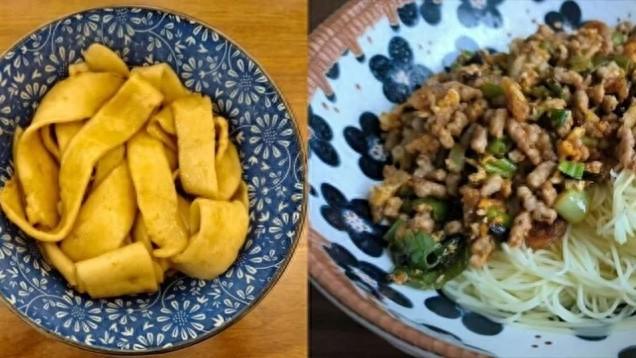
拉条子

Search documents
当讨论面条时人们在讨论什么
Xin Lang Cai Jing· 2026-02-22 07:35
Group 1 - The article discusses the unique culinary traditions of a specific region, particularly focusing on the sweet noodle dish known as "tian mian" which is characterized by its high sugar content and is traditionally served during special occasions [3][5] - The author reflects on the cultural significance of sweetness in the local cuisine, noting that many traditional dishes incorporate sugar, highlighting the region's distinct preference for sweet flavors [3][5] - The article contrasts the sweet noodle with other regional noodle varieties, such as the sour "suan tang zi" from Northeast China, showcasing the diversity of noodle dishes across different provinces [5][7] Group 2 - The preparation methods of various noodle types are described, emphasizing the skill and effort required in making them, such as the labor-intensive process of making "la tiao zi" which involves a dance-like technique [9][10] - The article introduces a philosophical discussion about food preferences, categorizing people into "noodle personalities" and "dumpling personalities," which sparks a debate about the nature of openness and complexity in food choices [10][12] - The author reflects on the cultural implications of food discussions, suggesting that debates over food are not just about taste but also about identity, values, and social interactions within the community [14][15]

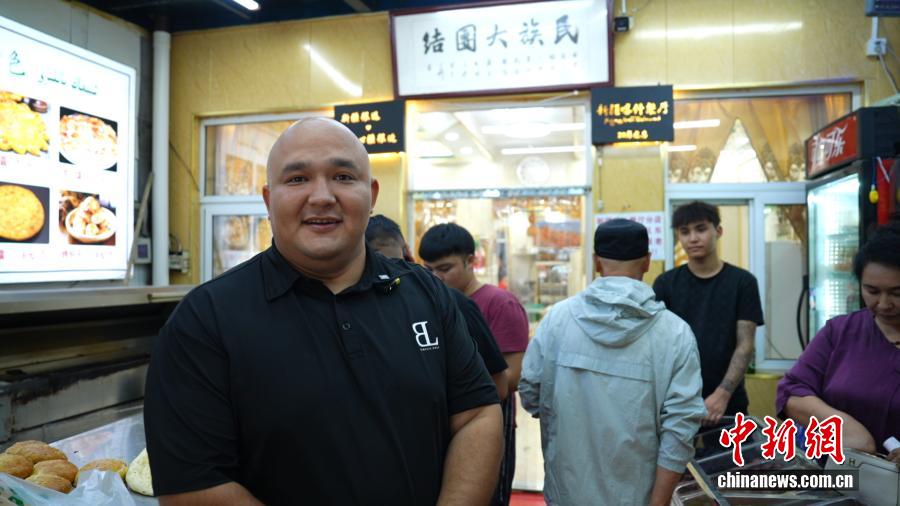
我从新疆来|“赛米米”的承诺:把家乡味做成“文化桥”
Zhong Guo Xin Wen Wang· 2025-10-03 07:32
Core Viewpoint - The article highlights the journey of a Uyghur veteran, Naibijiang, who has established a cultural bridge between Kashgar, Xinjiang, and Beijing through his restaurant business, showcasing the importance of food in cultural exchange and community building [2][11]. Group 1: Personal Journey and Business Development - Naibijiang moved to Beijing from Kashgar over thirty years ago, initially starting with a street barbecue stall and later opening two restaurants, reflecting his entrepreneurial spirit and adaptation to a new environment [2][3]. - The family business began with Naibijiang's grandfather selling raisins, and his father expanded it by opening a restaurant, which became a community hub in the neighborhood [6][8]. - Naibijiang's experiences in Beijing, including the warmth of local residents, have deeply influenced his approach to business and community engagement [7][8]. Group 2: Business Philosophy and Cultural Impact - The restaurant named "Saimimi," meaning "integrity" in Uyghur, embodies Naibijiang's commitment to honesty and quality in his food service, which has garnered a loyal customer base [8][9]. - Naibijiang emphasizes the importance of fresh ingredients and fair pricing, reflecting his military background and sense of responsibility [9][10]. - The restaurant serves as a cultural exchange platform, where customers can experience Xinjiang cuisine and learn about its cultural significance, fostering understanding between different ethnic groups [11][12]. Group 3: Community and Cultural Exchange - Naibijiang's restaurants facilitate interactions between locals and Xinjiang residents, promoting cultural understanding through shared meals and celebrations of various festivals [11][12]. - The article illustrates how food serves as a medium for cultural connection, allowing people from different backgrounds to come together and appreciate each other's traditions [11][12]. - Naibijiang's future plans include expanding the menu to incorporate more modern elements while continuing to promote Xinjiang culture, highlighting the ongoing evolution of cultural exchange through cuisine [12].