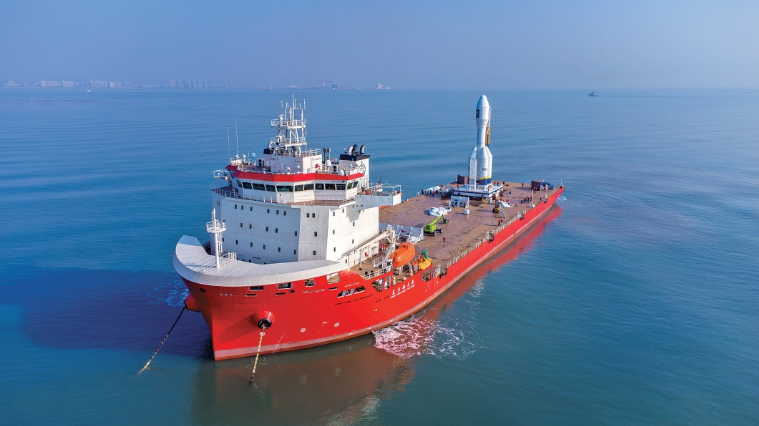
捷龙三号

Search documents
商业航天:从国家博弈到市场浪潮
Sou Hu Cai Jing· 2025-12-03 12:57
Group 1 - The article discusses the evolution of commercial space industry from government-dominated initiatives to a thriving private sector, highlighting key milestones such as the establishment of Intelsat in 1964 and the Space Launch Act of 1984, which opened the market to private enterprises [3][5] - Elon Musk's SpaceX played a pivotal role in transforming the commercial space landscape, achieving significant milestones like the successful launch of Falcon 1 in 2008 and the first rocket recovery in 2015, drastically reducing launch costs and establishing a new industry standard [5][9] - The article notes that by 2025, SpaceX's revenue is projected to reach $15.5 billion, indicating a dominant position in the market alongside competitors like Blue Origin and Virgin Galactic [5] Group 2 - China's commercial space sector has seen rapid development over the past decade, with significant policy changes encouraging private investment and participation in satellite development and launches, marking a shift from a state-controlled environment [7][10] - The successful launch of the Zhuque-2 rocket in 2023 marked a significant achievement for China's private space companies, demonstrating advancements in technology and increasing the share of private launches in the national total [9][10] - The Chinese commercial space market is expected to exceed ¥2.5 trillion by 2025, with an annual growth rate of over 20%, reflecting the sector's strategic importance and potential for economic impact [10][14] Group 3 - The article emphasizes the strategic importance of commercial space for national security and resource competition, as low Earth orbit resources are limited and the deployment of satellites is crucial for maintaining competitive advantages [12] - The integration of commercial space capabilities with national defense is highlighted, showcasing how private satellite services can enhance disaster response and national security communications [12][14] - The commercial space industry is positioned as a new growth engine for the economy, with projections indicating a market size exceeding ¥2.3 trillion in 2024, driving innovation across various sectors [14] Group 4 - The future of commercial space is characterized by ambitious goals, including the potential for significantly reduced launch costs and the proliferation of satellite constellations, which could enable widespread connectivity and new applications [16] - The article outlines challenges faced by domestic private companies, including reliance on imported technology and the need for improved regulatory frameworks to manage satellite operations and safety [18] - The narrative of commercial space is framed as a reflection of human curiosity and geopolitical competition, with China emerging as a key player in the global space arena [18]

“航天+海工”的技术融合,推动青岛、烟台等地形成海上航天产业集群——东方航天港:逐梦星辰的“海上摇篮”
Zhong Guo Zi Ran Zi Yuan Bao· 2025-08-25 01:25
Core Insights - The successful launch of the Jielong-3 rocket marks a significant milestone for China's commercial space industry, indicating a shift towards efficient mass production of rockets [3][4] - The development of the Yuyuan-1 rocket and its successful sea recovery trial positions China as a key player in reusable rocket technology, second only to the United States [10][11] Group 1: Launch Achievements - The Jielong-3 rocket successfully launched 11 satellites into LEO, marking the 17th sea launch from the Dongfang Spaceport [3][4] - The Dongfang Spaceport is China's only sea-based rocket launch site, enhancing the flexibility and safety of launch operations [3][4] - The Jielong-3 rocket's transition from customized to mass production is expected to lower costs and increase launch frequency, catering to commercial demands [4][10] Group 2: Technological Innovations - The Yuyuan-1 rocket, made of thin-walled stainless steel and using liquid oxygen and methane propellants, successfully completed a sea recovery test, filling a gap in China's liquid rocket capabilities [5][10] - Advanced technologies such as "sea-based launch dynamic compensation" and real-time monitoring systems have been developed to address the challenges of sea launches [6][9] - The integration of aerospace dynamics, marine engineering, and artificial intelligence is crucial for the success of sea launch and recovery operations [9][10] Group 3: Industry Implications - The reusable rocket technology is projected to significantly reduce launch costs, with potential costs dropping below $3,000 per kilogram, comparable to SpaceX's Falcon 9 [10][11] - The successful sea recovery of the Yuyuan-1 rocket is expected to drive the development of related industries, including liquid oxygen and methane engines and smart navigation systems [11] - China's advancements in sea recovery technology provide a competitive edge in international space endeavors, particularly in low Earth orbit satellite networks and deep space exploration [10][12]