
政策性种植险

Search documents
高科技推进模式变革 “双精准”守护美好“丰”景
Qi Lu Wan Bao· 2025-09-26 02:22
Core Viewpoint - The company is enhancing agricultural insurance services through digital transformation and technology integration, focusing on proactive risk management and efficient loss assessment to support local food security and rural revitalization efforts [1][3][5] Group 1: Innovation in Service Model - The company has shifted from a "passive compensation" model to an "active risk reduction" approach by implementing a new risk management model that includes "growth monitoring + disaster assessment" [1] - Utilizing high-resolution satellite remote sensing technology, the company conducts monthly crop growth monitoring to identify potential risks early, allowing for proactive disaster prevention [1][3] Group 2: Efficient Loss Assessment - The company leverages satellite imagery to quickly and accurately assess disaster losses, particularly in drought-affected areas, ensuring fair compensation for farmers [3] - A combination of remote sensing analysis and on-site sampling allows for objective and precise loss assessment, addressing traditional challenges in manual inspections [3] Group 3: Commitment to Farmers - The company's innovative practices reflect its commitment to enhancing agricultural insurance service quality through technology, ensuring that farmers experience fairness and convenience [5] - Future plans include further promoting the implementation of policy-based planting insurance to achieve a comprehensive transition from traditional to digital insurance services, thereby improving the accuracy of underwriting and claims [5]


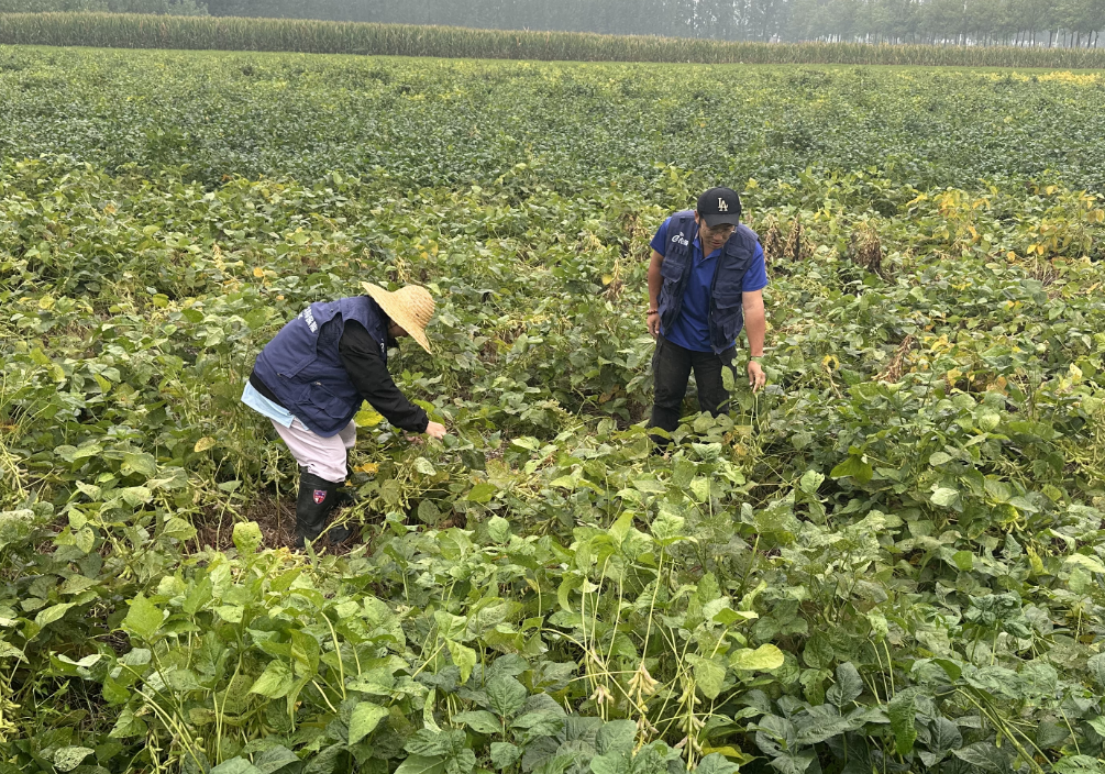
体系渐进+实践探索:织密农业减灾防灾“金融安全网”
Jin Rong Shi Bao· 2025-08-08 07:56
Core Insights - The article discusses the impact of natural disasters on apple production and the varying responses of different agricultural entities to mitigate risks [1][2] - It highlights the role of financial institutions in supporting agricultural disaster prevention and recovery efforts, emphasizing the need for tailored financial services [2][5] - The growth of agricultural insurance in China is noted, with a significant increase in premium scale and coverage, indicating a more robust risk management framework [3][4] Group 1: Agricultural Production and Risks - Apple production in certain regions faces risks from natural disasters such as hail and frost, which can significantly affect yield and quality [1] - Different agricultural entities have developed varying strategies to cope with these risks, influenced by their financial capabilities and awareness of insurance options [1][2] Group 2: Financial Support Mechanisms - Financial institutions are increasingly involved in disaster risk management for agriculture, providing loans and insurance products tailored to the needs of farmers [5][6] - The agricultural insurance premium in China is projected to reach 150 billion yuan in 2024, covering 147 million households and providing over 5 trillion yuan in risk protection [3] Group 3: Agricultural Insurance Development - Since the implementation of agricultural insurance premium subsidy policies in 2007, the insurance sector has seen rapid growth, with innovative products being introduced to stabilize crop income [3][4] - The introduction of agricultural catastrophe insurance has gained traction, with pilot programs in several provinces, indicating a growing recognition of its importance in risk management [4][9] Group 4: Optimization of Financial Services - The need for optimizing financial service mechanisms is emphasized, particularly in agricultural insurance, to ensure that compensation is accurate and timely [8][9] - There is a call for better integration of disaster response resources, including data sharing among financial and agricultural sectors, to enhance the efficiency of disaster risk management [10]
织密农业减灾防灾“金融安全网”
Jin Rong Shi Bao· 2025-06-19 04:53
Core Insights - The article discusses the impact of natural disasters on apple production and the varying responses of different agricultural entities to mitigate risks associated with these disasters [1][2] - It highlights the role of financial institutions in supporting agricultural disaster prevention and recovery efforts, emphasizing the need for tailored financial services [2][5] - The growth of agricultural insurance in China is noted, with a significant increase in premium scale and coverage, indicating a more robust risk management framework [3][4] Group 1: Agricultural Production and Risks - Apple production in certain regions typically flowers in mid-March and is harvested by October, facing risks from natural disasters such as hail and frost [1] - Different agricultural entities have varying strategies for risk management, influenced by their financial capabilities and experiences with past disasters [2] Group 2: Financial Support and Agricultural Insurance - In 2024, China's agricultural insurance premium scale reached 150 billion yuan, covering 147 million households and providing risk protection exceeding 5 trillion yuan [3] - The introduction of innovative insurance products, such as cost insurance and income insurance, has contributed to a diversified agricultural insurance system [3][4] Group 3: Policy and Regulatory Framework - In 2015, regulatory bodies established unified guidelines for agricultural insurance to mitigate adverse selection and enhance the governance of natural disaster risks [4] - The development of agricultural catastrophe insurance has gained traction, with pilot programs in eight provinces, indicating a growing recognition of its importance [4][9] Group 4: Financial Mechanisms and Innovations - Banks have developed rapid response mechanisms for disaster recovery, simplifying loan processes to support agricultural entities post-disaster [5] - The emergence of weather derivatives as a financial product aims to assist in risk management for agriculture, utilizing authoritative meteorological data [6] Group 5: Integration of Resources and Data Sharing - The need for better integration of agricultural disaster resources and financial services is emphasized, with a focus on overcoming information silos among various sectors [10] - Encouraging data sharing among banks and insurance companies can enhance the efficiency of financial services provided to agricultural entities [10]