
教育智能机器人及智能机器人解决方案

Search documents
2025年中国智能机器人空间感知解决方案行业政策、市场规模、代表企业经营现状及竞争趋势研判:行业呈现较强的发展势头,市场规模将增长到139亿元[图]
Chan Ye Xin Xi Wang· 2025-12-14 02:12
Core Insights - The intelligent robot spatial perception solution integrates sensor technology, algorithms, and data processing to address core issues such as robot positioning, environment modeling, dynamic obstacle avoidance, and target recognition, facilitating the transition from structured to complex open environments [1][3] - China is a major market for intelligent robots, driven by strong policy support and significant market demand, leading to robust growth in the spatial perception solution sector [5] Market Size and Growth - The global market for intelligent robot spatial perception solutions is projected to grow to 26 billion yuan in 2024, an increase of 5.7 billion yuan from 2023 [1][3] - The Chinese market for intelligent robot spatial perception solutions is expected to reach 10.8 billion yuan in 2024, up by 2.5 billion yuan from 2023, with further growth anticipated to 13.9 billion yuan by 2025 [5] Industry Development Status - The demand for advanced spatial perception capabilities in robots is increasing across various sectors, including home services, industrial production, and security inspections, necessitating improvements in perception technology [3][5] - Current perception technologies struggle to meet the diverse environmental needs of intelligent robots, particularly in challenging conditions such as darkness and confined spaces [3] Industry Chain - The upstream of the intelligent robot spatial perception solution industry includes hardware such as sensors, chips, and LiDAR, along with foundational software and algorithms [5] - The midstream consists of solution providers and system integrators, while the downstream includes robot manufacturers and end-users across various applications [5] Policy Environment - The Chinese government has implemented numerous policies to promote the development, application, and industrialization of intelligent robots, aiming to accelerate innovation and growth in the sector [5][6] Competitive Landscape - Key players in the intelligent robot spatial perception solution industry include SLAMTEC, DJI, SUTENG, Hesai Technology, and UBTECH, among others [2][7] - The industry faces challenges in algorithm innovation and high-end hardware development, with domestic companies achieving significant advancements in mid-to-low-end markets [7] Future Trends - The intelligent robot technology sector is expected to evolve towards high-precision spatial perception systems, enabling robots to transition from passive execution to autonomous decision-making [10] - High-quality scene data will become a critical competitive barrier, with major companies investing in technology and platform systems to enhance their capabilities [10]


优必选上半年营收超6亿元,全年人形机器人产能预计超1000台
Tai Mei Ti A P P· 2025-09-01 11:32
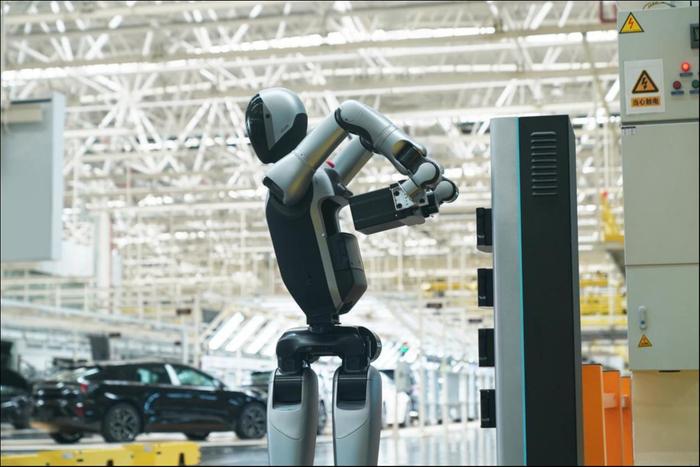
Core Insights - UBTECH, known as the "first humanoid robot stock," reported a revenue of 621 million RMB for the first half of 2025, marking a year-on-year increase of 27.5% [2] - The company signed a strategic partnership agreement with Infini Capital for a total financing credit line of 1 billion USD (approximately 71.29 billion RMB) [2] - The CEO highlighted significant growth in the humanoid robot sector, with expectations to deliver over 500 industrial humanoid robots by the end of the year [2][5] Financial Performance - Revenue for the first half of 2025 reached 621 million RMB, with a gross profit of 217 million RMB, reflecting a 17.3% increase year-on-year [2][4] - The adjusted net loss for the period was 368 million RMB, showing a reduction in losses by 17.2% compared to the previous year [2] - Research and development expenses amounted to 218 million RMB, a decrease of 4.04% year-on-year, with R&D accounting for 35.1% of total revenue [7] Business Segments - Revenue sources are divided into four main segments: educational robots, logistics robots, customized industry robots, and consumer robots [3] - Consumer robots and hardware accounted for nearly 42% of total revenue, growing by 48.9% to 260.1 million RMB [3][4] - Educational robots and consumer hardware segments both achieved nearly 50% year-on-year growth [3] Industry Outlook - The humanoid robot industry is at a critical juncture of technological breakthroughs and accelerated application in various scenarios [5] - Key challenges include improving adaptability, motion control precision, and cost efficiency, while demand in industrial manufacturing for standardized tasks is surging [5] - UBTECH has established partnerships with leading companies such as BYD, Geely, and Foxconn, positioning itself strongly in the market [5][9] Technological Advancements - The company is focusing on five key technology areas, including embodied intelligence and multimodal perception [7][8] - UBTECH aims to enhance the Walker S series humanoid robots with advanced features such as integrated joints and collaborative intelligence [8] - The integration of NVIDIA's Thor and development systems into the Walker series is underway, with expectations for more applications in the automotive industry [9] Market Performance - As of September 1, UBTECH's stock price increased by 4.81%, reaching 100.3 HKD per share, with a year-to-date rise of over 86% [11]
优必选(09880):2025年中报点评:营收稳健增长,人形机器人正式迈向商业化应用
Soochow Securities· 2025-09-01 10:31
Investment Rating - The report maintains a "Buy" rating for the company [1] Core Insights - In the first half of 2025, the company achieved a revenue of 621 million, representing a year-on-year increase of 27.5%, with a gross profit of 217 million, up 17.3% year-on-year. The net loss narrowed to 414 million [2] - The overall gross margin decreased to 35.0%, down 3.0 percentage points year-on-year, primarily due to a decline in the gross margin of educational intelligent robots and solutions [3] - The company has made significant progress in commercializing humanoid robots, signing the first small-scale procurement contract for industrial humanoid robots, marking a transition from training to commercial application [4] Revenue and Profit Forecast - The company forecasts total revenue for 2025 to be 2.016 billion, with projected revenues of 2.823 billion in 2026 and 3.705 billion in 2027, reflecting growth rates of 54.4%, 40.08%, and 31.22% respectively [1][4] - The net profit attributable to the parent company is expected to improve from a loss of 1.234 billion in 2023 to a loss of 1.027 billion in 2025, with a narrowing trend continuing through 2027 [1][4] Financial Metrics - The report indicates a projected P/E ratio of 42.37 for 2025, with a corresponding price-to-sales ratio (PS) of 23 for 2025, 16 for 2026, and 12 for 2027 [1][4] - The company’s operating expenses have shown a significant reduction, with sales expense ratio decreasing by 11.9 percentage points and management expense ratio decreasing by 14.3 percentage points [3]