数码配件等小商品

Search documents
今年东兴口岸跨境电商出口超60亿元
Guang Xi Ri Bao· 2025-12-25 02:57
Group 1 - The core viewpoint of the news highlights the significant increase in cross-border e-commerce package export declarations at the Dongxing port, driven by domestic e-commerce promotions and traditional festivals in Southeast Asia, with daily declarations reaching over 300,000 [1] - The Dongxing port's "9610" customs supervision model has facilitated the export of 47.203 million cross-border e-commerce packages this year, with a total value of 6.07 billion yuan [1] - The cross-border e-commerce direct reporting model at Dongxing port is particularly attractive to major platforms like Lazada and Cainiao, allowing Chinese goods to reach consumers in the ASEAN market with domestic e-commerce speed and cost-effectiveness [1] Group 2 - Dongxing Customs has enhanced regulatory service efficiency by expanding the cross-border e-commerce regulatory center, increasing its area by approximately 2,000 square meters and doubling the vehicle capacity from 15 to about 30 [2] - The optimization of operational processes and spatial layout at the Dongxing Customs has significantly improved site utilization efficiency and regulatory safety levels [2] - Currently, there are 109 cross-border e-commerce enterprises registered with customs in the China (Fangchenggang) Cross-Border E-commerce Comprehensive Pilot Zone [2]
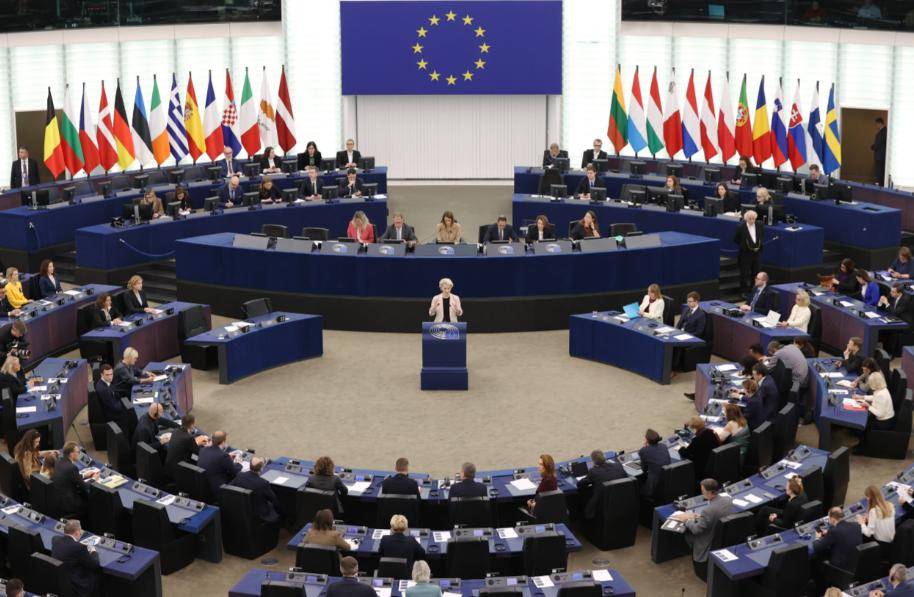
突发特讯!欧盟通告全球:取消小包裹免税政策,中国外交部回应,罕见措辞引爆国际舆论
Sou Hu Cai Jing· 2025-11-14 16:42
Core Viewpoint - The new EU tax policy targets the influx of "Made in China" products, aiming to create a fairer competitive environment for EU businesses while raising concerns about protectionism and its impact on global trade [1][3]. Group 1: EU Tax Policy - The EU has decided to eliminate the tax exemption for small packages valued under 150 euros, which was initially designed to facilitate small-scale trade and consumer convenience [3]. - This policy change is seen as a response to the rapid growth of Chinese e-commerce, which has captured a significant share of the European market with affordable products [3]. - The EU Commission explicitly stated that the goal is to protect internal EU businesses, indicating a shift towards a more protectionist stance [3]. Group 2: China's Response - The Chinese Foreign Ministry responded to the EU's policy by emphasizing the need for a fair, transparent, and non-discriminatory business environment for all companies, including Chinese firms [5][6]. - The response highlighted concerns about the fairness and transparency of the EU's decision-making process and questioned whether the new policy would lead to further trade friction [6]. Group 3: Impact on Stakeholders - European consumers are likely to face higher prices for goods previously available at lower costs, effectively imposing a "collective tax" on them [8]. - EU small and medium-sized retailers that rely on Chinese imports for materials or semi-finished products will also be adversely affected, as increased tariffs raise overall industry costs [8]. - Chinese exporters, particularly small sellers, may experience short-term challenges due to rising logistics and customs costs, leading to a potential industry reshuffle [8]. Group 4: Global Trade Context - The EU's decision reflects a broader trend of rising protectionism and a retreat from globalization, as seen in various countries' policies targeting foreign enterprises [10]. - China's commitment to maintaining an open trade environment contrasts with the EU's protectionist measures, showcasing a divergence in trade philosophies [10]. - The situation serves as a test of strategic resolve for countries amid the pressures of de-globalization, urging Chinese enterprises to focus on core technologies and competitive advantages [13].