
全球化逆流

Search documents
终于,荷兰不愿看到的局面出现了,中企开始“打包甩卖”欧洲资产
Sou Hu Cai Jing· 2025-12-13 12:20
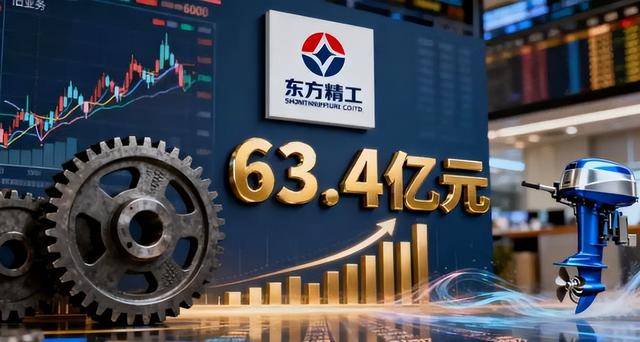
Core Viewpoint - The sale of Fosber Group by Dongfang Precision, which generated a 76.4% increase in net profit, reflects a strategic retreat driven by rising geopolitical risks rather than mere financial calculations [1][3][31]. Group 1: Company Actions - Dongfang Precision sold Fosber Group, including over 200 industrial 4.0 patents, to American company Bofeng for 6.3 billion RMB, despite it contributing two-thirds of the company's revenue [3][5]. - The decision to sell was made despite Fosber being a stable and profitable business, indicating a shift from profit focus to risk management [7][9]. - The funds from the sale will be reinvested into domestic sectors critical for China's technological advancement, such as AI and marine engines [28][29]. Group 2: Industry Context - The sale is part of a broader trend where 81% of Chinese companies are considering reducing or withdrawing investments in Europe due to increasing regulatory pressures and geopolitical tensions [16][20]. - The Dutch government's actions against Nexperia, a semiconductor company, exemplify the risks faced by Chinese firms in Europe, where national security concerns are being used to justify stringent regulations [11][13]. - Other companies, like Ningbo Huaxiang, have also sold subsidiaries at symbolic prices to avoid larger losses, indicating a growing fear among businesses regarding the stability of their investments in Europe [18][20]. Group 3: Future Implications - The withdrawal of Chinese companies from Europe may lead to significant job losses and a hollowing out of industries, particularly in the automotive supply chain, which relies heavily on Chinese components [24][26]. - The trend suggests a shift towards a new era of business where security considerations take precedence over traditional profit motives, potentially leading to a prolonged technological downturn in Europe [20][33]. - The strategic retreat of Chinese firms highlights the urgent need for Europe to reassess its approach to foreign investment and technology partnerships [22][31].


突发特讯!欧盟通告全球:取消小包裹免税政策,中国外交部回应,罕见措辞引爆国际舆论
Sou Hu Cai Jing· 2025-11-14 16:42
Core Viewpoint - The new EU tax policy targets the influx of "Made in China" products, aiming to create a fairer competitive environment for EU businesses while raising concerns about protectionism and its impact on global trade [1][3]. Group 1: EU Tax Policy - The EU has decided to eliminate the tax exemption for small packages valued under 150 euros, which was initially designed to facilitate small-scale trade and consumer convenience [3]. - This policy change is seen as a response to the rapid growth of Chinese e-commerce, which has captured a significant share of the European market with affordable products [3]. - The EU Commission explicitly stated that the goal is to protect internal EU businesses, indicating a shift towards a more protectionist stance [3]. Group 2: China's Response - The Chinese Foreign Ministry responded to the EU's policy by emphasizing the need for a fair, transparent, and non-discriminatory business environment for all companies, including Chinese firms [5][6]. - The response highlighted concerns about the fairness and transparency of the EU's decision-making process and questioned whether the new policy would lead to further trade friction [6]. Group 3: Impact on Stakeholders - European consumers are likely to face higher prices for goods previously available at lower costs, effectively imposing a "collective tax" on them [8]. - EU small and medium-sized retailers that rely on Chinese imports for materials or semi-finished products will also be adversely affected, as increased tariffs raise overall industry costs [8]. - Chinese exporters, particularly small sellers, may experience short-term challenges due to rising logistics and customs costs, leading to a potential industry reshuffle [8]. Group 4: Global Trade Context - The EU's decision reflects a broader trend of rising protectionism and a retreat from globalization, as seen in various countries' policies targeting foreign enterprises [10]. - China's commitment to maintaining an open trade environment contrasts with the EU's protectionist measures, showcasing a divergence in trade philosophies [10]. - The situation serves as a test of strategic resolve for countries amid the pressures of de-globalization, urging Chinese enterprises to focus on core technologies and competitive advantages [13].
“西方”分裂,二战后秩序崩溃
日经中文网· 2025-04-27 03:19
访问美国的法国总统 马克龙和美国总统特朗普(2月,Reuters) 赤川省吾:"不能让华盛顿和莫斯科决定欧洲的未来",在近现代史上,欧洲和美国经常被视为一 个整体,但目前鸿沟比以往任何时候都要深,已经不再是"西洋=欧美=西方"的局面。欧洲正面临 着国家模式转变的痛苦。日本又该何去何从呢? "不能让华盛顿和莫斯科决定欧洲的未来",法国总统马克龙3月在电视演讲中提出,拥核国家法国 将代替美国,通过"核保护伞"保护整个欧洲。 这一构想始于俄罗斯开始全面入侵乌克兰的3年前。其深层想法是,如果创建"拥有核武装的欧洲 军队",就能遏制俄罗斯。随着对特朗普政府的不信任不断提高,这一构想也开始在"与美国决 裂"这一语境中被提及。 法国拥有外交和军事大国的强烈自豪感,并且具有与英美等盎格鲁-撒克逊国家保持距离的戴高乐 主义的遗产。另一方面,如果邻国德国独自开发核武器,成本将会增加,被认为将不得不把相当 于目前3倍的国内生产总值(GDP)的6%用于国防开支。 赤川省吾: 二战后80年间,欧洲一直相信与美国共享民主和法治等"西方价值观"。然而,美国倾 向于"通过力量统治",而非"依法而治" ,美国越过作为同盟国的欧洲,接近假想敌的 ...