文物艺术品

Search documents
京津携手打造2025金秋文物艺术品拍卖季
Bei Jing Shang Bao· 2025-12-25 13:50
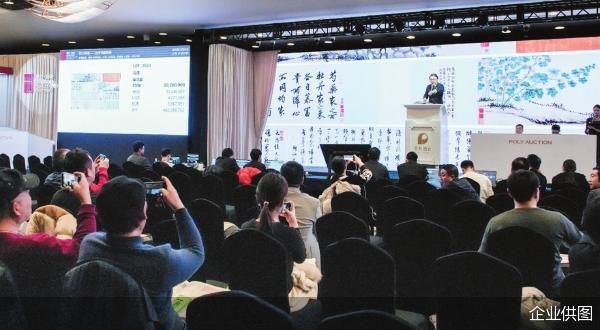
Core Viewpoint - The "2025 Autumn Cultural Relics and Art Auction Season" aims to enhance the cultural and artistic heritage of the Beijing-Tianjin-Hebei region while promoting consumption in the art market [3][5]. Group 1: Event Overview - The auction season will take place from November to December 2025 and is a significant part of the 2025 Beijing International Cultural Relics Expo [1]. - The event seeks to create an art feast for collectors and investors by promoting collection culture and expanding communication channels [3]. Group 2: Online and Offline Integration - The auction will utilize various platforms, including the official websites and WeChat accounts of the auction associations, to disseminate information about previews, auction dynamics, and industry news [3]. - An online auction page will be established in collaboration with Yipai Global to facilitate a seamless online-offline experience [3]. Group 3: Government Support and Innovation - The Beijing Cultural Relics Bureau has opened a "green application channel" for companies participating in the auction season to streamline the approval process [3]. - The event encourages the use of innovative auction formats such as online and live auctions to enhance participation and service experience [3]. Group 4: Expert Insights - The president of the Beijing Auction Association emphasized that the auction season represents a significant practice of collaborative development in the cultural sector, aiming to inject new momentum into regional cultural prosperity and economic development [5]. - The president of the Tianjin Auction Industry Association highlighted the importance of a fair and transparent business environment to attract collectors and ensure the success of the auction season [7].

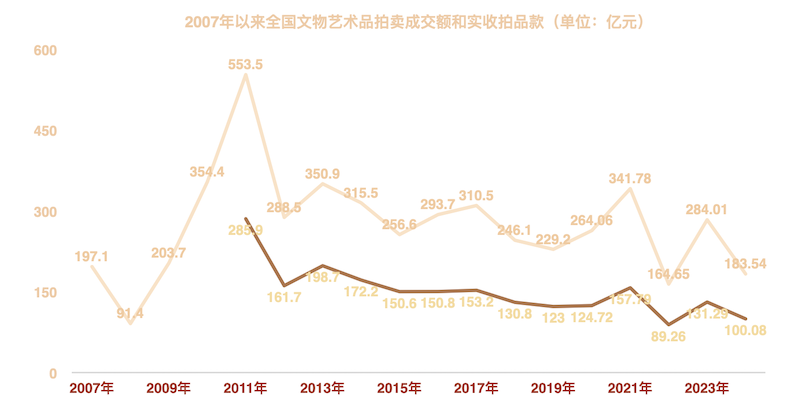
中拍协年报:文物艺术品拍卖2024年进入深度调整期
Di Yi Cai Jing· 2025-11-16 02:53
Core Insights - The Chinese auction market for cultural relics and artworks is experiencing a significant downturn, with total auction hammer prices dropping to 18.354 billion yuan in 2024, a decrease of 35.38% year-on-year [2] - The market is undergoing a structural adjustment, with online auctions becoming more normalized and accounting for 9.27% of the total auction revenue [4][5] Auction Performance - The total number of auction transactions in 2024 was 307,100, reflecting a 10.35% decrease from the previous year [2] - The average price of auctioned items fell from 82,900 yuan to 59,800 yuan [4] Online Auction Trends - Pure online auctions featured 385,091 items, with 144,049 items sold, indicating a growing trend towards online platforms [5] - Items sold for under 100,000 yuan accounted for 90.28% of total transactions, marking a 0.5 percentage point increase [4] Category Adjustments - Significant declines were noted in categories such as philately and contemporary art, with hammer prices dropping over 50% [6] - The only category to show growth was porcelain and miscellaneous items, which increased by 1.10% [6] High-Value Items - The number of items sold for over 10 million yuan decreased to 92, down from 227 the previous year [8] Market Share Dynamics - The Beijing auction market's share fell to 58.33%, a decrease of 9.61 percentage points, while Shanghai, Hangzhou, and Guangzhou saw increases in their market shares [10] Revenue and Profitability - The main business revenue for the auction industry fell to 1.78 billion yuan, down from 2.121 billion yuan, with a profit margin of 3.35% [13] - The top five auction companies accounted for 54.45% of the market share, with a total transaction amount of 5.45 billion yuan [12] Global Positioning - China's auction market for cultural relics and artworks ranked second globally, with a total transaction amount of 27.902 billion yuan, down from 42.757 billion yuan [15] International Market Performance - The overseas auction market for Chinese cultural relics and artworks generated 7.026 billion yuan, a decline of 31.56% year-on-year, marking the lowest since 2010 [17] - Porcelain and miscellaneous items accounted for 51.39% of the total overseas transaction amount [19]
进博会文物艺术品专区五年交易总额突破22亿元
Xin Hua She· 2025-11-14 13:48
Core Insights - The Shanghai International Import Expo (CIIE) has established a dedicated section for cultural relics and artworks, which has been held for five consecutive years since its inception in 2021, resulting in a total of 190 items sold and a transaction volume of 2.25 billion yuan, highlighting its role as a significant platform for promoting high-quality cultural trade in China [1][2] Group 1 - The cultural relics and artworks section of the CIIE has attracted over 60 cultural institutions from more than 20 countries and regions, including renowned auction houses like Christie's, Sotheby's, and Phillips, facilitating the transformation of artworks from "exhibits" to "commodities" [1] - The section serves as a key vehicle for the implementation of the "five tax exemptions" policy, leveraging the cross-border trade facilitation and cultural service innovation mechanisms of the Shanghai Free Trade Zone [1] - The chairman of Shanghai Free Trade Zone International Cultural Investment Development Co., Ltd. stated that institutional innovation and customs facilitation policies are driving more overseas art institutions to explore the Chinese market, positioning Shanghai as an efficient "gateway" for international cultural relics and artworks entering China [1] Group 2 - The "2025 Shanghai Free Trade Zone Cultural Industry Blue Book" was released during the forum, indicating that the value of cultural and artistic goods entering and exiting the Shanghai Free Trade Zone in 2024 is projected to be 7.286 billion yuan, accounting for 73.2% of the total in Shanghai [2]
“北京拍卖协会拍品展示中心”在潘家园揭牌
Bei Jing Shang Bao· 2025-09-25 16:53
Core Insights - The "2025 China·PanjiaYuan CITY Auction Season" event was officially launched in Beijing, marking a significant step in cultural and artistic display and exchange in the PanjiaYuan area [1][3] - The event aims to stimulate regional consumption potential and enhance market vitality by creating a unique auction model that integrates cultural heritage, art appreciation, and consumer experience [3][4] Group 1 - The PanjiaYuan area is recognized as an important landmark for cultural memory in Beijing, and the event is a key initiative to promote the development of the cultural industry [3] - The theme "CITY Auction Season" reflects the diverse consumer experiences and trendy attributes of the PanjiaYuan area, aligning with the current trends in auction transactions [3] - The Beijing Auction Association plans to collaborate with various sectors to promote the development of the cultural relics and art market, contributing to the prosperity of the capital's cultural industry [3] Group 2 - The event is part of the construction of a "wall-less museum" in PanjiaYuan, focusing on the protection and utilization of cultural resources and innovative urban cultural governance [4] - A series of cultural activities, including art exhibitions, auctions, and cultural lectures, will be held during the 2025 China·PanjiaYuan CITY Auction Season, providing a vibrant cultural experience for citizens and tourists [4]

听税|第11期:关于文物艺术品的税收知识你了解吗?
蓝色柳林财税室· 2025-07-21 00:52
Core Viewpoint - The article discusses the tax treatment of cultural relics and artworks purchased by enterprises, emphasizing that these assets are treated as investment assets and cannot be depreciated or amortized for tax deductions during the holding period [5][6]. Group 1: Tax Treatment of Cultural Relics and Artworks - Enterprises can treat purchased cultural relics and artworks as investment assets for tax purposes, but depreciation and amortization expenses during the holding period are not deductible [5][6]. - Upon transfer or disposal of investment assets, the cost of the investment asset is allowed to be deducted [7]. Group 2: Auction Process and Tax Implications - Auction houses, when entrusted to auction cultural relics and artworks, can issue a non-taxable VAT invoice to the buyer for the auction proceeds, which will not be included in the auction house's taxable income [8]. - Auction houses must retain certain documentation for verification, including images of auction items, contracts, confirmation of auction transactions, identification of both parties, and tax-related documents [9]. Group 3: Personal Auction of Cultural Relics and Artworks - Personal auction of cultural relics and artworks falls under the "property transfer income" tax category, allowing taxpayers to deduct the original value of the property when calculating taxable income [11]. - The original value of the property is defined as the price at which the seller acquired the auction item, based on valid documentation [12].