
新一代骁龙平台

Search documents
扎根中国,美企在进博会作出长期承诺
Zhong Guo Xin Wen Wang· 2025-11-07 14:16
Core Insights - American companies continue to dominate the exhibition space at the China International Import Expo (CIIE) for seven consecutive years, showcasing both established brands like Honeywell and Qualcomm, as well as newcomers like Kabod [1][3] - The response from American enterprises to the uncertainties in the global economy and trade policies is a clear commitment to remain and deepen their presence in China [1][4] Group 1: American Companies' Commitment - American companies are not just hesitant about their presence in China; they are executing a long-term strategy of "in China, for China" [3][4] - The HuRun Research Institute's report indicates that in the fiscal year 2024, American companies in China generated total revenues of $312.7 billion, reflecting a 3% year-on-year growth, with about 50% of these companies reporting China as their second-largest global revenue market [3][4] - Many American firms have established advanced R&D centers in China, emphasizing the importance of local talent and supply chains [5][8] Group 2: Strategic Shifts and Collaborations - American companies are shifting their focus from merely exporting products to co-developing standards and innovating collaboratively within China [4][5] - FedEx's "Panda Express" initiative highlights a long-term commitment to the Chinese market, showcasing a unique transportation service that has been operational for over 20 years [3] - The collaboration between Dun & Bradstreet and Shanghai Jiao Tong University aims to enhance decision-making support for companies looking to expand and innovate in China [3][4] Group 3: Market Dynamics and Future Outlook - The Chinese market is seen as a critical support for American companies to hedge against global uncertainties, with a complete supply chain and R&D collaboration established over decades [4][8] - The ongoing commitment of American firms to the Chinese market is not solely driven by profit but by the recognition of China's potential as a future-oriented market [8]


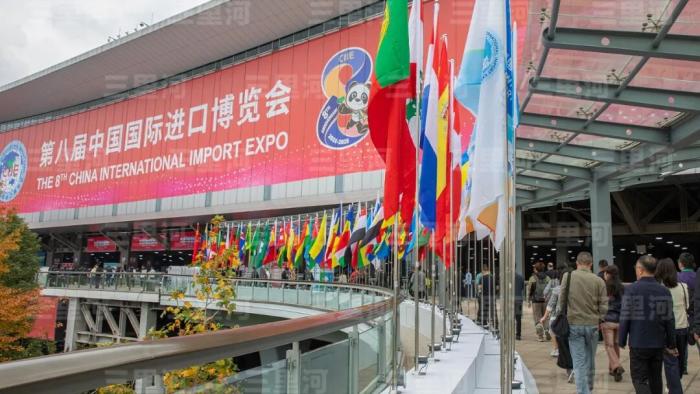
扎根中国 美企在进博会作出长期承诺
Zhong Guo Xin Wen Wang· 2025-11-07 04:49
Core Insights - American companies continue to prioritize their presence in China, viewing it as a long-term strategic commitment rather than a temporary market opportunity [4][10][11] Group 1: American Companies' Commitment - American firms have maintained their participation in the China International Import Expo (CIIE) for seven consecutive years, with a significant exhibition area [1] - Notable companies like Honeywell and Qualcomm have been consistent participants, while new entrants like the dessert brand Kabod also showcase their products [2] - The overall sentiment among American businesses is to remain and deepen their roots in China, reflecting a clear strategy of "staying for China" [4][10] Group 2: Economic Performance and Market Dynamics - According to the Hurun Research Institute, American companies in China reported a total revenue of $312.7 billion in the 2024 fiscal year, marking a 3% increase year-on-year [5] - Approximately 50% of these companies indicated that China is their second-largest revenue market globally [5] - The Chinese market is seen as a critical support for American firms to hedge against global uncertainties, with a well-established supply chain and collaborative ecosystem [6] Group 3: Innovation and Collaboration - Many American companies are shifting their focus from merely exporting products to co-developing standards and innovations within China [8] - Companies like Dun & Bradstreet are leveraging local talent to enhance their global product offerings, indicating a trend towards localized innovation [8][9] - The establishment of advanced R&D centers in China by American firms highlights a commitment to deeper collaboration and talent acquisition [9] Group 4: Future Outlook - The long-term outlook for American companies in China remains positive, with a belief that China represents the most promising future market [11] - Political rhetoric may create temporary fluctuations, but the underlying trend shows that American firms are increasing their investments and adapting to the local market [11]