旋转地质导向钻井系统

Search documents
视频丨工业机器人产量大增 前三季度我国实现“智”造升级
Yang Shi Xin Wen Ke Hu Duan· 2025-11-03 11:43
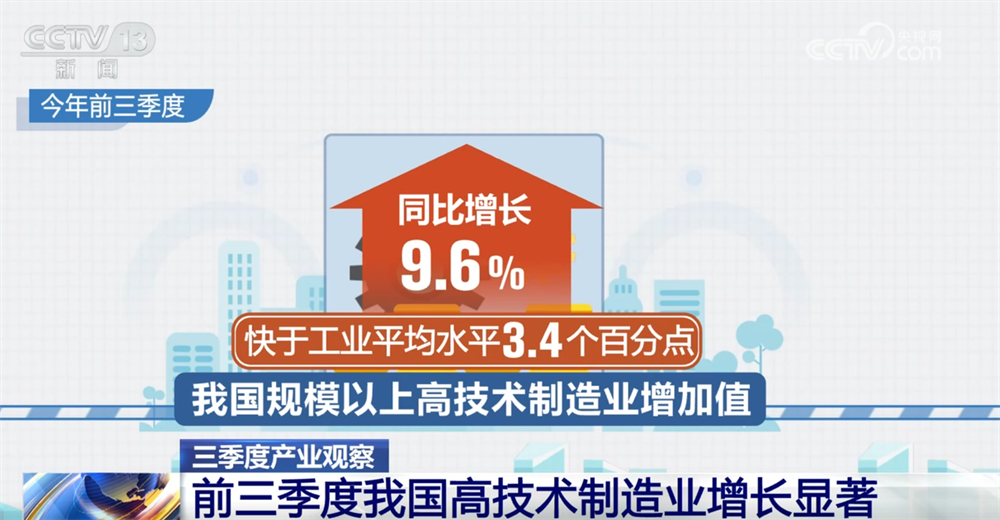
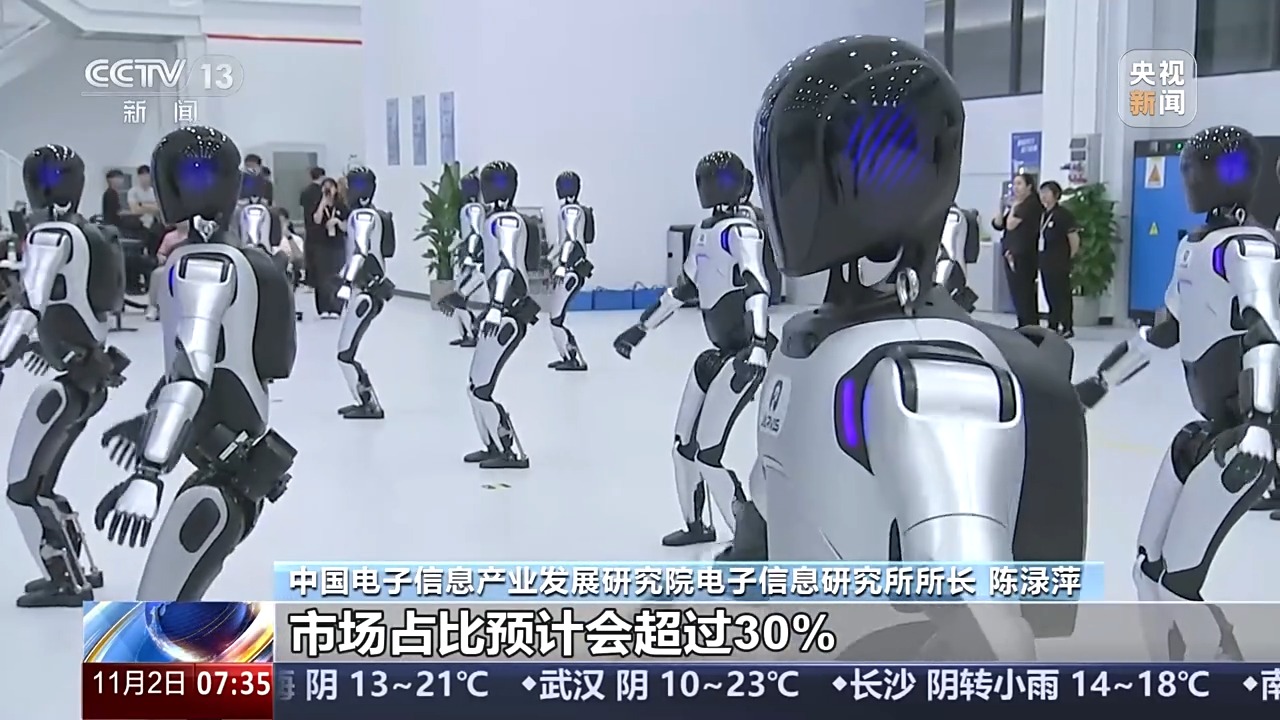
Core Viewpoint - High-tech manufacturing is a core engine driving new industrialization, accelerating industrial transformation and upgrading, and enhancing the international competitiveness of the manufacturing sector, becoming a key driver of high-quality economic development in China [1] Group 1: High-tech Manufacturing Growth - In the first three quarters of this year, the added value of China's high-tech manufacturing industry increased by 9.6% year-on-year, surpassing the average industrial growth rate by 3.4 percentage points [1] - The contribution rate of high-tech manufacturing to the growth of all above-scale industries reached 24.7%, highlighting its role as a stabilizing force in the industrial economy [1] Group 2: Intelligent Manufacturing - The production of intelligent products such as drones, industrial robots, 3D printing equipment, and satellite navigation receivers saw significant growth, with increases of 59.9%, 29.8%, 40.5%, and 28.5% respectively [1] - The rapid growth of robot production is a notable highlight, with industrial robot production reaching 76,300 units in September, a year-on-year increase of 28.3%, and cumulative production from January to September exceeding 595,000 units, surpassing the total production for the previous year [2] Group 3: AI Integration in Manufacturing - The integration of "AI+" in manufacturing is transforming the entire production chain, enhancing efficiency across research, production, management, and service sectors [5][6] - AI applications are extending beyond high-end equipment to traditional manufacturing sectors such as home appliances and building materials, significantly improving operational efficiency and reducing downtime [8] Group 4: Technological Breakthroughs - Continuous technological breakthroughs are essential for the sustained growth of high-tech manufacturing, with significant advancements in key areas such as high-end equipment and new materials [11] - The development of a directional drilling system, referred to as the "snake," has enabled precise navigation in extreme underground conditions, marking a shift from experience-driven to data-driven exploration [13] Group 5: Market Dynamics and Policy Support - The growth of high-tech manufacturing is supported by both policy and market forces, with a focus on overcoming bottlenecks and expanding advantages in core areas [16] - Investment in sectors related to high-tech manufacturing, such as aerospace and computer equipment, has seen year-on-year increases of 20.6% and 7.4% respectively, indicating robust market demand [15] Group 6: Future Outlook - The global robot market is projected to exceed $400 billion by 2029, with intelligent robots expected to account for over 30% of the market share [4] - Experts emphasize the need for China to adapt to new technological revolutions and industrial transformations, reinforcing the role of AI and innovation in driving high-tech manufacturing development [18]


从硬核数据透视三季度工业经济“压舱石”作用凸显 机器人制造“表现”抢眼
Yang Shi Wang· 2025-11-02 06:16
Core Insights - High-tech manufacturing is a core engine driving new industrialization, accelerating industrial transformation, and enhancing international competitiveness, contributing significantly to high-quality economic development [1] - In the first three quarters of this year, the added value of high-tech manufacturing in China increased by 9.6% year-on-year, outpacing the industrial average by 3.4 percentage points, with a contribution rate of 24.7% to the growth of all above-scale industries [1] Group 1: Growth Drivers - The penetration of intelligent technology is accelerating, becoming a key driver for growth in high-tech manufacturing, with significant increases in the production of smart drones (59.9%), industrial robots (29.8%), 3D printing equipment (40.5%), and satellite navigation receivers (28.5%) [4] - The green energy transition is leading to rapid growth in green equipment production, with wind turbine production increasing by 72.4%, nuclear power generator production by 38.9%, and solar cell production by 14% in the first three quarters [7] Group 2: Robotics and AI Integration - The substantial increase in robot production reflects the accelerated transformation and upgrading of China's manufacturing sector, with industrial robot production reaching 76,300 units in September, a year-on-year increase of 28.3% [12] - The integration of "AI + manufacturing" is deepening, impacting the entire production chain, with significant improvements in efficiency and decision-making processes, as seen in companies like Weichai Power [16][20] Group 3: Technological and Policy Support - The continuous growth of high-tech manufacturing is supported by technological breakthroughs and external forces from policies and market demands, leading to advancements in key areas such as high-end equipment and new materials [23] - The development of a rotational geological guidance drilling system, previously dominated by Western companies, showcases China's capability in overcoming technological barriers in the oil and gas sector [25] Group 4: Challenges and Recommendations - Despite impressive growth, challenges remain in areas such as chips, core components, and materials, indicating a need for targeted efforts to enhance innovation capabilities and address weaknesses [30][32] - Experts recommend strengthening the role of enterprises in innovation, increasing investment in basic research, and fostering a collaborative innovation system to support the transformation of small and medium-sized enterprises [34][36]