
大丝束碳纤维

Search documents
——建筑材料行业周报(26/03/09-26/03/15):上游原材料压力或导致细分板块修复斜率分化-20260316
Hua Yuan Zheng Quan· 2026-03-16 14:02
Investment Rating - Investment rating: Positive (maintained) [4] Core Viewpoints - The construction materials industry is expected to see a recovery in the real estate sector, with a potential bottoming out of the market. The report highlights two key judgments: 1) The fundamental bottom of the real estate market is likely to appear; 2) Outstanding listed companies may recover ahead of the industry due to their alpha advantages [5] - The report indicates that the pressure from rising upstream raw material prices may lead to differentiated recovery slopes across various segments of the construction materials industry. Companies in advantageous positions may increase prices and enhance profits, while those in less favorable positions may face accelerated market exit due to cost pressures [5] - The underground pipeline network is identified as a key area for urban renewal, with significant investment potential projected during the 14th Five-Year Plan period, reaching an average annual investment of 1 trillion yuan, which is over three times that of 2024 [5] Summary by Sections 1. Sector Tracking - The construction materials index decreased by 1.3% during the week, while the Shanghai Composite Index fell by 0.7% and the Shenzhen Component Index rose by 0.8% [9] - Notable stock performances included Yangzi New Materials (+12.2%) and Jingxue Energy Saving (+9.2%), while Qinglong Pipeline (-9.9%) and Puren (-9.3%) saw significant declines [9] 2. Data Tracking 2.1 Cement - The average price of 42.5 cement nationwide is 337.0 yuan/ton, down 1.0 yuan/ton month-on-month and down 59.7 yuan/ton year-on-year. The cement inventory ratio is 62.4%, down 0.4 percentage points month-on-month and up 8.0 percentage points year-on-year [16] - The cement shipment rate is 24.9%, up 9.7 percentage points month-on-month and down 18.5 percentage points year-on-year [16] 2.2 Float Glass - The average price of 5mm float glass is 1269.0 yuan/ton, up 15.0 yuan/ton month-on-month and down 177.8 yuan/ton year-on-year. The total inventory of key production enterprises in 13 provinces is 69.72 million heavy boxes, up 5.1% month-on-month and up 13.0% year-on-year [33] 2.3 Photovoltaic Glass - The average price of 2.0mm coated photovoltaic glass is 10.2 yuan/square meter, down 0.2 yuan/square meter month-on-month and down 3.6% year-on-year. The average price of 3.2mm coated photovoltaic glass is 17.2 yuan/square meter, down 0.1 yuan/square meter month-on-month and down 5.1% year-on-year [38] 2.4 Glass Fiber - The average price of alkali-free glass fiber yarn is 4615.0 yuan/ton, unchanged month-on-month and down 105.0 yuan/ton year-on-year. The average price of electronic yarn is 11000.0 yuan/ton, unchanged month-on-month and up 2050.0 yuan/ton year-on-year [46] 2.5 Carbon Fiber - The average price of large tow carbon fiber is 73.0 yuan/kg, up 0.5 yuan/kg month-on-month and year-on-year. The average price of small tow carbon fiber is 95.0 yuan/kg, unchanged month-on-month and year-on-year [50]
武汉理工大学孵化,航空复材大丝束碳纤维项目签约落地
DT新材料· 2026-03-05 16:05
Group 1 - The core viewpoint of the article highlights the successful industrialization of large-tow carbon fiber composite materials for aerospace engine casing, marking a significant advancement in technology and application within the Hubei Province's "Sharp Knife" technology project [2] - The first batch of mass-produced products is expected to roll off the production line by the end of this year at the Wuhan Aviation New Materials Industrial Park, indicating a rapid progression from technology maturity to practical application [2] - Large-tow carbon fiber composite materials have a strength more than three times that of alloy steel while having only one-fifth the density, allowing for lighter and thinner casings that can carry more propellant, enhancing the performance of aerospace vehicles [2] Group 2 - The project is closely associated with the Wuhan Aviation New Materials Research Institute, which has a strong team of academicians and experts to collaborate on core technology breakthroughs and the transformation of results into practical applications [3] - A new center for innovative applications of energy storage materials and devices was also established, focusing on advancing cutting-edge energy storage technologies for high-end equipment in aerospace, new energy vehicles, and drones [3]

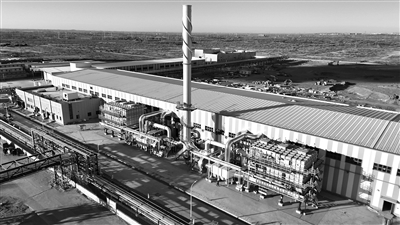
上海石化大丝束碳纤维异地项目阶段竣工
Zhong Guo Hua Gong Bao· 2026-02-03 03:32
Core Viewpoint - The Shanghai Petrochemical's phase one of the 30,000 tons per year large tow carbon fiber project has completed mechanical construction and is entering the production preparation stage, with production expected to officially commence in the second quarter of this year [1]. Group 1: Project Overview - The project includes two production lines with a combined capacity of 6,000 tons per year [1]. - It is a key engineering project in Ordos City, constructed by Inner Mongolia Xinjingshan Carbon Fiber Co., a subsidiary of Shanghai Petrochemical [1]. - The project will utilize Shanghai Petrochemical's proprietary large tow carbon fiber technology and the abundant green electricity resources in Inner Mongolia [1]. Group 2: Production and Market Impact - The primary products will be large tow carbon fibers in specifications of 48K and 60K, aimed at supplying raw materials for downstream sectors such as wind power [1]. - The project is expected to be fully operational by the end of 2027, at which point Shanghai Petrochemical's large tow carbon fiber capacity will rank first in the country [1]. - An additional project with an annual production capacity of 60,000 tons of large tow carbon fiber precursor will also be constructed at the existing Shanghai Petrochemical site, with construction expected to start in the first half of this year [1].

上海石化,年产3万吨大丝束碳纤维项目一阶段提前机械竣工
DT新材料· 2026-02-02 16:05
Core Viewpoint - The article highlights the progress of Shanghai Petrochemical's large tow carbon fiber project, emphasizing its significance in supporting the renewable energy sector and positioning Shanghai Petrochemical as a leader in carbon fiber production in China by 2027 [1]. Group 1: Project Overview - On February 1, Shanghai Petrochemical's large tow carbon fiber project reached mechanical completion for its first phase, one month ahead of schedule, entering the production preparation stage [1]. - The first phase includes two production lines with a combined capacity of 6,000 tons per year, expected to officially commence production in the second quarter of this year [1]. - The project is set to be fully operational by the end of 2027, with Shanghai Petrochemical's carbon fiber capacity projected to rank first in the country [1]. Group 2: Technological and Environmental Aspects - The project leverages Shanghai Petrochemical's proprietary large tow carbon fiber technology and the abundant green electricity resources in Inner Mongolia, focusing on producing specifications such as 48K and 60K large tow carbon fibers [1]. - The design and equipment of the project are optimized for safety, environmental protection, and reliability, achieving international leading standards [1]. Group 3: Future Developments - A complementary project with an annual production capacity of 60,000 tons of large tow carbon fiber precursor will be constructed at Shanghai Petrochemical's existing site, with expected commencement in the first half of this year [1]. - Inner Mongolia Xinjingshan Carbon Fiber Co., Ltd. aims to establish a leading domestic production base for large tow carbon fiber, focusing on low-cost, large-scale, and green production [1].
吉林石化以科技创新赋能产业升级
Zhong Guo Hua Gong Bao· 2026-01-26 03:25
Core Viewpoint - In 2025, Jilin Petrochemical emphasizes technological innovation as a core element of its development strategy, achieving significant results in scientific research and product development, thereby enhancing its self-reliance in high-level technology [1][2][3] Group 1: Research and Development Achievements - Jilin Petrochemical established a comprehensive research system linking strategic guidance, scientific research breakthroughs, and results transformation, completing 51 technology projects and achieving 12 successful transformations in 2025 [1] - The company reported a total economic benefit of over 60 million yuan and direct revenue exceeding 46 million yuan, creating a virtuous cycle of "research empowering production and production feeding back into research" [1] Group 2: Key Technological Breakthroughs - The successful development of large-tow carbon fiber production technology fills a domestic technological gap, while breakthroughs in ethylene-propylene rubber were achieved through collaboration with domestic universities, overcoming 56 key technical challenges [2] - The stable operation of the second industrialization test for ENB-containing ethylene-propylene rubber products demonstrated the effectiveness of domestically produced catalysts, expanding product application areas and addressing high-quality development constraints in the industry [2] Group 3: Product Upgrades and Market Positioning - Jilin Petrochemical focused on high-end product development in key areas such as ABS, synthetic rubber, and polyolefins, achieving significant advancements in product quality, with the 0215H product passing RTI certification and large-diameter polyethylene pipe materials receiving national PE100 grade certification [3] - The commissioning of a new 400,000-ton/year high-density polyethylene facility enabled the successful development of new product grades, enhancing the product matrix and extending the value chain [3] Group 4: Innovation Mechanisms and Ecosystem - The continuous emergence of major technological innovations is supported by a robust institutional mechanism, addressing common challenges such as insufficient innovation motivation and low collaborative efficiency [3] - Jilin Petrochemical formed innovation alliances with universities and research institutes, implemented research management mechanisms like "ranking and leading," and improved result transformation mechanisms to accelerate the transition of laboratory technologies to production lines and markets [3]
常州滨开区交卷!跨越不止“亿”点点!
Xin Lang Cai Jing· 2026-01-18 21:30
Core Insights - The article highlights the significant achievements of the Binjiang Economic Development Zone in Jiangsu, showcasing its rapid industrial growth, innovative projects, and commitment to ecological sustainability during the "14th Five-Year Plan" period. Economic Growth - The Binjiang Economic Development Zone accounts for 6.1% of the city's industrial output and 7.3% of its total imports and exports, with a projected GDP of 48 billion yuan by 2025, representing a 41% increase from the previous five-year plan [2] - The industrial output value is expected to reach 112 billion yuan by 2025, a 58.3% increase from 2020, with public budget revenue projected at 3.48 billion yuan, nearly double that of 2020 [2] - The zone has seen the establishment of nearly 9,300 new business entities, including 2,750 new companies, and an increase in industrial enterprises from 287 to 385 [2] Industrial Development - The zone has developed a complete carbon fiber and composite materials industry chain, with 64 key enterprises and an expected output value of 17 billion yuan by 2025, capturing over 30% of the provincial market share [3] - The pharmaceutical sector is also thriving, with 10 companies projected to generate nearly 20 billion yuan in output by 2025, connecting the region with global pharmaceutical markets [3] Project Implementation - The zone has initiated 213 major projects aimed at technological breakthroughs and industrial upgrades, with nearly 300 high-tech enterprises and 115 provincial R&D platforms expected by 2025 [4] - The establishment of a joint investment promotion center has facilitated project implementation, leading to significant economic contributions [4] Investment Attraction - During the "14th Five-Year Plan," the zone attracted 159 quality projects with a total investment exceeding 95.1 billion yuan, marking a 63.9% increase [6] - Foreign investment has also been robust, with actual foreign capital exceeding 1.28 billion USD, a 21.3% increase, including a notable 2 billion USD project [6] Ecological Initiatives - The zone has prioritized ecological protection, closing 48 low-efficiency chemical enterprises along the Yangtze River, and has implemented innovative environmental standards [9] - The area has been recognized for its efforts in pollution control, achieving a 66.4% reduction in VOCs emissions [10] Urban Development - The integration of industry and urban living has been emphasized, with significant improvements in transportation and residential conditions, including the completion of 1,464 housing units [12] - The focus on enhancing public services and infrastructure has contributed to a higher quality of life for residents [11] Future Outlook - The Binjiang Economic Development Zone aims to continue its trajectory of high-quality development, with plans to further integrate with the Yangtze River region and enhance its role in China's modernization efforts [13]
研判2025!中国大丝束碳纤维行业产业链、市场规模、需求量、竞争格局、发展趋势:风电需求驱动下,中国大丝束碳纤维行业迎来爆发式增长[图]
Chan Ye Xin Xi Wang· 2026-01-17 01:09
Core Insights - The large tow carbon fiber industry is experiencing significant growth due to its high strength, modulus, low density, and excellent corrosion and fatigue resistance, particularly in the wind power sector, which enhances the efficiency and stability of wind energy equipment [1][6] - The demand for large tow carbon fiber in China is projected to reach 20,700 tons by 2024, driven by advancements in technology and the increasing need for clean energy [1][6] Industry Overview - Carbon fiber, known as the "king of new materials," consists of over 90% carbon content, with large tow carbon fiber defined as having more than 48,000 filaments per bundle [2] - Large tow carbon fiber offers significant advantages over small tow carbon fiber, including increased production capacity and lower costs, which helps overcome the high price barriers that limit its application [2][4] Market Demand - The Chinese wind power blade market is expected to reach 47.6 billion yuan in 2024, reflecting a year-on-year increase of 7.7%, which will drive the demand for carbon fiber reinforced composites [4] - The global market for large tow carbon fiber is projected to reach $810 million by 2024, indicating a continued growth trend fueled by downstream demand [5] Industry Development - The large tow carbon fiber industry in China has progressed from a focus on small tow carbon fiber to significant advancements in large tow production, with key milestones achieved in industrialization and scale production since 2016 [3][4] - The first domestic standard for large tow carbon fiber was established in 2023, marking a significant step in the industry’s development [3] Competitive Landscape - Major global players in the large tow carbon fiber market include Toray (Japan), Hexcel (USA), and SGL (Germany), while Chinese companies like Shanghai Petrochemical, Jilin Chemical Fiber, and Zhongfu Shenying are emerging as key competitors [6][4] Industry Trends - The domestic production of large tow carbon fiber is accelerating, reducing reliance on imports and enhancing self-sufficiency in the industry [10] - The application of large tow carbon fiber is expanding beyond wind power to sectors such as rail transportation, energy, and infrastructure, driven by its cost-effectiveness and performance advantages [10] - Government policies are increasingly supporting the development of the carbon fiber industry, promoting innovation and the adoption of advanced materials [10]


国产碳纤维,再获大突破!
DT新材料· 2026-01-13 16:05
Core Viewpoint - A significant breakthrough has been achieved in the field of high-performance large tow carbon fiber by a research team led by Wuhan University of Technology, establishing a self-controlled technology system and application ecosystem for the high-quality development of strategic new materials in China [2][3]. Group 1: Industry Development - The carbon fiber industry in China has primarily focused on small tows (1,000 to 12,000 filaments), which are costly and limit large-scale applications. In contrast, large tow carbon fibers (over 48,000 filaments) offer better cost-performance ratios and are becoming the mainstream trend in global demand [3]. - The global demand for large tow carbon fiber has surpassed that of small tows, indicating a shift towards more cost-effective and scalable applications [3]. Group 2: Technological Advancements - Wuhan University of Technology has successfully developed a dry-jet wet spinning preparation technology and complete equipment for stable mass production of 48K high-performance (T700 grade) large tow carbon fiber, achieving a significant increase in tensile strength and a cost reduction of approximately 20% [3]. - The previously restricted complete equipment for large tow carbon fiber production is now fully self-controlled, marking a significant advancement in domestic capabilities [3]. Group 3: Application and Future Prospects - The research team has also addressed the performance degradation of large tow carbon fiber composites during the molding process by developing a low-viscosity, high-wettability resin system, which can be tailored for various applications, including high-temperature and corrosion-resistant functionalities [6]. - This technology has been applied to five representative products, including aerospace rocket engine casings, unmanned drone compartments, unmanned boat hulls, freight vehicle tops in rail transport, and high-end machine tool carbon fiber drive shafts, all of which have passed key performance validations and are ready for mass production [6]. - Future efforts will focus on advancing the application of large tow carbon fiber in critical fields such as aerospace and enhancing downstream support to create an industrial cluster effect [6].
新质生产力引领生态蝶变,常州唱响新时代“长江之歌”绿色强音
Xin Lang Cai Jing· 2026-01-09 15:38
Core Viewpoint - The article emphasizes the importance of balancing ecological protection and economic development along the Yangtze River, highlighting the successful transformation of the Changzhou section into a model of ecological and economic synergy [1][11]. Group 1: Ecological Transformation - Changzhou, despite having only 25.8 kilometers of Yangtze River shoreline, plays a crucial role as a key node in the "golden waterway" [1]. - Since 2019, Changzhou High-tech Zone has implemented five major actions—"stop, transfer, dismantle, green, and improve"—to address pollution, resulting in the closure of 48 chemical enterprises and the complete removal of hazardous chemical companies within a 1-kilometer radius [2]. - Over 220 hectares of land along the river have been restored to green space, transforming the "industrial rust belt" into an "ecological embroidery belt" [2]. Group 2: Technological Empowerment - The largest chemical park in the city, the Binhai New Materials Industrial Park, has established a smart environmental management platform that integrates data from 57 enterprises and various monitoring devices to ensure real-time ecological safety [4]. - This platform includes 195 automatic pollution source monitoring devices and 279 VOCs monitoring devices, creating a detailed ecological management system [4]. Group 3: Green Industry Development - The investment of 175 million yuan in the flue gas enhancement project at Everbright Changgao Environmental Energy Co., Ltd. has led to a 40% reduction in nitrogen oxide emissions and an 80% reduction in sulfur dioxide emissions, surpassing EU standards [6]. - The transformation of former chemical factory sites has led to the establishment of the Changjiang Great Protection Exhibition Hall, symbolizing the shift from "rust" to "beauty" along the river [6]. - The new carbon fiber production line in the New Carbon Valley is expected to generate an output value of 17 billion yuan by 2025, accounting for over 30% of the province's carbon fiber industry [8]. Group 4: Economic Growth and Recognition - The Changzhou Binhai Economic Development Zone aims to achieve an industrial output value exceeding 100 billion yuan during the 14th Five-Year Plan period, earning multiple national honors for green industrial parks [8]. - The region is home to 10 pharmaceutical companies, with an expected output value of 20 billion yuan by 2025, showcasing the growth of the new pharmaceutical industry [8]. Group 5: Ecological and Social Benefits - The implementation of a "ten-year fishing ban" has led to the resurgence of over 150 fish species in the Yangtze River, with the presence of the Yangtze River dolphin indicating improved water quality [9]. - The 30-kilometer riverside slow-moving path has transformed industrial remnants into recreational spaces for citizens, promoting a harmonious coexistence between nature and urban life [9]. Group 6: Infrastructure Development - The Changtai Yangtze River Bridge, set to open in September 2025, will significantly reduce commuting time and serve as an ecological landmark [11]. - The nearby Desheng Island is being developed into a comprehensive scenic area that integrates ecological agriculture, local culture, and tourism [11].
碳纤维行业更新:日本东丽提价,高端景气和大宗底部的再确认
GUOTAI HAITONG SECURITIES· 2025-12-16 01:14
Investment Rating - The report maintains an "Overweight" rating for the carbon fiber industry [4]. Core Insights - The announcement by Toray Industries regarding a price increase of 10%-20% for its TORAYCA brand carbon fibers confirms the bottom of domestic carbon fiber prices and highlights the structural recovery in the high-end market [4]. - The report recommends leading companies with high-performance carbon fiber layouts and those improving cost efficiency through increased capacity utilization in the general carbon fiber sector. Recommended stocks include Zhongfu Shenying and Guangwei Composites, with Jilin Carbon Valley as a related stock [4]. Summary by Sections Price Trends - Toray's price increase is set to take effect from January 2026, driven by global supply-demand dynamics, weak yen raising energy costs, and rising raw material and labor costs. The focus of the price increase appears to be on high-performance small-tow products [4]. Domestic Market Stability - The domestic carbon fiber market has seen stable bottom prices over the past two years, with the price stability expected to continue due to Toray's price increase, which may improve both external and domestic market conditions [4]. High-End Market Dynamics - The high-end market, particularly for ultra-small tow fibers (below 3K), has already experienced price increases, contributing significantly to the profits of leading domestic companies. Future developments in the high-end market will be influenced by changes in military supply systems and the demand from civil aviation and aerospace sectors [4]. Mid-Range Bulk Products - The report notes that starting in 2025, the wind power market's increased penetration of carbon fiber will positively impact industry capacity utilization and cost reduction. The focus for bulk carbon fiber products will be on improving cost efficiency rather than price increases, with a projected capacity utilization recovery to 100% by the second half of 2025 [4].

