无创全脑多通道脑氧监护仪

Search documents
中科搏锐获数千万元B轮融资,深耕脑机接口全产业链布局
IPO早知道· 2026-03-10 03:27
Core Viewpoint - Zhongke Borui (Beijing) Technology Co., Ltd. has completed a multi-million yuan Series B financing to enhance its brain-computer interface (BCI) technology and clinical applications, aligning with national development strategies for the industry [2][9]. Group 1: Company Overview - Zhongke Borui was established in 2017 and focuses on the transformation and industrialization of BCI technology, emphasizing practical clinical applications rather than conceptual development [4]. - The company collaborates with top medical institutions, such as Capital Medical University Xuanwu Hospital and Tiantan Hospital, to address critical clinical needs in areas like perioperative intensive care and stroke rehabilitation [5]. Group 2: Product Development and Innovation - Zhongke Borui has developed a comprehensive product line that integrates BCI technology with artificial intelligence, covering the entire chain from research and development to clinical application [5][7]. - The company has created innovative products, including the world's only non-invasive multi-channel brain oxygen monitor and a photonic synchronous brain function imaging device, which significantly enhance surgical outcomes in functional neurosurgery [5][7]. Group 3: Strategic Goals and Future Plans - The company aims to establish a full-cycle BCI medical ecosystem that includes diagnosis, monitoring, treatment, and rehabilitation, focusing on brain health [9]. - Following the recent financing, Zhongke Borui plans to increase investment in core technology research, enhance its intellectual property portfolio, and expand production capacity to support market growth [9].

让“金点子”结出“新果子”
Xin Lang Cai Jing· 2026-02-12 01:04
Core Insights - The "Spring Rain Action" is a national initiative led by the National Medical Products Administration (NMPA) to promote the transformation of clinical research results in medical devices, aiming for source innovation and effective implementation by 2025 [1][2][8] - Various local drug regulatory departments are actively engaging with medical institutions to facilitate the transformation of clinical research into practical medical devices, addressing challenges faced by clinical doctors and technical experts [2][5] Group 1: Policy and Initiatives - The Beijing Drug Administration upgraded the "Beijing Medical Device Consultation and Appointment System" to provide specialized consulting services for medical institutions [1] - The Sichuan Drug Administration organized a matchmaking event to showcase clinical research transformation projects, fostering collaboration between project teams and enterprises [1][2] - The initiative has led to the collection of over 400 projects in resource-rich provinces, covering multiple cutting-edge fields [2] Group 2: Collaborative Efforts - Local drug regulatory departments are working closely with healthcare, insurance, and other sectors to create a supportive ecosystem for medical device innovation and transformation [5][6] - The establishment of platforms, such as the leading user community information platform in Sichuan and the innovation service platform in Hebei, aims to bridge the gap between clinical researchers and product developers [5] Group 3: Success Stories and Outcomes - The approval of the first domestically produced ECMO device in Shandong exemplifies the successful transformation of clinical research into market-ready products, supported by regulatory guidance [7] - Other provinces, such as Beijing and Zhejiang, have also seen successful product approvals, indicating a growing trend of accelerated clinical research outcomes [8] - The initiative has not only resulted in tangible products but has also enhanced the understanding of clinical trial quality management among medical professionals, fostering a culture of quality awareness in medical device development [8]
多项全球首创医工结合项目路演
Xin Lang Cai Jing· 2026-02-08 21:39
Group 1 - The event showcased cutting-edge medical-engineering crossover technologies, including a real-time visualized minimally invasive robotic system for CT/MRI, a non-invasive multi-channel brain oxygen monitoring device, and an ultra-fine magnetic-controlled endoscope system [1] - The ultra-fine magnetic-controlled endoscope system developed by Peking University First Hospital utilizes a unique "wired transmission + magnetic control" dual-mode drive technology, enabling painless, high-definition, real-time, and controllable screening for upper gastrointestinal diseases [1] - Innovations presented at the event address clinical needs and industry bottlenecks, demonstrating significant potential for results transformation in the medical-engineering crossover field [1] Group 2 - The event focused on the transformation of technological achievements in the medical-engineering crossover field, aiming to accelerate the transition of hard technology from laboratories to the market [2] - The Beijing Municipal Science and Technology Commission highlighted the importance of the medical-engineering crossover field in connecting cutting-edge technological breakthroughs with public health needs, emphasizing its role in cultivating new productive forces [2] - The initiative aims to promote interaction among scientific and technological talents and facilitate the landing of high-quality, high-potential technology transformation projects in Beijing [2]
科技人才领军,多项全球首创医工交叉硬科技亮相中关村
Bei Jing Ri Bao Ke Hu Duan· 2026-02-08 10:42
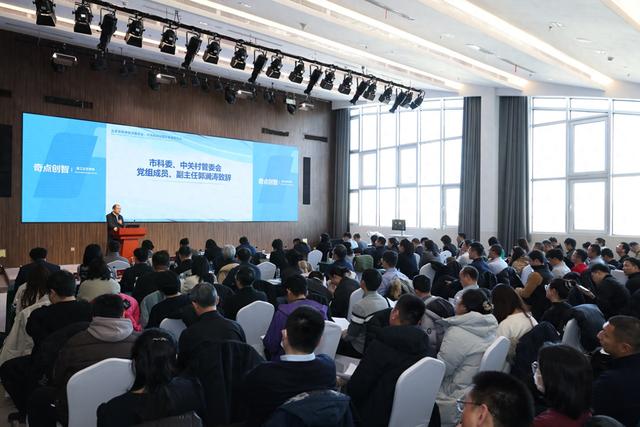
Core Insights - The event showcased innovative medical-engineering crossover technologies, including a real-time visualized minimally invasive robotic system for CT/MRI, a non-invasive multi-channel brain oxygen monitor, and a micro-magnetic endoscope system, highlighting advancements in medical diagnostics and treatment [1][2] Group 1: Event Overview - The event was held on February 7 at the Intelligent Future AI Industry Innovation Base, focusing on the intersection of medical and engineering fields [1] - It featured presentations from leading universities, hospitals, and tech companies in Beijing, emphasizing the importance of collaboration in advancing healthcare technology [2] Group 2: Innovative Technologies - The ultra-micro magnetic endoscope system introduced by Peking University First Hospital utilizes a unique "wired transmission + magnetic control" dual-mode technology for painless and high-definition upper digestive tract screening [1] - Other notable innovations included a minimally invasive robotic system for CT/MRI and a personalized prosthetic design for knee reconstruction, all addressing critical clinical needs and showcasing significant potential for commercialization [2] Group 3: Talent and Collaboration - The event aimed to bridge technology talent and facilitate the transformation of high-quality, high-potential scientific achievements into market-ready solutions, aligning with the Capital High-end Talent Gathering and Cultivation Project [2][3] - An interactive segment called "Creative Open Mic" allowed attendees to share their research projects and insights in the medical-engineering crossover field, fostering a collaborative environment [2]

脑机接口、AI底座,多项“首创”硬科技亮相中关村
Bei Jing Ri Bao Ke Hu Duan· 2025-03-31 08:44
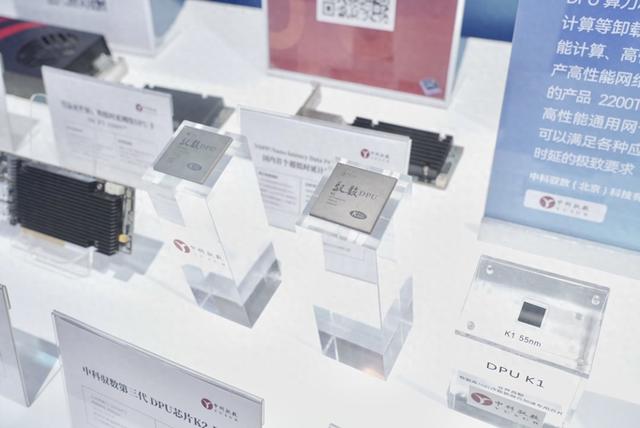
Group 1: DPU and AI Infrastructure - The Data Processing Unit (DPU) is recognized as the "third main chip" following CPU and GPU, with the latest third-generation DPU chip K2-Pro showcased at the Zhongguancun Forum [3] - The K2-Pro chip is designed to address challenges in large-scale data centers, achieving network throughput of 25G and 100G, filling a gap in the high-performance network card market [3] - The rapid development of AI, 5G, and the metaverse necessitates innovative computing solutions, with heterogeneous computing (DPU + CPU + GPU) becoming mainstream for next-generation intelligent computing centers [3] Group 2: AI Industry Development - The "Artificial Intelligence +" exhibition area highlighted the importance of autonomous innovation in computing infrastructure for AI industry growth, featuring products from GPU company Moore Threads [4] - The "Kua'e" system-level computing solution is tailored for large model training and inference, meeting the core demands of the large model era [4] - The Beijing Digital Economy Computing Power Center, a key project, integrates thousands of P-level domestic computing resources and provides various services for AI industry development [6] Group 3: Medical Innovations - The first non-invasive multi-channel brain oxygen monitoring device developed by Zhongke Boyue can monitor eight brain regions and is expected to enter clinical use in 2026 [7] - The Lattice NEXT blood flow-directed mesh stent, developed by Aike Medical Devices, expands the treatment range for intracranial aneurysms and has been recognized as an innovative medical device [9]