
医工交叉

Search documents
罕见病有了智能可信的AI“听诊器”
Xin Lang Cai Jing· 2026-02-25 21:02
Core Insights - Shanghai Jiao Tong University has developed the world's first intelligent rare disease diagnostic system, DeepRare, addressing the global challenge of high misdiagnosis and underdiagnosis rates in rare diseases [1][2] - The system surpasses traditional medical AI by integrating vast medical literature and real clinical case data, enabling deep understanding and internalization of medical knowledge [1] - DeepRare demonstrates significant improvements in diagnostic accuracy, achieving a first-position accuracy of 57.18% without genetic data, and over 70.6% with the inclusion of genetic sequencing data [2] Group 1 - DeepRare's ability to perform "phenotype decoding" has improved the diagnostic accuracy by 23.79 percentage points compared to previous best models in the field [2] - The system's reasoning reports, which include a complete evidence chain, have received a 95.4% approval rate from human experts, ensuring that diagnoses are well-supported [2] - The platform has been operational since July 26, 2025, and has attracted over 1,000 professional users from more than 600 medical and research institutions globally [2] Group 2 - The research is a result of a long-term "medical-engineering intersection" strategy at Shanghai Jiao Tong University, led by a collaborative team of professors from the AI and medical schools [3] - The team plans to conduct real-world clinical validation of thousands of rare disease cases over the next six months through an international multi-center cooperation network [3] - The project aims to create a global intelligent diagnostic network to shorten the diagnostic journey for rare disease patients [3]
中国科研团队研发DeepRare系统破解罕见病确诊难题
Xin Lang Cai Jing· 2026-02-20 03:08
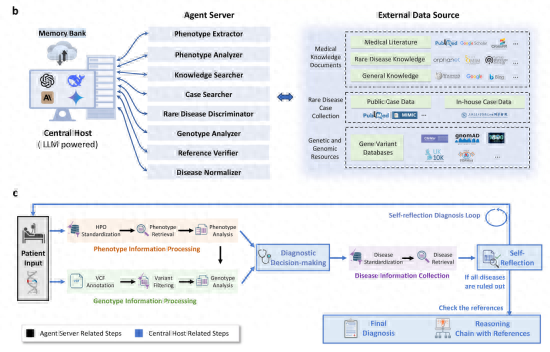
Core Insights - The article highlights a groundbreaking achievement in AI rare disease diagnosis by a collaborative team from Shanghai Jiao Tong University and Xinhua Hospital, with the introduction of the DeepRare system, which addresses the global challenges of difficult diagnosis and high misdiagnosis rates in rare diseases [1] Group 1: DeepRare System Overview - DeepRare is the world's first intelligent evidence-based reasoning diagnostic system for rare diseases, developed to overcome the challenges of traditional medical AI [1] - The system employs an innovative "central-body" architecture that surpasses traditional medical AI across three dimensions [3] Group 2: Key Features of DeepRare - The system integrates vast medical literature and clinical case data, breaking down data silos to provide comprehensive knowledge support for each diagnosis [3] - DeepRare possesses a "slow thinking" capability akin to human doctors, allowing for iterative hypothesis testing and self-reflection to fill information gaps and correct logical flaws [3] - It features a transparent reasoning process, providing a complete evidence chain for each diagnostic conclusion, addressing the "trust crisis" in AI healthcare [3] Group 3: Performance Metrics - DeepRare achieved a first diagnosis accuracy rate of 57.18% using only patient clinical phenotypes, a 23.79 percentage point improvement over the best international models in the field [5] - In retrospective human-machine comparisons, DeepRare's diagnostic recall rate surpassed that of rare disease specialists with ten years of clinical experience, marking it as the first method to outperform human doctors in this metric [5] - When genetic data is included, the accuracy rate for complex cases exceeds 70.6%, significantly outperforming the widely used Exomiser tool, which has an accuracy of 53.2% [5] Group 4: Implementation and Future Plans - The DeepRare online diagnostic platform is set to launch in July 2025, having already attracted over 1,000 professional users and covering more than 600 medical and research institutions globally within six months [7] - The system is currently undergoing internal testing at Xinhua Hospital, where it will serve as a "digital quality control officer" for rare disease diagnosis [7] - The collaborative team is initiating a "10,000 clinical validation plan" to complete tens of thousands of real-world validations of difficult rare diseases within six months, aiming to extend this "Chinese solution" to global rare disease patients [7]

Nature 重磅:上海交大人工智能学院×新华医院「梦之队」,如何用 AI 智能体终结罕见病确诊的「百年孤独」?
机器之心· 2026-02-19 03:47
Core Viewpoint - The article discusses the development of DeepRare, an AI system designed to improve the diagnosis of rare diseases, which currently face long diagnosis times and high misdiagnosis rates. The system outperforms experienced specialists by simulating human expert "slow thinking" logic [1][4]. Group 1: Clinical Need for AI - The current medical knowledge explosion makes it impossible for even the most talented doctors to keep up with over 7,000 rare diseases, leading to significant delays in diagnosis and treatment [6]. - The integration of AI in rare disease diagnosis is seen as a necessary step to alleviate the burden on healthcare professionals and improve patient outcomes, especially in pediatric and genetic cases [6]. Group 2: Technological Leap - DeepRare represents a paradigm shift from traditional predictive models to a system that emphasizes logical reasoning and decision-making, allowing it to autonomously plan diagnostic paths rather than merely recalling information [9]. - The system incorporates a "dynamic reflection mechanism" that identifies logical gaps in patient data and actively seeks new evidence, enhancing its diagnostic accuracy [10]. Group 3: Implementation and Productization - The establishment of OneX Intelligence aims to bridge the gap between academic research and practical application, transforming DeepRare into a clinical decision support system that integrates seamlessly with existing hospital systems [13]. - DeepRare has been deployed within Xinhua Hospital for internal testing, focusing on quality control in rare disease diagnosis and enhancing the interpretation of genetic sequencing reports through automation [14]. Group 4: Organizational Innovation - The collaborative model at Shanghai Jiao Tong University promotes deep integration between AI researchers and medical professionals, facilitating a more effective development process for AI applications in healthcare [18]. - The success of DeepRare is viewed as a reflection of the innovative organizational structure that encourages not only academic publication but also the commercialization of research findings [19].
【新春走基层·蹲点笔记】中国之光
Jing Ji Ri Bao· 2026-02-16 22:29
Core Insights - The development of the East Lake High-tech Zone in Wuhan has transformed it into a significant hub for innovation and technology, contributing to China's strategic technological advancements [1][4] - The East Lake Laboratory has achieved world records in high-speed rail technology, indicating a strong focus on cutting-edge transportation solutions [2] - The establishment of various national and regional laboratories and innovation platforms has strengthened the research and development ecosystem in the region [4][12] Group 1: Technological Innovations - The East Lake Laboratory has successfully accelerated a high-speed train model to 800 km/h in just 5.3 seconds, breaking previous records and advancing research in high-speed transportation [2] - The Nine Peaks Mountain Laboratory focuses on compound semiconductor technology, aiming to provide foundational hardware support for future industries [3] - The integration of medical and engineering technologies has led to the development of innovative medical devices, such as a minimally invasive heart surgery tool inspired by fruit cutting techniques [6][7] Group 2: Research and Development Ecosystem - The East Lake High-tech Zone has established a comprehensive innovation ecosystem with over 5,800 high-tech enterprises and 196 national-level specialized "little giant" companies [12] - The Wuhan Innovation Development Research Institute has facilitated the growth of nearly 1,000 projects, enhancing the local innovation landscape [7][8] - The region's R&D investment intensity reached 9.4%, ranking third among national high-tech zones, showcasing a strong commitment to technological advancement [4][12] Group 3: Talent Development - The East Lake High-tech Zone has attracted over 40,000 master's and 8,000 doctoral graduates, emphasizing the importance of talent in driving innovation [12] - Collaborative initiatives with local universities have been established to cultivate industry-ready talent, addressing the demand for skilled professionals in emerging sectors [12] - The "Doctor 500 Plan" at Huagong Technology aims to enhance the company's R&D capabilities by increasing the proportion of PhD talent [10]


中国之光
Jing Ji Ri Bao· 2026-02-16 22:13
Core Viewpoint - The development of the East Lake High-tech Zone in Wuhan, known as "China's Optics Valley," has become a significant hub for technological innovation and industry integration, emphasizing the need for high-level technological self-reliance and the fusion of technological and industrial innovation [1][4]. Group 1: Technological Innovation and Achievements - The East Lake Laboratory has achieved a world record by accelerating a high-speed train model to 800 km/h in just 5.3 seconds, showcasing advancements in transportation technology [2]. - The laboratory is also developing a comprehensive electric power system for ships, addressing traditional inefficiencies in testing and ensuring reliability and safety [2]. - The Nine Peaks Mountain Laboratory focuses on compound semiconductor technology, aiming to provide foundational hardware support for future industries [3]. Group 2: Research and Development Ecosystem - The East Lake High-tech Zone has established a comprehensive innovation ecosystem with 1 national laboratory, 13 national key laboratories, and numerous innovation platforms, achieving a research and development intensity of 9.4%, ranking third among national high-tech zones [4]. - The integration of various stakeholders, including enterprises, talent, and market resources, is crucial for achieving breakthroughs and effective technology transfer [4]. Group 3: Unique Innovations in Biotechnology and Medical Devices - Wuhan Heyuan Biotechnology Co., Ltd. has developed a groundbreaking "rice blood production" technology, allowing for the production of human serum albumin from rice, marking a significant advancement in biotechnology [5]. - The innovative micro-invasive myocardial resection system, inspired by a pineapple cutting tool, has been successfully implemented in clinical settings, demonstrating the potential of cross-disciplinary collaboration in medical technology [6][7]. Group 4: Talent Development and Investment - The East Lake High-tech Zone has established a government-led investment fund of 89 billion yuan, with over 70 billion yuan allocated annually for scientific innovation, significantly exceeding the national average [12]. - The region has attracted over 40,000 master's and 8,000 doctoral graduates, emphasizing the importance of talent in driving technological and industrial innovation [12]. Group 5: Future Industry Development - The East Lake High-tech Zone is focusing on emerging industries such as artificial intelligence, humanoid robots, brain-machine interfaces, and biomanufacturing, aiming to create a trillion-yuan scale "World Optics Valley" [12]. - The integration of innovative elements and a supportive ecosystem is essential for fostering a competitive environment that encourages risk-taking and innovation [12].
多项全球首创医工结合项目路演
Xin Lang Cai Jing· 2026-02-08 21:39
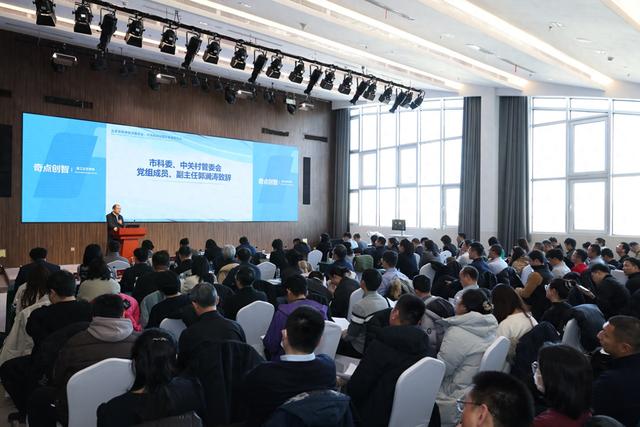
Group 1 - The event showcased cutting-edge medical-engineering crossover technologies, including a real-time visualized minimally invasive robotic system for CT/MRI, a non-invasive multi-channel brain oxygen monitoring device, and an ultra-fine magnetic-controlled endoscope system [1] - The ultra-fine magnetic-controlled endoscope system developed by Peking University First Hospital utilizes a unique "wired transmission + magnetic control" dual-mode drive technology, enabling painless, high-definition, real-time, and controllable screening for upper gastrointestinal diseases [1] - Innovations presented at the event address clinical needs and industry bottlenecks, demonstrating significant potential for results transformation in the medical-engineering crossover field [1] Group 2 - The event focused on the transformation of technological achievements in the medical-engineering crossover field, aiming to accelerate the transition of hard technology from laboratories to the market [2] - The Beijing Municipal Science and Technology Commission highlighted the importance of the medical-engineering crossover field in connecting cutting-edge technological breakthroughs with public health needs, emphasizing its role in cultivating new productive forces [2] - The initiative aims to promote interaction among scientific and technological talents and facilitate the landing of high-quality, high-potential technology transformation projects in Beijing [2]
科技人才领军,多项全球首创医工交叉硬科技亮相中关村
Bei Jing Ri Bao Ke Hu Duan· 2026-02-08 10:42
Core Insights - The event showcased innovative medical-engineering crossover technologies, including a real-time visualized minimally invasive robotic system for CT/MRI, a non-invasive multi-channel brain oxygen monitor, and a micro-magnetic endoscope system, highlighting advancements in medical diagnostics and treatment [1][2] Group 1: Event Overview - The event was held on February 7 at the Intelligent Future AI Industry Innovation Base, focusing on the intersection of medical and engineering fields [1] - It featured presentations from leading universities, hospitals, and tech companies in Beijing, emphasizing the importance of collaboration in advancing healthcare technology [2] Group 2: Innovative Technologies - The ultra-micro magnetic endoscope system introduced by Peking University First Hospital utilizes a unique "wired transmission + magnetic control" dual-mode technology for painless and high-definition upper digestive tract screening [1] - Other notable innovations included a minimally invasive robotic system for CT/MRI and a personalized prosthetic design for knee reconstruction, all addressing critical clinical needs and showcasing significant potential for commercialization [2] Group 3: Talent and Collaboration - The event aimed to bridge technology talent and facilitate the transformation of high-quality, high-potential scientific achievements into market-ready solutions, aligning with the Capital High-end Talent Gathering and Cultivation Project [2][3] - An interactive segment called "Creative Open Mic" allowed attendees to share their research projects and insights in the medical-engineering crossover field, fostering a collaborative environment [2]

孤独焦虑损伤大脑!华南理工大学团队解开长久谜题
2 1 Shi Ji Jing Ji Bao Dao· 2026-01-30 02:42
Core Insights - The World Health Organization has identified "social isolation" as a significant global health threat, with research revealing that social isolation can lead to anxiety and changes in brain function [5][6]. Group 1: Research Findings - A research team from South China University of Technology has discovered that social isolation triggers iron accumulation in a specific brain region, leading to a new pathway of neural plasticity termed "ferroplasticity" [5][7]. - The study indicates that iron, previously considered a nutrient for neural health, can become a "double-edged sword" under psychological stress, driving structural and functional changes in neural synapses [5][6]. Group 2: Implications for Treatment - The research suggests a novel non-invasive intervention method through nasal delivery targeting key molecules like iron or α-synuclein, which showed significant reduction in anxiety behaviors in mice within two weeks [8][9]. - This approach could potentially benefit over 1 billion people globally suffering from social isolation-related psychological issues, paving the way for new non-invasive anxiety therapies [8][9]. Group 3: Future Directions - The research integrates neuroscience, metal biology, and translational medicine, marking a significant achievement in brain science and mental health [9]. - Future steps include advancing the safety and dosage optimization of nasal spray formulations and exploring imaging techniques for iron accumulation in the brain, with plans to initiate clinical trials [9].

省属重点高校,如何服务区域重大需求 |聚焦2026山东两会
Jing Ji Guan Cha Bao· 2026-01-29 06:32
Group 1 - The Shandong Provincial Government is focusing on the development of key industries, including new generation information technology and artificial intelligence, as well as emerging sectors like life health and green energy, as part of its "10+1" industrial development strategy [2] - Qingdao University is aligning its academic programs with the regional industrial layout by establishing interdisciplinary doctoral programs in areas such as low-altitude technology and artificial intelligence [2][3] - The university has formed seven academic clusters from 39 disciplines, emphasizing peak disciplines in systems, textiles, and medicine, while also developing advantageous clusters in new energy and cultural creativity [3] Group 2 - Qingdao University has established its own medical technology company to leverage its clinical advantages, focusing on smart medical devices and innovative healthcare solutions [4] - The university is actively promoting the construction of research centers in extreme environment medicine and artificial intelligence, with several projects already approved or in progress [3] - The integration of AI into various research initiatives is a priority for Qingdao University, aiming to enhance its contributions to the local economy and healthcare innovation [2][4]
省属重点高校,如何服务区域重大需求
Jing Ji Guan Cha Wang· 2026-01-29 06:03
Group 1 - The Shandong Provincial People's Congress emphasized the importance of a first-class university named after a city as a hallmark of a modern international metropolis, with a focus on high-quality development of local universities and application-oriented institutions [1] - Qingdao University aims to leverage its strengths in medicine, healthcare, and engineering to contribute to the development of the Qingdao Science and Technology Innovation Corridor and the "China Health Bay" initiative, presenting both challenges and opportunities for the institution [1] Group 2 - Qingdao City has outlined a "10+1" industrial development strategy focusing on emerging industries such as new generation information technology, artificial intelligence, and health, while also enhancing existing industries like smart home appliances and high-end chemicals [2] - Qingdao University has established eight interdisciplinary doctoral programs in areas such as low-altitude technology and artificial intelligence, fostering a collaborative ecosystem through the integration of education and industry [2] Group 3 - Qingdao University has organized 39 first-level disciplines into seven discipline clusters, with a focus on developing peak discipline clusters in "system+", "textile+", and "medicine+" [3] - The university is actively promoting projects related to extreme environment special medicine and artificial intelligence, with plans for future energy and intelligent connected vehicle centers [3] Group 4 - Qingdao University has established its own wholly-owned medical technology company to incubate innovations in smart diagnostics, medical devices, and pharmaceuticals, aiming to create a strong brand in medical technology [4]