无液氦亚3K低温扫描探针显微镜

Search documents
科学仪器 硬核利器(科技瞭望)
Ren Min Ri Bao Hai Wai Ban· 2025-11-30 22:20
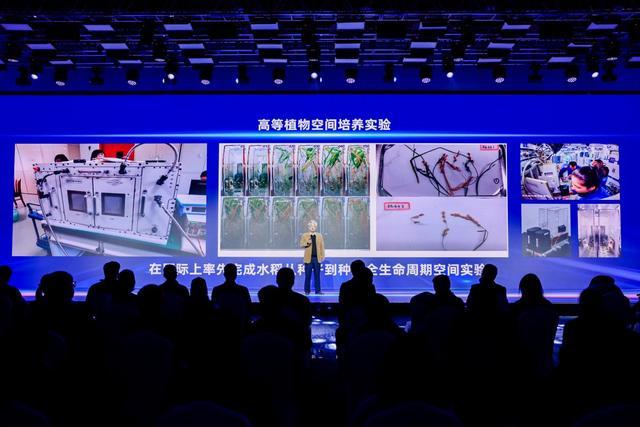
Group 1: Overview of Scientific Instrumentation in China - The article highlights the significant advancements in China's scientific instrumentation, showcasing a transition from basic development to achieving international competitiveness in high-end instruments [1][2] - A recent event at the National Science Communication Center featured three innovative scientific instruments recommended by the Chinese Society of Instrumentation [1] Group 2: Space Life Science Instruments - The "Space Life Science Instrument" developed by the Shanghai Institute of Technical Physics is designed to support life science experiments in space, addressing challenges such as microgravity and extreme environmental conditions [2][3] - This instrument has successfully completed over 40 space life science tasks since its launch in July 2022, marking a shift from simple experiments to complex system research [2][4] - Key features include a closed life support system, AI-driven in-situ observation, and automated precision control, which are essential for maintaining the necessary conditions for various life forms [3][4] Group 3: Low-Temperature Scanning Probe Microscopy - The development of a helium-free low-temperature scanning probe microscope system represents a significant advancement in nanoscience research, eliminating reliance on imported helium and reducing operational costs [5][6] - This system maintains temperatures below 3K (approximately -270.15°C) using a novel remote liquefaction cooling technology, allowing for long-term stable operation [6] - The technology has been adopted by several universities in China, contributing to various cutting-edge research outcomes [6] Group 4: Visual Inspection Technology for Chip Packaging Substrates - The article discusses the importance of chip packaging substrates in modern electronics and the challenges faced in their defect detection, which has historically relied on manual inspection [7][8] - A team from Northeast University has developed an AI-based visual inspection technology that enables intelligent identification and precise classification of micro and nano-level defects [8][9] - The team has collected over 140,000 data samples to train AI models, significantly improving defect detection efficiency and quality in the chip packaging industry [8][9]
新天工开物:三项科学仪器创新成果亮相
Huan Qiu Wang Zi Xun· 2025-10-30 08:40
Core Insights - The article highlights significant advancements in China's scientific instrument sector, showcasing three innovative technologies that enhance the country's capabilities in space life sciences, low-temperature scanning probe microscopy, and chip ceramic packaging inspection [1][3][4]. Group 1: Space Life Science Instruments - The space life science instrument is a core component supporting China's space station life experiments, featuring a high-functionality integrated experimental platform that enables advanced exploration in unique space environments [1][3]. - This instrument has supported over 80% of China's space life science missions, filling a critical gap in domestic research capabilities [3]. Group 2: Low-Temperature Scanning Probe Microscopy - The development of the "liquid helium-free sub-3K low-temperature scanning probe microscope" represents a significant breakthrough, allowing for long-term maintenance of low temperatures without the need for liquid helium, thus enhancing China's technological level in this field [4][5][7]. - This innovation has been successfully industrialized and is being applied in numerous domestic universities, contributing to the advancement of high-end scientific instruments in China [7]. Group 3: Chip Ceramic Packaging Inspection Technology - The chip ceramic packaging substrate visual inspection technology utilizes AI and computer vision to achieve intelligent identification and precise classification of micro and nano-level defects, addressing challenges in the detection of complex defects [8][9]. - This technology has significantly improved the yield and automation level in the manufacturing of chip ceramic packaging substrates, marking a substantial advancement in China's integrated circuit packaging industry [8][9].