日用家居品

Search documents
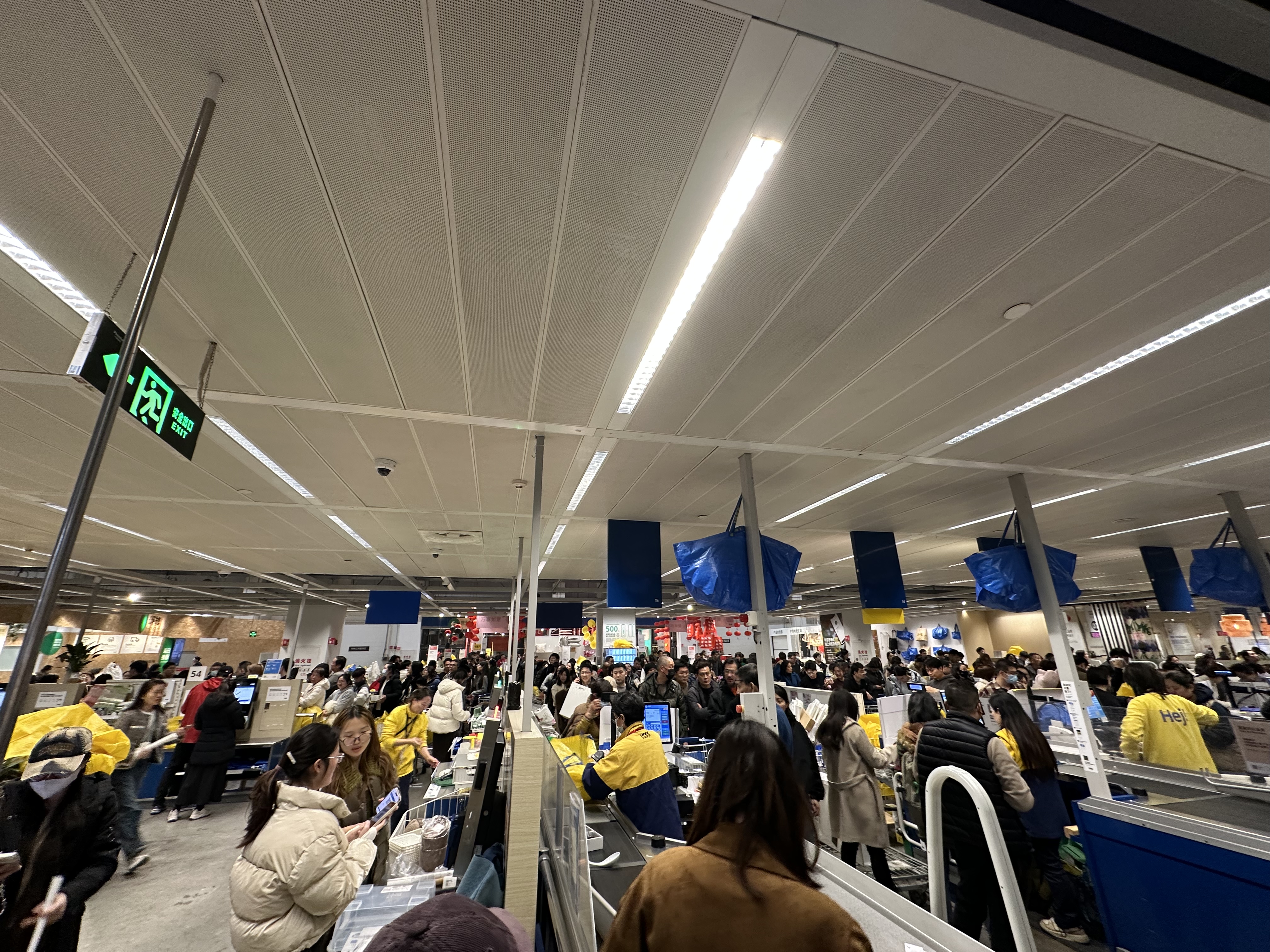
现场直击宜家关店清仓3折起售
Di Yi Cai Jing Zi Xun· 2026-01-16 10:39
Core Viewpoint - IKEA is closing several stores in China, including the Shanghai Baoshan store, as part of its strategic transformation to build a more resilient foundation for future growth and focus on local relevance [8]. Group 1: Store Closures and Discounts - The Shanghai Baoshan store will close on February 2, 2026, with discounts starting from January 15, offering products at 30% to 60% off [6][8]. - The clearance sale has attracted a significant increase in customer traffic, with footfall more than doubling compared to normal days, especially peaking around noon [4]. Group 2: Business Challenges - IKEA faces challenges with its large store model, including site selection, cost control, and operations, compounded by the impact of e-commerce and price wars [8]. - The decline in furniture and home goods sales is attributed to the adjustment in the real estate market and increasing consumer demand for cost-effective products [8]. Group 3: Future Strategies - IKEA plans to invest 160 million yuan in the 2026 fiscal year to focus on promoting 150 lower-priced products, building on a total investment of 673 million yuan over the past two fiscal years [9]. - The company aims to open over ten small-format stores in the next two years as part of a strategy to control costs and develop a more flexible offline presence while also expanding its online business [9].


现场直击宜家关店清仓3折起售
第一财经· 2026-01-16 10:15
Core Viewpoint - IKEA is closing seven offline stores in China, including the Shanghai Baoshan store, as part of its strategic transformation to build a more resilient foundation for future growth and focus on local relevance [9]. Group 1: Store Closures and Discounts - The IKEA Shanghai Baoshan store will close on February 2, 2026, with discounts starting from January 15, attracting a significant increase in customer traffic, doubling the usual flow [5][7]. - Customers reported long wait times of up to two hours to check out, indicating high demand for discounted items [5][7]. Group 2: Business Strategy and Market Challenges - The decision to close stores is part of IKEA's deeper transformation in China, responding to declining sales in the furniture and home goods market due to a real estate market adjustment and increasing consumer demand for cost-effective products [9]. - IKEA has faced challenges with its large store model, including site selection, cost control, and operational difficulties, compounded by e-commerce competition and price wars [9]. Group 3: Investment in Lower-Priced Products - In the 2026 fiscal year, IKEA plans to invest 160 million yuan to focus on promoting 150 lower-priced products, building on a total investment of 673 million yuan over the past two fiscal years [10]. - The company aims to open over ten small-format stores in the next two years as a strategy to control costs and develop a more flexible offline presence while also expanding its online business [10].

现场直击宜家关店清仓3折起售:大批客人涌入门店,排队2小时结账
Di Yi Cai Jing· 2026-01-16 09:13
Core Insights - IKEA is undergoing a strategic adjustment, closing several stores in China as part of its transformation process to build a more resilient foundation for future growth and focus on local relevance [10] Group 1: Store Closures and Discounts - The IKEA store in Shanghai Baoshan will close on February 2, 2026, with discounts starting from January 15, attracting a significant increase in customer traffic, more than doubling the usual flow [4][8] - Customers reported long wait times of up to 2 hours to check out during peak hours, indicating high demand for discounted items [4] - Popular categories during the clearance sale included kitchenware, bedding, and daily household items, with discounts ranging from 30% to 60% [7] Group 2: Business Strategy and Market Challenges - IKEA's decision to close these seven stores is part of a broader strategy to address challenges such as site selection, cost control, and competition from e-commerce and price wars [11] - The company has emphasized the introduction of lower-priced products to maintain market share, planning to invest 160 million yuan in the 2026 fiscal year to promote 150 lower-priced items [11] - Over the past two fiscal years, IKEA has invested a total of 673 million yuan in launching more lower-priced products, with plans to open over ten smaller stores in the next two years to control costs and enhance flexibility [11]