全渠道模式

Search documents
现场直击宜家关店清仓3折起售
Di Yi Cai Jing Zi Xun· 2026-01-16 10:39
Core Viewpoint - IKEA is closing several stores in China, including the Shanghai Baoshan store, as part of its strategic transformation to build a more resilient foundation for future growth and focus on local relevance [8]. Group 1: Store Closures and Discounts - The Shanghai Baoshan store will close on February 2, 2026, with discounts starting from January 15, offering products at 30% to 60% off [6][8]. - The clearance sale has attracted a significant increase in customer traffic, with footfall more than doubling compared to normal days, especially peaking around noon [4]. Group 2: Business Challenges - IKEA faces challenges with its large store model, including site selection, cost control, and operations, compounded by the impact of e-commerce and price wars [8]. - The decline in furniture and home goods sales is attributed to the adjustment in the real estate market and increasing consumer demand for cost-effective products [8]. Group 3: Future Strategies - IKEA plans to invest 160 million yuan in the 2026 fiscal year to focus on promoting 150 lower-priced products, building on a total investment of 673 million yuan over the past two fiscal years [9]. - The company aims to open over ten small-format stores in the next two years as part of a strategy to control costs and develop a more flexible offline presence while also expanding its online business [9].

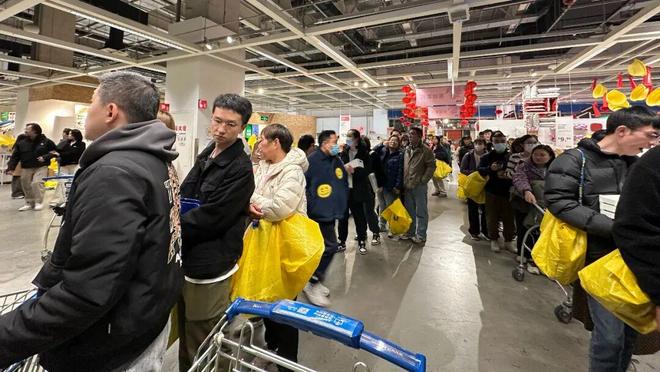
现场直击宜家关店清仓3折起售
第一财经· 2026-01-16 10:15
Core Viewpoint - IKEA is closing seven offline stores in China, including the Shanghai Baoshan store, as part of its strategic transformation to build a more resilient foundation for future growth and focus on local relevance [9]. Group 1: Store Closures and Discounts - The IKEA Shanghai Baoshan store will close on February 2, 2026, with discounts starting from January 15, attracting a significant increase in customer traffic, doubling the usual flow [5][7]. - Customers reported long wait times of up to two hours to check out, indicating high demand for discounted items [5][7]. Group 2: Business Strategy and Market Challenges - The decision to close stores is part of IKEA's deeper transformation in China, responding to declining sales in the furniture and home goods market due to a real estate market adjustment and increasing consumer demand for cost-effective products [9]. - IKEA has faced challenges with its large store model, including site selection, cost control, and operational difficulties, compounded by e-commerce competition and price wars [9]. Group 3: Investment in Lower-Priced Products - In the 2026 fiscal year, IKEA plans to invest 160 million yuan to focus on promoting 150 lower-priced products, building on a total investment of 673 million yuan over the past two fiscal years [10]. - The company aims to open over ten small-format stores in the next two years as a strategy to control costs and develop a more flexible offline presence while also expanding its online business [10].
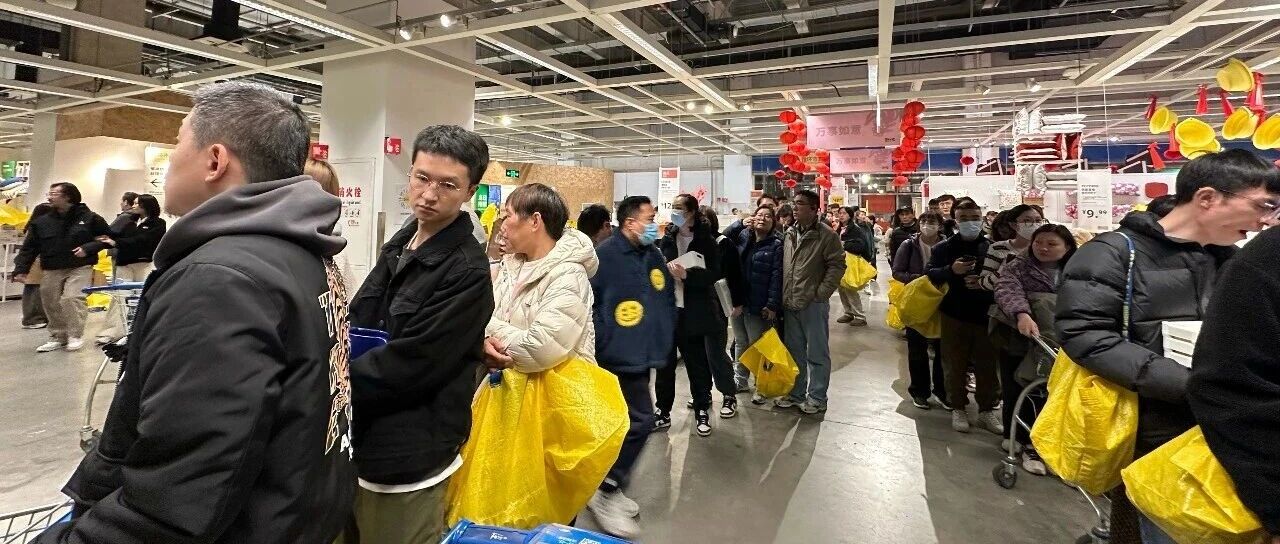
现场直击宜家关店清仓3折起售:大批客人涌入门店,排队2小时结账
Di Yi Cai Jing· 2026-01-16 09:13
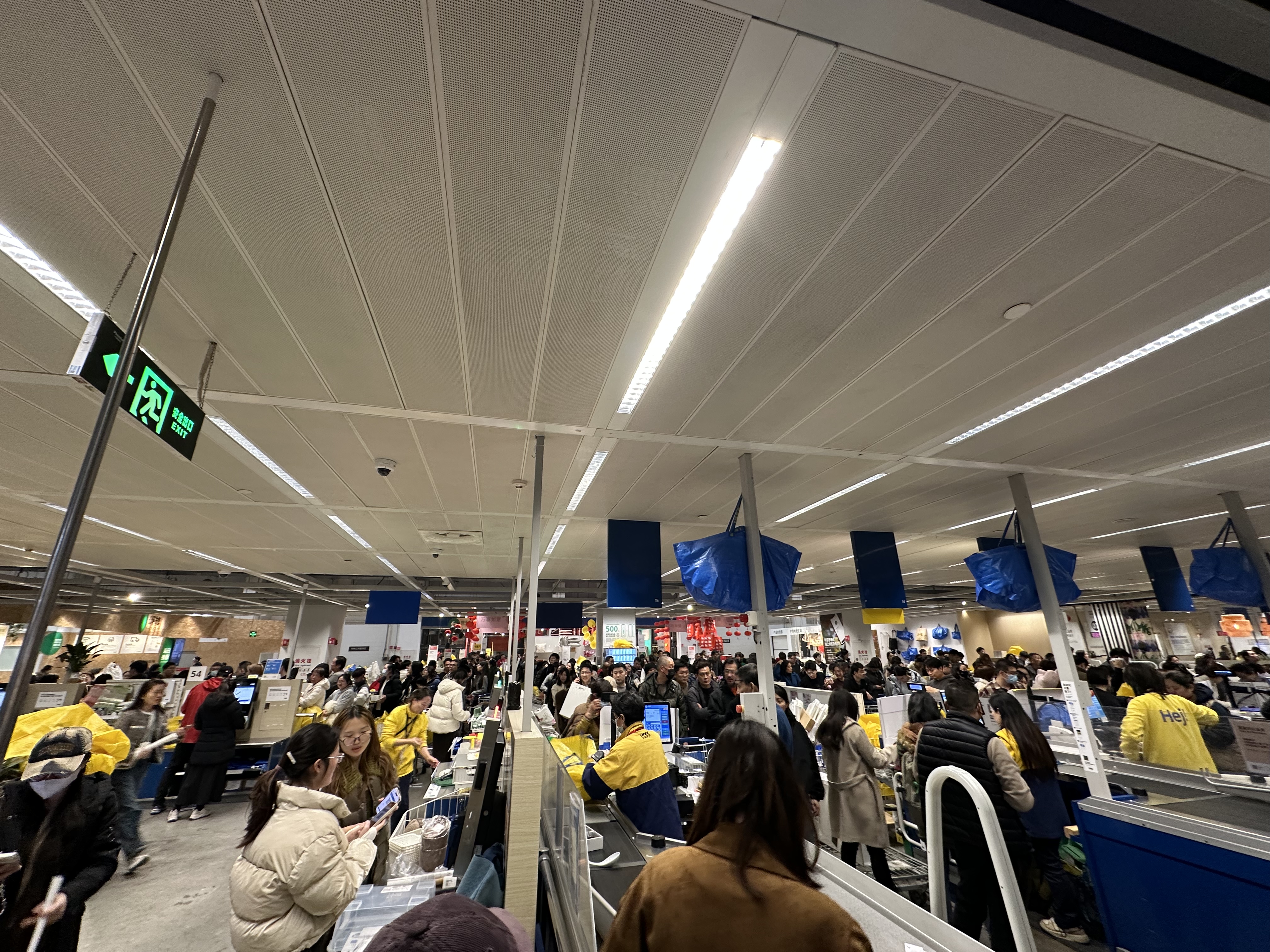
Core Insights - IKEA is undergoing a strategic adjustment, closing several stores in China as part of its transformation process to build a more resilient foundation for future growth and focus on local relevance [10] Group 1: Store Closures and Discounts - The IKEA store in Shanghai Baoshan will close on February 2, 2026, with discounts starting from January 15, attracting a significant increase in customer traffic, more than doubling the usual flow [4][8] - Customers reported long wait times of up to 2 hours to check out during peak hours, indicating high demand for discounted items [4] - Popular categories during the clearance sale included kitchenware, bedding, and daily household items, with discounts ranging from 30% to 60% [7] Group 2: Business Strategy and Market Challenges - IKEA's decision to close these seven stores is part of a broader strategy to address challenges such as site selection, cost control, and competition from e-commerce and price wars [11] - The company has emphasized the introduction of lower-priced products to maintain market share, planning to invest 160 million yuan in the 2026 fiscal year to promote 150 lower-priced items [11] - Over the past two fiscal years, IKEA has invested a total of 673 million yuan in launching more lower-priced products, with plans to open over ten smaller stores in the next two years to control costs and enhance flexibility [11]
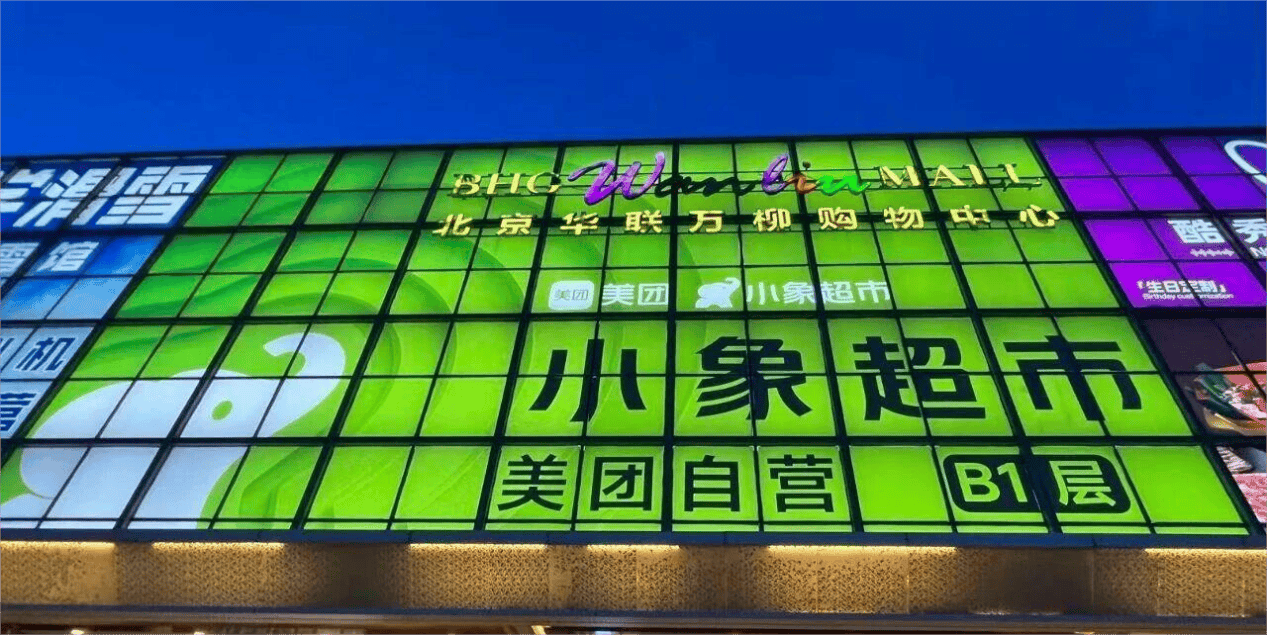
美团小象超市北京首店开业:全渠道模式重构生鲜零售竞争格局
Sou Hu Cai Jing· 2025-12-22 18:59
Core Insights - The entry of Meituan into the offline fresh retail market marks a significant shift in the industry, indicating the arrival of heavyweight players and pushing the transformation of fresh supermarkets into a new phase [1][10] - Major players like Alibaba and JD.com are already focusing on the offline experience, leading to a multi-channel competition landscape [1] Company Developments - Meituan's first Xiaoxiang supermarket opened in Beijing on December 19, 2025, completing its "home delivery + in-store" multi-channel strategy after seven years in the fresh e-commerce sector [3] - The Xiaoxiang supermarket, which evolved from the "30-minute quick delivery supermarket" Meituan Maicai launched in 2019, has established nearly 1,000 front warehouses across 20 cities [3] - The opening of the first store is a key demonstration of Meituan's commitment to fresh retail, following the shutdown of certain operations to focus on Xiaoxiang supermarkets [3] Industry Trends - The "offline large experience store + N warehouses" model is being adopted to build multi-channel touchpoints and solidify market position, resembling the Sam's Club model [3] - The Xiaoxiang supermarket app serves as the core hub for multi-channel coordination, enabling seamless integration of store and warehouse resources for rapid fulfillment [3] - The retail industry is transitioning from a transaction-based society to an experience-based society, with a focus on enhancing customer experience in fresh retail [8][10] Competitive Advantages - The Xiaoxiang supermarket emphasizes three core competitive strengths: enhanced offline experience, quality differentiation from discount supermarkets, and a focus on proprietary brands [6] - The store features a diverse consumption space with fresh food counters and customized services, aiming to create a shopping experience similar to that of "Pang Dong Lai" [6] - The opening period includes high-cost performance products to achieve differentiated competition and improve gross margins [6]

当亚马逊被“围猎”,谁在瓜分新的万亿蛋糕?
3 6 Ke· 2025-12-22 11:44
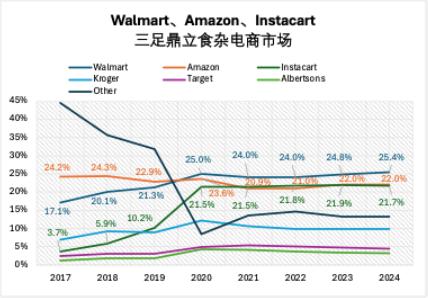
Group 1: Core Insights - The disparity in online retail penetration between China (30%) and the U.S. (16%) is significant, indicating different market dynamics and maturity levels [1][2] - U.S. e-commerce is not merely lagging behind but is in a mature market with strong offline competitors like Walmart and Costco, leading to structural differentiation rather than total growth [2][3] - The U.S. retail landscape is characterized by a robust offline infrastructure that complicates the growth of e-commerce, as traditional retailers provide high efficiency and experience [4][5] Group 2: Market Dynamics - The U.S. e-commerce market, valued at over $1.1 trillion, is supported by a $7 trillion retail base, despite a lower penetration rate [4] - The competition in the U.S. e-commerce space is shifting towards specific niches where traditional retailers cannot compete, such as extreme low pricing, traffic stimulation, and fresh food delivery [4][10] - Amazon, while still a leader, faces challenges from low-cost competitors and content-driven e-commerce platforms like TikTok Shop, which leverage social media for sales [5][9] Group 3: Competitive Landscape - Companies like Temu and Shein are disrupting the U.S. market by utilizing Chinese supply chains to offer low prices without the burden of high logistics costs [7][8] - TikTok Shop is transforming its video content into e-commerce opportunities, presenting a new avenue for merchants seeking alternatives to Amazon [9] - Walmart has successfully adapted to the e-commerce landscape by utilizing its extensive store network for efficient fresh food delivery, surpassing Amazon in this segment [12] Group 4: Key Companies - **Amazon (AMZN)**: Despite facing competition, Amazon maintains a strong retail market share of approximately 37% and continues to perform well in core categories like consumer electronics [13][14] - **Walmart (WMT)**: Walmart is evolving into a full-channel giant, with its e-commerce business growing over 20% for seven consecutive quarters, driven by its fresh food offerings [15] - **PDD Holdings (PDD)**: Temu is transitioning to a model that enhances its pricing power and logistics efficiency, targeting Amazon's mid-tier merchant ecosystem [16] - **Shopify (SHOP)**: Shopify is leveraging AI to enhance traffic distribution and improve monetization rates, moving beyond its initial role as a platform provider [17] - **Instacart (CART)**: Instacart dominates the U.S. third-party fresh food delivery market, with a significant portion of its revenue coming from high-margin advertising [18]


当亚马逊被“围猎”,谁在瓜分新的万亿蛋糕?
格隆汇APP· 2025-12-22 11:12
Core Viewpoint - The article discusses the significant disparity in online retail penetration between China and the U.S., with China's online retail sales approaching 30% while the U.S. remains around 16%. This difference is attributed to the maturity of the U.S. retail market, which is dominated by strong offline players like Walmart and Costco, leading to a more complex competitive landscape for e-commerce in the U.S. [4][5][6] Group 1: Market Dynamics - The U.S. e-commerce market is not simply lagging behind China but is characterized by a mature offline retail system that provides high efficiency and experience, making it difficult for e-commerce to replace traditional retail. Instead, e-commerce serves as a supplement to offline shopping [5][6]. - The U.S. retail market, valued at $7 trillion, supports a substantial e-commerce sector worth over $1.1 trillion, despite a lower penetration rate [6]. - The competitive landscape in the U.S. is shifting from total growth to structural differentiation, focusing on specific niches where traditional retailers cannot compete effectively, such as extreme low prices, traffic stimulation, and fresh food delivery [6][13]. Group 2: Competitive Challenges - Amazon, while still a leader in infrastructure, faces significant challenges from low-cost competitors and new traffic sources, particularly from companies like Temu and Shein, which leverage Chinese supply chains to offer lower prices without the need for expensive logistics in the U.S. [8][10][11]. - TikTok Shop is emerging as a powerful player in the e-commerce space, converting its vast short video traffic into purchasing power, contrasting with Amazon's traditional search-based model [12]. - In the fresh grocery segment, Walmart has overtaken Amazon with a 25% market share compared to Amazon's 22%, due to Walmart's effective use of its extensive store network to reduce delivery costs and enhance customer experience [15]. Group 3: Key Companies - **Amazon (AMZN)**: Despite facing competition, Amazon maintains a strong retail market share of around 37% and continues to perform well in core categories, such as consumer electronics [17]. - **Walmart (WMT)**: Walmart is transforming from a traditional supermarket to a full-channel giant, with its e-commerce business growing over 20% for seven consecutive quarters, now accounting for 20% of its total retail sales [20]. - **PDD Holdings (PDD)**: Temu is evolving from a fully managed model to a semi-managed one, enhancing its supply chain capabilities and integrating local inventory to compete with Amazon [21]. - **Shopify (SHOP)**: Shopify is shifting its growth narrative, focusing on AI-driven traffic distribution and financial services to enhance its revenue model [22]. - **Instacart (CART)**: Instacart dominates over 70% of the U.S. third-party grocery delivery market, with a growing high-margin advertising business contributing to its revenue [23].

三只松鼠(300783):收入增长稳健 盈利能力短期承压
Xin Lang Cai Jing· 2025-10-28 02:43
Core Viewpoint - The company reported its Q3 2025 results, showing an increase in revenue but a significant decline in net profit, indicating challenges in profitability despite revenue growth [1][2]. Financial Performance - Q3 2025 revenue reached 2.281 billion yuan, a year-on-year increase of 8.91% [1] - Net profit attributable to shareholders was 22 million yuan, down 56.79% year-on-year [1] - Non-recurring net profit was 6 million yuan, a decrease of 83.45% year-on-year [1] - Gross margin improved to 25.71%, up 1.25 percentage points year-on-year [2] - The net profit margin was 0.98%, down 1.48 percentage points year-on-year [2] - The non-recurring net profit margin was 0.28%, down 1.54 percentage points year-on-year [2] Expense Analysis - Total expense ratio for Q3 2025 was 25.24%, an increase of 3.29 percentage points year-on-year [2] - Sales expense ratio was 21.33%, up 2.24 percentage points year-on-year [2] - Management expense ratio was 3.17%, an increase of 0.66 percentage points year-on-year [2] - R&D expense ratio was 0.60%, up 0.32 percentage points year-on-year [2] - Financial expense ratio was 0.14%, an increase of 0.07 percentage points year-on-year [2] Strategic Initiatives - The company is actively promoting its "D+N" omnichannel model, enhancing supply chain efficiency [2] - Online operations are being refined, while offline distribution is accelerating to adapt to a full range of products and channels [2] - The production capacity of the snack and nut supply chain is increasing, which is expected to lower costs and strengthen key products [2] Future Projections - Revenue forecasts for 2025, 2026, and 2027 are 11.262 billion, 12.872 billion, and 14.563 billion yuan, with year-on-year growth rates of 6.03%, 14.30%, and 13.14% respectively [3] - Expected net profits for 2025, 2026, and 2027 are 205 million, 437 million, and 531 million yuan, with year-on-year growth rates of -49.80%, 113.35%, and 21.63% respectively [3] - Corresponding P/E ratios for 2025, 2026, and 2027 are projected to be 45.8, 21.5, and 17.7 times [3] - The company is given a "recommend" rating based on these projections [3]

艺康集团:2025年餐饮消费洞察报告
Sou Hu Cai Jing· 2025-07-03 08:19
Group 1 - The report identifies five new consumption logics in the catering industry: cost-performance logic, big product logic, pre-made plus on-site logic, multi-engine logic, and light social logic [1][5][10] - The cost-performance logic highlights that Generation Z consumers prioritize high cost-performance and emotional value, leading to trends like the popularity of "leftover blind boxes" [1][12][13] - The big product logic emphasizes that successful big products rely on cost-performance or unique features, fostering consumer loyalty while balancing innovation and tradition [1][20][22] Group 2 - The report indicates that the chain small store model is emerging as a new trend in the industry, characterized by low costs and high efficiency, suitable for fragmented social interactions [2][6] - Key competitive points for the chain small store model include product iteration innovation, supply chain flexibility, investment in store equipment, deep digitalization, and food safety crisis management [2][6][22] - The report reflects a profound transformation in the catering industry regarding consumer demand and operational models, providing directional guidance for industry development [2][6] Group 3 - The report notes that the catering industry is experiencing a significant industrialization and digitalization revolution, with pre-made industrialization becoming a major trend [27][28] - The pre-made industrialization is driven by breakthroughs in commercial efficiency, rising consumer demands for food safety and convenience, and supportive policy incentives [27][28] - The report predicts that the pre-made food market in China will exceed 500 billion yuan in 2024, with a growth rate of over 20% [37] Group 4 - The report highlights the importance of blending public and private domain operations in catering, with public domain traffic including offline natural traffic and online platforms, while private domain traffic focuses on refined operations to enhance customer loyalty [40][41] - The integration of "dine-in + retail" models is noted as a new trend, effectively improving space efficiency and meeting diverse consumer needs [36][34] - The report emphasizes that the catering industry's revenue structure is evolving from a single dine-in model to a dual-driven model of "dine-in + delivery" [34][36]

2025年中国零??业报告:零?量贩崛起,零?零售新纪元
Qin Ce Xiao Fei Yan Jiu· 2025-03-11 09:23
Investment Rating - The report indicates a positive investment outlook for the Chinese snack industry, highlighting a "golden period" characterized by simultaneous growth in volume and price, driven by health, scenario-based consumption, and digitalization [2][6]. Core Insights - The Chinese snack industry is experiencing a "volume and price increase" phase, with a steady market growth trajectory. The market size is projected to reach 1.4 trillion RMB by 2024, recovering from a growth rate slump during 2020-2022, which saw a mere 0.8% increase in 2022 [2][6]. - The current market structure is layered into three segments: foundational categories supporting the market, emerging categories breaking through, and long-tail categories gaining momentum. Traditional giants are urged to seek high-end upgrades, while new entrants should focus on health transformation [9][12]. - The market is characterized by a "strong head, weak long tail" dynamic in 2023, necessitating traditional categories to innovate through scenarios to extend their lifecycle, while health-focused niches present structural opportunities [2][9]. - Offline channels dominate the snack distribution landscape, with hypermarkets accounting for over 40% of the market share, supermarkets around 24%, and e-commerce channels approximately 20%, which is gradually declining [2][26]. Summary by Sections Current Status of the Snack Industry - The snack industry is undergoing a channel transformation that is generating new growth opportunities. The rise of hypermarkets is particularly noteworthy, as they leverage high turnover efficiency to offer competitive pricing [6][34]. Channel Transformation - The report outlines a significant shift in the snack sales channels over the years, evolving from traditional distribution networks to large chain stores, and now to hypermarket sales models. This transformation is expected to continue, with hypermarkets projected to reach a market size of 1,040 billion RMB by 2024 [25][26]. Analysis of Representative Companies - **Mingming Hen Mang**: Following a merger, the brand's sales are expected to surge from 23.865 billion RMB in 2023 to 55.5 billion RMB in 2024, marking a growth of over 130%. The company serves approximately 5.9 million consumers daily [2][56]. - **China Wangwang**: The company faces challenges with its core product, Wangzai Milk, which accounts for 90% of its revenue in the dairy segment. The revenue for the first half of 2024 is projected to decline by 1.6% year-on-year [2][60]. - **Three Squirrels**: The company has seen a decline in revenue from 9.79 billion RMB in 2020 to 7.12 billion RMB in 2023, primarily due to the fading e-commerce boom and high costs of offline expansion. However, a recovery is anticipated in 2024 with a projected revenue of 10.2 to 10.8 billion RMB, driven by a strategy focused on high-end value and omnichannel sales [2][64].