
易方达奥明日经225ETF

Search documents
多只跟踪日经225指数的产品发布溢价风险提示
Zheng Quan Shi Bao Wang· 2025-11-19 08:28
Core Viewpoint - Several ETFs tracking the Nikkei 225 index, including the Huazhong Mitsubishi UFJ Nikkei 225 ETF and the E Fund Tomorrow Nikkei 225 ETF, have issued premium risk alerts, advising investors to be cautious of premium risks in secondary market trading [1] Group 1 - The ETFs have highlighted the potential for significant losses if investors purchase at high premiums [1]
跨境ETF频频溢价,多只溢价率超6% 基金公司QDII额度紧缺仍是关键
Mei Ri Jing Ji Xin Wen· 2025-11-16 14:28
Core Viewpoint - The recent surge in premiums for several cross-border ETFs has raised concerns among fund companies, prompting multiple warnings about the risks associated with high premiums in the market [1][2][4]. Group 1: Premiums and Risk Warnings - As of November 14, several cross-border ETFs, including E Fund MSCI US 50 ETF and Huaxia Nomura Nikkei 225 ETF, have reported premiums exceeding 6%, with E Fund's premium reaching 6.66% [2][3]. - Fund companies have issued multiple risk warnings, advising investors to be cautious of the high premium status and the potential for significant losses if they invest blindly [2][3]. - The high premiums are attributed to supply-demand imbalances in the secondary market, exacerbated by insufficient QDII quotas, which prevent fund companies from arbitraging to correct price discrepancies [1][5]. Group 2: Investor Interest and Market Dynamics - There remains a strong interest in cross-border ETFs among investors, particularly in newly launched products like the Brazilian cross-border ETFs, which saw rapid sales [4][5]. - The popularity of certain ETFs is linked to their holdings in well-known technology companies such as Apple, Nvidia, and Microsoft, providing investors with opportunities to participate in these technology sectors [3][4]. - The expansion of cross-border ETF offerings is driven by both management initiatives and investor demand, as the current range of available ETFs in China is relatively limited [4][5]. Group 3: Market Trends and Future Outlook - The trend of investing in international markets is growing, with an increasing number of funds targeting regions like Germany, France, and Southeast Asia, thereby diversifying the investment landscape [5]. - The recent adjustments to the Hong Kong Stock Connect ETF list indicate a broader acceptance and integration of cross-border investment products in the Chinese market [5]. - Analysts suggest that the fundamental cause of premium occurrences in QDII ETFs is the short-term supply-demand mismatch, which can fluctuate based on market sentiment and external factors [5].
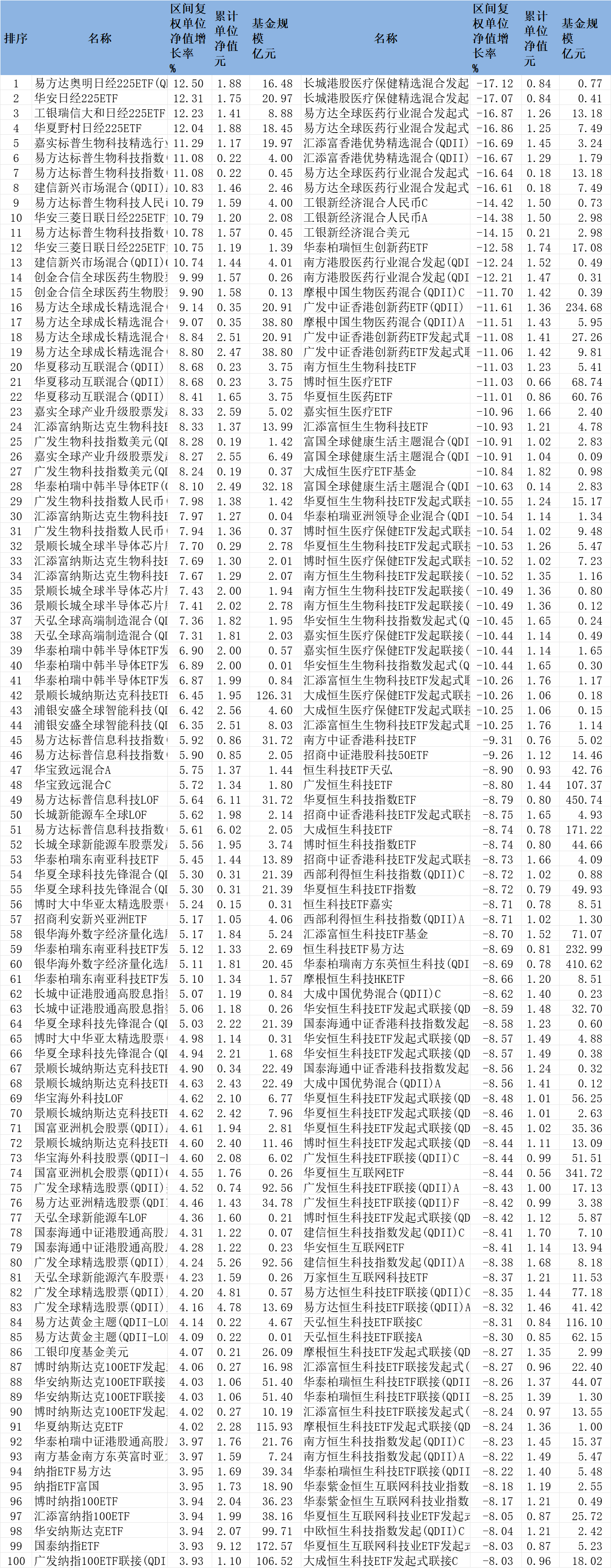
10月份56%QDII正收益 易方达奥明日经225ETF涨12.5%
Zhong Guo Jing Ji Wang· 2025-11-05 23:08
Core Insights - In October 2023, among 684 comparable QDII funds, 381 funds saw an increase in net value, representing 55.7% of the total, while 301 funds experienced a decline [1] - The top-performing QDII fund for October was the E Fund Nikkei 225 ETF, which achieved a return of 12.50% [1] - The E Fund Nikkei 225 ETF has a year-to-date return of 31.82% and an inception-to-date return of 87.95%, with a cumulative net value of 1.8795 yuan as of November 3, 2025 [1] Fund Performance - The Huaan Nikkei 225 ETF, with the largest scale of 2.097 billion yuan, recorded a 10-month increase of 12.31% [2] - The Huaan Nikkei 225 ETF has a year-to-date return of 32.23% and an inception-to-date return of 74.55%, with a cumulative net value of 1.7455 yuan as of November 3, 2025 [3] - The Hua Xia Nomura Nikkei 225 ETF and the Harvest S&P Biotechnology Select Industry ETF also performed well, with returns of 12.04% and 11.29% respectively in October [4] Fund Tracking and Holdings - The E Fund Nikkei 225 ETF tracks the Nikkei 225 Index and primarily invests in the Nikkei 225 ETF managed by Omin Asset Management [1] - The Hua Xia Nomura Nikkei 225 ETF also tracks the Nikkei 225 Index, achieving a year-to-date return of 31.34% and an inception-to-date return of 88.09% [4] - The Harvest S&P Biotechnology Select Industry ETF, established on December 26, 2023, has a year-to-date return of 22.26% and an inception-to-date return of 18.27% [4] Performance Summary - A total of 13 QDII funds had returns exceeding 10% in October, with the top five being: 1. E Fund Nikkei 225 ETF: 12.50% 2. Huaan Nikkei 225 ETF: 12.31% 3. ICBC Credit Suisse Nikkei 225 ETF: 12.23% 4. Hua Xia Nomura Nikkei 225 ETF: 12.04% 5. Harvest S&P Biotechnology Select Industry ETF: 11.29% [5][6]

日经225指数收盘创历史新高,相关ETF两日内连续三次警示风险
Sou Hu Cai Jing· 2025-10-21 12:01
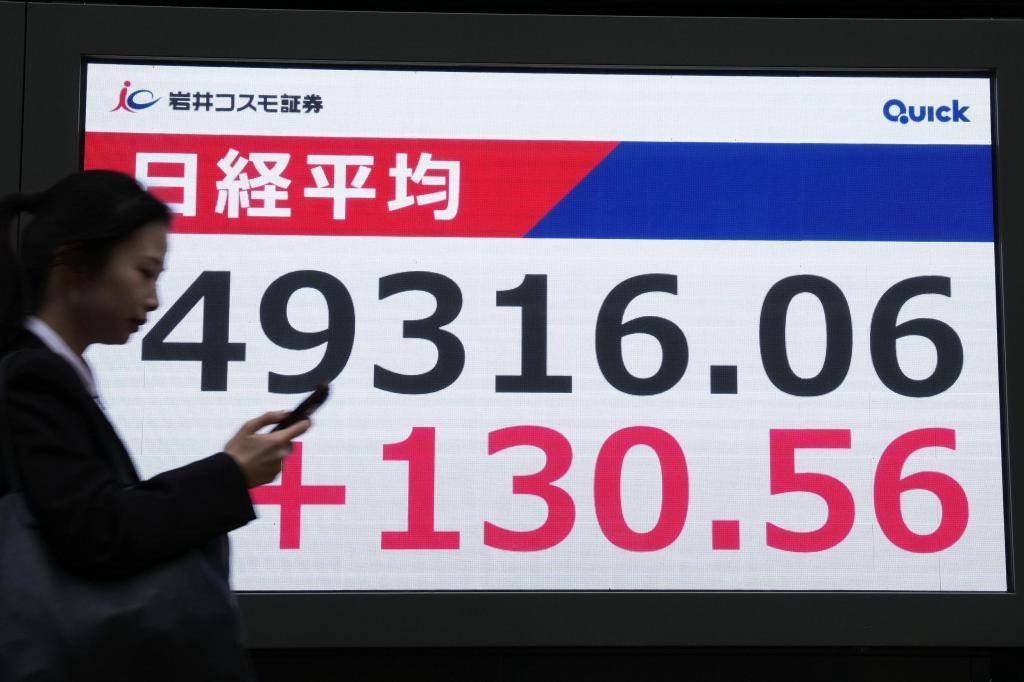
Market Performance - The Nikkei 225 index closed at a record high of 49,316.06 points on October 21, 2025, with an intraday high of 49,945.95 points, marking a year-to-date increase of 23.62% [2] - Several ETFs tracking the Nikkei 225 index showed significant premiums, with the Huaxia Nomura Nikkei 225 ETF having a premium rate of 5.28% as of October 21 [2] - Trading activity for related ETFs was robust, with the Huaxia Nomura Nikkei 225 ETF achieving a turnover rate of 161.05% and a trading volume of 2.391 billion [2] Political Developments - Fumio Kishida, the president of the Liberal Democratic Party, won 237 votes in the first round of the House of Representatives' prime ministerial election, securing the position of Japan's 104th prime minister [2] ETF Market Dynamics - The five ETFs related to Japanese stocks reached a total scale of 7.119 billion, reflecting a growth of over 60% from 4.382 billion at the beginning of the year [5] - Recent trading price premiums for the Huaxia Nomura Nikkei 225 ETF and others have prompted risk warnings regarding their market prices exceeding net asset values [4][5] Economic Outlook - Analysts expect that Kishida's macroeconomic policies may positively influence nominal GDP growth, which could benefit the Japanese stock market [5] - The outlook for the Japanese market remains optimistic, driven by factors such as corporate profit growth, improved corporate governance, and increased participation from foreign investors [6] - Sectors like finance, construction, and utilities are benefiting from digital transformation and infrastructure demand, presenting attractive investment opportunities [6]
日经225指数创历史新高!华夏基金,提示ETF溢价风险
Zhong Guo Ji Jin Bao· 2025-10-20 09:54
Core Insights - The Nikkei 225 index has reached a historic high, surpassing 49,000 points for the first time, closing at 49,185.50 points with a 3.4% increase on October 20 [4] - Several ETFs linked to the Nikkei index have seen significant price increases, prompting a warning from Huaxia Fund regarding premium risks in the secondary market [2][5] Market Performance - The Nikkei 225 index's rise is attributed to political developments, including a potential coalition agreement between the ruling Liberal Democratic Party and the Japan Innovation Party [4] - On the same day, Huaxia's Nikkei ETF led the market with a 6.57% increase, while other ETFs also performed well, with trading volumes showing high activity [5][6] ETF Growth - The total size of five ETFs related to Japanese stocks has increased by nearly 60% year-to-date, reaching 6.867 billion yuan as of October 17 [7] - The E Fund's Nikkei 225 ETF has seen the largest growth, increasing by 144%, while Huaxia's ETF grew by nearly 70% [7] Economic Factors - The rise in the Nikkei index is linked to favorable corporate fundamentals and external factors such as the Federal Reserve's potential interest rate cuts, which lower funding costs and attract investment to Japan [7][8] - Japan's low interest rate policy and a weak yen have also contributed to the attractiveness of the stock market, benefiting export-oriented companies [8] Future Outlook - Analysts expect continued support for the market from improved earnings, structural reforms in Japanese companies, and potential stock buybacks [8] - Political uncertainty remains a concern, but the potential election of a pro-stimulus candidate could provide further positive momentum for the market [8]